
4 Things You Must Do When Police Pull You Over
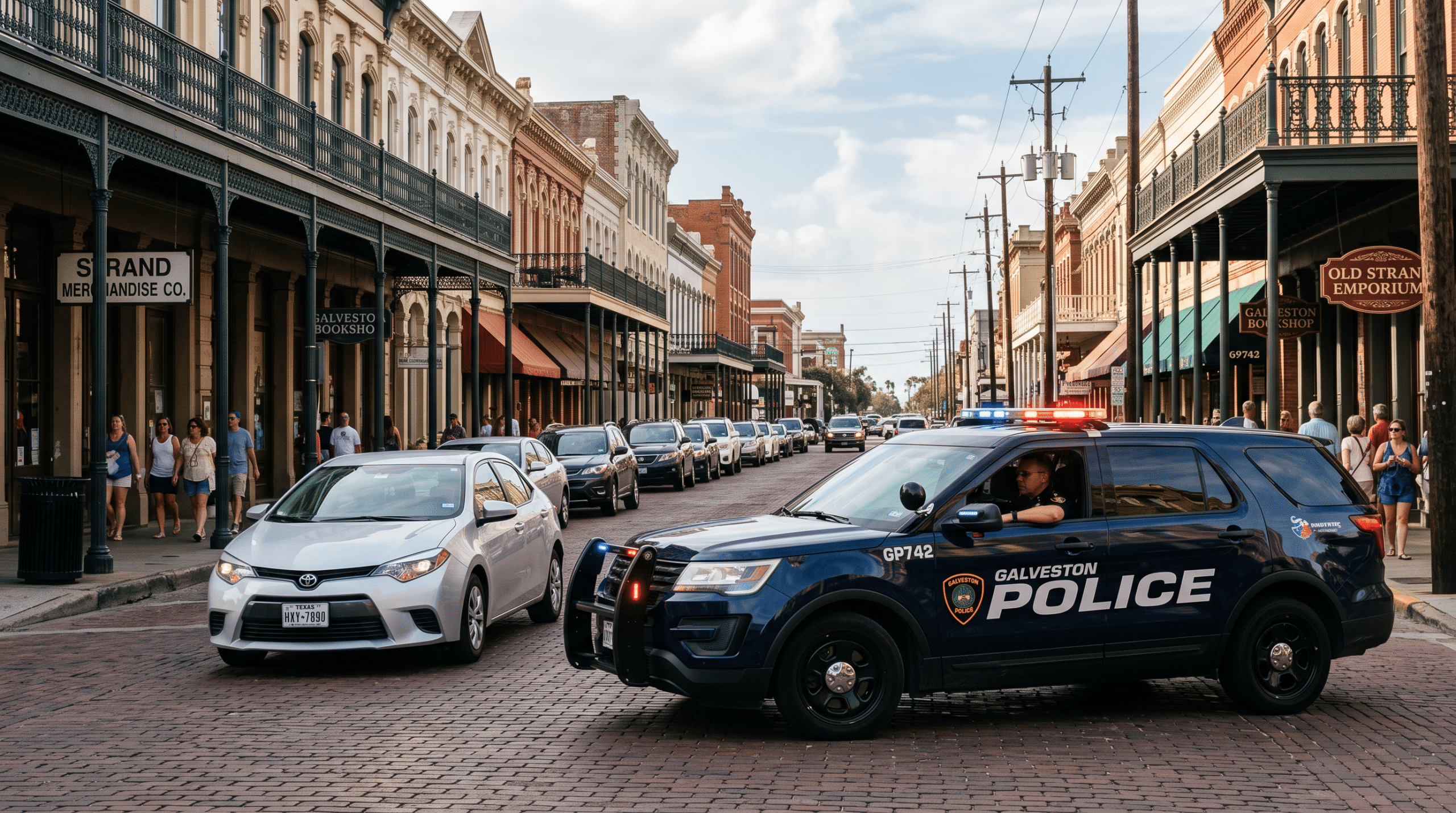
Seeing police lights in your mirror can make anyone nervous. In Galveston, a routine traffic stop might end with just a warning or citation, but it could also lead to a DWI or drug investigation, a vehicle search, or even an arrest. What you say and do in those first moments matters. We often see drivers give police more information than required, agree to searches without realizing the risks, or make things worse by arguing on the roadside. Knowing how to respond is not about being rude or uncooperative. It’s about understanding which instructions you must follow, which questions you don’t have to answer, and how to protect your rights without making the situation harder.
First, Pull Over Safely And Do Not Try To Get Away
If a police car turns on its emergency lights behind you, the safest thing to do is signal, slow down, and stop in a safe spot as soon as you can. If you keep driving because you disagree with the stop, a simple traffic issue can quickly become much more serious.
Texas Transportation Code § 545.421 makes it an offense for a driver to willfully fail or refuse to bring a vehicle to a stop or to flee or attempt to elude a pursuing police vehicle when the officer is displaying the required visual signal. Depending on the circumstances, conduct that officers interpret as fleeing can expose a driver to an additional criminal allegation that did not exist when the officer first activated the lights.
Sometimes you need a few extra seconds to find a safe place to pull over, like if you’re on a narrow bridge or a dark road without a shoulder. In those cases, slow down, turn on your hazard lights, and show the officer you plan to stop. This helps avoid looking like you’re trying to get away.
After you stop, stay in your car unless the officer tells you to get out. Avoid sudden movements, reaching under your seat, or opening the door without being asked. Keep your hands where the officer can see them and wait for instructions. This can help keep the situation calm.
The legality of the traffic stop can be challenged later. The side of the road is rarely the place to argue about whether the officer had sufficient grounds to stop you.
Second, Provide The Identification And Documents Texas Law Requires
You should distinguish between providing legally required information and answering investigative questions.
Texas Transportation Code § 521.025 requires a driver to have a driver’s license while operating a motor vehicle and to display that license on demand from a magistrate, court officer, or peace officer. The statute also permits a peace officer to stop and detain a person operating a vehicle to determine whether the person has the required driver’s license.
Texas law also requires motorists covered by the state’s financial responsibility requirements to provide evidence of financial responsibility to an investigating officer in circumstances covered by Transportation Code § 601.053. That evidence commonly takes the form of automobile liability insurance.
Showing your driver’s license and insurance doesn’t mean you have to explain where you’ve been, what you were doing, if you drank earlier, who was with you, or what’s in your car.
There is another important distinction involving identification. Texas Penal Code § 38.02 provides that a person commits Failure to Identify if, after being lawfully arrested, the person intentionally refuses to provide his or her name, residence address, or date of birth when requested by a peace officer. The statute also addresses intentionally giving false identifying information after lawful arrest or detention.
Giving police a fake name or false information can lead to another criminal charge. Telling the truth when asked for ID is not the same as volunteering information about possible crimes.
Third, Protect Your Right To Remain Silent
One of the biggest mistakes we see during traffic stops is the belief that a person can talk an officer out of making an arrest.
Police officers are trained to ask questions. Those questions may sound conversational, but they often have an investigative purpose. An officer who asks, “Where are you coming from?” “Have you had anything to drink?” “When was your last drink?” or “Do you know why I stopped you?” may be gathering information that can later appear in a police report or be used as evidence.
You generally do not improve your position by guessing, minimizing, exaggerating, or trying to explain away suspicious circumstances.
The Texas Constitution provides important protections against compelled self-incrimination. Article I, Section 10 states protections applicable to an accused in a criminal prosecution, while the Fifth Amendment to the United States Constitution provides the familiar protection against being compelled to incriminate oneself.
You can be polite without answering investigative questions. A person can clearly state that he or she wishes to remain silent and wants to speak with an attorney before answering questions.
Once you invoke that right, the safest course is usually to stop talking about the facts of the case.
Drivers sometimes make the mistake of asserting the right to remain silent and then immediately continuing the conversation. They may explain why they were speeding, disclose that they had “only two beers,” describe where marijuana came from, admit that a prescription belongs to someone else, or try to explain why an object is in the vehicle. Those statements can become important evidence.
Silence is particularly important when a traffic stop begins developing into a DWI investigation. An officer may be listening for slurred speech, inconsistent answers, admissions about alcohol consumption, or statements establishing when and where drinking occurred. What seems like casual conversation may later become part of the prosecution’s theory of intoxication.
Protecting your rights does not require insulting the officer, refusing lawful instructions, or turning the encounter into an argument. It requires understanding that you are not obligated to help investigators build a criminal case against you.
Fourth, Do Not Consent To A Search Or Physically Resist Police
Police may ask to search your vehicle during a traffic stop. The wording can be casual: “You don’t mind if I take a look, do you?” A nervous driver may agree simply because he or she believes saying no will look suspicious.
You should understand what consent means. If you voluntarily authorize a search, you may make it much harder to later challenge that search on constitutional grounds.
Article I, Section 9 of the Texas Constitution protects people and their possessions from unreasonable searches and seizures. The Fourth Amendment provides similar federal constitutional protection.
Police do not always need your consent to conduct a lawful search. Depending on the circumstances, officers may claim to have probable cause, a warrant, a lawful basis connected to an arrest, or another recognized legal justification. The important point is that you do not have to voluntarily supply consent merely because an officer asks.
You can calmly state that you do not consent to a search.
If the officer searches anyway, do not physically interfere. Your attorney can later examine whether the search was lawful and, when appropriate, seek suppression of unlawfully obtained evidence.
Texas Penal Code § 38.03 makes it an offense to intentionally prevent or obstruct a person known to be a peace officer from carrying out an arrest, search, or transportation by using force against the officer or another person. The statute specifically states that it is not a defense that the arrest or search was unlawful.
That distinction matters. You can refuse consent without physically resisting. Those are not the same thing.
If an officer orders you out of the vehicle, tells you where to stand, or begins a search despite your objection, physically fighting over the issue can create a separate criminal charge. We would much rather challenge an improper search in court than defend both the original allegation and a new resisting charge.
Talk To A Galveston Criminal Defense Lawyer At Mark Diaz & Associates
A traffic stop can change direction quickly. What begins as a speeding allegation can become a DWI investigation, drug possession case, weapons charge, warrant arrest, or another serious criminal matter. If you were arrested after a traffic stop in Galveston or Houston, we can examine what happened before the officer turned on the emergency lights, what occurred during the detention, whether statements were lawfully obtained, and whether any search complied with the Texas and United States Constitutions.
At Mark Diaz & Associates, we defend clients facing criminal charges in Galveston and throughout the city of Houston, Texas. We understand that the details of the traffic stop often determine what defenses are available, which is why we look closely at the officer’s stated reason for the stop, recordings, searches, questioning, testing, and the evidence prosecutors intend to use.
When you hire me, you work directly with me. My clients have my personal cell phone number because questions, emergencies, and concerns don’t always happen during business hours. You won’t be handed off to a junior associate or lost in a system where your case is one of dozens on a crowded docket. From arrest through resolution, I remain personally involved and accessible.
If a traffic stop has resulted in a criminal charge, DWI arrest, drug allegation, or other criminal investigation, call our Galveston criminal defense attorney at Mark Diaz & Associates today by calling 409-515-6170 to schedule your free consultation. We represent clients throughout Galveston and the entire Houston, Texas area, and we are prepared to review the circumstances of your stop and determine how Texas law may affect your defense.
