
Boating While Intoxicated Charges In Galveston
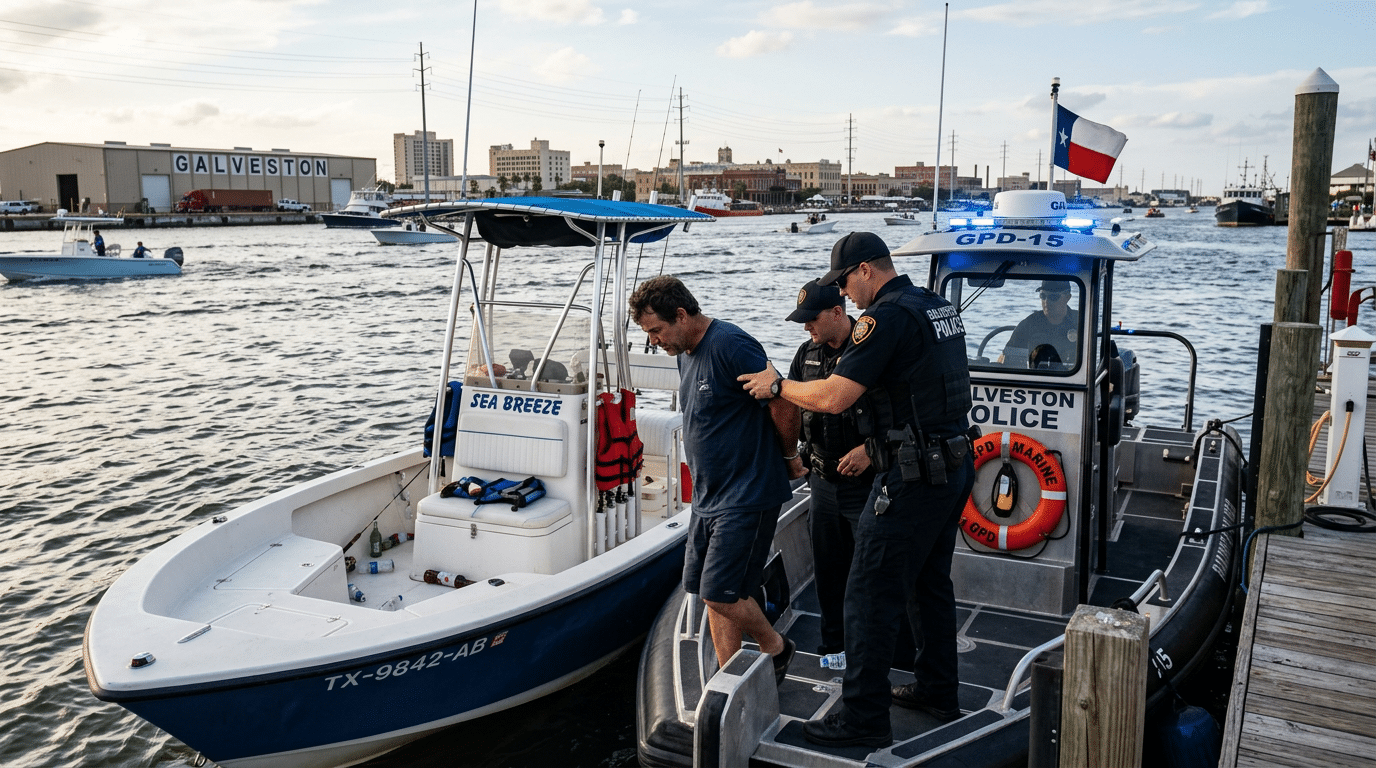
Galveston County is a top spot in Texas for recreational boating. Every year, thousands of locals and visitors enjoy fishing, sailing, water sports, and social events on the water. Many people wrongly assume that boating laws are less strict than driving laws when it comes to alcohol. We often meet clients who are surprised to find out that boating while intoxicated can lead to serious criminal charges in Texas. What starts as a fun day with family and friends can quickly become an arrest and criminal charges that affect your record. If you have been arrested for Boating While Intoxicated (BWI), knowing your rights and acting fast can help protect your future.
What Is Boating While Intoxicated In Texas?
Texas law prohibits operating a watercraft while intoxicated. Under Texas Penal Code §49.06, a person commits an offense if they operate a watercraft while intoxicated in a public waterway.
Many people are surprised to learn that BWI laws closely resemble Texas DWI laws. Under Texas Penal Code §49.01(2), intoxication means either not having the normal use of mental or physical faculties due to alcohol, drugs, controlled substances, dangerous drugs, a combination of substances, or any other substance introduced into the body. Intoxication may also be established if a person’s blood alcohol concentration is 0.08 percent or higher.
Boating is different from driving and brings its own challenges for investigations. Wind, waves, sun, dehydration, tiredness, and the natural movement of the boat can cause physical signs that look like intoxication. These factors often play a big role in defending against a BWI charge.
Texas law applies to all types of watercraft, including motorboats, sailboats, personal watercraft such as Jet Skis, and many other vessels operated on public waterways.
How BWI Arrests Commonly Occur In Galveston
Law enforcement agencies actively patrol Galveston’s waterways, especially during holidays and peak tourism seasons. Agencies such as the Texas Parks and Wildlife Department, the Galveston County Sheriff’s Office, the United States Coast Guard, and local marine units regularly conduct safety inspections and boating enforcement operations.
Unlike traffic stops on land, officers do not always need a specific violation to initiate contact with boat operators. Under Texas Parks and Wildlife Code §31.124, officers have the authority to stop and inspect vessels for safety compliance and registration requirements.
A routine safety inspection can quickly become a criminal investigation. Officers might ask about alcohol use, watch your behavior, check coolers, and start field sobriety tests if they think you may be intoxicated.
Many people unintentionally create problems for themselves during these encounters because they assume the interaction is informal. Once an officer suspects intoxication, the investigation can quickly escalate into an arrest.
Why BWI Cases Are Different From DWI Cases
Many clients assume a BWI charge is identical to a DWI case. While there are similarities, there are also significant differences.
Operating a boat naturally affects a person’s balance, coordination, and physical movements. The constant motion of the water can make sober individuals appear unsteady. Heat exhaustion, dehydration, seasickness, fatigue, and sun exposure can all mimic signs commonly associated with intoxication.
This makes things harder for law enforcement. Officers often depend on what they see, but these signs may not truly show impairment. Someone who has trouble balancing after hours on the water is not always intoxicated.
We frequently examine environmental factors that may have contributed to an officer’s observations. Conditions that are perfectly normal for boating environments can sometimes be misinterpreted as signs of impairment. These details become important because prosecutors still carry the burden of proving intoxication beyond a reasonable doubt.
Field Sobriety Tests Are Not Always Reliable On The Water
Many BWI investigations involve field sobriety exercises, but these tests are not always reliable in marine environments. Field sobriety tests were made for roadside use, not for boats. Standing on a moving boat, being in the sun for hours, and dealing with uneven surfaces can all affect how someone performs on these tests. Even after returning to shore, a person’s equilibrium may still be impacted by spending time on the water. It is common for individuals to feel unsteady after boating for several hours.
We carefully evaluate how these tests were administered and whether environmental factors affected performance. We also examine whether officers followed proper procedures during the investigation. Simply because an officer claims someone failed a field sobriety test does not automatically mean the person was intoxicated.
Chemical Testing Plays A Major Role In BWI Cases
Breath and blood tests often become central pieces of evidence in BWI prosecutions. Texas has implied consent laws that apply to boating offenses. Under Texas Parks and Wildlife Code §31.104, boat operators are deemed to have consented to chemical testing under certain circumstances.
Refusing a test may create additional consequences, including the suspension of boating privileges. In some situations, officers may also obtain warrants for blood draws.
However, chemical testing is not infallible. We frequently investigate whether testing procedures were properly followed. Equipment maintenance, calibration records, chain of custody issues, and laboratory procedures may all become relevant. Errors can occur at multiple stages of the testing process. Challenging these issues is often an important component of a defense strategy.
Penalties For Boating While Intoxicated In Texas
A first-time BWI offense is generally a Class B misdemeanor. Under Texas Penal Code §12.22, a Class B misdemeanor may carry penalties of up to 180 days in county jail and fines up to $2,000. The court may also impose probation, community service, alcohol education requirements, and other conditions.
Certain circumstances can significantly increase the penalties. Prior intoxication-related convictions, extremely high blood alcohol concentrations, serious injuries, or fatalities may lead to felony charges.
Boating accidents involving injuries can result in intoxication assault charges under Texas Penal Code §49.07. If a death occurs, prosecutors may pursue intoxication manslaughter charges under Texas Penal Code §49.08. The consequences can quickly become life-changing.
A BWI Conviction Can Affect More Than Your Criminal Record
Many people underestimate the long-term consequences associated with BWI convictions.
Employment opportunities may become more difficult to obtain because employers often conduct background checks. Professional licenses may be affected for nurses, teachers, commercial drivers, healthcare workers, and individuals in regulated professions.
Insurance costs may also increase. In some situations, future boating privileges may be suspended or restricted.
The impact often extends beyond the courtroom. Many clients are concerned about their reputation, family obligations, and future opportunities. These are important considerations when deciding how to approach a defense strategy. Protecting your record early can have lasting benefits.
Defenses That May Apply In A Boating While Intoxicated Case
Every case deserves an independent investigation because BWI allegations are rarely as simple as they initially appear.
We frequently examine whether the officer had sufficient evidence to establish intoxication. Environmental conditions often play a significant role in these cases and may explain behavior that officers mistakenly associate with impairment.
We also investigate field sobriety testing procedures, chemical testing protocols, and whether law enforcement followed proper constitutional safeguards throughout the investigation.
Video evidence can be extremely important. Many marine units now utilize body cameras and vessel cameras that may reveal inconsistencies in the officer’s observations.
Witness testimony also matters. Passengers, nearby boaters, marina employees, and others may provide information that supports the defense. Every detail deserves careful attention because small facts can significantly alter the direction of a case.
What You Should Do After A BWI Arrest
If you are arrested for Boating While Intoxicated, remain calm and avoid making the situation worse. Do not discuss the facts of the case with other passengers, investigators, or on social media. Statements that seem harmless often become evidence later.
Preserve any information that may support your defense. Photographs, videos, weather conditions, witness information, and boating records may all become valuable evidence.
Most importantly, contact a criminal defense attorney immediately. Early intervention often creates more opportunities to investigate the case while evidence is still available. The sooner your defense begins, the more options may be available to protect your future.
FAQs About Boating While Intoxicated Charges In Galveston
Is Boating While Intoxicated The Same As A DWI?
The offenses are similar but not identical. Both involve allegations of intoxication, but BWI cases present unique environmental factors that can affect investigations. Conditions on the water often create additional defense opportunities.
Can Police Stop My Boat Without Seeing Me Break A Law?
Yes. Texas law gives officers authority to conduct safety inspections and verify compliance with boating regulations. What starts as a routine inspection can sometimes become a criminal investigation if officers suspect intoxication.
Can I Refuse A Breath Or Blood Test?
You may refuse, but refusal can trigger additional consequences under Texas law, including the suspension of boating privileges. In some cases, officers may also obtain a warrant for a blood draw.
Will A BWI Conviction Affect My Driver’s License?
It may. Certain intoxication-related offenses can have consequences beyond boating privileges, especially if prior convictions exist. Every case should be individually reviewed.
Do I Need A Lawyer For A First-Time BWI Charge?
Yes. Even first-time offenses can create lasting consequences. There may be legal defenses available involving field sobriety testing, chemical testing, constitutional issues, and procedural errors.
Contact Our Galveston BWI Attorney For A Free Consultation
A Boating While Intoxicated arrest can quickly turn an enjoyable day on the water into a stressful criminal case. These cases involve unique legal and scientific issues that deserve immediate attention.
At Mark Diaz & Associates, we aggressively defend clients facing BWI charges throughout Galveston and across the city of Houston, Texas. We understand how marine investigations are conducted, how prosecutors build these cases, and how to identify weaknesses in the evidence.
When you hire me, you work directly with me. My clients have my personal cell phone number because questions, emergencies, and concerns do not always happen during business hours. You will not be handed off to a junior associate or lost in a system where your case is one of dozens on a crowded docket. From arrest through resolution, I remain personally involved and accessible.
Contact our Galveston BWI attorneys at Mark Diaz & Associates by calling 409-515-6170 to receive your free consultation. We represent clients throughout Galveston and all of Houston, Texas, and we are ready to begin protecting your rights immediately.
