
What Happens After A Federal Search Warrant Is Executed At Your Home Or Business?
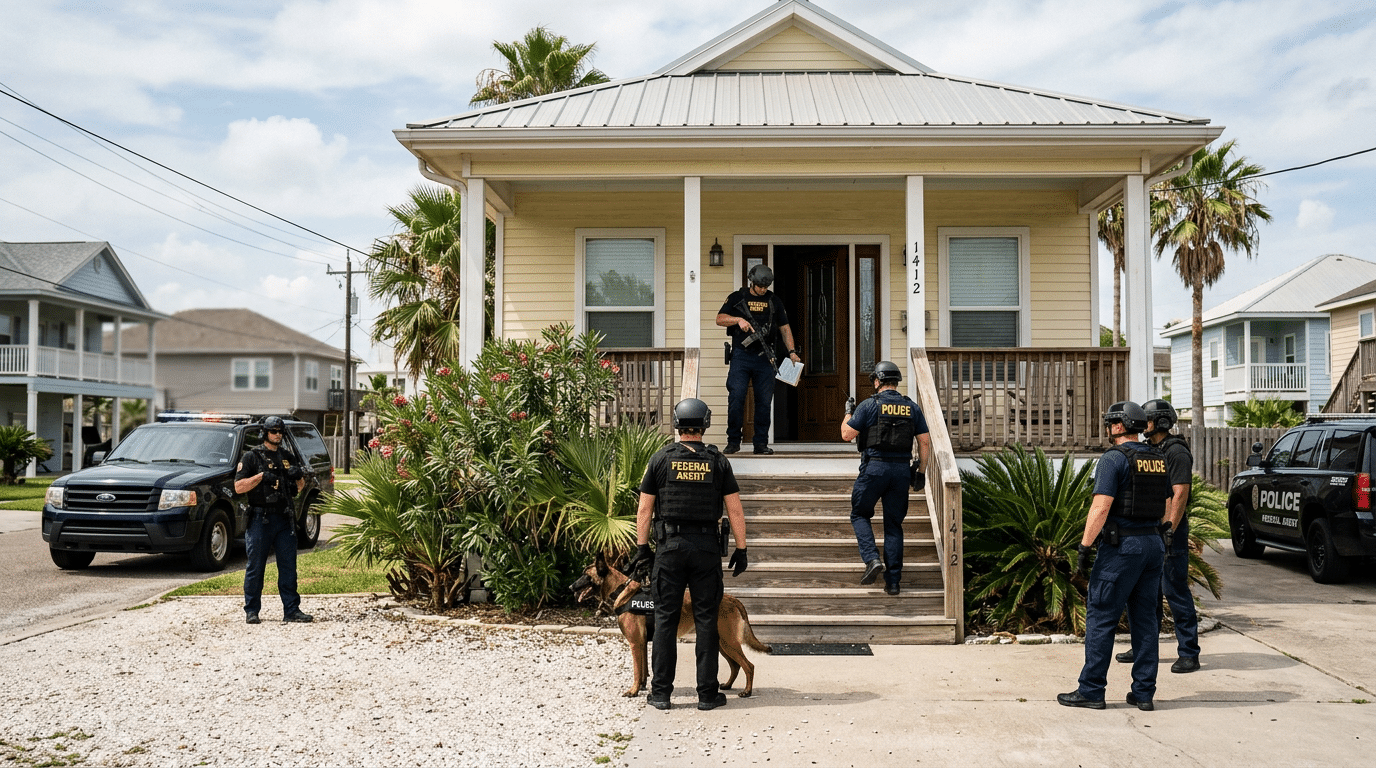
A federal search warrant can turn an ordinary morning into a frightening and confusing event. Federal agents may arrive in large numbers, secure the property, separate the occupants, and begin searching rooms, offices, vehicles, computers, and storage areas. You may be ordered to remain in one location while agents conduct the search, and investigators may attempt to question you before they leave. Even when no arrest occurs, the execution of a federal warrant should be treated as a serious warning that a criminal investigation has reached an advanced stage. We advise people in Galveston in this position to remain calm, avoid interfering with the search, and obtain legal representation before making statements about the investigation.
A Federal Judge Must Find Probable Cause Before Issuing The Warrant
Federal Rule of Criminal Procedure 41 governs many federal search warrants. A magistrate judge generally may issue a warrant when the government establishes probable cause to believe that evidence, contraband, proceeds of a crime, property used to commit an offense, or a person who should be arrested will be found in a particular place. The warrant must identify the location or person to be searched and describe the property or information agents are authorized to seize.
Probable cause does not require proof beyond a reasonable doubt. Federal agents usually submit a sworn affidavit describing the facts supporting the request. That affidavit may refer to cooperating witnesses, undercover operations, surveillance, bank records, recorded communications, confidential informants, controlled purchases, or information obtained from other searches.
The affidavit may remain sealed after the search. As a result, the copy of the warrant left at the property may show what agents were permitted to search for without revealing the full basis of the investigation. A defense attorney may later seek access to the affidavit and examine whether the government presented accurate and sufficient facts to the judge.
Agents May Search Only Within The Warrant’s Lawful Scope
A search warrant does not let federal agents search anything they want. They must stick to the places and items listed in the warrant. For example, if the warrant is for financial records, agents can look where those records might be kept. They cannot use a warrant for large machinery to open a small jewelry box, since the item they are looking for would not fit there.
Digital search warrants can be more complicated because a lot of information can be stored on one phone, computer, server, or cloud account. Agents may take electronic devices and look at them later with special tools. The government might copy hard drives or other data so investigators can check emails, messages, photos, transaction records, internet use, and even deleted files.
A central defense question is whether agents remained within the warrant’s permitted scope. When the search went beyond that authority, we may consider whether a motion to suppress could prevent unlawfully obtained evidence from being used in court.
Agents May Force Entry Under Certain Conditions
Federal agents commonly knock, announce their identity and purpose, and request entry. Under 18 U.S.C. § 3109, an officer executing a federal search warrant may break an exterior or interior door or window after announcing the officer’s authority and purpose and being refused entry. Forced entry may also be permitted in other legally recognized circumstances, including situations involving safety risks or the threatened destruction of evidence.
Some warrants authorize entry without the usual advance announcement when a judge finds sufficient grounds for that procedure. Even without such authority, the circumstances encountered at the scene may affect whether officers can enter immediately.
Damage to a door or other property does not, by itself, prove that the search was illegal. The legality of the entry depends on the warrant, what agents announced, how long they waited, what they reasonably believed, and whether an exception applied.
You Should Not Physically Interfere With The Search
You might think the warrant is wrong or that agents are searching the wrong place. If so, let your lawyer and the courts handle it, not physical resistance. Trying to block officers, take back property, hide evidence, or tell others to delete information can lead to more criminal charges.
Texas Penal Code § 38.15 prohibits certain intentional interference with a peace officer performing a lawful duty. Texas Penal Code § 37.09 also makes it a crime to alter, destroy, conceal, or fabricate evidence when a person knows that an investigation or official proceeding is pending or in progress and acts with the required intent. Although a federal search is primarily governed by federal law, conduct during or after the search may create exposure under both state and federal statutes.
Federal obstruction laws can apply if someone destroys or hides records, documents, electronic data, or physical evidence during a federal investigation. If you panic and start deleting messages after agents leave, you could make your legal situation worse, even if those messages would not have proven the original crime.
You Are Not Required To Answer Investigative Questions
Federal agents might try to question you while others search. They may say the conversation is informal or that answering questions will help clear things up. You have the right to refuse an interview and ask for a lawyer.
Silence is often safer than trying to explain complicated facts during an unexpected search. People under stress may guess, confuse dates, minimize events, or make statements that agents later characterize as inconsistent. The danger is not limited to admitting the suspected offense.
Under 18 U.S.C. § 1001, knowingly and willfully making a materially false statement in a matter within federal jurisdiction can be prosecuted as a separate crime. The statute generally authorizes imprisonment of up to five years, with longer maximum terms in certain categories of cases. A person may therefore face a false-statement allegation even when prosecutors cannot prove the offense that led to the search.
We regularly advise clients that requesting counsel is not an admission of guilt. It is a lawful way to avoid turning a tense and confusing encounter into evidence for the prosecution.
Agents Should Leave A Copy Of The Warrant And A Property Receipt
Federal Rule of Criminal Procedure 41 generally requires the executing officer to provide a copy of the warrant and a receipt identifying property taken during the search. The officer may give those materials to the person whose property was searched or leave them at the location. The executing officer must also prepare an inventory and return the warrant to the designated judge.
The inventory may use general descriptions rather than listing every file contained on a seized computer or every document in a box. We review the warrant and inventory to determine what agents sought, what they took, which agencies participated, and which federal district appears to be handling the investigation.
You should keep these documents in a secure place and provide copies to your attorney. Do not write explanations on them, post photographs of them online, or distribute them among employees and business associates without legal guidance.
A Search Warrant Does Not Automatically Mean An Arrest Will Occur
Some federal searches are conducted at the same time as arrests. In other cases, agents execute the warrant but leave without taking anyone into custody. The absence of an immediate arrest should not create false confidence.
Federal prosecutors may need time to analyze computers, review financial records, compare witness statements, or present evidence to a grand jury. The investigation may continue for months after the search. Agents may also use the evidence seized from one location to request warrants for other properties or accounts.
The Department of Justice distinguishes among witnesses, subjects, and targets in federal investigations. A witness may possess relevant information. A subject is someone whose conduct falls within the investigation’s scope. A target is a person who prosecutors or the grand jury have substantial evidence linking to a crime and who is viewed as a likely defendant. These classifications can change as evidence develops.
Legal counsel may contact the prosecutor or investigating agency to determine whether the client is currently viewed as a witness, subject, or target. The government is not always required to provide a complete answer, but early communication can help shape decisions about interviews, subpoenas, document production, and possible surrender arrangements.
The Government May Continue Using A Grand Jury
A federal grand jury may issue subpoenas for testimony, records, financial information, electronic data, and other evidence. Prosecutors may use materials seized during the search to identify new witnesses or transactions. Employees, customers, accountants, vendors, relatives, and business partners may be contacted.
A subpoena should never be ignored, but it should also not be answered casually. The recipient may have rights, obligations, and risks that require careful review. Producing incomplete, altered, or misleading records can create additional problems. Giving testimony without understanding one’s status may also expose the witness to criminal liability.
When a client receives a grand jury subpoena after a search, we examine the subpoena’s scope, preserve responsive records, assess possible privileges, and determine whether discussions with prosecutors are appropriate. The response must be accurate, but it should not surrender rights unnecessarily.
Seized Property May Be Held For An Extended Period
Phones, computers, business records, and other property may remain in federal custody while agents conduct their review. This can disrupt a company’s operations or prevent a family from accessing important information. The government may return some property voluntarily after making forensic copies, but other items may be retained as evidence or treated as property subject to forfeiture.
Federal Rule of Criminal Procedure 41 includes a procedure for seeking the return of property. Whether such a request is appropriate depends on the investigation, the owner’s interest in the property, whether the government still needs it, and whether the property is allegedly contraband or connected to criminal activity.
Federal forfeiture laws may allow the government to pursue assets believed to be proceeds of certain offenses or property used to facilitate criminal conduct. Civil forfeiture and criminal forfeiture involve different procedures, deadlines, and burdens. A person who receives a seizure or forfeiture notice should act promptly because failing to file a proper claim by the deadline may result in the loss of important rights.
The Warrant And Search May Be Challenged
A judge’s approval does not make every search immune from challenge. We may examine whether the warrant was supported by probable cause, whether the affidavit contained material falsehoods or misleading omissions, whether the warrant described the location and items with sufficient particularity, and whether agents exceeded its scope.
A motion to suppress may be available when evidence was obtained in violation of the Fourth Amendment. The government may respond that agents relied on the warrant in good faith or that another exception permits the evidence to be used. These disputes are highly fact-specific and often require close review of the affidavit, reports, photographs, body-camera footage, forensic procedures, and testimony from the agents involved.
The defense may also challenge whether seized electronic data belonged to the person charged, whether another user had access to a device, and whether the government can establish an unbroken chain of custody. Finding evidence inside a home, shared office, or company network does not automatically prove who created it, knew about it, or controlled it.
Texas And Federal Charges May Arise From The Same Search
A federal warrant may uncover suspected violations of federal law, Texas law, or both. Federal agencies often work with local police, county officers, and state investigators. Evidence seized by a federal task force may be shared with state prosecutors, and a state investigation may later produce federal charges.
For example, a search involving suspected drug trafficking may expose a person to charges under the federal Controlled Substances Act and the Texas Controlled Substances Act, Chapter 481 of the Texas Health and Safety Code. A search involving firearms may lead to federal firearm allegations and Texas weapons charges. Financial records may support federal fraud allegations while also raising questions about theft, money laundering, or organized criminal activity under Texas law.
The federal and state systems have different charging practices, evidentiary rules, sentencing structures, and plea procedures. A defense strategy must account for the possibility of parallel proceedings rather than assuming that only one jurisdiction is involved.
Protecting Your Rights After Agents Leave
The hours immediately following a search are important. You should preserve the warrant, inventory, surveillance recordings, security-system data, and photographs of the property. Write down what happened while your memory is fresh, including what agents said, where they searched, what they took, and whether anyone was questioned.
Do not contact witnesses to coordinate accounts or ask what they plan to tell investigators. Do not delete electronic information, move assets, alter business records, or post about the search on social media. Those actions may be misunderstood or used as evidence of consciousness of guilt.
We can begin reviewing the government’s conduct before charges are filed. Early representation may allow us to communicate with prosecutors, prepare for possible interviews, preserve favorable evidence, address business disruptions, and arrange a controlled surrender if an arrest warrant is later issued.
Frequently Asked Questions About Federal Search Warrants
Does A Federal Search Warrant Mean I Will Be Charged?
Not necessarily, but the search indicates that a federal judge found probable cause to believe that specified evidence or property would be located at the place searched. You may be a witness, subject, or target, and your status may change as investigators review the seized materials. Federal charges sometimes follow quickly, while other investigations continue for months. You should not assume that the matter is over simply because agents left without making an arrest. Legal counsel may be able to contact the prosecutor, evaluate the warrant, and help determine the investigation’s likely direction.
Can I Refuse To Let Federal Agents Search My Property?
You may state that you do not consent to any search beyond the warrant, but you should not physically obstruct agents who present a valid warrant. Officers generally do not need your permission to search the location and items authorized by the warrant. Ask to see the warrant, remain calm, and contact an attorney. Your objection may preserve the fact that you did not voluntarily consent to a broader search. Arguments about probable cause, scope, or unlawful entry should usually be presented later in court rather than fought at the scene.
Can Federal Agents Question Me During The Search?
Agents may ask questions, but you generally have the right to decline an interview and request legal counsel. Even a person who believes there is an innocent explanation can create problems by guessing, misstating a date, or denying something agents believe they can prove. A knowingly false material statement to federal investigators may violate 18 U.S.C. § 1001. You should provide basic identifying information when legally required, but you do not have to give a detailed account of events merely because agents ask for one. A lawyer can communicate with investigators and determine whether any later interview serves your interests.
Can Agents Search Everyone Who Is Present?
A warrant for a home or business does not automatically authorize a full evidentiary search of every person present. However, agents may control movement during the search and may take reasonable safety measures. Whether they can search a particular person depends on the warrant, probable cause, consent, an arrest, officer-safety concerns, or another legal basis. Personal items located on the premises can also present difficult questions, particularly when ownership is unclear. The legality of any personal search should be reviewed based on the warrant’s wording and the circumstances at the scene.
How Can I Recover Computers Or Business Records Taken By Agents?
Your attorney may first contact the assigned agent or prosecutor and request the return of property that is no longer needed, particularly when seized equipment is disrupting legitimate business operations. The government may agree to return original devices after creating forensic copies. When informal efforts fail, Federal Rule of Criminal Procedure 41 may permit a motion seeking the property’s return. The court will consider ownership, the government’s need for the items, the investigation’s status, and whether the property is allegedly illegal or subject to forfeiture. Acting too quickly without understanding the investigation can have strategic consequences, so the request should be carefully planned.
Speak With Mark Diaz & Associates After A Federal Search In Galveston Or Houston
A federal search warrant should never be treated as a routine inconvenience. The government may already have witness statements, financial records, surveillance evidence, electronic communications, and information gathered through months of investigation. We can examine the warrant, identify the agencies involved, protect you during contact with investigators, preserve favorable evidence, and prepare for the possibility of grand jury proceedings or federal charges.
Mark Diaz & Associates represents clients in Galveston and throughout the entire city of Houston, Texas. We understand that a federal investigation can threaten your freedom, reputation, business, professional license, and financial security. Our goal is to intervene early, limit avoidable damage, and build a defense based on the actual facts and law.
When you hire me, you work directly with me. My clients have my personal cell phone number because questions, emergencies, and concerns do not always happen during business hours. You will not be handed off to a junior associate or lost in a system where your case is one of dozens on a crowded docket. From the search through the final resolution of the investigation or case, I remain personally involved and accessible.
Contact our Galveston federal defense lawyer at Mark Diaz & Associates by calling 409-515-6170 to discuss a federal search warrant, investigation, grand jury subpoena, or criminal charge in Galveston or Houston, Texas.
