
How Prosecutors Use Social Media Posts As Evidence In Texas Criminal Cases
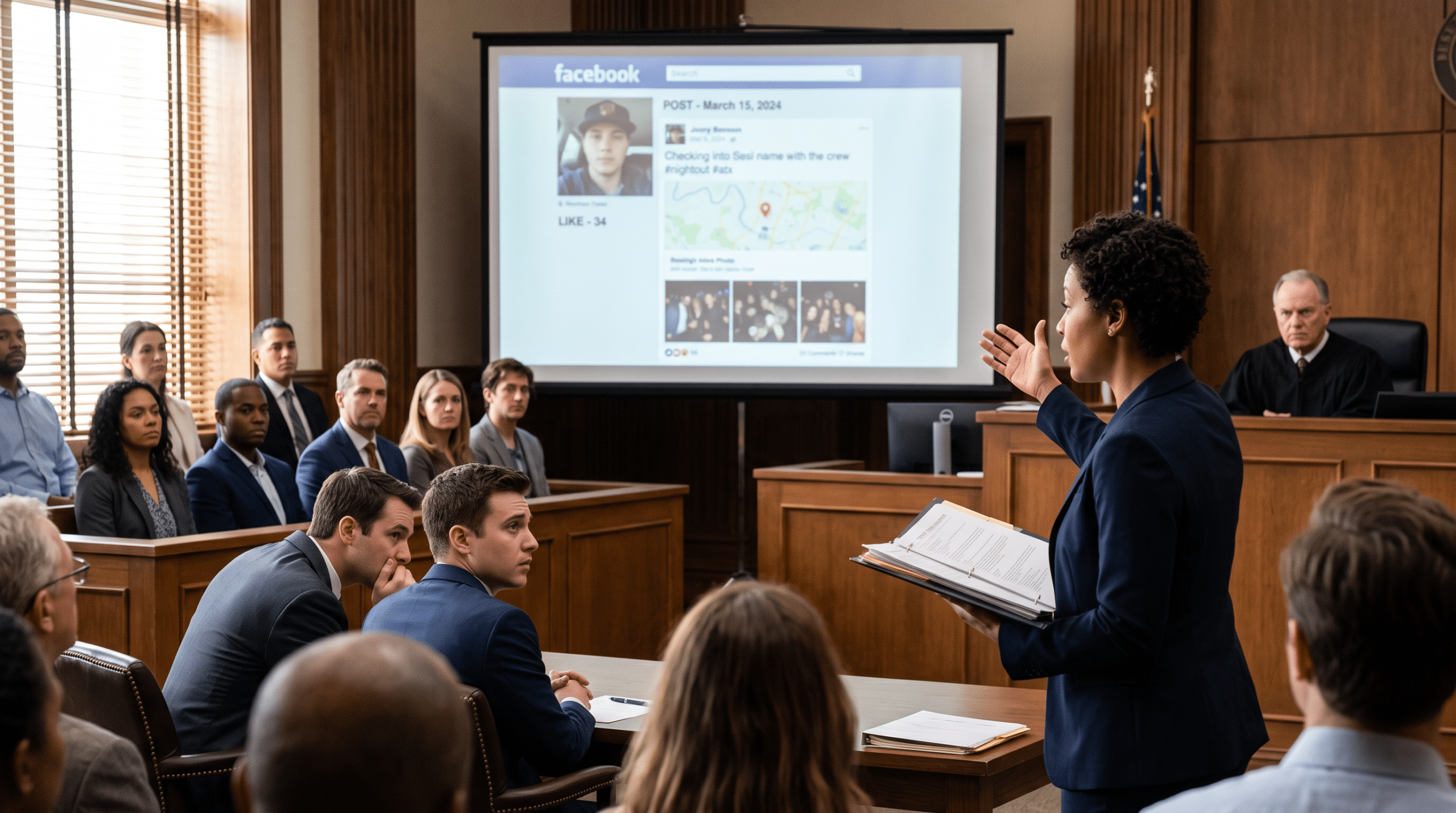
A social media post can become evidence before you even know you are under investigation. Prosecutors might look at photos, videos, comments, private messages, location tags, friend lists, and even reactions when building a criminal case in Texas. Something that seemed harmless at first can look very different when combined with witness statements, surveillance footage, phone records, or other evidence.
Deleting a post after an arrest often does not help, since someone else may have saved, photographed, or shared it with law enforcement. When we defend clients in Galveston, we look at what the post shows, who created it, whether it is complete, how investigators got it, and if the prosecution can legally use it in court.
Social Media Evidence Can Affect Many Types Of Criminal Cases
Social media evidence is not just used in internet crimes. Prosecutors can use it in cases like DWI, assault, family violence, drug charges, theft, weapons offenses, sex crimes, homicide, and organized crime. A photo might be used to link someone to a weapon, car, group, drug, or place. A video could be shown as proof of what happened, intoxication, motive, identity, or relationships between people in the case.
Comments and direct messages matter just as much. Prosecutors might claim that a message shows intent, knowledge, planning, ownership, fear, anger, or guilt. In a drug case, messages about prices, amounts, delivery spots, or coded words can be used to support a charge of possession with intent to deliver. In an assault case, angry messages sent before or after the event might be used as evidence of motive or hostility.
A post does not need to be a direct confession to cause problems. Prosecutors often put together different pieces of information and ask the jury to draw conclusions from the bigger picture.
Prosecutors Must Connect The Post To The Accused Person
A screenshot with a defendant’s name or profile photo is not always reliable. Social media accounts can be shared, copied, hacked, faked, or used by more than one person. Before electronic content can be used in court, the prosecution usually has to show enough proof that the item is what they say it is.
Texas Rule of Evidence 901 requires authentication or identification of evidence. That requirement may be met through witness testimony, identifying characteristics, metadata, account records, surrounding circumstances, or other proof connecting the material to a particular person. The rule does not require the prosecution to eliminate every possibility of fabrication before admission, but it must establish a sufficient foundation.
We may challenge authentication if the State only uses a profile name, photo, or printed screenshot. Key questions are who took the image, if the original content still exists, if the account was secure, if others knew the password, if the evidence was changed, and if the prosecution can prove when the content was made.
Relevance Does Not Make Every Post Admissible
The prosecution must also show that social media evidence is relevant to an issue in the case. Under Texas Rule of Evidence 401, evidence is relevant when it has some tendency to make a fact of consequence more or less probable. A post that has no meaningful connection to the charge should not be admitted merely because it makes the defendant look irresponsible or unlikable.
Even relevant evidence may be excluded under Texas Rule of Evidence 403 when its probative value is substantially outweighed by dangers such as unfair prejudice, confusion, misleading the jury, undue delay, or needless presentation of cumulative evidence. This rule can be especially important when a prosecutor attempts to introduce inflammatory photographs, offensive lyrics, old arguments, political statements, or content involving unrelated conduct.
We may argue that a post creates an emotional reaction without proving a disputed fact. A person’s taste in music, clothing, humor, or entertainment does not necessarily establish criminal intent. Context matters, and the defense should not permit the State to transform a person’s online identity into proof of guilt.
A Defendant’s Own Statements May Be Used Against Them
Hearsay rules often prevent parties from offering out-of-court statements to prove the truth of what was said. However, Texas Rule of Evidence 801 generally allows the prosecution to offer a defendant’s own statement against that defendant as an opposing-party statement. This means that a caption, comment, message, livestream, or recorded statement may be admitted even when similar statements made by other people would face a hearsay objection.
The analysis can become more complicated when a post contains statements from several people. A screenshot may include comments from the defendant, an alleged victim, a witness, and unknown account users. Each statement may require separate consideration. The State cannot automatically treat every part of a social media conversation as reliable simply because one participant is the accused person.
We also look for missing content. A single message may appear threatening when separated from the messages that came before it. A short video may omit the conduct that caused the person to react. Dates, time zones, edits, deleted comments, and private conversations may change the meaning of the material.
Police May Obtain Social Media Evidence In Several Ways
Investigators do not always need to seize a phone to obtain online content. Public posts may be reviewed directly. Friends, relatives, witnesses, alleged victims, or confidential informants may voluntarily show messages or provide screenshots. Police may also use subpoenas, court orders, or search warrants to seek account records from social media companies, depending on the type of information requested and the applicable law.
Texas Code of Criminal Procedure Chapter 18 governs search warrants, while Chapter 18B addresses access to certain electronic communications and related information. Different legal standards may apply to stored communications, subscriber records, identifying information, and location data. The legality of the government’s actions depends on what was requested, how it was obtained, and whether investigators stayed within the authorization granted by the court.
When police obtain social media information through a warrant, we examine the supporting affidavit and the warrant’s scope. A request that is too broad may raise constitutional concerns. We also review whether investigators searched accounts, devices, dates, or categories of information that were not covered by lawful authorization.
Social Media Can Be Used To Prove Intent Or Identity
Many Texas offenses require the State to prove a particular mental state, such as intentionally, knowingly, recklessly, or with intent to harm, defraud, threaten, or commit another crime. Social media posts may be used to support those elements.
For example, Texas Penal Code § 33.07 addresses online impersonation. The statute applies to certain conduct involving the use of another person’s name or persona without consent and with an intent specified by the law. Account records, fabricated profiles, messages, and publication history may become central evidence in such a prosecution.
Prosecutors may also use social media to identify a suspect. Clothing, tattoos, backgrounds, vehicles, associates, or location information may be compared with other evidence. However, resemblance is not always identification. Images may be old, altered, reposted, mislabeled, or taken from someone else’s account.
Posts Can Affect Bond And Protective Order Conditions
Social media activity may create problems while a case is pending. A court may order a defendant not to contact an alleged victim, witness, or protected person. Sending a direct message, tagging the person, replying through another account, or asking someone else to communicate may be viewed as prohibited contact.
Texas Penal Code § 25.07 criminalizes certain violations of protective orders and related court orders. Whether a post or message amounts to a violation depends on the exact order and the conduct alleged. A person should not assume that online contact is permitted merely because there was no telephone call or face-to-face meeting.
Prosecutors may also present posts at a bond hearing to argue that a defendant threatened someone, violated release conditions, possessed a weapon, used drugs, consumed alcohol, or traveled somewhere without permission. Even joking statements may be interpreted seriously when a criminal case is already pending.
Deleting Posts May Create Additional Legal Problems
People often panic after learning that police are investigating them and begin deleting posts, messages, photographs, or accounts. That reaction can make the situation worse.
Texas Penal Code § 37.09 addresses tampering with or fabricating physical evidence. The statute applies when a person, knowing that an investigation or official proceeding is pending or in progress, alters, destroys, or conceals a record, document, or thing with the intent to impair its availability as evidence. It also covers certain conduct involving false evidence. Whether deleting electronic material constitutes tampering depends on the facts, the person’s knowledge, and the intent behind the action.
We generally advise clients not to delete, edit, hide, or post new material about the allegations. Preserving evidence does not mean surrendering it without legal review. It means avoiding actions that may later be portrayed as an attempt to obstruct the investigation.
Social Media Evidence Can Also Support The Defense
Electronic evidence does not always favor the prosecution. Posts, messages, and location information may support an alibi, contradict an accuser, establish consent, show bias, reveal a motive to make a false allegation, or prove that a witness continued voluntary contact after the alleged incident.
A complete message thread may show that the State relied on a misleading excerpt. Photographs may establish that an injury occurred at another time. Account records may demonstrate that someone else controlled the profile. Metadata may show that a screenshot was created later than claimed or that a photograph was taken at a different location.
Our task is to identify both the dangers and the defense value of digital evidence. We seek the original material whenever possible rather than relying only on cropped screenshots selected by the prosecution.
Criminal Defense Frequently Asked Questions
Can Police Use A Private Social Media Post Against Me?
Yes, a privacy setting does not guarantee that a post will remain outside a criminal investigation. Another user may voluntarily provide it to police, or investigators may seek records through lawful legal process. The defense can still examine how the material was acquired, whether the government needed a warrant, whether the request was properly limited, and whether the exhibit is authentic. A private post must still satisfy the rules governing relevance, authentication, hearsay, and unfair prejudice before it may be presented to a jury.
Should I Delete My Social Media Accounts After An Arrest?
You should not delete posts, messages, photographs, videos, or accounts because you fear they may be used in the case. Deleting evidence after learning of an investigation may create an allegation of evidence tampering under Texas Penal Code § 37.09 when the required knowledge and intent can be proven. You should also avoid posting about the case, contacting witnesses, or trying to explain the allegations online. Speak privately with your lawyer before changing anything connected to your accounts.
Can A Screenshot Be Used As Evidence In A Texas Court?
A screenshot may be admitted, but the prosecution must establish that it is what the State claims it is. A profile name and photograph may not answer who wrote the message, when it was created, whether it was edited, or whether someone else controlled the account. Authentication may come from testimony, account records, metadata, surrounding messages, or distinctive details. We may challenge a screenshot when the original is unavailable, the conversation is incomplete, or the State cannot reliably connect the material to our client.
Can Prosecutors Use Rap Lyrics, Jokes, Or Memes Against Me?
They may try, particularly when they believe the content relates to intent, motive, identity, threats, gang activity, weapons, or the charged conduct. That does not mean the evidence should automatically be admitted. We may argue that fictional lyrics, humor, copied material, or a general interest in a subject proves little about what happened in the case. Texas Rules of Evidence 401 and 403 allow courts to consider whether the material is genuinely relevant and whether its value is substantially outweighed by unfair prejudice or confusion.
Can Social Media Evidence Help Prove That I Am Innocent?
Yes. Messages and posts may contradict an allegation, establish your location, document a prior relationship, show that another person had a motive to lie, or preserve statements that later changed. The surrounding conversation may also give an innocent meaning to a message selected by the State. Defense counsel should preserve favorable material promptly because users may delete accounts, platforms may remove data, and electronic records may become more difficult to obtain over time.
Speak With Mark Diaz & Associates About Your Criminal Case For Free
A criminal case involving social media requires more than reading a screenshot and accepting the prosecution’s interpretation. We examine how the content was obtained, who controlled the account, whether the exhibit is complete, and whether it satisfies the Texas Rules of Evidence. We also investigate whether posts, messages, videos, account records, or metadata can be used to challenge the allegations and support your defense.
Mark Diaz & Associates represents people charged with criminal offenses in Galveston and throughout Houston, Texas. We defend clients in cases involving DWI, assault, family violence, drug allegations, theft, sex offenses, internet crimes, and serious felony charges. The sooner we become involved, the sooner we can help preserve favorable electronic evidence and address online material that prosecutors may attempt to use against you.
When you hire me, you work directly with me. My clients have my personal cell phone number because questions, emergencies, and concerns do not always happen during business hours. You will not be handed off to a junior associate or lost in a system where your case is one of dozens on a crowded docket. From arrest through resolution, I remain personally involved and accessible. Call our Galveston criminal defense attorney at Mark Diaz & Associates today by calling 409-515-6170 to schedule your free consultation.
