
How Witness Statements Can Make Or Break A Criminal Defense Case
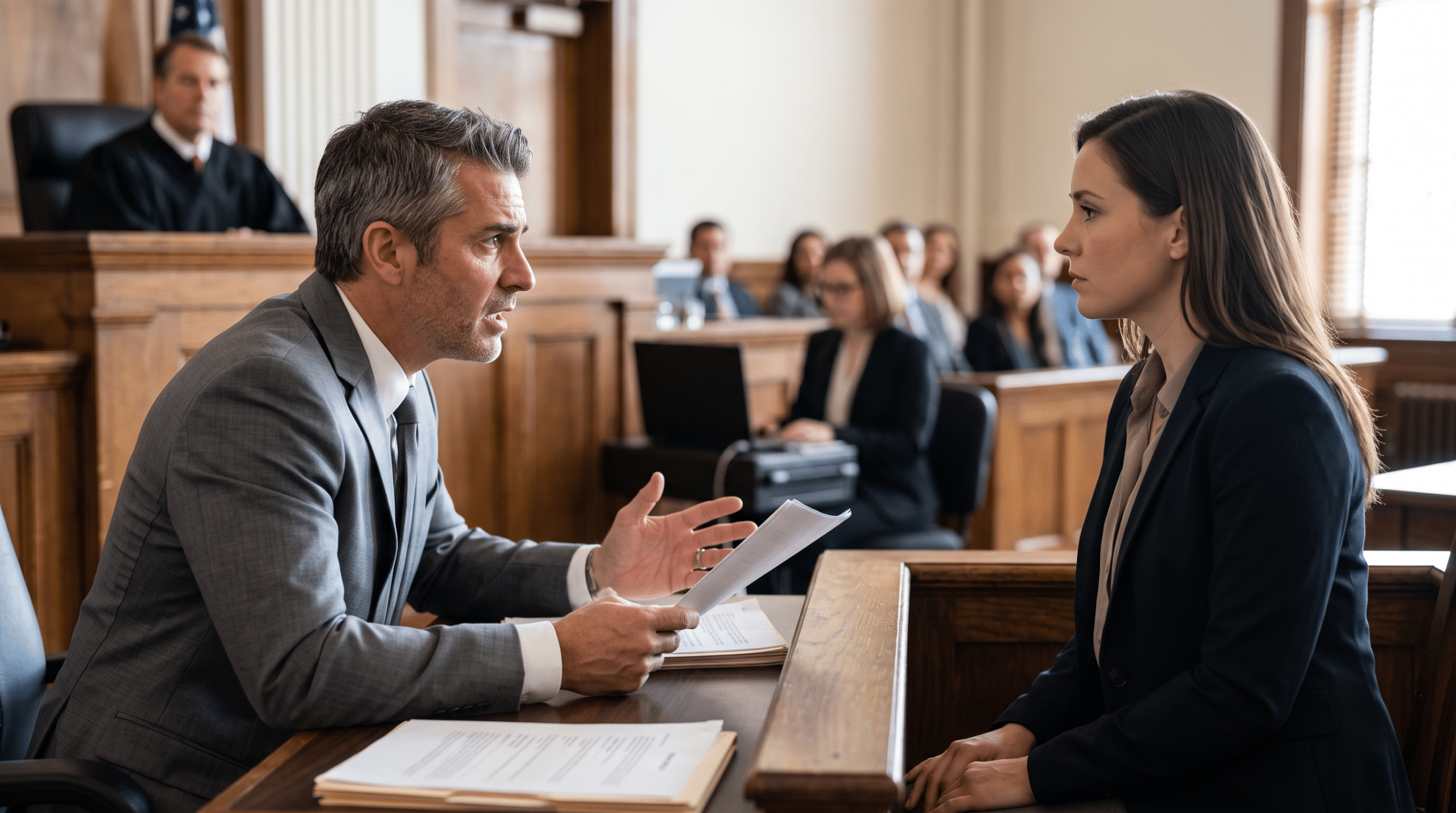
In many criminal cases, the outcome depends on what people say happened, not on clear video, scientific proof, or an unbiased record. A witness might identify a suspect, describe a threat, repeat an alleged confession, or claim to have seen something that supports the charge. Later, that same witness might change key details, admit uncertainty, or give testimony that does not match the physical evidence. These differences can affect whether prosecutors keep pursuing a case, offer a plea deal, or fail to prove guilt at trial. When we defend someone accused of a crime in Galveston, we carefully review every witness statement because just a few words can change the entire case.
Witness Statements Often Shape The Initial Criminal Charge
Police officers usually start an investigation by talking to the alleged victim, the accused, and anyone who might have seen or heard something about the incident. These interviews can happen at someone’s home, on the street, in a business, or at the police station. Officers may record statements using body cameras, patrol car equipment, written affidavits, interview room cameras, or handwritten notes.
A witness statement might give police enough reason to make an arrest, but that does not mean the statement is accurate. The officer may have only heard one side of the story. The witness could have been scared, angry, intoxicated, confused, or influenced by someone else. Sometimes, witnesses talk about things they assumed happened as if they saw them themselves.
We compare the original statement with later interviews, sworn affidavits, 911 recordings, body-camera footage, text messages, photographs, medical records, and trial testimony. A witness who appears confident in a short police report may sound uncertain when the full recording is reviewed.
The State Must Disclose Material Witness Evidence
Texas Code of Criminal Procedure Article 39.14 governs discovery in criminal cases and generally requires the prosecution to provide discoverable material in the State’s possession, custody, or control. That material can include written or recorded witness statements, police reports, offense reports, photographs, videos, and other evidence relevant to the case. The statute also requires disclosure of favorable evidence that may negate guilt, reduce punishment, or support the defense.
This disclosure obligation is important because witness credibility cannot be evaluated from the charging document alone. We need to know what each witness said, when the statement was made, how the questions were phrased, and whether the witness gave a different version elsewhere.
A short summary written by an officer may leave out hesitation, uncertainty, leading questions, or statements that help the defense. For that reason, we look for the original recording whenever one exists. The difference between the recording and the officer’s summary may become a significant issue during negotiations or trial.
Inconsistent Statements Can Damage A Witness’s Credibility
A prior inconsistent statement occurs when a witness says something before trial that conflicts with the witness’s later testimony. Texas Rule of Evidence 613 allows a party to question a witness about a prior inconsistent statement and, when the proper requirements are met, use other evidence to establish the inconsistency.
Not every difference carries the same weight. A minor disagreement about the exact time may be understandable. A major change involving who started a fight, whether a weapon was displayed, where the accused was standing, or whether the witness actually saw the event can seriously weaken the State’s case.
We examine whether the inconsistency concerns a central fact or a minor detail. We also consider whether the witness had a reason to change the story. A witness may be attempting to protect a friend, avoid personal responsibility, strengthen a civil claim, gain an advantage in a family dispute, or obtain favorable treatment in another criminal case.
When jurors hear two conflicting versions from the same person, they may question whether either version is dependable. That reasonable doubt can be decisive when the State’s case depends heavily on one witness.
Hearsay Rules Affect Which Statements Reach The Jury
A statement does not automatically become admissible simply because a witness made it. Texas Rule of Evidence 801 generally defines hearsay as an out-of-court statement offered to prove the truth of what it asserts. Rule 802 generally excludes hearsay unless a statute, evidence rule, or other legal authority permits its admission. Rules 803 and 804 contain exceptions that may apply depending on how and why the statement was made.
For example, prosecutors may argue that a statement made during an emergency qualifies as an excited utterance or present-sense impression. The defense may respond that enough time passed for reflection, that the speaker lacked personal knowledge, or that the statement was made after the immediate stress had ended.
A prior inconsistent statement may sometimes be used to challenge credibility without becoming proof that the earlier version was true. Texas courts have recognized that a statement admitted only for impeachment ordinarily serves a different purpose from evidence admitted for its truth.
These distinctions matter. A jury may hear that a witness changed the story, but the judge may instruct the jury that the earlier statement can be considered only when deciding whether the witness is believable. We identify the legal purpose of each statement and challenge attempts to place unreliable allegations before the jury under an improper theory.
Eyewitness Identification Can Be Mistaken
Eyewitness testimony can sound persuasive, especially when a witness identifies the accused with confidence. Confidence, however, does not always establish accuracy. Poor lighting, distance, stress, intoxication, limited viewing time, disguises, weapons, and suggestive identification procedures can affect perception and memory.
We examine how the identification occurred. A witness who independently recognized someone under good conditions may present a stronger identification than a witness who first saw the accused in a social media photo, a suggestive lineup, or the back of a patrol car.
We also compare the witness’s original description with the accused person’s actual appearance. Differences involving height, build, clothing, tattoos, facial hair, or other visible features may expose weaknesses in the identification. Surveillance footage, location records, receipts, vehicle data, and phone records may further show that the witness was mistaken.
Motive And Bias Can Change How A Statement Is Viewed
A witness does not have to lie about everything for bias to matter. Personal relationships can influence how people remember and describe events. Criminal cases sometimes arise from divorces, child custody disputes, romantic breakups, workplace conflicts, unpaid debts, neighborhood disputes, and disagreements among relatives.
We investigate the history between the witness and the accused. Text messages sent before or after the allegation may reveal anger, threats, demands, jealousy, or plans to use a criminal complaint for leverage. Social media posts may conflict with claims of fear or lack of contact. Financial records may show another reason for the accusation.
A witness may also expect something from the prosecution. An informant, codefendant, or person facing separate charges may hope for leniency. The jury should know about any agreement, expectation, pending charge, or personal interest that could affect the testimony.
Body-Camera And 911 Evidence Can Confirm Or Contradict A Statement
Body-camera recordings and 911 calls often preserve a witness’s words close to the time of the alleged crime. These recordings can help prosecutors when the witness gives a detailed and consistent account. They can also help the defense when the recording contradicts the police report or later testimony.
Tone, timing, and surrounding circumstances matter. A caller may sound uncertain about who committed the offense. A witness may admit not seeing the event. Another person may be heard supplying details or telling the caller what to say. Body-camera footage may show that an alleged victim was calm, aggressive, intoxicated, or physically uninjured despite later claims.
We do not evaluate a statement in isolation. We compare it with everything visible and audible in the recording. A witness’s words may lose force when the physical scene does not match the description.
A Recantation Does Not Automatically End The Case
Sometimes an alleged victim withdraws an accusation or signs an affidavit of non-prosecution. That development can help the defense, but it does not require the prosecutor to dismiss the charge. The State, not the complaining witness, controls whether a Texas criminal prosecution continues.
Prosecutors may believe the original statement and argue that the recantation resulted from pressure, fear, reconciliation, financial dependence, or family influence. They may attempt to proceed through other evidence, including 911 calls, photographs, officer observations, medical records, text messages, or statements that qualify under an evidence exception.
We examine both accounts carefully. If the original allegation was false, exaggerated, or based on a misunderstanding, the recantation may expose serious weaknesses. If the witness has changed the account several times, those contradictions may create substantial credibility problems for the State.
No defendant should contact a witness to request a recantation. Such conduct can create new allegations and make the original case more difficult to defend.
Contacting Or Influencing A Witness Can Lead To Additional Charges
Texas Penal Code § 36.05 prohibits certain efforts to coerce, influence, or interfere with a witness or prospective witness. Conduct involving threats, pressure, benefits, or attempts to influence testimony can result in a separate tampering charge. The precise offense level depends on the allegations and the underlying proceeding.
Even a message that seems harmless to the sender may be presented as an attempt to affect testimony. Contact can also violate a bond condition, protective order, emergency protection order, or no-contact directive.
We advise our clients not to investigate witnesses personally or communicate through relatives and friends. Defense investigation should be handled lawfully and carefully. A trained investigator can request an interview without pressuring the witness or creating avoidable allegations.
False Sworn Testimony Can Carry Criminal Consequences
Texas Penal Code §§ 37.02 and 37.03 address perjury and aggravated perjury. Perjury generally involves making a false statement under oath or swearing to the truth of a material statement previously made when the person knows it is false. Aggravated perjury involves a false material statement made during or in connection with an official proceeding.
The possibility of perjury does not mean every mistaken statement is criminal. Memory can be imperfect, and witnesses may honestly recall events differently. Prosecutors generally must prove that the person knowingly made a false statement, not merely that the statement was inaccurate.
Still, a proven lie about a material issue can severely damage a witness’s credibility. If a witness fabricates evidence or gives knowingly false sworn testimony, that conduct may also affect the prosecution’s willingness to rely on the person.
Independent Evidence Can Strengthen Or Defeat A Witness Account
The strongest way to test a statement is often to compare it with independent evidence. Phone location data may show where people were at a certain time. Surveillance video may reveal who entered or left a location. Medical evidence may support or conflict with an injury claim. Fingerprints, DNA, vehicle information, financial records, photographs, and digital communications may establish facts that memory cannot reliably resolve.
We look for evidence that can confirm or disprove specific parts of the story. If a witness claims that an event occurred at a precise time, records may show whether that timing was possible. If the witness claims that no communication occurred, phone records may show repeated calls or messages. If the witness describes a violent struggle, photographs of the scene may show whether there was damage or disorder.
A criminal case should not be reduced to deciding which person sounds more convincing. Objective evidence can expose a false allegation, an honest mistake, or an incomplete investigation.
FAQs About Witness Testimony In Criminal Cases
Can Someone Be Convicted In Texas Based On One Witness’s Statement?
Yes. Texas law does not impose a general rule requiring multiple witnesses before a person can be convicted. A jury may convict based on one witness if it finds the testimony credible and concludes that the State proved every element beyond a reasonable doubt. However, the lack of supporting evidence may become an important defense issue. We examine whether the witness’s account remained consistent, whether the witness could accurately perceive the event, whether there was a motive to lie, and whether physical or digital evidence supports the allegation.
What Happens If A Witness Changes The Story?
A changed account may be used to challenge the witness’s reliability. Texas Rule of Evidence 613 provides a process for questioning a witness about a prior inconsistent statement. The importance of the change depends on what was altered and why. A minor difference may have little effect, while a contradiction involving identity, consent, possession, threats, or the use of a weapon may undermine a central part of the prosecution’s case.
Can An Alleged Victim Drop A Criminal Charge In Texas?
An alleged victim can tell prosecutors that the person does not want the case to continue, but the final decision belongs to the State. A prosecutor may proceed despite an affidavit of non-prosecution or recantation. The prosecution may rely on other witnesses, recordings, photographs, medical evidence, police observations, or admissible prior statements. A recantation can still be valuable when it exposes inconsistencies or confirms that the original accusation was inaccurate.
Can We Contact A Witness In A Pending Criminal Case?
A defense team may lawfully investigate and request witness interviews, but the accused should not personally pressure, threaten, reward, or attempt to influence a witness. Direct contact may violate a court order or lead to allegations of witness tampering under Texas Penal Code § 36.05. We generally prefer to have witness contact handled by counsel or a qualified investigator so the communication is properly documented and does not create additional problems.
Are Police Reports Considered Complete Witness Statements?
Not necessarily. A police report usually reflects the officer’s summary rather than a word-for-word record of everything the witness said. It may omit uncertainty, pauses, follow-up questions, conflicting details, or statements favorable to the defense. We compare reports with body-camera footage, 911 recordings, written statements, interview videos, and later testimony. Those comparisons may reveal that the original conversation was more complicated than the report suggests.
Call Mark Diaz & Associates To Defend Your Case
Witness testimony can determine whether a criminal case ends in dismissal, a negotiated resolution, or trial. We do not accept a police report as the final account of what occurred. We examine the original recordings, compare every version of the story, investigate bias and motive, and search for independent evidence that confirms or contradicts the allegation. Careful preparation can expose mistaken identification, unreliable memory, omitted facts, and statements that changed after the investigation began.
Mark Diaz & Associates represents people accused of crimes in Galveston and throughout the city of Houston, Texas. We defend clients facing assault, domestic violence, DWI, drug, theft, sex offense, and other serious criminal allegations. Every case receives individual attention based on the evidence, the applicable law, and the client’s personal circumstances.
When you hire me, you work directly with me. My clients have my personal cell phone number because questions, emergencies, and concerns do not always happen during business hours. You will not be handed off to a junior associate or lost in a system where your case is one of dozens on a crowded docket. From arrest through resolution, I remain personally involved and accessible.
Call our Galveston criminal law attorney at Mark Diaz & Associates today by calling 409-515-6170 to schedule your free consultation.
