
Can Police Search Your Cell Phone Without A Warrant In Galveston?
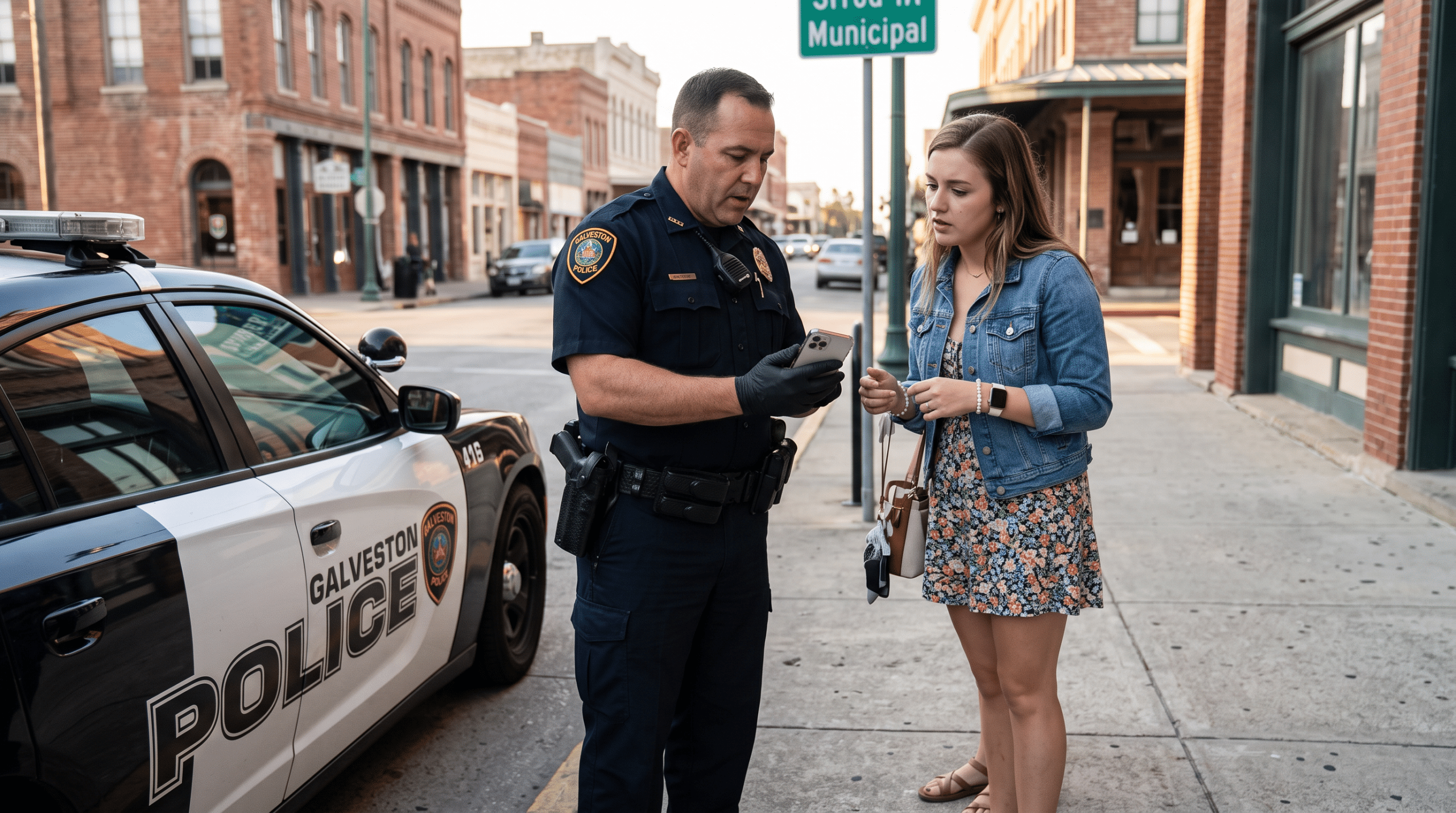
A cell phone can contain years of private information, including text messages, photographs, emails, location records, banking details, social media activity, and conversations with family members. When police take a phone during an arrest or investigation in Galveston, many people assume officers may immediately open it and review everything stored inside. That is generally not correct. The fact that police may lawfully possess or seize a phone does not automatically give them authority to search its digital contents. Both the Fourth Amendment and Texas law provide important privacy protections, although several exceptions may allow a warrantless search under specific circumstances.
Police Usually Need A Warrant To Search A Cell Phone
The general rule is that police must obtain a search warrant before examining the digital contents of a cell phone. In Riley v. California, the United States Supreme Court held that officers generally may not search a phone’s data merely because they arrested the person carrying it. The Court recognized that modern phones store immense amounts of sensitive personal information and cannot be treated like wallets, cigarette packages, or other physical objects found during an arrest.
Texas law provides an additional statutory protection. Article 18.0215 of the Texas Code of Criminal Procedure generally requires an officer to obtain a warrant before searching a cellular telephone or another wireless communications device after a lawful arrest. A warrant must be supported by probable cause and issued by a magistrate with legal authority to approve the search.
This distinction matters. Police may be permitted to take physical control of a phone during an arrest to protect evidence or prevent access to the device. That seizure does not necessarily authorize officers to open messages, review photographs, examine apps, or search browsing history.
What Police Must Show To Obtain A Search Warrant
A cell phone search warrant cannot be based on a vague belief that a phone might contain something useful. Investigators must present facts establishing probable cause that evidence connected to a particular crime will likely be found on the device.
The warrant should also describe the property to be searched and the evidence officers are authorized to seek. A warrant may permit police to examine certain categories of data, such as text messages exchanged during a defined period, photographs connected to an alleged offense, call records involving identified people, or location information relevant to the investigation.
We examine whether the supporting affidavit created a real connection between the alleged crime, the person accused, and the phone. Mere ownership of a cell phone should not, by itself, establish probable cause to search every part of the device. When a warrant is too broad, lacks sufficient factual support, or authorizes an unrestricted review of private data, we may seek to suppress the evidence obtained from the search.
An Arrest Does Not Give Police Unlimited Access
Police officers may conduct certain searches incident to a lawful arrest. Traditionally, this exception allows officers to search an arrested person and the area within that person’s immediate control. The purpose is to locate weapons, prevent escape, and keep physical evidence from being destroyed.
A phone is different because its digital contents cannot be used as a physical weapon against an officer. Once police secure the device, the arrested person usually cannot delete information or use the phone without the officers knowing. The Supreme Court therefore rejected the argument that the ordinary search-incident-to-arrest rule automatically permits a complete review of phone data.
Officers may inspect the outside of a phone, remove it from a pocket, secure it, and take steps to prevent remote access while seeking a warrant. Those actions are not the same as opening the device and reading its contents.
Consent Can Permit A Warrantless Phone Search
Police may search a phone without a warrant when the owner voluntarily gives valid consent. This is one of the most important exceptions because officers often ask for permission during traffic stops, interviews, or arrests.
Consent must be voluntary under the circumstances. A person does not have to agree simply because an officer asks. Police may phrase the request casually, such as asking to “take a quick look,” but agreeing may open the door to evidence that has nothing to do with the original investigation.
The scope of consent also matters. Permission to view one text message may not necessarily authorize officers to search every conversation, application, photograph, and stored document. Courts may consider the exact words used, what the person reasonably understood, and whether the search remained within the permission given.
You may clearly state that you do not consent to a search. You should not physically resist, argue aggressively, attempt to destroy the phone, or try to delete evidence. A clear verbal refusal preserves the issue for later legal review while avoiding additional allegations.
Police May Claim An Emergency Required Immediate Access
An urgent emergency may sometimes justify a warrantless phone search. This exception is known as exigent circumstances. It may apply when officers reasonably believe immediate access is necessary to prevent serious physical harm, locate a person in danger, stop an imminent offense, or prevent the destruction of critical evidence.
The emergency must be real and supported by specific facts. Police cannot rely on a general claim that digital evidence might disappear in every criminal case. Courts examine what officers knew at the time, how immediate the threat appeared, and whether there was enough time to request a warrant.
For example, investigators searching for a kidnapped person may argue that recent messages or location information had to be accessed at once. A claimed emergency becomes less convincing when police already control the phone, the suspected danger has passed, or officers wait a substantial period before conducting the search.
Another Person May Not Have Authority To Consent
Police sometimes obtain permission from a spouse, roommate, employer, parent, or another person who has access to the phone. Whether that consent is valid depends on whether the person had actual or apparent authority over the device and the information searched.
A spouse does not automatically have authority to authorize a complete search of the other spouse’s password-protected phone. Likewise, knowing a passcode or occasionally borrowing the device does not always create authority to expose all private communications to law enforcement.
Employer-owned devices may raise different issues. Workplace policies, ownership rights, shared access, and the employee’s reasonable expectation of privacy may affect the analysis. Each case depends on the facts, including who owned the phone, who controlled it, whether it was password protected, and how it was normally used.
Can Police Force You To Unlock Your Phone?
The legal questions surrounding passcodes, fingerprints, and facial recognition are more complicated than the basic warrant requirement. A search warrant authorizing examination of a phone does not always resolve whether police may compel a person to unlock it.
Compelling someone to disclose a memorized passcode may raise Fifth Amendment concerns because the passcode comes from the person’s mind and may communicate knowledge or control over the device. Biometric unlocking through a fingerprint or facial scan may be analyzed differently, although courts have not treated every situation in the same manner.
You should not guess about your obligations when officers demand a passcode or hold a phone near your face. Politely state that you want to speak with an attorney before answering questions or assisting with access. Do not provide false information, damage the device, or interfere physically with officers.
Police May Seek Data From A Service Provider
Not every phone investigation involves officers physically opening the device. Police may seek account records, stored communications, subscriber information, cloud backups, or location data from wireless carriers and technology companies.
Texas Code of Criminal Procedure Chapter 18B contains procedures governing law enforcement access to certain electronic customer data. Depending on the information sought, investigators may need a search warrant, court order, subpoena, or another form of legal process.
Location information receives significant constitutional protection. In Carpenter v. United States, the Supreme Court held that police generally need a warrant to obtain historical cell-site location records that provide a detailed account of a person’s movements. In 2026, the Court also held that police conduct a Fourth Amendment search when they obtain certain cell phone location-history data from a technology company, even when the request covers a limited period.
These cases show that officers cannot always avoid the warrant requirement by requesting private digital information from a third-party company instead of searching the physical phone.
A Search Warrant Does Not Authorize Every Possible Search
Even when officers have a valid warrant, the search must remain within its lawful scope. A warrant tied to suspected drug sales should not automatically become permission to inspect unrelated private records without limit. Investigators must generally search in places where the evidence described in the warrant could reasonably be found.
Digital searches present difficult questions because information may be stored in mislabeled files, cloud accounts, deleted folders, application databases, or backups. Police may use forensic software to copy and analyze substantial amounts of data. We review what the warrant authorized, what information was actually examined, and whether officers continued searching after locating the evidence described.
Evidence found outside the warrant’s scope may be challenged, although the result depends on how officers discovered it and whether another exception applies.
What Happens When Police Conduct An Illegal Search?
Evidence obtained through an unlawful phone search may become the subject of a motion to suppress. Article 38.23 of the Texas Code of Criminal Procedure generally bars the admission of evidence obtained in violation of federal law, Texas law, or the Texas Constitution.
A successful suppression motion can prevent prosecutors from using text messages, photographs, videos, location records, contact information, or other digital evidence at trial. Evidence later discovered because of the unlawful search may also be challenged as the product of the original violation.
Suppression is not automatic. Prosecutors may argue that officers acted in good-faith reliance on a warrant, that the evidence would have been discovered through lawful means, that an independent source produced it, or that the defendant lacked a protected privacy interest. These disputes often require a detailed hearing involving warrant affidavits, forensic extraction reports, officer testimony, and the timing of each investigative step.
What To Do When Police Take Your Phone
Do not physically interfere when an officer seizes your phone. State clearly that you do not consent to a search, and ask to speak with an attorney before answering questions or providing access credentials. Avoid discussing what is on the phone, who owns particular accounts, or how certain applications are used.
Do not attempt to erase files, remotely wipe the device, change account settings, or direct another person to destroy information. Those actions may create separate accusations involving tampering with evidence.
Write down what happened as soon as possible. Record which officers handled the phone, whether they asked for consent, whether you provided a passcode, what they said about having a warrant, and how long they kept the device. Those details may become important when we evaluate whether the search was lawful.
Call Mark Diaz & Associates For A Free Galveston Criminal Defense Consultation
Cell phone evidence can shape the entire direction of a criminal case. A single message, photograph, location record, or online search may be taken out of context and presented as proof of intent, identity, knowledge, or involvement in an offense. We examine how police obtained the phone, whether consent was voluntary, whether the warrant established probable cause, whether the search stayed within its authorized scope, and whether the state can authenticate the evidence it intends to use.
Mark Diaz & Associates represents people facing criminal charges in Galveston and throughout the city of Houston, Texas. We understand how digital evidence is collected and how constitutional violations can affect a prosecution. When a phone search was unlawful, we may seek to suppress the evidence and prevent the government from benefiting from an improper investigation.
When you hire me, you work directly with me. My clients have my personal cell phone number because questions, emergencies, and concerns do not always happen during business hours. You will not be handed off to a junior associate or lost in a system where your case is one of dozens on a crowded docket. From arrest through resolution, I remain personally involved and accessible.
Call our Galveston criminal defense attorney at Mark Diaz & Associates today by calling 409-515-6170 to schedule your free consultation. We defend clients in Galveston and throughout Houston, Texas, and we are prepared to review the search, the warrant, and the digital evidence being used against you.
