
Texas Castle Doctrine: When Can You Use Self-Defense In Your Home, Car, Or Business?
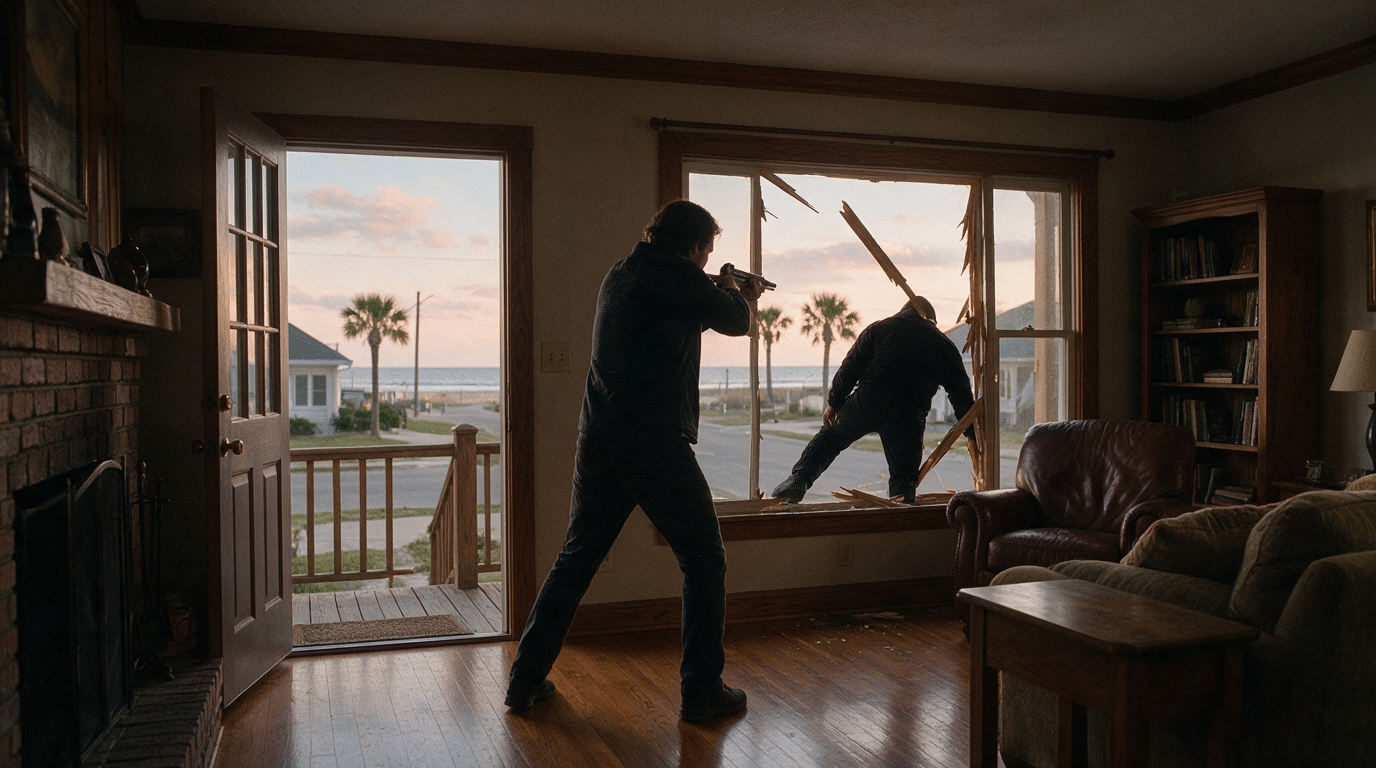
Texas law gives you important rights to protect yourself if you believe you are facing an immediate threat, but these rights have limits. This is especially true if a confrontation happens in your home, car, workplace, or business. People often call these situations “Castle Doctrine” cases, but Texas does not have a single law with that name. Instead, the rules come from several parts of Chapter 9 of the Texas Penal Code, which covers self-defense, deadly force, and protecting property.
If you use a gun or other deadly force in Galveston County, police and prosecutors will look closely at whether you met these legal requirements. It’s important to know where Texas law draws the line, because even if you thought you were protecting yourself, you could still face serious charges if prosecutors think your actions were not legally justified.
How The Texas Castle Doctrine Works
The Texas Castle Doctrine is really a set of legal protections that can help support a self-defense claim in certain situations. Texas Penal Code § 9.31 allows someone to use force if they reasonably believe it is needed right away to protect themselves from another person’s unlawful force. Texas Penal Code § 9.32 deals with when deadly force can be used, which is a much more serious matter. Deadly force needs a higher level of justification because it is force that can cause death or serious injury.
Section 9.32 sets up an important rule for cases involving someone’s home, car, or workplace when they are inside. If the legal requirements are met, the law may assume that the person’s belief that deadly force was needed right away was reasonable. This rule can be very important if prosecutors later question what the person was thinking during a quick and stressful situation. However, not every shooting inside a home or car is automatically legal.
When Can You Use Force To Protect Yourself In Your Home?
A person’s home receives significant protection under Texas law. Texas Penal Code § 9.32 provides a presumption of reasonableness in certain circumstances when a person against whom deadly force is used unlawfully and forcibly enters, or attempts to enter, the defendant’s occupied habitation. The protection can also apply when another person is unlawfully and forcibly removing, or attempting to remove, the defendant from the habitation.
The terms “unlawfully” and “with force” are important. A homeowner cannot shoot someone just because they are on the property, arguing at the door, or refusing to leave right away. What happened during the entry, how the other person acted, whether weapons were shown, what threats were made, and whether the homeowner truly felt in immediate danger can all be key evidence.
For example, if a stranger kicks in a locked front door at night, that is very different from an invited guest who just argues inside the home. Texas Penal Code § 9.31 makes it clear that you cannot use force just because someone is being verbally aggressive. This difference is why we look closely at what happened right before force was used.
Deadly Force Requires More Than Fear Or Suspicion
Fear alone does not automatically justify deadly force. Under Texas Penal Code § 9.32, deadly force may be justified when the person would be justified in using force under § 9.31 and reasonably believes deadly force is immediately necessary to protect against another person’s use or attempted use of unlawful deadly force. Deadly force can also be justified when reasonably believed immediately necessary to prevent certain serious violent crimes, including aggravated kidnapping, murder, sexual assault, aggravated sexual assault, robbery, or aggravated robbery.
The word “immediately” is especially important. Self-defense generally concerns a threat that is occurring or about to occur, not revenge for something that already happened. If an intruder breaks into a home, attacks someone, and then clearly leaves while presenting no continuing threat, using deadly force later may raise very different legal questions.
These cases often turn on seconds. Surveillance cameras, home security recordings, 911 calls, physical evidence, witness accounts, gunshot trajectories, injuries, and statements made immediately afterward can change how prosecutors interpret what happened.
Does The Castle Doctrine Apply Inside Your Car?
Yes, Texas Penal Code § 9.32 expressly includes an occupied vehicle within circumstances that can trigger the statutory presumption of reasonableness. The law can therefore apply when someone unlawfully and forcibly enters or attempts to enter an occupied vehicle, or unlawfully and forcibly attempts to remove someone from that vehicle.
This can become particularly important in carjacking situations, violent road-rage encounters, or confrontations in parking lots. If someone smashes a driver’s window and attempts to drag the driver from the vehicle, for example, the factual circumstances may support a much stronger claim of justified deadly force than a situation where two motorists simply exchange insults through closed windows.
The vehicle must be occupied for this particular statutory presumption to apply. That distinction matters. Protecting yourself while sitting inside your vehicle is legally different from using deadly force merely to protect an unattended automobile from damage or theft.
Does The Castle Doctrine Protect You At Your Business Or Workplace?
Texas law also expressly refers to a person’s place of business or employment. Under Texas Penal Code § 9.32, the presumption of reasonableness may apply when someone unlawfully and forcibly enters or attempts to enter the person’s occupied place of business or employment, assuming the other statutory conditions are satisfied.
This can become important for store owners, employees, restaurant workers, office employees, contractors, and others confronted with violent criminal conduct while working. A convenience store employee confronted by an armed robber may face circumstances that support the use of deadly force. A business owner involved in a heated disagreement with a customer ordinarily presents an entirely different situation.
The law does not transform every business dispute into self-defense simply because the confrontation occurs on property you own or operate. We have to examine what the other person was doing, whether unlawful force or deadly force was being threatened, and whether the response was reasonable under the circumstances.
Texas Does Not Always Require You To Retreat
Texas’s no-duty-to-retreat law is closely associated with the Castle Doctrine, but the two concepts should not be confused. Under Texas Penal Code §§ 9.31 and 9.32, a person who has a right to be present at the location where force is used, who did not provoke the person against whom force is used, and who is not engaged in criminal activity at that time other than a Class C misdemeanor traffic violation generally is not required to retreat before using justified force or deadly force.
This rule is not just for your home. Depending on the situation, it can also apply in other places where you have a legal right to be.
However, having no duty to retreat does not mean you are allowed to shoot whenever you want. You still have to meet the rules for self-defense. The main question is whether the amount of force you used was legally justified for the threat you faced.
Provoking The Confrontation Can Damage A Self-Defense Claim
Texas law does not allow someone to deliberately create a violent confrontation and then automatically claim self-defense when the other person responds. Texas Penal Code § 9.31 contains limitations involving provocation, and § 9.32’s presumption of reasonableness requires that the person using deadly force not have provoked the person against whom the force was used.
This issue often leads to disagreements. Prosecutors might look at text messages, phone calls, security videos, social media posts, witness statements, and past interactions to see if the defendant was trying to start a fight.
But not every argument takes away your right to self-defense. Arguments can get out of hand quickly, and things can change fast. We look at everything that happened, not just who started talking or got angry first.
Protecting Property Is Different From Protecting A Person
Texas provides relatively broad protections for property, but deadly force to protect property is governed by specific requirements. Texas Penal Code § 9.41 permits force in certain circumstances to prevent or terminate another person’s trespass or unlawful interference with property. Texas Penal Code § 9.42 addresses when deadly force may be used to protect land or tangible movable property.
Section 9.42 can authorize deadly force under limited circumstances involving crimes such as arson, burglary, robbery, aggravated robbery, nighttime theft, or nighttime criminal mischief. Additional statutory requirements must also be satisfied, including circumstances concerning whether the property could be protected or recovered by other means or whether using less than deadly force would expose someone to a substantial risk of death or serious bodily injury.
This is an area where misunderstandings can become dangerous. Someone stealing property does not automatically give the property owner unrestricted authority to use deadly force. The precise crime, timing, risk, and available alternatives may all matter.
You Can Still Be Arrested Even If You Believe The Shooting Was Justified
A lawful self-defense claim does not necessarily prevent an arrest or criminal investigation. Police arriving at a shooting scene usually have incomplete information. Officers may separate witnesses, secure weapons, examine injuries, collect video evidence, photograph the scene, and obtain statements before deciding what happened.
A person who used force may eventually rely on self-defense and still initially face questioning, detention, or arrest. If someone dies, the consequences become even more serious because investigators may examine whether charges such as murder or manslaughter are appropriate before the defense has had a full opportunity to present its evidence.
We do not assume that explaining everything immediately to police will automatically resolve the situation. Statements made during the stress of a violent encounter can become important evidence, particularly if investigators later believe portions of the account are inconsistent with physical evidence.
What Happens If An Innocent Person Is Injured?
Even when the use of force against an aggressor is justified, Texas law addresses injuries caused to innocent third parties. Texas Penal Code § 9.05 provides that justification for force or deadly force does not eliminate responsibility if a person recklessly injures or kills an innocent third person.
Consider a shooting in a crowded store, apartment complex, parking lot, or public area. A person may have had a legitimate reason to defend against an attacker, but the way the weapon was used may create an additional issue if a bystander was recklessly endangered or struck.
This is another reason Castle Doctrine cases are highly fact-dependent. The law considers not only why force was used, but also how that force was used.
Evidence Can Determine Whether Self-Defense Is Believed
A self-defense case often depends on evidence that shows what happened during the confrontation. We might look at security videos, doorbell cameras, car cameras, 911 calls, photos, injuries, weapons, fingerprints, phone records, text messages, witness statements, medical reports, and the layout of the scene.
In a home invasion case, damage to a locked door or broken window may help establish forcible entry. In a vehicle case, shattered glass or damage to the door may support an account of an attempted carjacking. At a business, surveillance footage may show whether an alleged robber displayed a weapon or moved toward an employee.
We also examine evidence that prosecutors may use against the self-defense claim. Statements made before or after the confrontation, prior threats, conflicting accounts, and evidence suggesting that the defendant pursued someone who was leaving can become significant.
A Castle Doctrine Claim Must Be Built Around The Actual Facts
Texas law gives people substantial rights to protect themselves, their families, and others from violent threats. Those protections are strongest when the facts fall squarely within the requirements of Texas Penal Code §§ 9.31 and 9.32. They are not automatic simply because a confrontation occurred inside a home, car, or business.
When we defend someone who used force, we focus on the circumstances as they appeared to that person at the moment the decision had to be made. We also work to preserve evidence before recordings disappear, witnesses become difficult to locate, or the prosecution develops a version of events without hearing the complete defense.
Call Mark Diaz & Associates If You Are Facing Criminal Charges After Acting In Self-Defense
If you used force to protect yourself, your family, your home, your vehicle, or your business, being investigated afterward can be frightening and frustrating. You may believe the facts clearly show that you were defending yourself while police or prosecutors see the incident differently. These cases demand careful attention to Texas Penal Code § 9.31, § 9.32, § 9.41, and § 9.42, along with a detailed investigation of what actually happened before force was used.
At Mark Diaz & Associates, we defend people facing serious criminal accusations in Galveston and throughout Houston, Texas. When self-defense is an issue, we examine the prosecution’s evidence and work to identify the facts supporting your right to protect yourself. A case involving a firearm, serious injury, or death can carry life-changing consequences, so we believe the defense should begin as early as possible.
When you hire me, you work directly with me. My clients have my personal cell phone number because questions, emergencies, and concerns don’t always happen during business hours. You won’t be handed off to a junior associate or lost in a system where your case is one of dozens on a crowded docket. From arrest through resolution, I remain personally involved and accessible.
If you are under investigation or have been arrested after using force in your home, vehicle, workplace, or business, Contact our Galveston criminal law lawyers at Mark Diaz & Associates by calling 409-515-6170 to receive your free consultation. We represent clients in Galveston and throughout Houston, Texas, and we are prepared to protect your rights when your freedom and future are at stake.
