
How Does Cross-Examination Expose Problems With Witness Testimony?
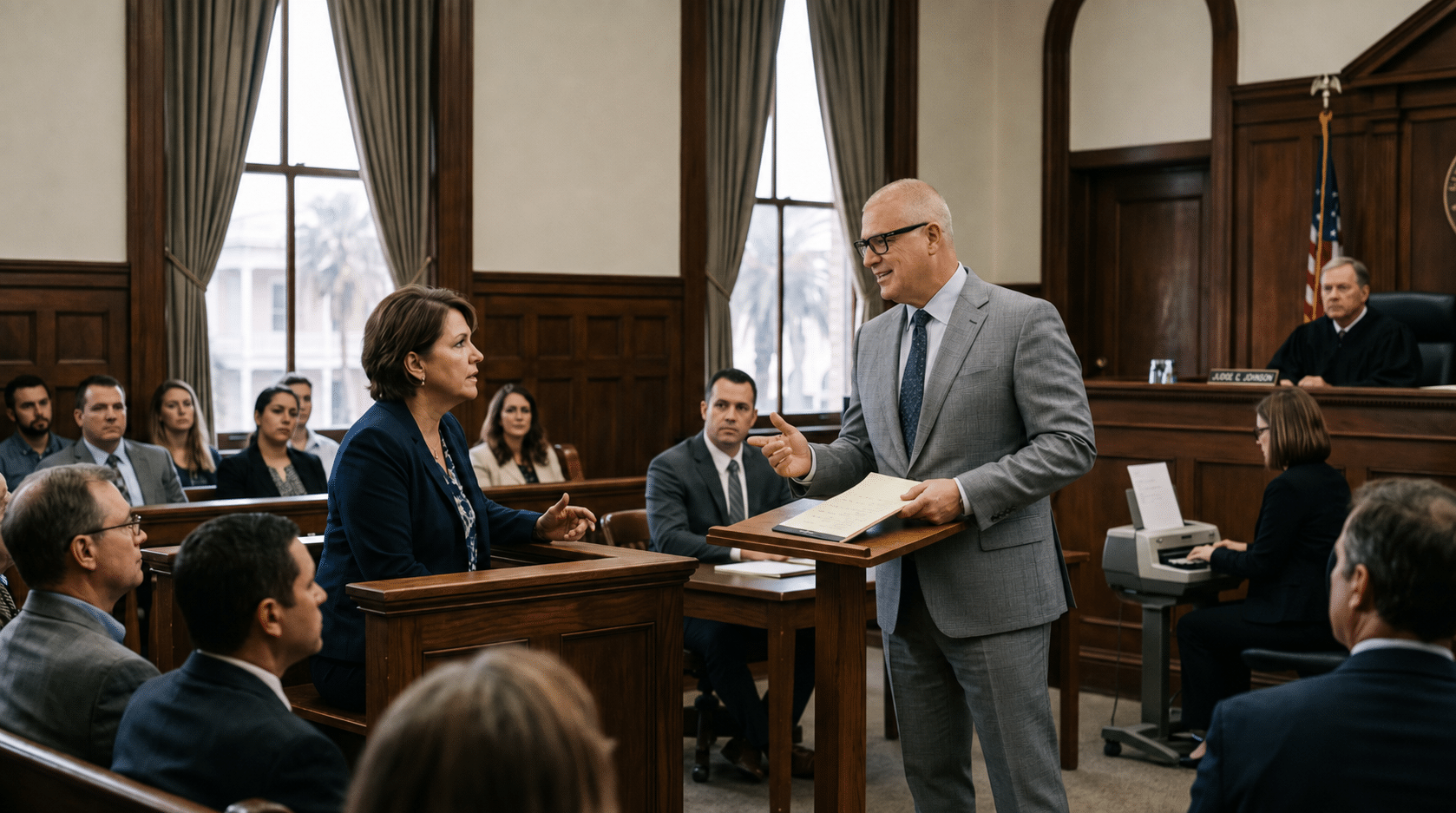
Witness testimony is often crucial in Galveston County criminal cases, but just because someone takes the stand does not mean everything they say is correct. Witnesses might misunderstand what they saw, remember things wrong, change their story over time, exaggerate, leave out key facts, or have personal reasons for describing events a certain way. Sometimes, whether someone is convicted or acquitted depends on whether jurors believe one person’s version of events. Cross-examination lets us test that version instead of just accepting it. When we defend someone in Galveston, we look at what a witness says now, what they said before, what the physical evidence shows, what the witness could actually see or hear, and whether there is any reason to doubt their credibility.
Cross-Examination Is A Fundamental Part Of A Criminal Defense
Texas law gives criminal defendants important rights when the government presents witnesses against them. Texas Code of Criminal Procedure Article 1.05 recognizes the accused’s right to be confronted with the witnesses against them, and Article 1.25 likewise provides that a defendant at trial generally has the right to confront the witnesses presented by the state. These protections work alongside the Sixth Amendment right of confrontation, which includes the opportunity to challenge prosecution witnesses through cross-examination.
The Texas Rules of Evidence allow for broad cross-examination. Texas Rule of Evidence 611(b) lets us question a witness about any relevant topic, including their credibility. Rule 611(c) also usually allows leading questions during cross-examination. This is important because leading questions help us focus the witness on specific facts, rather than letting them repeat a long story that might not have been challenged earlier.
Cross-examination is not just about making a witness look bad. The real goal is to see if their testimony holds up under close questioning. A witness might seem sure of themselves when answering general questions from the prosecutor, but they can become much less certain when asked about exact times, distances, past statements, recordings, photos, or other evidence. A person may have spoken with police at the scene, given a written statement, testified before a grand jury, participated in a recorded interview, or sent text messages describing what happened. If the witness’s courtroom testimony differs materially from an earlier account, that inconsistency can become important.
Texas Rule of Evidence 613 addresses prior inconsistent statements. Before using a prior inconsistent statement for impeachment, the examining party must provide the witness with enough information about the statement, including its substance and the circumstances under which it was made, and the witness must have an opportunity to explain or deny it. If the witness does not unequivocally admit making the inconsistent statement, extrinsic evidence may sometimes be used subject to the rule’s requirements.
Not every difference in a witness’s story means they are not believable. People forget small details all the time. What really matters is if the change is about something important. For example, if a witness first told police the defendant was across the room but later says the defendant was right next to the alleged victim, that could change how the jury sees their testimony. The same goes for adding important facts months later that were not in the first report.
Cross-Examination Can Test Whether The Witness Actually Saw Or Heard What Happened
A witness cannot reliably describe something the witness had no meaningful opportunity to perceive. Texas Rule of Evidence 602 generally requires evidence sufficient to support a finding that a witness has personal knowledge of the matter about which the witness is testifying.
This is why the details around what a witness saw or heard matter. During cross-examination, we might ask where the witness was standing, how far away the event was, if the lighting was bad, if anything blocked their view, if things happened quickly, or if alcohol, drugs, fear, stress, or distractions affected what they noticed. A witness might say, “I saw him holding the weapon,” but that may seem less convincing if the jury learns it was dark, the witness was far away, and several people were between them and the accused.
Identification testimony can be particularly important in assault, robbery, burglary, homicide, and other cases where the identity of the accused is disputed. Cross-examination may expose uncertainty that was not apparent during the prosecutor’s questioning.
Memory Problems Can Become Important At Trial
Human memory is not like a video recording. A witness might truly believe their story is correct but still be wrong about important details. Things like time passing, talking about the event with others, hearing from other witnesses, seeing news reports or photos, and suggestions from investigators can all change how someone remembers what happened.
Cross-examination lets us ask when the witness first talked about the event, how much time passed before they gave a statement, if they discussed the incident with others, and if later versions of their story include new details. These questions can show that a witness’s confidence grew over time, instead of being certain right after the event.
Texas Rule of Evidence 612 also addresses writings used to refresh a witness’s memory. In criminal cases, an adverse party has certain rights involving a writing used by a witness to refresh memory before or while testifying, including the opportunity in appropriate circumstances to inspect the material and cross-examine the witness about it.
Bias And Personal Motives Can Affect Testimony
A witness’s credibility is not just about whether they are lying on purpose. Sometimes, a witness has a personal reason for describing events a certain way. They might be angry with the accused, involved in a custody fight, trying to avoid getting in trouble themselves, hoping for a lighter sentence, protecting someone else, or trying to help their own legal case.
Texas Rule of Evidence 613(b) specifically addresses questioning concerning a witness’s bias or interest. The rule permits examination designed to expose circumstances or statements tending to demonstrate bias, subject to the required foundation and opportunity for the witness to explain or deny the matter.
This is especially important if a prosecution witness is also facing charges. If a witness thinks helping the prosecution might help their own case, jurors should know about that possible motive. The same idea applies in cases like domestic violence, assault, sexual offenses, or family disputes where there was already a disagreement before the criminal accusation.
Criminal Convictions May Sometimes Be Used To Challenge Credibility
A witness’s criminal history is not automatically admissible merely because the witness has been convicted of a crime. Texas Rule of Evidence 609 establishes specific requirements for using certain convictions to attack credibility. In general, the conviction must involve a felony or a crime involving moral turpitude, and the court must conduct the required balancing of probative value and prejudicial effect. Additional restrictions apply when more than ten years have passed since the conviction or release from confinement, whichever occurred later.
Rule 608 also places limits on attacks based purely on alleged conduct. Texas generally does not allow a party to introduce specific acts of misconduct simply to suggest that a witness has an untruthful character, apart from qualifying convictions under Rule 609 and other independently admissible grounds. At the same time, Rule 607 provides that any party, including the party that called the witness, may attack that witness’s credibility.
These rules show why it is important to handle witness impeachment carefully. There is a big difference between proving a valid reason to question a witness and just accusing them of lying.
Physical And Digital Evidence Can Contradict A Witness
Some of the strongest cross-examination comes from evidence that does not depend on anyone’s memory. Surveillance footage, body-camera video, photographs, text messages, call records, GPS information, social media communications, medical records, receipts, and forensic evidence may contradict part or all of a witness’s account.
Suppose a witness claims that an argument happened at 9:00 p.m., but time-stamped video shows the defendant somewhere else at that moment. Or a witness claims there was no contact with the accused before an alleged assault, while text messages show an extended conversation arranging a meeting. These contradictions may become far more persuasive than simply asking a jury to choose one person’s word over another.
We look for these conflicts early because effective cross-examination often begins long before trial. It requires comparing statements with documents, recordings, timelines, and objective evidence until we understand exactly where the accounts diverge.
Cross-Examination Can Expose Assumptions Presented As Facts
Witnesses sometimes testify about conclusions rather than direct observations. Someone may say that the defendant “looked drunk,” “was angry,” “wanted to hurt him,” or “must have known” about drugs found in a vehicle. Those statements can sound factual even though they may be interpretations rather than observations.
Cross-examination can separate what a witness actually perceived from what the witness assumed. We may ask what specific conduct led to that conclusion, whether other explanations existed, and whether the witness actually heard or observed anything demonstrating intent. This distinction can be critical because many Texas criminal charges require the state to prove a particular mental state, such as intentionally, knowingly, or recklessly committing an act.
A witness’s assumption cannot automatically fill a gap in the prosecution’s proof. By separating observations from conclusions, we can help jurors evaluate what the evidence truly establishes.
A Witness Does Not Have To Be Proven A Liar To Create Reasonable Doubt
A common misunderstanding is that the defense must prove that a prosecution witness deliberately lied. That is not the standard. The prosecution carries the burden of proving the charged offense beyond a reasonable doubt.
Sometimes cross-examination shows that a witness may be mistaken rather than dishonest. A person may have been frightened, distracted, intoxicated, confused, or relying on an incomplete memory. Those weaknesses can still matter because the jury must decide whether the state’s evidence is sufficiently reliable to meet its burden.
The most important question may not be whether a witness intentionally fabricated an accusation. It may be whether the testimony is reliable enough to support a criminal conviction when all of the inconsistencies and conflicting evidence are considered together.
Preparing Cross-Examination Begins Before The Witness Takes The Stand
Strong cross-examination usually results from preparation rather than courtroom improvisation. We review police reports, recorded interviews, body-camera footage, witness statements, photographs, digital records, forensic reports, prior testimony, and other discovery before deciding how a witness should be questioned.
Texas Rule of Evidence 615 can also require production of certain witness statements after direct examination when the applicable conditions are satisfied and the statement has not previously been produced. The rule covers specified written, recorded, and grand jury statements and provides remedies when an ordered statement is not produced.
The goal is to understand the witness’s account better than the witness expects. When we know exactly what was previously said and how it compares with the evidence, we can ask focused questions that reveal weaknesses without allowing the testimony to become unnecessarily confusing.
Speak With Mark Diaz & Associates About Witness Testimony In Your Criminal Case
When witness testimony plays a central role in a criminal accusation, we do not assume that the version written in a police report will survive careful examination. We study prior statements, recordings, timelines, physical evidence, digital communications, and the circumstances under which each witness observed the alleged event. A witness who sounds certain in a report may have serious credibility or reliability problems once the entire record is examined.
At Mark Diaz & Associates, we defend people facing criminal charges in Galveston and throughout the city of Houston, Texas. We understand how much can depend on a witness’s credibility, particularly in assault, domestic violence, homicide, sex crime, drug, theft, and other cases where the prosecution relies heavily on testimony.
When you hire me, you work directly with me. My clients have my personal cell phone number because questions, emergencies, and concerns do not always happen during business hours. You will not be handed off to a junior associate or lost in a system where your case is one of dozens on a crowded docket. From arrest through resolution, I remain personally involved and accessible.
If you have been arrested or accused of a crime and witness testimony is being used against you, contact our Galveston criminal defense lawyers at Mark Diaz & Associates by calling 409-515-6170 to receive your free consultation. We represent clients in Galveston and throughout Houston, Texas, and we can examine the testimony and evidence to determine where the prosecution’s case may be challenged.
