
Can Text Messages Be Used To Prove A Federal Conspiracy?
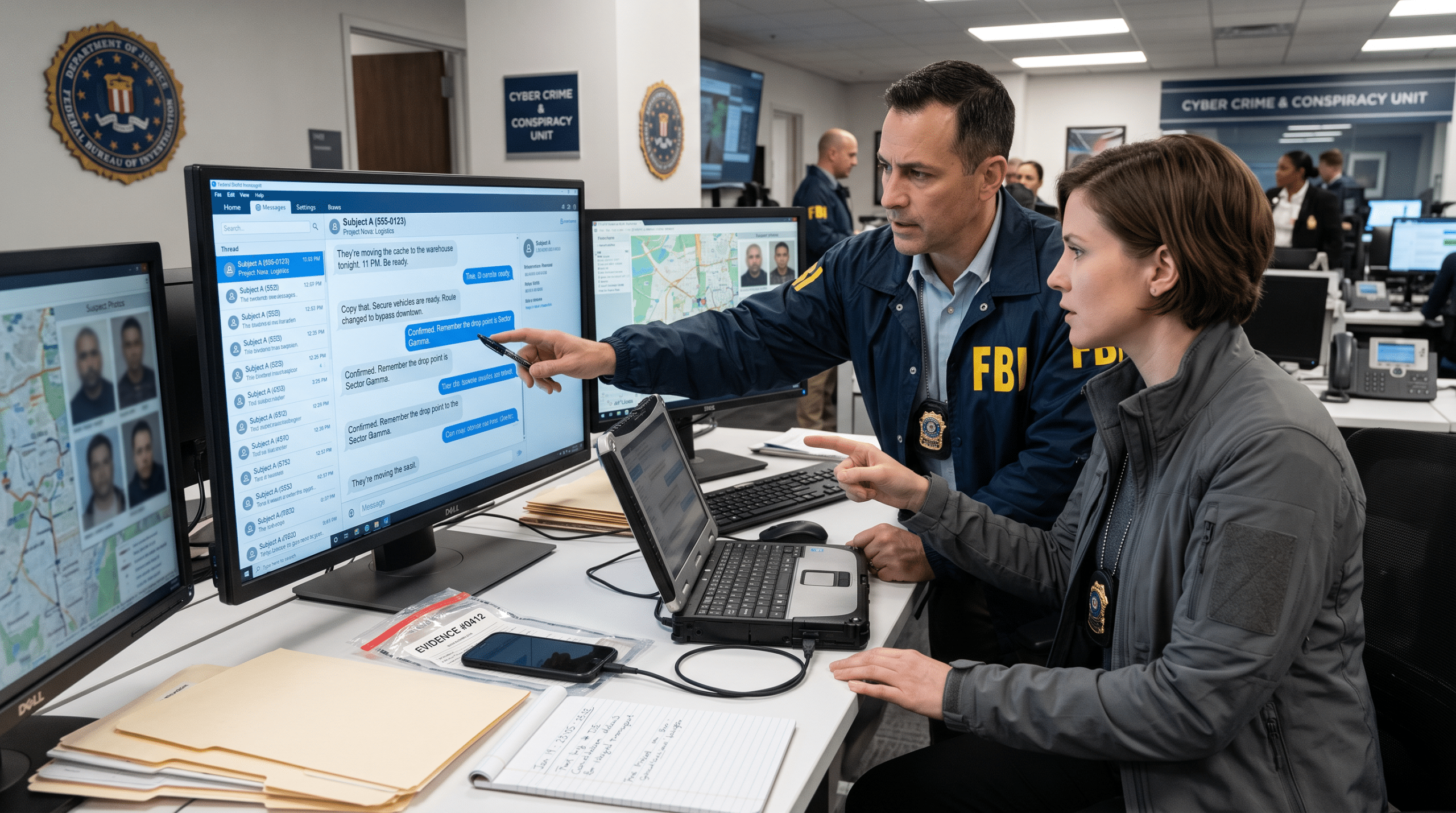
Text messages often play a key role in federal conspiracy cases. Investigators may use them to suggest that people agreed to work together, knew each other’s actions, divided tasks, discussed money, set up meetings, or tried to hide what they were doing. The government does not need a message that clearly says, “We agree to commit this crime.” Instead, prosecutors might use many messages along with financial records, surveillance, phone logs, witness statements, photos, location data, and other evidence to argue that these communications show a criminal agreement.
However, a message that looks incriminating by itself can mean something different when you see the whole conversation. When we defend someone accused of conspiracy in Galveston, we look at what each message says, who sent it, when it was sent, what happened before and after, and whether the government can truly connect those messages to our client.
What Federal Prosecutors Must Prove In A Conspiracy Case
Because a federal conspiracy is a federal offense, federal law controls the elements prosecutors must establish. One of the principal federal conspiracy laws is 18 U.S.C. § 371. The statute applies when two or more people conspire to commit an offense against the United States or to defraud the United States and at least one conspirator commits an act to further the conspiracy. A conviction under § 371 can carry imprisonment of up to five years, subject to an exception when the underlying offense is only a misdemeanor.
The agreement is often the central issue. Federal prosecutors are not limited to written contracts, recorded conversations, or explicit statements admitting that a conspiracy existed. They may attempt to prove an agreement through circumstances and conduct. That is one reason text messages can become so important. A series of messages discussing meetings, deliveries, payments, account information, coded language, or instructions can be presented as evidence that the participants were working toward the same illegal objective.
The government must still prove the required elements beyond a reasonable doubt. Association with someone involved in a crime is not automatically a conspiracy. Friendship, family relationships, business dealings, frequent communications, or presence around people committing crimes do not by themselves establish that a person knowingly joined a criminal agreement.
Drug Conspiracies Are Governed By Different Federal Rules
Federal drug conspiracy cases deserve particular attention because 21 U.S.C. § 846 differs from the general conspiracy statute. Section 846 provides that a person who conspires to commit a federal controlled-substance offense is subject to the penalties prescribed for the underlying drug offense.
Unlike a prosecution under 18 U.S.C. § 371, the government does not have to prove an overt act to obtain a conviction under § 846. The United States Supreme Court confirmed this distinction in United States v. Shabani. The Court held that § 846 does not contain an overt-act requirement. This makes evidence concerning the alleged agreement itself especially significant.
Text conversations about amounts, prices, delivery spots, customers, transportation, or payments can become key evidence in a federal drug conspiracy case. The defense needs to check if the government is interpreting these messages fairly or if they are giving a criminal meaning to messages that are unclear, incomplete, sarcastic, misunderstood, or actually about something legal.
Prosecutors May Build A Conspiracy Case From An Entire Message History
A federal investigation rarely depends upon a single isolated text. Investigators may obtain months or even years of communications and attempt to reconstruct relationships between the people under investigation.
Prosecutors might say that frequent messages show an ongoing relationship. They may compare texts with bank deposits, car movements, hotel bookings, shipments, surveillance, controlled buys, or witness statements. A message like “It’s ready” means little by itself. But if they can link it to a drug delivery or money transfer that happened soon after, they may argue that the context explains its meaning.
Context can help both sides. Sometimes, we find messages that prosecutors left out, misunderstood, or put in the wrong order. Earlier or later messages might show that a conversation was actually about something legal. A nickname could refer to someone else, and dates might not match the prosecution’s story. That’s why digital evidence should be reviewed as a whole, not just as selected screenshots.
The Government Must Connect The Messages To The Person Accused
Finding incriminating words on a device does not automatically establish who wrote them.
Federal Rule of Evidence 901 requires evidence sufficient to support a finding that an item is what the party offering it claims it to be. Authentication can be based on witness knowledge, distinctive characteristics, internal patterns, surrounding circumstances, and other forms of evidence.
Authentication can become a significant defense issue when several people had access to a phone, account, computer, or messaging application. Phones may be shared. Passwords can be known by other people. Accounts can remain logged in on multiple devices. Contact names can be misleading. Messages can also be forwarded, copied, selectively captured, or presented without surrounding conversations.
We look closely at the evidence the government uses to claim our client wrote a certain message. This might include phone extraction reports, device records, subscriber details, witness statements, photos, timestamps, location data, login records, or the messages themselves.
A Co-Conspirator’s Messages May Also Be Used Against You
Federal conspiracy cases create another significant evidentiary issue. A defendant may face not only his or her own statements but also statements made by alleged co-conspirators.
Federal Rule of Evidence 801(d)(2)(E) provides that a statement offered against a party may qualify as a non-hearsay opposing-party statement when it was made by the party’s co-conspirator during and in furtherance of the conspiracy. The rule also makes clear that the statement itself cannot, standing alone, establish the existence of the conspiracy or someone’s participation in it.
This can have enormous consequences. One person’s texts about arranging a transaction, warning others about law enforcement, coordinating transportation, collecting money, or assigning responsibilities may potentially be offered against additional defendants if the legal requirements are satisfied.
Not every message from an alleged co-conspirator automatically qualifies. Whether the conspiracy existed, whether the defendant participated in it, when the statement was made, and whether the statement actually furthered the alleged conspiracy can all become contested questions.
Police Usually Need A Warrant To Search The Contents Of A Cell Phone
The way investigators obtained text messages can be just as important as what those messages say.
The Fourth Amendment protects against unreasonable searches and seizures. In Riley v. California, the United States Supreme Court held that police generally must obtain a warrant before searching digital information stored on a cell phone seized during an arrest. The Court recognized that modern phones contain an extraordinary amount of private information and cannot be treated like ordinary physical objects found in someone’s pocket.
A federal defense lawyer should therefore examine the search warrant, supporting affidavit, scope of the authorized search, devices covered by the warrant, dates involved, and manner in which investigators collected and analyzed the information. A warrant does not necessarily authorize investigators to search every piece of digital information without limitation.
Suppression issues are highly fact-specific. If digital evidence was obtained through an unconstitutional search, the defense may have grounds to ask the federal court to suppress it. That can materially alter a conspiracy prosecution when messages form a major part of the government’s case.
Deleted Text Messages May Still Become Evidence
Deleting a message does not necessarily mean it disappears.
Investigators may recover data from a device, synchronized computer, cloud account, recipient’s phone, backup, or other digital source. A message deleted from one person’s device may remain available on the device belonging to the person who received it.
This is one reason we strongly advise clients not to begin deleting messages, accounts, photographs, or other records after learning about a federal investigation. Attempts to destroy evidence can create additional problems and may be interpreted as evidence of consciousness of guilt. Once a person knows or reasonably suspects that federal authorities are investigating, making sudden changes to electronic records without legal advice can make an already serious situation worse.
Texas Conspiracy Law May Also Matter In A Related State Case
A person being investigated in Galveston can potentially face issues under both federal and Texas law depending on the conduct involved. Texas Penal Code § 15.02 defines criminal conspiracy differently from federal drug conspiracy law. Under the Texas statute, a person commits criminal conspiracy when, with the intent that a felony be committed, the person agrees with one or more others that they will engage in conduct constituting the offense and the person or another conspirator performs an overt act pursuing that agreement. Texas law also expressly permits the agreement to be inferred from the participants’ acts.
That distinction matters. A prosecution filed in the United States District Court is governed by federal law and federal evidentiary rules. A Texas prosecution based on related conduct may implicate Texas Penal Code § 15.02 and Texas evidentiary and constitutional protections.
Texas Code of Criminal Procedure Article 38.23 also generally prohibits the admission against an accused in a Texas criminal trial of evidence obtained in violation of the Texas or United States Constitution or laws. The applicable suppression rules depend on which sovereign is prosecuting the case and how the evidence was obtained.
Text Messages Do Not Automatically Prove Criminal Intent
One of the most important issues in a conspiracy defense is the difference between communication and criminal agreement.
People discuss questionable conduct without agreeing to participate in it. Someone may receive information without approving it. A person may provide an innocent service without knowing why another person wants it. Friends may use slang, jokes, sarcasm, shorthand, or language that appears suspicious when investigators read it months later.
The government may attempt to transform ordinary communications into evidence of criminal intent by interpreting them through the theory of its investigation. We examine whether that interpretation is actually supported by the complete record.
A prosecution still has the burden of proving knowing participation in the alleged conspiracy. Receiving a suspicious message is different from agreeing to commit a federal crime. Knowing someone involved in illegal activity is different from becoming a participant. Those distinctions can determine whether a person is convicted or acquitted.
Federal Conspiracy Charges Can Carry Severe Consequences
A federal conspiracy charge should never be treated as a minor accusation simply because prosecutors claim the planned offense was committed primarily by someone else.
Under 18 U.S.C. § 371, the general conspiracy offense can carry up to five years of imprisonment. Federal drug conspiracies under 21 U.S.C. § 846 can be considerably more serious because the statute subjects a defendant to the penalties associated with the underlying controlled-substance offense.
The investigation may also expand beyond the original conspiracy allegation. Phones and messages can lead investigators to financial accounts, additional individuals, locations, transactions, photographs, and other evidence. For that reason, we begin evaluating digital evidence as early as possible rather than waiting until the government presents its interpretation at trial.
FAQs About Text Messages And Federal Conspiracy Charges
Can Federal Prosecutors Convict Me Of Conspiracy Based Only On Text Messages?
Text messages can provide powerful evidence, but the government must still prove every element of the charged conspiracy beyond a reasonable doubt. The importance of the texts depends on what they say, whether they can be authenticated, who sent them, and whether other evidence supports the government’s interpretation. Vague communications may not establish a criminal agreement at all. Even highly suspicious messages should be considered alongside the full conversation and surrounding circumstances. We look closely at whether prosecutors are using the communications to prove an actual agreement or simply relying on association and assumptions.
Can My Friend’s Text Messages Be Used Against Me In A Federal Conspiracy Case?
Potentially. Federal Rule of Evidence 801(d)(2)(E) permits certain statements made by a co-conspirator during and in furtherance of a conspiracy to be offered against another participant. That does not mean every message written by someone prosecutors call a co-conspirator is automatically admissible. The government must satisfy the rule’s requirements, including issues involving the existence of the conspiracy and the defendant’s participation. Messages written after the conspiracy ended or statements that merely describe past events can raise different evidentiary questions.
What If Someone Else Used My Phone To Send The Messages?
Authorship can become a central defense issue. Federal Rule of Evidence 901 requires the government to authenticate evidence before it is admitted. A phone belonging to you does not necessarily prove that you personally wrote every message found on it. We may examine who had access to the phone, passwords, linked devices, timestamps, login information, location evidence, writing patterns, surrounding communications, and forensic extraction data. The government’s ability to connect a particular message to a particular person should never simply be assumed.
Can Police Read My Text Messages After Arresting Me?
An arrest does not generally give officers unrestricted authority to search through the digital contents of your phone. The Supreme Court’s decision in Riley v. California generally requires law enforcement to obtain a warrant before searching digital information contained on a seized cell phone, although recognized exceptions to the warrant requirement may apply in particular circumstances. When we review a federal case involving phone evidence, we examine how the device was seized, whether a warrant existed, what the warrant authorized, and whether investigators remained within its lawful scope.
What Should I Do If Federal Agents Are Asking About My Text Messages?
Do not assume that explaining the messages will make the problem disappear. Federal agents may already possess communications from your phone, another person’s device, or other sources, and they may be comparing your answers against evidence you have not seen. Statements made during an interview can become additional evidence in the investigation. Before discussing messages, relationships, transactions, or alleged co-conspirators with investigators, you should understand the investigation and your legal position. Speaking with counsel before agreeing to an interview can prevent an attempt to explain one issue from creating several new ones.
Call Mark Diaz & Associates About A Federal Conspiracy Investigation In Galveston
If federal investigators are examining your text messages, phone records, financial activity, or communications with other people, the investigation may already be much further along than you realize. At Mark Diaz & Associates, we represent people facing serious criminal investigations and charges in Galveston and throughout the City of Houston, Texas. We examine the government’s conspiracy theory, the evidence it claims establishes an agreement, the legality of digital searches, the authentication of electronic communications, and whether individual messages actually prove knowing participation in a federal crime.
When you hire me, you work directly with me. My clients have my personal cell phone number because questions, emergencies, and concerns do not always happen during business hours. You will not be handed off to a junior associate or lost in a system where your case is one of dozens on a crowded docket. From arrest through resolution, I remain personally involved and accessible.
If you have been contacted by federal agents, served with a search warrant or subpoena, or charged with participating in a federal conspiracy, contact our Galveston federal criminal attorney at Mark Diaz & Associates by calling 409-515-6170 to schedule your free consultation. The firm represents clients in Galveston and throughout Houston, Texas, in serious state and federal criminal matters
