
Federal Charges For Mailing Or Shipping Controlled Substances
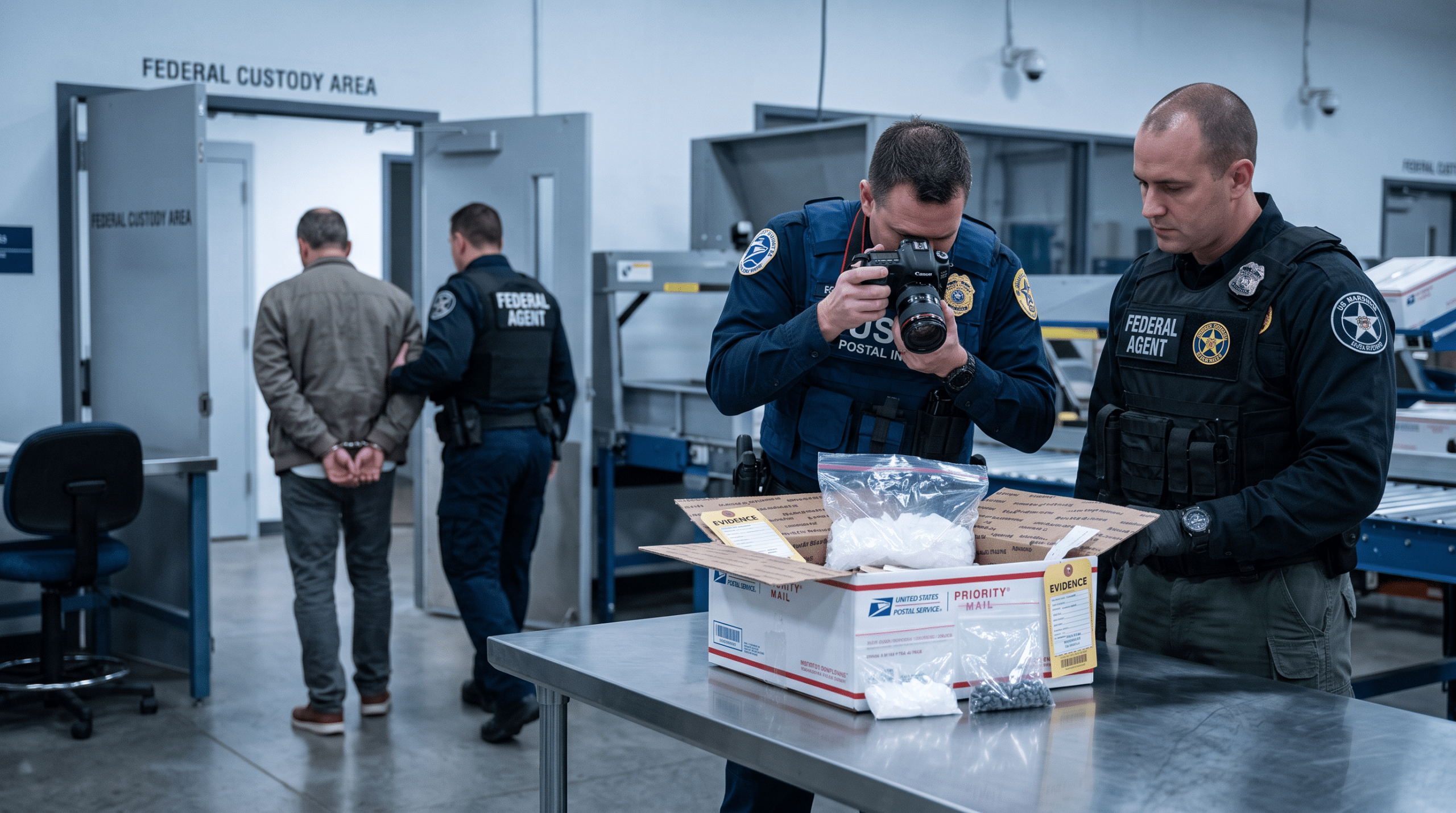
Mailing or shipping controlled substances can quickly turn a drug investigation into a serious federal case. Prosecutors often use package records, surveillance footage, text messages, payment details, tracking data, fingerprints, intercepted messages, and evidence from homes or vehicles to link someone to a shipment. However, just because drugs are found in a package, the government still has to prove that the person knew about them and intended to break the law.
Simply receiving a suspicious package does not mean the recipient knew what was inside. When we defend clients in Galveston or Houston accused of mailing, shipping, or receiving controlled substances, we look at what was found in the package, how the investigation unfolded, and whether the government can truly connect our client to any illegal distribution.
Why Mailing Drugs Can Become A Federal Criminal Case
Drug cases involving the United States mail or interstate shipping frequently attract federal attention because federal agencies have jurisdiction over federal drug crimes and offenses involving the postal system. Investigations may involve the United States Postal Inspection Service, Drug Enforcement Administration, Homeland Security Investigations, FBI, or other federal and local law enforcement agencies.
The central federal drug statute in many of these prosecutions is 21 U.S.C. § 841. Section 841 makes it unlawful to knowingly or intentionally manufacture, distribute, dispense, or possess with intent to distribute a controlled substance. The statute also prohibits similar conduct involving counterfeit controlled substances.
Shipping drugs can therefore be treated as evidence of distribution rather than simple possession. Prosecutors may argue that placing drugs in a package, preparing the parcel for delivery, arranging payment, or directing where it should be sent demonstrates an intent to transfer the controlled substance to another person.
That distinction matters because federal distribution charges can carry far more severe penalties than an allegation involving possession for personal use.
Federal Penalties Depend Heavily On The Drug And Quantity
The possible sentence under 21 U.S.C. § 841(b) depends heavily on the type and quantity of the controlled substance involved. Federal law establishes different sentencing ranges for substances such as fentanyl, methamphetamine, cocaine, heroin, marijuana, and other scheduled drugs. Certain quantities trigger mandatory minimum prison sentences.
For example, § 841 contains sentencing provisions under which qualifying quantities of certain drugs can expose a defendant to a minimum of five years and as much as 40 years in federal prison. Larger quantities can produce even higher mandatory minimums. Federal law also provides substantially increased consequences when serious bodily injury or death results from the use of a distributed substance.
Because of this, the government’s lab analysis is very important. We look at what substance was tested, its reported weight, how the sample was handled, the lab paperwork, and whether the government can legally link the whole amount to our client.
Quantity can also become disputed in cases involving multiple packages or alleged conspiracies. Prosecutors sometimes attempt to attribute shipments made by other people to a defendant. Whether those quantities can properly be included may have a major impact on sentencing exposure.
Using The Mail Can Create Additional Federal Allegations
Federal law separately addresses the use of communication facilities to facilitate felony drug crimes. Under 21 U.S.C. § 843(b), it is unlawful to knowingly or intentionally use a communication facility to commit, cause, or facilitate a federal felony drug offense. Significantly, Congress specifically included the mail within the statutory definition of a communication facility.
This provision can matter when prosecutors allege that a person used the mail as part of a broader drug-distribution operation. Phones, electronic communications, and other forms of communication may also become part of the prosecution’s theory.
Each alleged use of a communication facility may create additional legal issues. As a result, prosecutors may review far more than the package itself. They may seek search warrants for phones, cloud accounts, messaging applications, email accounts, shipping accounts, or payment services in an effort to reconstruct the events surrounding the shipment.
Shipping Through A Private Carrier Does Not Prevent Federal Charges
Some people believe federal law applies only when drugs are mailed through the United States Postal Service. That is not correct.
A person accused of using UPS, FedEx, another commercial carrier, or a courier service may still face prosecution under 21 U.S.C. § 841 for distributing or possessing a controlled substance with intent to distribute. The government’s theory does not necessarily depend on which carrier physically transported the package. Instead, prosecutors may focus on the alleged possession, transfer, distribution, conspiracy, and intent behind the shipment.
Interstate transportation and other facts can also increase federal investigative interest. A package traveling from Texas to another state, arriving in Galveston from another state, or moving across international borders can bring multiple federal agencies into the investigation.
The use of a private carrier therefore should never be viewed as protection against federal prosecution.
Drug Conspiracy Charges Can Expand The Case
Mailing and shipping investigations frequently become conspiracy cases.
Under 21 U.S.C. § 846, a person who attempts or conspires to commit a federal Controlled Substances Act offense is subject to the same penalties prescribed for the underlying offense.
A conspiracy allegation can dramatically expand a federal case because prosecutors do not necessarily have to claim that every defendant personally handled every package. They may argue that several people knowingly agreed to participate in a drug-distribution operation and performed different roles.
One person might allegedly obtain the drugs, another package them, another purchase postage, another provide an address, and another receive the package. The defense question is whether the government can prove that the accused knowingly joined the alleged criminal agreement rather than merely associating with someone involved.
Federal investigators often attempt to prove such relationships through messages, telephone records, financial transfers, package tracking, travel records, photographs, and witness testimony.
Controlled Deliveries Can Lead To Arrests And Search Warrants
A controlled delivery occurs when law enforcement intercepts a suspicious package and allows the delivery process to continue while officers monitor what happens.
Investigators may watch the delivery location to determine who retrieves the parcel. They may use surveillance teams, undercover officers, cooperating witnesses, tracking technology, or other investigative techniques. In some cases, authorities may attempt to use the delivery as part of the factual basis for obtaining a search warrant.
Receiving or touching a package, however, does not by itself answer every legal question. Prosecutors still need evidence establishing the required mental state.
We examine whether our client knew the package contained drugs, whether the package was actually addressed to the accused, whether other people had access to the delivery location, and what occurred before and after the package arrived. These details can become central to the defense.
Knowledge And Intent Are Critical Issues
Federal prosecutors generally must prove more than the fact that drugs were found inside a box.
Section 841 applies to conduct committed knowingly or intentionally. That mental-state requirement can create important defense issues. A person may receive a package for someone else, live at an address where multiple people receive deliveries, or have no knowledge that another individual used the person’s address.
Prosecutors may try to establish knowledge through circumstantial evidence. They may point to messages about the shipment, unusually frequent packages, cash payments, false names, repeated tracking checks, attempts to avoid surveillance, or statements made after law enforcement contact.
We analyze each piece of evidence separately rather than accepting the government’s interpretation. Conduct that investigators describe as suspicious may have an innocent explanation, and an address appearing on a package does not necessarily identify the person who arranged or owned the shipment.
Search And Seizure Issues Can Affect The Evidence
Package investigations can raise significant Fourth Amendment issues.
Law enforcement may seek warrants to search residences, vehicles, phones, computers, storage locations, or financial accounts after intercepting a shipment. Whether a warrant was supported by probable cause and whether officers remained within the authorized scope of the search can become important defense questions.
We examine the warrant application, supporting affidavit, investigative chronology, and execution of the search. If constitutional violations occurred, the defense may seek suppression of unlawfully obtained evidence.
A suppression ruling can have a major effect on a federal prosecution because package cases often depend heavily on evidence discovered during follow-up searches.
Texas Drug Charges May Also Apply
Although these cases are often federal, the same conduct can also implicate the Texas Controlled Substances Act.
Under Texas Health and Safety Code § 481.112, a person commits an offense involving Penalty Group 1 substances by knowingly manufacturing, delivering, or possessing with intent to deliver the controlled substance. The severity of the offense increases according to the quantity involved.
Texas law defines “deliver” broadly. Under Texas Health and Safety Code § 481.002, delivery includes an actual or constructive transfer to another person and can include an offer to sell a controlled substance.
Possession may also create independent exposure. Texas Health and Safety Code § 481.115, for example, criminalizes knowing or intentional possession of substances in Penalty Group 1 or 1-B unless the possession is otherwise authorized by law. Penalties escalate substantially as the weight increases.
The existence of state law does not mean a defendant will automatically be prosecuted in both systems. It does mean we need to examine potential exposure under both Texas and federal law whenever local and federal agencies participate in the investigation.
Fentanyl Shipments Can Carry Especially Serious Consequences
Fentanyl cases receive intense attention from federal and Texas prosecutors because very small quantities can create severe sentencing exposure.
Texas classifies fentanyl and related substances separately within Penalty Group 1-B, and Texas Health and Safety Code § 481.1123 imposes escalating felony penalties for manufacturing, delivering, or possessing with intent to deliver those substances. Even less than one gram can constitute a felony offense under the statute.
Federal law also contains quantity-based sentencing provisions for fentanyl under § 841. Depending on the amount and circumstances, mandatory minimum sentences may apply.
When an intercepted package allegedly contains fentanyl, determining the laboratory-tested substance and weight is therefore critical.
Statements To Federal Agents Can Become Evidence
One of the most damaging moments in a federal drug investigation can occur when agents approach a suspect before an arrest and ask questions.
Agents may already possess substantial evidence before making contact. They may know about packages, tracking numbers, phone records, cooperating witnesses, or surveillance that the person being questioned has never seen.
Trying to explain the situation without understanding the government’s evidence can create additional problems. Statements may later be compared with records or witness accounts and presented as evidence that the person lied or attempted to conceal involvement.
When federal investigators want to discuss a controlled-substance shipment, obtaining legal advice before making substantive statements can help protect important rights.
Frequently Asked Questions About Federal Drug Shipping Charges
Can I Face Federal Charges Just For Receiving A Package Containing Drugs?
Receiving a package containing drugs does not automatically prove a federal crime. The government generally needs evidence connecting you to knowing or intentional criminal conduct. If someone used your address without your knowledge or sent something you did not know contained a controlled substance, those facts can be extremely important. Prosecutors may attempt to prove knowledge using text messages, tracking history, financial transactions, surveillance, prior deliveries, or statements. We examine whether the government’s evidence actually establishes that the recipient knew what the package contained and intended to participate in unlawful possession or distribution.
What Happens If Police Intercept A Package Before It Reaches Me?
Law enforcement may seize the parcel, obtain a warrant concerning its contents, or arrange a controlled delivery. Officers may continue monitoring the package to identify who retrieves it and what happens afterward. The interception can also become the basis for additional surveillance or applications for warrants to search a residence, vehicle, or electronic device. The fact that investigators intercept a package does not establish who placed the drugs inside it or who knowingly owned them. Those remain factual and legal issues that must be proven.
Is Mailing Drugs Through USPS More Serious Than Using FedEx Or UPS?
The use of USPS can create postal and federal investigative issues, but using a private shipping service does not prevent a federal drug prosecution. Section 841 focuses on unlawful manufacture, distribution, dispensing, and possession with intent to distribute controlled substances. Federal investigators can therefore pursue a case involving drugs shipped through USPS, FedEx, UPS, or another carrier. The specific charges depend on how the government believes the shipment was arranged and what additional evidence investigators uncover.
Can I Be Charged In A Drug Conspiracy If I Never Mailed The Package?
Yes, depending on the evidence. Under 21 U.S.C. § 846, conspiracy liability can arise when prosecutors prove participation in an agreement to commit a federal drug offense. The government may contend that different participants performed different functions within the alleged operation. Prosecutors may therefore attempt to hold someone responsible even if that person never personally packaged or mailed drugs. The defense often focuses on whether the accused knowingly joined the criminal agreement or was merely associated with people who allegedly committed crimes.
What Should I Do If Federal Agents Contact Me About A Drug Package?
You should take the investigation seriously before discussing the facts of the case. Federal agents may already have records, surveillance, intercepted communications, or statements from other people when they approach you. What appears to be an informal conversation can later become important evidence. We can evaluate the investigation, determine what agency is involved, examine the allegations, and advise you regarding communications with investigators. Early representation can also help preserve evidence and address search-warrant, seizure, and constitutional issues before important opportunities are lost.
Call Mark Diaz & Associates About Federal Drug Charges In Galveston
Federal allegations involving mailed or shipped controlled substances can expose a person to years in prison, substantial fines, supervised release, and a permanent federal criminal record. These cases may involve federal drug-distribution statutes, conspiracy allegations, intercepted packages, controlled deliveries, electronic communications, search warrants, and potential Texas drug charges. We examine how the shipment was discovered, who allegedly controlled it, what the government claims our client knew, and whether investigators followed constitutional requirements when collecting evidence.
At Mark Diaz & Associates, we defend people facing serious criminal allegations in Galveston and throughout Houston, Texas. When federal investigators or prosecutors become involved, we understand that the defense must begin with a careful examination of the government’s evidence rather than assumptions based simply on what was found inside a package.
When you hire me, you work directly with me. My clients have my personal cell phone number because questions, emergencies, and concerns don’t always happen during business hours. You won’t be handed off to a junior associate or lost in a system where your case is one of dozens on a crowded docket. From arrest through resolution, I remain personally involved and accessible.
If you have been contacted by federal agents, learned that a package was intercepted, received a federal target letter, or been arrested in connection with controlled substances sent through the mail or a shipping carrier, call our Galveston drug crime attorneys at Mark Diaz & Associates today at 409-515-6170 to schedule your free consultation. We represent clients in Galveston and throughout the entire Houston area and can begin evaluating the allegations, evidence, and possible defense issues affecting your case
