
Can Police Search Your Cell Phone Without A Search Warrant In Texas?
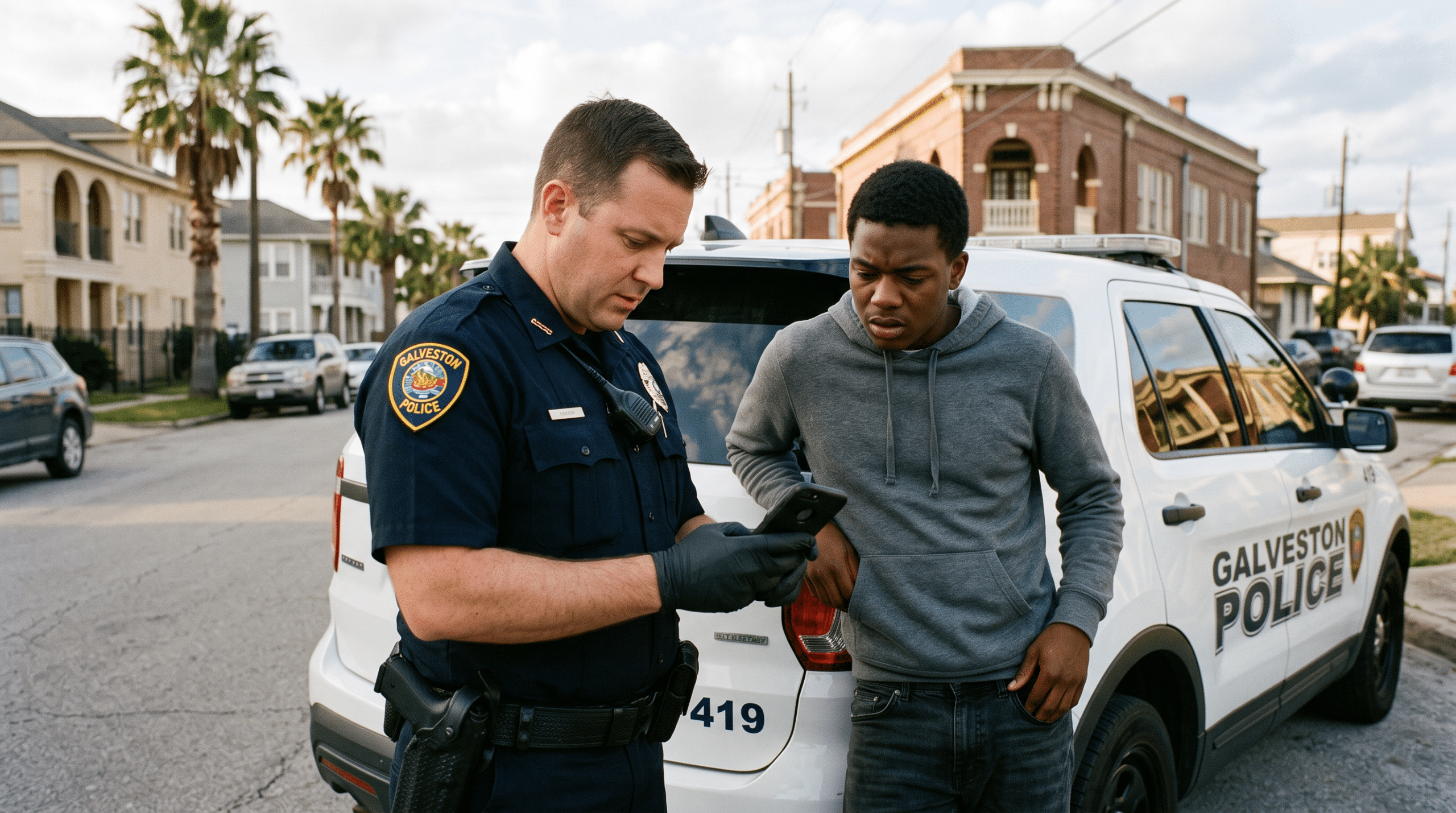
Your cell phone may contain years of private information, including text messages, photographs, emails, banking records, location history, social media activity, videos, contacts, and internet searches. For that reason, police in Galveston County generally cannot treat a cell phone like an ordinary object found in your pocket after an arrest. Texas law provides specific protections for the digital contents of cellular phones, and federal constitutional law also limits warrantless searches of these devices.
An officer may be able to physically seize your phone in certain situations, but taking possession of the phone is not necessarily the same as having legal authority to search through its contents. If police searched your phone without a valid warrant or recognized legal exception, we may be able to challenge the search and seek suppression of evidence obtained from it.
Texas Law Generally Requires A Search Warrant To Search A Cell Phone
Texas has a statute that directly addresses police searches of cell phones and other wireless devices. Article 18.0215(a) of the Texas Code of Criminal Procedure states that a peace officer may not search a person’s cellular telephone or other wireless communications device pursuant to a lawful arrest without first obtaining a warrant under the statute.
That rule is important because an arrest by itself does not give police unlimited authority to inspect everything stored on your phone. In older criminal cases involving physical objects, officers were often permitted to conduct fairly broad searches of items found on an arrested person under the search-incident-to-arrest doctrine. Modern cell phones are different because of the enormous quantity and personal nature of the information they contain.
Texas Code of Criminal Procedure Article 18.02(a)(14) also specifically recognizes a cellular telephone or other wireless communications device as something that may be searched or seized under a warrant, subject to Article 18.0215. A recent Texas appellate decision reiterated that Article 18.0215 governs warrants for searching these devices.
The United States Supreme Court Protects The Digital Contents Of Cell Phones
The U.S. Supreme Court addressed this issue directly in Riley v. California, 573 U.S. 373 (2014). Police had arrested Riley and searched his cell phone without a warrant. Information discovered on the phone was later used against him in connection with additional criminal charges.
The Supreme Court held that police generally must obtain a warrant before searching digital information stored on a cell phone seized during an arrest. The Court recognized that modern phones differ significantly from physical objects traditionally found on an arrested person because they can hold enormous amounts of highly personal information.
That ruling applies in Texas because the Fourth Amendment protects people against unreasonable searches and seizures by government authorities. As a practical matter, an officer usually cannot justify opening your messages, photographs, applications, call history, or other digital files simply by saying that the phone was found when you were arrested.
Police May Take Your Phone Without Immediately Having Authority To Search It
One of the most important distinctions we explain to clients involves the difference between seizing a phone and searching its contents.
Suppose police arrest someone during a drug investigation and find a phone in that person’s pocket. Officers may have grounds to take physical possession of the phone and preserve it as potential evidence. That does not automatically permit them to begin reading text messages or searching applications.
Law enforcement may instead secure the device while investigators apply for a warrant. Once a valid warrant is issued, officers may conduct the search authorized by that warrant.
This distinction matters in drug trafficking, sexual offense, homicide, theft, conspiracy, fraud, and federal criminal investigations because prosecutors frequently rely on digital communications to establish relationships between suspects, alleged intent, knowledge, transactions, or planning.
What Police Must Establish To Obtain A Cell Phone Search Warrant
Texas Code of Criminal Procedure Article 18.0215 sets requirements for an application seeking a warrant to search a cell phone. The application must identify the device, identify its owner or possessor, provide required jurisdictional information, and state facts establishing probable cause that criminal activity has occurred, is occurring, or will occur and that searching the device is likely to produce evidence related to that activity.
Probable cause cannot lawfully rest on a mere suspicion that something interesting might be found on someone’s phone. Investigators are expected to present facts connecting the device and the suspected criminal offense.
That connection can become a major issue in a suppression hearing. We may examine the affidavit submitted to the judge, the factual basis asserted by the officer, the particular device identified, and the scope of the warrant.
A warrant does not necessarily give investigators permission to conduct an unlimited exploration of every piece of information ever stored on a device. The warrant and supporting affidavit can therefore become critical documents when we evaluate whether the search remained within lawful limits.
Consent Can Allow Police To Search A Phone Without A Warrant
A warrant is not required in every situation. One major exception involves consent.
Article 18.0215(d) of the Texas Code of Criminal Procedure permits a warrantless cell phone search when the owner or possessor consents to it. The statute also recognizes certain other limited circumstances, including situations involving a reported stolen device, particular circumstances involving a felony fugitive, and an immediate life-threatening situation.
Consent creates serious issues in many criminal cases. An officer may ask, “Can I take a look at your phone?” or “Can you unlock this for me?” Someone who believes that cooperation will prove innocence may agree before understanding the possible consequences.
Once consent is given, prosecutors may argue that the resulting search was lawful. We therefore examine exactly what was said, whether consent was voluntary, what permission was actually given, and whether officers went beyond the scope of that permission.
Agreeing to one limited action does not necessarily amount to permission for investigators to inspect every application, account, photograph, and message on a phone.
An Emergency May Create An Exception To The Warrant Requirement
Texas law also recognizes limited emergency situations in which officers may search without first obtaining a warrant. Article 18.0215(d) allows a warrantless search where an officer reasonably believes an immediate life-threatening situation exists under the applicable statutory definition.
This exception is not supposed to become a general excuse for bypassing the warrant process. The circumstances must support the claimed emergency.
For example, investigators may argue that immediate access to a phone was necessary to locate a kidnapping victim, identify a person believed to be in imminent danger, or respond to another genuine threat to human life. Whether those circumstances actually justified the search may become a disputed legal issue.
We examine what officers knew at the time of the search rather than simply accepting an after-the-fact assertion that an emergency existed.
Police May Search For Text Messages, Photos, Location Data, And Other Digital Evidence
When police obtain lawful access to a phone, the amount of information available can be substantial. A device may contain text conversations, call records, photographs, videos, social media communications, internet history, notes, emails, contacts, stored documents, application data, and information showing where a person may have traveled.
Digital evidence can play a major role in criminal prosecutions. In a drug case, prosecutors may claim text messages show drug transactions. In a sex crime investigation, they may rely on messages, photographs, dating application communications, or internet activity. In an assault or homicide investigation, investigators may look for threats, communications between participants, photographs, or location-related evidence.
The meaning of digital evidence is not always as straightforward as prosecutors suggest. Messages can be taken out of context. Multiple people may have access to a device or account. Dates, metadata, deleted material, cloud synchronization, and application records may require careful forensic analysis.
Our job is not simply to accept the prosecution’s interpretation of what was found. We examine how the evidence was obtained and what it actually proves.
A Search Warrant Does Not Automatically Make Every Search Lawful
The existence of a warrant does not end our review.
We may challenge whether probable cause supported the warrant in the first place. We may also examine whether the warrant sufficiently identified the phone, whether the proper judge issued it, and whether investigators exceeded the authority granted by the warrant.
Texas courts continue to address disputes involving the statutory requirements for cell phone searches. In a 2025 Texas appellate decision, for example, the court examined issues involving the authority to issue a warrant and compliance with Article 18.0215 during a forensic examination of a phone.
Small procedural details can become important when digital evidence forms a significant part of the state’s case.
Illegally Obtained Cell Phone Evidence May Be Suppressed
Texas provides a powerful statutory remedy for unlawfully obtained evidence.
Article 38.23(a) of the Texas Code of Criminal Procedure generally prohibits the use of evidence obtained by an officer or another person in violation of the Texas or United States Constitution or applicable law. The statute also contains an objective good-faith exception involving officers who rely on a warrant issued by a neutral magistrate based on probable cause.
If police unlawfully searched a phone, we may file a motion asking the court to suppress evidence obtained through that search. The specific remedy depends on the facts and legal issues involved.
Suppression can have a major effect on a criminal prosecution. If text messages, photographs, videos, or other digital records form a significant part of the state’s case, excluding that evidence may substantially weaken the prosecution’s ability to prove its allegations.
Do Not Assume You Must Unlock Your Phone Because Police Ask
An officer asking to see your phone does not necessarily mean the officer has lawful authority to search it without your permission.
There is an important difference between cooperating with lawful police instructions and voluntarily consenting to a search. When someone is nervous, surrounded by officers, or worried about being arrested, it can be difficult to recognize that difference.
We generally want to know exactly what happened before the phone was searched. Did officers obtain a warrant? Did they claim the owner consented? Was the phone already unlocked? Did someone provide a passcode? Was biometric access involved? Did officers claim an emergency existed?
Those details may determine whether the digital evidence was lawfully obtained.
Call Mark Diaz & To Defense Your Case In Galveston County
Cell phones have become some of the most important sources of evidence in modern criminal investigations. Police and prosecutors may use messages, photographs, videos, location information, social media communications, application data, and other digital records to build a case. That does not mean law enforcement can ignore constitutional protections or Texas search warrant requirements. When digital evidence is involved, we examine how the phone was obtained, whether officers had a valid warrant, whether probable cause supported that warrant, whether anyone actually consented to the search, and whether investigators stayed within the lawful scope of their authority.
At Mark Diaz & Associates, we represent people facing criminal charges and investigations in Galveston and throughout the city of Houston, Texas. If police searched your cell phone, we can review the circumstances surrounding that search and determine whether there may be grounds to challenge the evidence.
When you hire me, you work directly with me. My clients have my personal cell phone number because questions, emergencies, and concerns don’t always happen during business hours. You won’t be handed off to a junior associate or lost in a system where your case is one of dozens on a crowded docket. From arrest through resolution, I remain personally involved and accessible.
If you have been arrested, are under investigation, or believe police unlawfully searched your cell phone, contact our Galveston criminal law attorneys at Mark Diaz & Associates by calling 409-515-6170 to receive your free consultation. We represent clients in Galveston and throughout Houston, Texas, and we can evaluate the search, the evidence, and the criminal charges you are facing.
