
What Happens If You Are Accused Of Transporting Drugs Across State Lines?
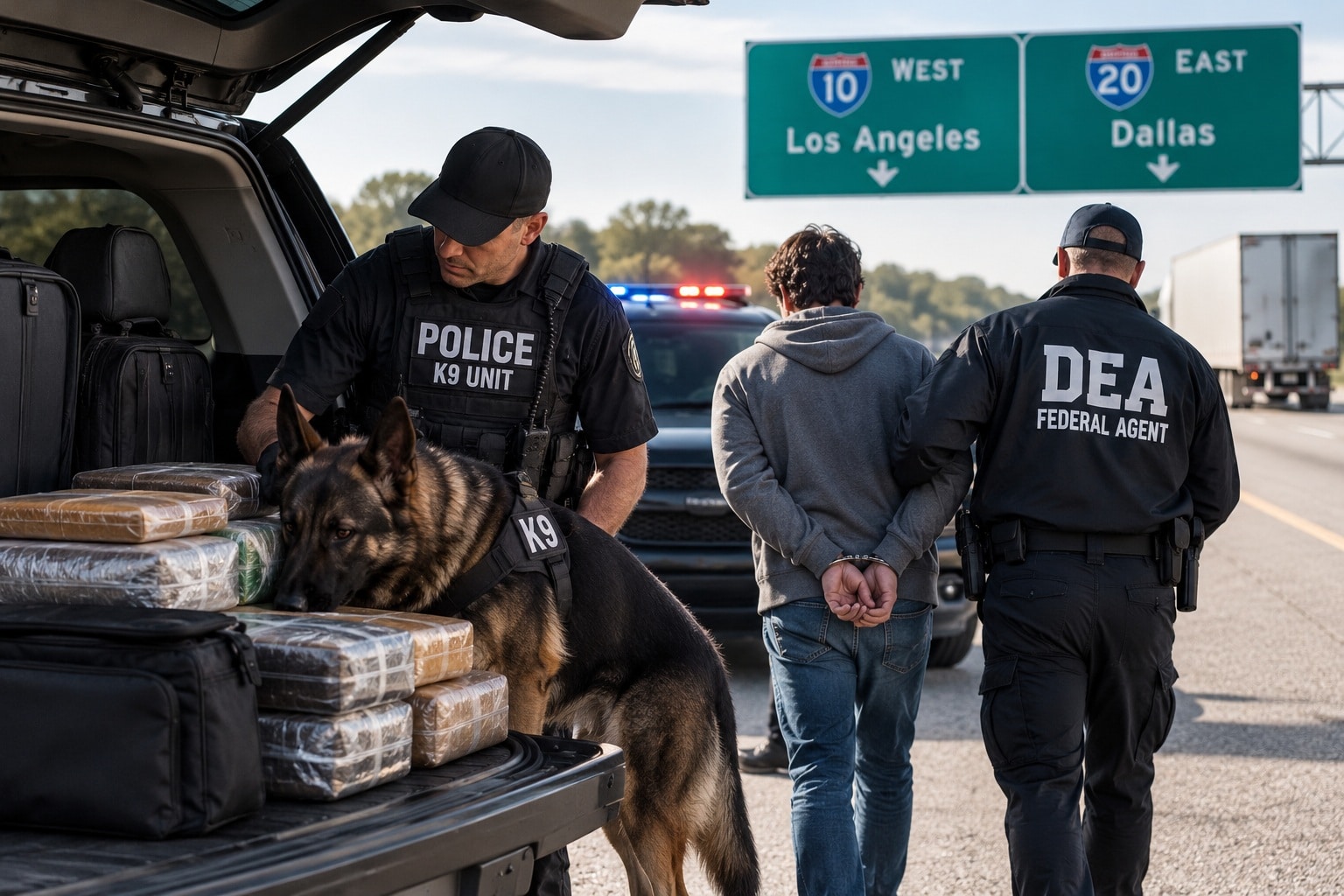
An accusation that you transported illegal drugs across state lines can quickly become much more serious than an ordinary possession case. Law enforcement may investigate where the drugs came from, where they were going, who owned them, and whether other people were involved. Depending on the facts, you could face charges under Texas law, federal law, or potentially both.
The amount and type of controlled substance can significantly affect the possible punishment, while evidence suggesting distribution can expose you to charges far more serious than simple possession. When we defend someone accused of transporting controlled substances into or out of Texas, we examine not only what police found, but also how they found it and whether prosecutors can actually prove that our client knowingly possessed or intended to distribute the drugs.
Crossing A State Line Can Bring Federal Authorities Into The Case
People sometimes assume that taking drugs across a state boundary automatically creates a separate federal crime. The legal issue is more specific than that. Federal law makes it unlawful to knowingly or intentionally distribute a controlled substance or possess one with intent to distribute under 21 U.S.C. § 841. Federal authorities may become involved in interstate trafficking investigations because federal law regulates controlled-substance distribution, particularly when the investigation involves significant quantities, multiple jurisdictions, organized distribution, or federal agencies.
A case may therefore involve agencies such as the Drug Enforcement Administration along with state or local law enforcement. An arrest in Texas does not necessarily mean the matter will remain solely in Texas state court. Which authorities prosecute the case will depend on the facts, the investigation, the suspected drug activity, and decisions made by state and federal prosecutors.
Texas Law Separates Possession From Possession With Intent To Deliver
Texas drug offenses are primarily governed by Chapter 481 of the Texas Health and Safety Code. Under Texas Health and Safety Code § 481.115, a person commits an offense by knowingly or intentionally possessing a controlled substance in Penalty Group 1 or 1-B without legal authorization. Texas law defines possession as actual care, custody, control, or management.
That distinction matters when drugs are discovered inside a vehicle. Prosecutors cannot establish guilt merely by proving that drugs were somewhere in the car. They must connect the accused person to the substance and establish the required mental state.
A transportation case can become substantially more serious if prosecutors allege an intent to distribute. Texas Health and Safety Code § 481.112 prohibits knowingly manufacturing, delivering, or possessing with intent to deliver a Penalty Group 1 controlled substance. The offense level increases sharply based on the aggregate weight of the substance, including adulterants and dilutants.
Drug Quantity Can Dramatically Change The Potential Penalties
The quantity recovered is one of the most important facts in a Texas controlled-substance case. Under § 481.115, possession of less than one gram of a Penalty Group 1 or Penalty Group 1-B substance is generally a state jail felony. Possession of one gram or more but less than four grams is generally a third-degree felony, while possession of four grams or more but less than 200 grams is generally a second-degree felony. Larger quantities can result in first-degree felony exposure and substantially greater punishment.
The penalties can be even more severe when the accusation involves delivery or possession with intent to deliver. Section 481.112, for example, makes possession with intent to deliver less than one gram of a Penalty Group 1 controlled substance a state jail felony, while amounts of one gram or more but less than four grams can constitute a second-degree felony. Four grams or more but less than 200 grams can constitute a first-degree felony.
Fentanyl receives separate treatment under Texas law. Fentanyl and its derivatives are listed in Penalty Group 1-B under Texas Health and Safety Code § 481.1022. Section 481.1123 establishes separate felony penalties for manufacturing, delivering, or possessing Penalty Group 1-B substances with intent to deliver.
Prosecutors Still Must Prove Knowledge And Control
A common issue in drug transportation cases is whether the accused person actually knew the controlled substance was present. This question can be especially important when several people were traveling in the same vehicle or when the drugs were found in luggage, a locked container, a hidden compartment, or property belonging to another passenger.
We examine who owned the vehicle, who had access to the area where the substance was discovered, whether fingerprints or DNA were collected, what each occupant said, and whether officers found additional evidence connecting our client to the drugs. Phone records, text messages, cash, packaging materials, scales, travel records, hotel receipts, and navigation data may also become part of the prosecution’s effort to establish knowledge or an intent to distribute.
Large quantities can be used as circumstantial evidence of distribution, but quantity alone does not eliminate the prosecution’s burden to prove the required elements beyond a reasonable doubt. The surrounding evidence remains important.
Federal Conspiracy Charges Can Expand The Case
Interstate drug investigations frequently involve allegations against more than one person. Under 21 U.S.C. § 846, a person who attempts or conspires to commit a federal controlled-substance offense can face the same penalties prescribed for the underlying offense that was the object of the conspiracy.
This means investigators may look beyond the person physically driving the vehicle. They may examine alleged suppliers, buyers, passengers, organizers, and anyone believed to have participated in an agreement involving distribution. Phone extractions, social media communications, financial records, surveillance, cooperating witnesses, and statements from other suspects can become important evidence.
A person does not necessarily avoid a conspiracy investigation simply because the drugs were never physically in that person’s hands. For that reason, we carefully examine what prosecutors claim each defendant actually agreed to do and what evidence supposedly connects that person to the alleged scheme.
The Legality Of The Traffic Stop And Vehicle Search Matters
Many transportation cases begin with an ordinary traffic stop on an interstate or major highway. The circumstances leading to the stop and the subsequent search can become central issues in the defense.
We examine why the vehicle was stopped, how long the driver was detained, whether consent to search was requested, whether consent was actually voluntary, whether a drug-detection dog was used, and whether officers claimed probable cause existed. We also review dash-camera footage, body-camera recordings, dispatch records, police reports, and available search-warrant materials.
Texas Code of Criminal Procedure Article 38.23 provides that evidence obtained in violation of the United States Constitution, the Texas Constitution, or applicable law generally may not be admitted against the accused in a criminal trial. If drugs were discovered through an unlawful detention or search, challenging the admissibility of that evidence can become one of the most important issues in the case.
What You Say After The Stop Can Affect The Investigation
Interstate drug investigations often involve extensive questioning. Officers may ask where you started your trip, where you are going, who packed the vehicle, who owns particular luggage, how you know your passengers, and whether you know what is inside a container.
Statements can later be compared against phone data, receipts, surveillance footage, location records, or statements given by other people. Trying to explain the situation without understanding what investigators already know can create additional problems. We generally want to examine the evidence before our client makes decisions about discussing the allegations with investigators.
A Drug Transportation Charge Requires A Detailed Defense
Cases involving alleged transportation of controlled substances across state lines can involve overlapping Texas and federal issues, serious felony exposure, vehicle searches, electronic evidence, and allegations involving several people. We look closely at whether the government can prove knowing possession, whether the evidence actually supports an intent to distribute, whether the substance and weight were properly established, and whether law enforcement respected constitutional search and seizure requirements.
An arrest is not proof that every allegation made by investigators is true. The strength of the case depends on admissible evidence and whether prosecutors can prove each required element. Early review can also be important because vehicles, phones, surveillance recordings, laboratory testing, and other evidence may become central to the defense.
Frequently Asked Questions About Transporting Drugs Across State Lines In Texas
Does Crossing A State Line Automatically Make A Drug Charge Federal?
Not necessarily. Crossing a state line can increase the possibility of federal involvement, particularly when authorities suspect interstate distribution, but the physical act of crossing the border between two states does not by itself determine every charge.
Federal prosecutors frequently rely on statutes such as 21 U.S.C. § 841 when the allegation involves distributing controlled substances or possessing them with intent to distribute. Texas prosecutors may separately bring charges under Chapter 481 of the Texas Health and Safety Code when conduct occurring in Texas satisfies the elements of a state offense.
The investigative agency, drug quantity, alleged distribution network, location of the conduct, and involvement of other suspects can affect how the case is handled. We therefore determine at the beginning whether the investigation is state, federal, or potentially both.
Can I Be Convicted If The Drugs Were Found In A Car I Was Driving But Were Not Mine?
Driving the vehicle can be important evidence, but it does not automatically prove knowing possession. Texas law defines possession in terms of actual care, custody, control, or management, and the prosecution must establish the required knowledge or intent.
This becomes particularly important when several people occupy the vehicle or the drugs were hidden somewhere that was not immediately visible. We look for evidence tying our client personally to the substance. That can include where the drugs were located, whether our client owned the container, whether other occupants had access to it, what statements were made, and whether physical or electronic evidence establishes a connection. A person should not be convicted simply because illegal drugs happened to be near them.
How Do Prosecutors Try To Prove That Drugs Were Intended For Sale?
Prosecutors may rely on the amount of drugs, packaging, cash, scales, communications, travel patterns, multiple phones, ledgers, or other circumstances that they believe indicate distribution rather than personal possession. No single fact necessarily proves intent in every case.
Under Texas Health and Safety Code § 481.112, prosecutors seeking a conviction for possession with intent to deliver a Penalty Group 1 substance must prove the knowing conduct required by that statute. We review whether the alleged indicators of distribution actually support that conclusion or whether they have an innocent or less damaging explanation.
What Happens If The Drugs Belonged To A Passenger?
The fact that another person claims ownership can be significant, but it does not automatically end an investigation. Police and prosecutors may still examine whether the driver knew about the drugs or exercised control over them.
When several occupants could have accessed the area where drugs were located, the question of possession may become highly contested. We examine the physical location of the drugs, statements from passengers, fingerprints, DNA, phone communications, vehicle ownership, luggage ownership, and other circumstances. Evidence identifying another person as the owner may support the defense, but the entire factual record needs to be evaluated.
Speak With Our Galveston Criminal Defense Lawyers At Mark Diaz & Associates Today
If you have been accused of transporting drugs into Texas, out of Texas, or between states, the decisions made at the beginning of your case can affect everything that follows. At Mark Diaz & Associates, we examine how the traffic stop occurred, why officers searched the vehicle, where the drugs were located, who had access to them, and whether prosecutors can prove knowing possession or an intent to distribute. We also evaluate whether the case could involve federal authorities and whether constitutional violations provide grounds to challenge important evidence.
When you hire me, you work directly with me. My clients have my personal cell phone number because questions, emergencies, and concerns do not always happen during business hours. You will not be handed off to a junior associate or lost in a system where your case is simply one of dozens on a crowded docket. From arrest through resolution, I remain personally involved and accessible.
Mark Diaz & Associates represents people facing serious criminal charges in Galveston and throughout Houston, Texas. To discuss an accusation involving drug possession, drug delivery, interstate drug transportation, or another controlled-substance offense, call our Galveston federal drug trafficking attorney at Mark Diaz & Associates by calling 409-515-6170 to schedule your free consultation.
