
Can You Be Arrested For A Sex Crime Based On A Text Message?
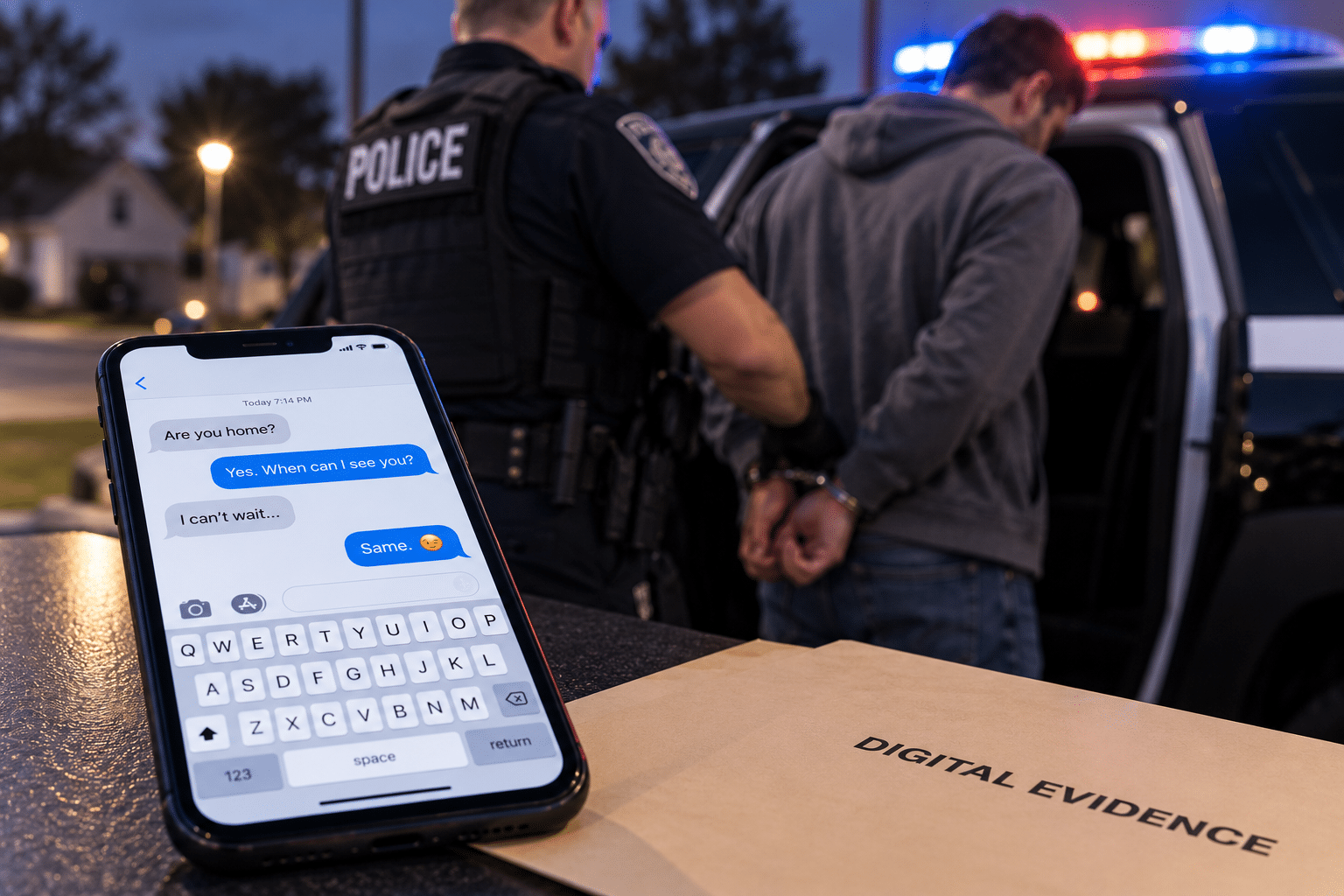
A text message can be enough to start a serious sex crime investigation in Galveston County, and under some circumstances, the message itself can form a major part of the alleged offense. Police do not always need physical evidence, an eyewitness to sexual contact, or an in-person meeting before seeking an arrest. A conversation by text, social media message, dating app, or another electronic platform may provide investigators with evidence of a person’s intent, knowledge, identity, or alleged plans.
The meaning of those messages, however, depends heavily on context. When we defend someone accused of a sex offense based on electronic communications, we look beyond a screenshot and examine the complete conversation, who actually controlled the account, how the evidence was obtained, and whether the messages establish every element required by Texas law.
Texas Law Specifically Covers Certain Sexual Communications By Text
One of the clearest examples is Texas Penal Code § 33.021, which addresses online solicitation of a minor. The statute expressly applies to communications made through the Internet, email, text messages, electronic messaging services, and commercial online services.
Under § 33.021(b), a person who is at least 17 may commit an offense when, with the required intent to commit certain specified offenses, that person intentionally communicates in a sexually explicit manner with a minor or distributes sexually explicit material to a minor. Texas law defines a minor for purposes of this statute as someone younger than 17 or someone the accused believes is younger than 17.
Section 33.021(c) separately prohibits knowingly soliciting a minor through electronic communications to meet another person when the accused allegedly intends for the minor to engage in sexual contact, sexual intercourse, or deviate sexual intercourse. Importantly, Texas law specifically states that the meeting does not have to occur for prosecution under this subsection.
That means a person may face an arrest based largely on what prosecutors claim was communicated through a phone or online account.
A Planned Meeting Does Not Have To Take Place
People are sometimes surprised to learn that police may make an arrest even though nobody ever met in person. For an alleged violation of Texas Penal Code § 33.021(c), the statute states that failure of the meeting to occur is not a defense.
The alleged solicitation itself can therefore become the focus of the case. Investigators may examine statements about meeting locations, sexual activity, transportation, hotel rooms, timing, age, or what the parties intended to do if they met.
The penalties can be severe. An offense under § 33.021(b) is generally a third-degree felony, although it can become a second-degree felony when the minor is younger than 14, or the accused believes the person is younger than 14. An offense under subsection (c) is a second-degree felony.
Text Messages Can Also Become Evidence In Other Texas Sex Crime Cases
Not every sex crime involving text messages is charged as online solicitation. Electronic communications may also be used as evidence in investigations involving sexual assault, aggravated sexual assault, indecency with a child, sexual performance by a child, or possession or promotion of child pornography.
For example, Texas Penal Code § 21.11 prohibits certain sexual contact with a child younger than 17 and certain exposure-related conduct committed with the required sexual intent. Prosecutors may use a text conversation to argue that the accused had a particular intent, knew the complainant, arranged a meeting, or made statements related to alleged physical conduct.
Likewise, Texas Penal Code § 43.26 addresses possession or promotion of child pornography. Images sent or stored through a phone can create separate legal issues from the words contained in the accompanying messages. The current statute also addresses certain computer-generated or artificially created depictions involving children, making careful analysis of the actual digital material especially important.
Can Police Arrest You Based Only On Messages?
Potentially, yes. The legal question at the arrest stage is not whether prosecutors have already proven the case beyond a reasonable doubt. Police and prosecutors may seek an arrest warrant when they believe the available evidence establishes probable cause that an offense occurred and that the accused committed it.
Under Texas Code of Criminal Procedure Articles 15.04 and 15.05, a complaint supporting an arrest accusation must charge the commission of an offense and state that the accused committed an offense, or that the person making the affidavit has good reason to believe that the accused committed it. The complaint must also identify the accused and describe the time and place of the alleged offense as definitely as reasonably possible.
Text messages can contribute to that showing. But probable cause for an arrest and proof necessary for a conviction are very different standards. An arrest does not establish guilt.
Screenshots Do Not Always Tell The Whole Story
When police receive screenshots from a complainant, parent, undercover officer, or another person, we want to know exactly where those screenshots came from. A screenshot may omit messages immediately before or after an important statement. Messages can also be forwarded, edited, deleted, taken out of order, or attributed to the wrong person.
The identity of the sender can be another important issue. Ownership of a phone number or social media account does not automatically establish who typed every message sent from the device. Depending on the facts, account access, passwords, device records, IP information, metadata, witness testimony, and forensic extraction may become important.
Texas Rule of Evidence 901 generally requires a party offering an item of evidence to produce evidence sufficient to support a finding that the item is what that party claims it is. The rule recognizes several methods of authentication, including witness knowledge and distinctive characteristics considered together with the surrounding circumstances.
Context And Intent Can Be Critical
Words that look damaging when isolated may take on a different meaning when the full conversation is examined. This is particularly important when the criminal statute requires the State to establish a specific intent.
Under § 33.021, for example, the wording of the statute makes intent an important element. Prosecutors may attempt to infer intent from the language used, frequency of communication, discussion of sexual activity, age-related statements, proposed meeting arrangements, images, or subsequent conduct. The defense may challenge whether those facts actually support the intent alleged by the State.
We also examine whether the accused was communicating with an actual minor or with someone the accused allegedly believed was a minor. Texas law specifically includes an individual whom the actor believes to be younger than 17 within the definition used by § 33.021. This provision is particularly important in undercover investigations in which an officer poses as a minor online.
Deleted Messages May Still Be Recovered
Deleting a text conversation does not necessarily erase it from an investigation. Police may obtain evidence from another participant’s phone, device backups, cloud accounts, service providers, downloaded account records, or forensic examinations of electronic devices.
For that reason, someone who learns that police are investigating electronic communications should be extremely cautious about deleting, changing, or destroying material. The better course is to speak with a criminal defense attorney before taking action concerning evidence that may become part of an investigation.
We also advise against contacting the complainant to explain the messages, obtain a retraction, or persuade the person to change a statement. Additional communications can create new evidence and may make an already serious situation more difficult.
An Arrest Based On Text Messages Is Not The End Of The Case
A criminal accusation based on electronic messages can look straightforward when investigators select several statements and place them in an arrest affidavit. The defense investigation may reveal a much more complicated picture.
We examine the entire message history, dates and timestamps, account ownership, device access, metadata, photographs, videos, witness statements, search warrants, forensic reports, and the circumstances surrounding any police interview. We also compare the alleged conduct closely with the statutory elements of the specific offense.
A text message can be powerful evidence, but it does not relieve prosecutors of their obligation to prove the charged crime. Authentication, identity, intent, context, age, admissibility, investigative procedures, and the government’s interpretation of the conversation can all become significant issues.
Frequently Asked Questions About Texas Sex Crime Charges Based On Text Messages
Can I Really Be Arrested If I Never Met The Person?
Yes. Certain Texas offenses can be based on electronic communications without an actual face-to-face meeting. Texas Penal Code § 33.021(c), for example, prohibits knowingly soliciting a minor through text or other electronic communications to meet another person when the required sexual intent exists. The statute expressly states that it is not a defense that the meeting never occurred.
That does not mean every sexual conversation or proposed meeting automatically violates the statute. Prosecutors still have to establish the specific statutory elements, including the required state of mind. We examine exactly what was said, the sequence of the conversation, what each participant represented, and whether the State’s interpretation accurately reflects the complete exchange.
What If The Person I Was Texting Was Actually An Undercover Police Officer?
An undercover operation can still result in charges. Under Texas Penal Code § 33.021, the definition of a minor includes a person whom the accused believes to be younger than 17. As a result, an officer does not necessarily have to use an actual child during an online solicitation investigation.
These cases often turn heavily on the conversation itself. We look closely at who introduced sexual subjects, what age was represented, whether the accused actually believed that representation, what was said about meeting, and whether the evidence proves the required intent. The complete conversation can matter far more than a few selected screenshots.
What If Someone Else Used My Phone Or Account?
Identity can become a major defense issue. The fact that a message came from a particular phone number, social media profile, or device does not automatically answer who physically wrote and sent it.
Police may attempt to connect a person with the communications through account records, device possession, IP information, photographs, statements, location data, or distinctive information contained in the conversation. The defense can examine the same evidence for weaknesses or inconsistencies. Texas Rule of Evidence 901 requires evidence sufficient to support a finding that evidence offered at trial is what the proponent claims it to be.
Can Police Use Screenshots Against Me?
Screenshots can potentially be used as evidence, but their source and authenticity matter. A screenshot presented by one participant may not contain the entire conversation. It may exclude earlier statements, later explanations, dates, usernames, or other information that changes the meaning of the exchange.
When possible, we want the original electronic evidence rather than relying solely on selected images of a conversation. Device extractions, account records, metadata, and complete message histories may provide information that is absent from screenshots. Authentication and admissibility issues are evaluated under the Texas Rules of Evidence, including Rule 901.
Speak With A Galveston Criminal Defense Lawyer About A Text Message Sex Crime Investigation
A sex crime investigation can begin with nothing more than a phone call from a detective, a search warrant, or a series of text messages shown to police. What happens during the first stages of the investigation can affect the entire case. At Mark Diaz & Associates, we examine the complete electronic record, the State’s theory of intent, the identity of the person who allegedly sent the messages, how police obtained the evidence, and whether the facts actually satisfy the Texas statute being alleged.
When you hire me, you work directly with me. My clients have my personal cell phone number because questions, emergencies, and concerns do not always happen during business hours. You will not be handed off to a junior associate or lost in a system where your case is one of dozens on a crowded docket. From arrest through resolution, I remain personally involved and accessible.
If you have been arrested, contacted by investigators, or believe you are under investigation because of text messages or other electronic communications, call our Galveston sex crime attorney at Mark Diaz & Associates today by calling 409-515-6170 to schedule your free consultation.
