
Federal Drug Charges At Houston Airports: What Travelers Should Know
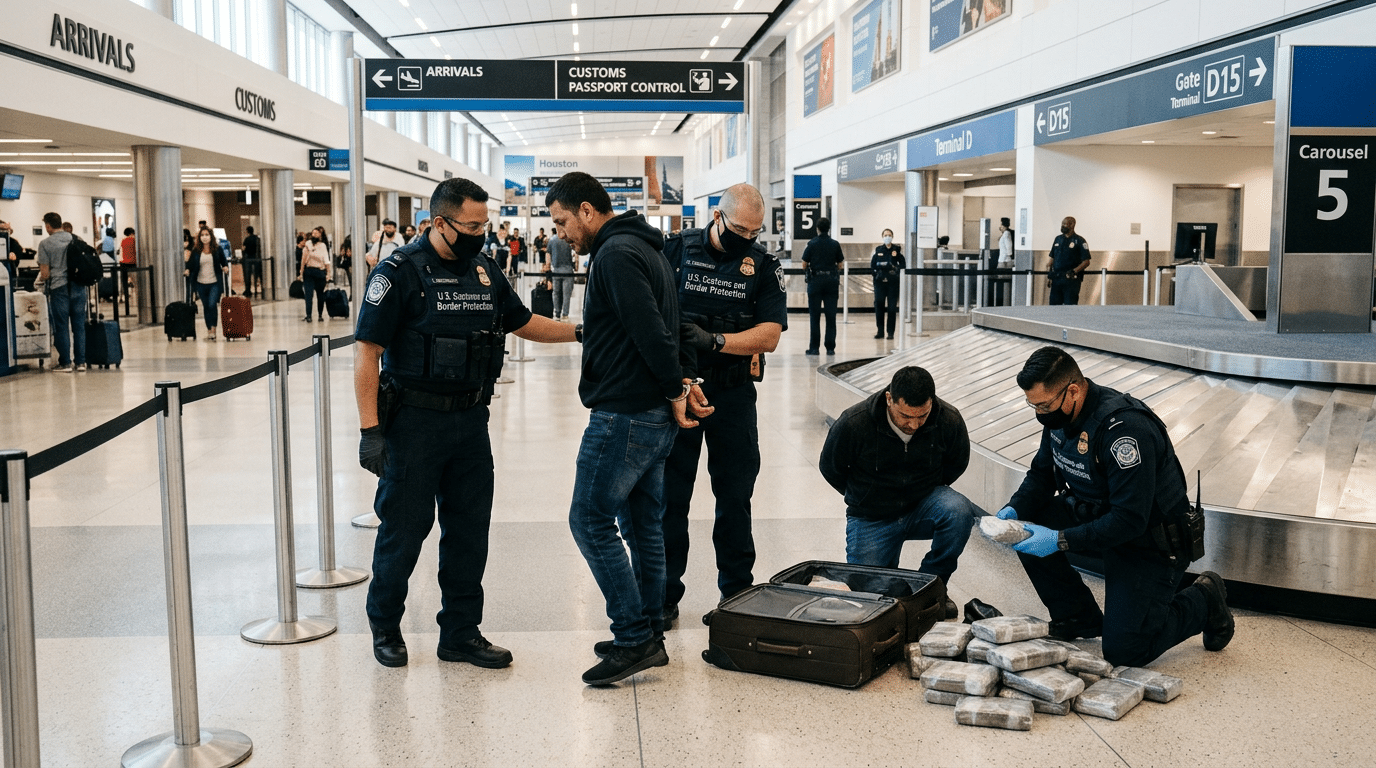
If law enforcement finds suspected drugs in your luggage or belongings at a Houston airport, your trip can quickly turn into a federal criminal investigation. Because airports connect states and countries, these cases often go beyond simple possession. Federal agencies may get involved if they think drugs were brought into the U.S., moved across state lines, or intended for distribution. Texas authorities might also file charges under state drug laws for the same actions.
When we defend clients in these situations, we immediately look at what the government can actually prove about possession, knowledge, intent, ownership, and the reason for the trip.
Why A Houston Airport Drug Case Can Become Federal
Not every drug arrest at an airport leads to federal charges. Federal authorities usually get involved if the case includes interstate travel, international flights, drug importation, federal agencies, or is part of a bigger trafficking investigation.
Federal prosecutors often use 21 U.S.C. § 841 to charge people they believe knowingly or intentionally possessed drugs with the intent to distribute. This law also covers making and distributing drugs. The possible punishment depends on the type and amount of drug, the person’s criminal history, and other details of the case.
Airport drug cases often get extra attention because investigators might think traveling with drugs is evidence of transportation or distribution. We do not assume that just flying with drugs means trafficking. The prosecution still has to prove every part of the federal offense beyond a reasonable doubt.
International Arrivals Can Lead To Federal Importation Charges
A traveler entering Houston from another country can face additional federal exposure if customs officers find suspected controlled substances. Under 21 U.S.C. § 952, federal law generally prohibits unauthorized importation of controlled substances into the United States, subject to specific statutory exceptions.
Federal prosecutors may pursue penalties under 21 U.S.C. § 960 when they allege that a person knowingly or intentionally imported a controlled substance in violation of federal law. Section 960 also covers certain controlled substances brought aboard an aircraft, vessel, or vehicle and establishes punishment based in part on drug type and quantity.
The word “knowingly” is very important in these cases. If someone else packed the bag, put something inside, or asked the traveler to carry a package without saying what was in it, we look at whether the government can prove the traveler actually knew about the drugs.
Texas Drug Charges May Still Apply
A federal investigation does not necessarily eliminate possible Texas criminal charges. Texas Health and Safety Code Chapter 481 creates separate offenses for possession, manufacture, delivery, and possession with intent to deliver controlled substances.
Texas Health and Safety Code § 481.115 makes it an offense to knowingly or intentionally possess a controlled substance in Penalty Group 1 or 1-B unless an applicable legal authorization exists. The punishment increases based on the aggregate weight of the substance, including adulterants and dilutants. Even possession of less than one gram can be charged as a state jail felony for substances covered by that statute.
This difference is important because a traveler might still face serious state charges even if federal authorities do not take the case. We check which agency made the seizure, where the alleged possession happened, and whether state or federal prosecutors are handling the case.
Possession With Intent To Deliver Can Carry Much Greater Consequences
Airport drug cases frequently involve allegations that the drugs were being transported for sale or delivery rather than for personal use. Under Texas Health and Safety Code § 481.112, a person commits an offense if the person knowingly manufactures, delivers, or possesses with intent to deliver a controlled substance listed in Penalty Group 1. Punishment increases sharply as the alleged weight increases.
For Penalty Group 1 substances, less than one gram may result in a state jail felony under § 481.112. One gram or more but less than four grams may be charged as a second-degree felony, while four grams or more but less than 200 grams may constitute a first-degree felony. Larger quantities can carry substantially higher minimum prison terms and fines.
We look at whether the evidence really shows an intent to deliver. The amount of drugs matters, but investigators might also use packaging, cash, travel records, messages, statements, or other signs of distribution.
Federal Conspiracy Charges Can Reach Beyond The Person Carrying The Drugs
One of the most serious risks in a federal airport drug investigation is a conspiracy accusation. Under 21 U.S.C. § 846, a person who attempts or conspires to commit a federal controlled substance offense can face the same penalties prescribed for the underlying offense.
This means the federal government does not have to prove that someone personally owned or handled every drug in a larger trafficking case. Prosecutors might say that several people agreed to help move or distribute drugs.
We carefully check if there is real evidence of an agreement and knowing involvement. Just knowing someone, traveling together, being in a contact list, or being nearby does not automatically mean someone is part of a federal drug conspiracy.
What Happens When Drugs Are Found In Luggage
When drugs are found in checked or carry-on luggage, investigators usually focus right away on who owns the bag and who knew about the drugs. They might look at baggage tags, airline records, surveillance video, travel history, payment records, text messages, and what the traveler said.
Where the drugs are found matters, but it does not answer every legal question. A suitcase could have been packed by someone else, shared with other travelers, left alone, or handled by many people before being found.
When we review these cases, we check if the prosecution has evidence linking our client to the drugs beyond just finding them in their luggage. Proving knowledge and control is often key in both Texas and federal cases.
Statements To Investigators Can Become Important Evidence
People stopped at airports often feel pressured to explain themselves right away. Investigators might ask who packed the bag, who bought the ticket, who planned the trip, where the traveler stayed, and if anyone asked them to carry something.
If someone gives a nervous or incomplete answer, it might later be seen as inconsistent or suspicious. Investigators can compare what was said to phone records, surveillance video, flight details, financial records, and statements from others in the case.
We look at when the questioning happened, which agency did it, if the traveler was detained, what was said, and if constitutional rights applied. What is said early in an airport investigation can become a big part of the prosecution’s case.
The Amount And Type Of Drug Can Change The Entire Case
The amount of drugs often decides if someone faces a minor possession charge or a much more serious offense with heavy prison time. Federal law sets different penalties for different drugs and amounts, while Texas law uses penalty groups and its own weight-based system.
Texas treats substances in different penalty groups differently. For example, Texas Health and Safety Code § 481.115 addresses possession of Penalty Group 1 and 1-B substances, while other sections govern different controlled substances.
We also check the lab tests and the reported weight. The government must prove that what was seized is really the drug they claim, and that the amount used for the charge is backed up by law and science.
Early Defense Work Can Matter In An Airport Drug Case
Airport investigations can involve multiple law enforcement agencies and large amounts of electronic evidence. Surveillance footage may be preserved, phones may be seized, witnesses may be interviewed, and federal prosecutors may begin examining communications and travel history before formal charges are filed.
We want to understand the government’s theory as early as possible. That includes whether prosecutors claim simple possession, possession with intent to distribute, importation, conspiracy, or another federal or Texas drug offense.
A drug discovery at a Houston airport can create serious legal exposure, but the accusation is only the beginning of the case. The prosecution still has to prove every required element of the offense, including the mental state required by the statute.
Frequently Asked Questions About Federal Drug Charges At Houston Airports
Does Finding Drugs In My Luggage Automatically Mean I Will Be Convicted?
No. The discovery of drugs in luggage can be powerful evidence, but it does not automatically establish every element of a criminal offense. In many drug cases, the government must prove that the accused knowingly or intentionally possessed the controlled substance.
If other people had access to the bag, packed it, transported it, or placed items inside it, those facts may become important. We look for evidence showing whether our client actually knew the drugs were present and exercised control over them. Phone records, surveillance footage, baggage history, statements, fingerprints, travel arrangements, and witness testimony may all become relevant.
When Does An Airport Drug Case Become A Federal Case?
Federal involvement may occur when the alleged conduct involves international importation, interstate transportation, federal agencies, significant quantities of controlled substances, or an alleged trafficking organization. Federal prosecutors may use 21 U.S.C. § 841 for possession with intent to distribute and related offenses, while §§ 952 and 960 address unlawful drug importation.
The fact that an arrest occurred at an airport does not by itself determine which government will prosecute. We evaluate which agencies conducted the investigation and whether charges have been referred to state or federal prosecutors.
Can I Be Charged If Someone Else Put Drugs In My Bag?
You can be investigated or arrested, but the prosecution still has to prove the mental state required by the charged offense. Both Texas and federal drug statutes commonly require knowing or intentional conduct.
If someone secretly placed drugs in your luggage, knowledge may become a central defense issue. We would examine who had access to the bag, when it was packed, whether it was ever left unattended, whether another traveler used it, and whether communications or other evidence support or contradict the government’s allegations.
Can I Face A Federal Drug Conspiracy Charge Even If I Never Owned The Drugs?
Yes, depending on the evidence. Under 21 U.S.C. § 846, a person convicted of conspiring to commit a federal controlled substance offense can face the same statutory penalties as the underlying drug offense.
Federal conspiracy cases often focus on alleged agreements and participation rather than simple ownership. We examine whether there is reliable evidence showing that the accused knowingly joined the alleged plan. Association with another person or presence during suspicious activity does not by itself answer that question.
Does The Weight Of The Drugs Matter?
Yes. Drug weight can dramatically affect both Texas and federal punishment ranges. Under Texas Health and Safety Code § 481.115, Penalty Group 1 and 1-B possession offenses increase in severity as the aggregate weight increases. Section 481.112 similarly increases punishment for manufacture, delivery, or possession with intent to deliver based on quantity.
Federal law also uses drug type and quantity to establish sentencing ranges for many controlled substance offenses. Because weight can affect the potential charge and punishment, we scrutinize laboratory reports, measurement methods, chain of custody, and whether adulterants or mixtures were included in the reported amount.
What If Federal Agents Want To Search My Phone?
Phones can contain text messages, call records, photographs, location information, payment records, social media messages, and other evidence investigators may consider relevant. The legality of a phone search depends on the facts, including whether agents have a warrant, whether consent was given, and the scope of any judicial authorization.
In an airport drug case, electronic evidence may be used to support allegations that a traveler knew about the drugs or intended to deliver them. We examine how the device was obtained, how the search was authorized, what information was collected, and whether the search remained within lawful limits.
Speak With Mark Diaz & Associates About Federal Drug Charges At A Houston Airport
Federal drug charges arising from a Houston airport investigation can involve serious allegations of possession, distribution, importation, or conspiracy. These cases may include federal agents, Texas authorities, airport surveillance, phone evidence, travel records, baggage records, and statements made shortly after detention. At Mark Diaz & Associates, we examine the government’s evidence closely and identify what prosecutors can actually prove about knowledge, possession, intent, and participation.
When you hire Mark Diaz & Associates, you work directly with Mark Diaz. Clients have access to his personal cell phone because questions, emergencies, and serious concerns do not always happen during business hours. You will not simply be handed off to a junior associate or left wondering who is responsible for your defense. From the investigation or arrest through the resolution of the case, Mark remains personally involved, accessible, and informed about what is happening.
Mark Diaz & Associates represents people accused of criminal offenses in Galveston and throughout Houston, Texas. If you are under investigation or have been arrested for a federal or Texas drug offense involving a Houston airport, contact our Galveston federal drug defense attorney at Mark Diaz & Associates by calling 409-515-6170 to schedule your free consultation.
