
Can You Face Federal Drug Charges For Shipping Drugs Through The Mail?
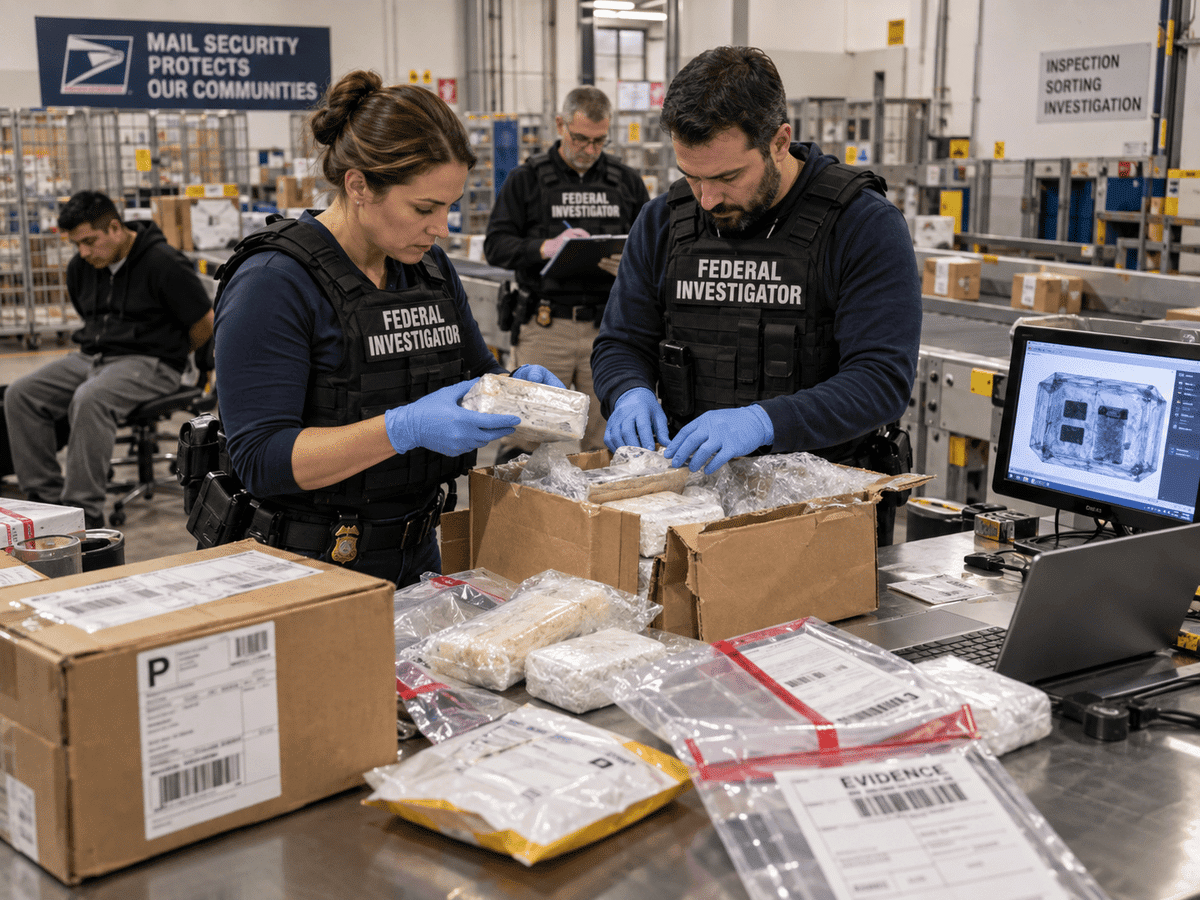
If you ship illegal drugs through the mail, you could face serious federal charges, even if the package never arrives. Federal investigators often look into packages containing fentanyl, cocaine, methamphetamine, prescription drugs, and other controlled substances sent through the U.S. mail. Authorities may investigate not just the sender and recipient, but also anyone who helped with the shipment or is linked to a larger distribution network.
In Texas, the same actions can also lead to state drug charges under the Texas Controlled Substances Act. When we defend clients in Galveston accused of mailing drugs, we look at what was found in the package and whether prosecutors can actually prove who sent it, who knew what was inside, and if there is enough evidence of possession, delivery, or involvement in a bigger drug operation.
Mailing Drugs Can Trigger Federal Drug Distribution Charges
Federal law says it is illegal to knowingly or intentionally distribute a controlled substance or to have one with the intent to distribute it. Under 21 U.S.C. § 841(a)(1), the government can prosecute people for making, distributing, dispensing, or possessing controlled substances with intent to distribute. The sentence you might face depends a lot on the type and amount of drugs involved, and some cases come with strict mandatory minimum prison sentences.
Mailing a package can be used as evidence of drug distribution because the government might claim that sending drugs through the mail shows you meant to transfer them to someone else. Prosecutors do not always have to prove the recipient got the drugs to bring certain federal charges. Even if a package is intercepted, it can still lead to charges of attempted distribution or being part of a drug trafficking scheme.
The Mail Itself Can Become Part Of The Federal Charge
Federal law treats the mail as a type of communication tool that can be used to help commit felony drug crimes. Under 21 U.S.C. § 843(b), it is a separate crime to knowingly or intentionally use any communication facility, including the mail, to commit or help with a federal drug felony. Each time the mail is used this way, it can count as a separate offense.
That means prosecutors may examine much more than the drugs inside a This means prosecutors might look at more than just the drugs in one package. They could review shipping labels, tracking records, return addresses, online accounts, payment records, phone records, text messages, and past shipments. If investigators think there were multiple shipments, they may try to build a larger case instead of treating it as a one-time event.ge
You do not have to be the one who actually puts a drug package in the mailbox to face federal charges. Under 21 U.S.C. § 846, anyone who tries or conspires to commit a federal drug crime can face the same penalties as if they had committed the crime themselves.
This matters when several people are accused of being involved in getting, packaging, addressing, transporting, receiving, or selling drugs. Federal prosecutors might argue that each person knowingly took part in a plan to distribute controlled substances.
We carefully check if the government can really prove there was an agreement and that someone knowingly took part. Just being friends with someone involved in drugs, receiving a package for someone else, living at an address where a package arrives, or showing up in someone’s phone does not automatically mean you are part of a federal drug conspiracy. The government still needs to prove criminal intent.
Texas Drug Charges May Also Arise From The Same Conduct
Just because investigators are handling a federal case does not mean Texas drug laws do not apply. Texas Health and Safety Code § 481.112 makes it a crime to knowingly make, deliver, or possess with intent to deliver a Penalty Group 1 controlled substance. The seriousness of the charge goes up as the amount increases. For example, having less than one gram is usually a state jail felony, but larger amounts can lead to more serious felony charges.
Texas law also separates simple possession from delivery-related conduct. Under Texas Health and Safety Code § 481.115, knowingly or intentionally possessing a Penalty Group 1 or 1-B controlled substance can produce felony charges based on the aggregate weight involved.
If a shipment starts in Texas, is received in Texas, or is linked to actions in the state, we check if state investigators are involved and if separate Texas charges might be filed.
Postal Inspectors Actively Investigate Drug Shipments
The U.S. Postal Inspection Service is the federal agency in charge of protecting the U.S. mail. Stopping illegal drugs is a top priority for them, and they work with other law enforcement agencies on drug cases. The Postal Inspection Service reports making large seizures of methamphetamine, cocaine, synthetic opioids, and other drugs sent through the mail. Investigation may begin before an arrest ever occurs. Postal inspectors may identify a suspicious parcel and work with other agencies to determine who mailed it, who is expected to receive it, and whether the shipment is part of a larger pattern.
This can cause investigators to look at both the sender and the recipient. The sender might be investigated for distribution, while the recipient could be investigated for possession, attempted possession, or conspiracy, depending on what the evidence shows.
Investigators May Use A Controlled Delivery
One investigative technique in mail-based drug cases involves allowing a suspected package to continue toward its destination under law enforcement supervision. The purpose may be to identify who accepts or retrieves the package and determine whether additional evidence connects that person to the shipment.
Receiving a package, however, does not automatically establish knowledge of its contents. We examine whether the government can prove that the accused knew drugs were inside and intended to possess or distribute them.
This issue can become especially important when packages are sent to shared homes, apartment buildings, businesses, hotels, or addresses used by several people. Someone may also accept a package for a friend or relative without knowing what it contains. Knowledge remains an important element in many drug prosecutions.
Digital Evidence Can Become Central To A Mail Drug Case
Federal investigators frequently examine electronic evidence when building a drug distribution case. Text messages discussing packages, tracking numbers, payment apps, cryptocurrency transactions, online marketplace records, photographs, emails, and location data may be used to establish a connection between a defendant and a shipment.
The government may also compare evidence from different packages. Repeated shipments involving the same addresses, names, telephone numbers, or payment accounts can become part of a prosecution theory.
We examine whether investigators lawfully obtained the evidence, whether it actually belongs to our client, whether the messages have been taken out of context, and whether the evidence proves knowledge rather than merely association.
Drug Type And Quantity Can Change The Potential Sentence
The substance and quantity alleged can have an enormous effect on a federal drug case. Section 841 establishes different sentencing ranges depending on the controlled substance and amount involved. Cases involving fentanyl, methamphetamine, cocaine, heroin, and other drugs may carry substantial federal penalties when statutory quantity thresholds are met.
Texas law also uses quantity to determine the grade of many controlled-substance offenses. Under § 481.112, for example, the punishment for manufacture or delivery of a Penalty Group 1 substance increases significantly as the aggregate weight rises.
We therefore examine laboratory testing, package weight, adulterants or dilutants, chain of custody, and whether the government can establish that the substance and quantity are what prosecutors claim.
A Mail Drug Investigation Can Expand Beyond A Single Package
An intercepted package may be only the beginning of an investigation. Postal inspectors and other federal agencies may investigate prior shipments, additional addresses, financial transactions, vehicles, storage locations, phones, and other people believed to be involved.
The U.S. Postal Inspection Service specifically states that it works with other agencies to investigate illegal drugs moving through the mail. That cooperation can turn what appears to be a single-package case into a broader investigation involving federal distribution or conspiracy allegations.
When we become involved early, we focus on what the government can actually prove rather than the assumptions investigators may be making based on a package, an address, or another person’s statements.
Frequently Asked Questions About Federal Drug Charges For Shipping Drugs Through The Mail
Can You Be Charged Federally If The Drugs Never Arrived?
Yes. Delivery to the recipient is not necessarily required for federal criminal exposure. Depending on the facts, prosecutors may pursue attempted distribution, conspiracy, possession with intent to distribute, or other charges even when postal inspectors intercept the package before it reaches its destination.
Under 21 U.S.C. § 846, attempts and conspiracies involving federal drug crimes can carry the same penalties as the underlying offense. We would examine what steps were allegedly taken toward completing the shipment and what evidence connects our client to those acts. A package containing drugs does not by itself establish who knowingly arranged the shipment.
Can I Be Charged Just Because Drugs Were Mailed To My Address?
Not automatically. The government generally needs evidence showing knowledge and criminal intent, not merely that a package was addressed to your home or business. People receive packages for roommates, relatives, coworkers, former residents, and other individuals every day.
Investigators may look for evidence showing that you were expecting the package, tracked it, paid for its contents, communicated with the sender, or took steps to retrieve it. We examine whether those connections actually exist and whether they prove knowing involvement. Simply living at the delivery address is not the same as knowingly possessing controlled substances.
Can Postal Inspectors Arrest Me For A Drug Package?
Postal inspectors are federal law enforcement officers and investigate narcotics moving through the U.S. mail. The U.S. Postal Inspection Service states that preventing illegal drugs and contraband from moving through the mail is one of its enforcement responsibilities, often in cooperation with other federal, state, and local agencies.
An investigation may involve surveillance, package examination, interviews, search warrants, controlled deliveries, or coordination with agencies such as the DEA. If investigators develop probable cause, arrests and federal charges can follow.
What If Someone Asked Me To Receive A Package For Them?
That fact alone does not necessarily make you guilty of a federal drug offense. The critical issue may be whether you knew that the package contained controlled substances and whether you knowingly participated in illegal activity.
The government may examine messages between you and the sender, whether you were paid, what you were told about the package, whether you had received similar shipments before, and what you did after receiving it. We focus on whether those facts actually prove criminal knowledge or whether there is an innocent explanation.
Can Shipping One Package Lead To A Federal Drug Conspiracy Charge?
It can, depending on the evidence. Under 21 U.S.C. § 846, federal prosecutors can charge conspiracy when they believe two or more people agreed to commit a federal controlled-substance crime.
A single shipment may become part of a conspiracy allegation if prosecutors believe it was connected to a broader distribution arrangement. They may rely on communications, money transfers, prior packages, testimony from cooperating witnesses, or other evidence. We examine whether there was actually an agreement and whether our client knowingly joined it rather than merely having contact with someone involved in illegal conduct.
Can Texas Charge Me Even If The Federal Government Is Investigating?
Potentially, yes. Conduct involving controlled substances can violate both federal law and Texas law. Texas Health and Safety Code § 481.112 prohibits knowingly manufacturing, delivering, or possessing with intent to deliver certain controlled substances, while § 481.115 addresses knowing or intentional possession of Penalty Group 1 and 1-B substances.
Whether a case proceeds federally, through Texas courts, or through some combination of investigations depends on the circumstances and prosecutorial decisions. We identify which agencies are involved and what offenses they appear to be investigating as early as possible.
What Should I Do If Federal Agents Ask Me About A Drug Package?
Statements made during a federal drug investigation can become important evidence. Investigators may already have shipping records, surveillance, text messages, tracking information, financial records, or statements from other people before they approach you.
Trying to explain the situation without knowing what investigators already possess can create problems, particularly if a mistaken statement is later treated as evidence of dishonesty or knowledge. We recommend obtaining legal representation before discussing suspected criminal activity with investigators so the circumstances can be evaluated before potentially damaging statements are made.
Speak With A Galveston Federal Drug Crime Lawyer
A drug shipment investigation can expose you to allegations of federal distribution, attempted distribution, conspiracy, use of the mail to facilitate a drug felony, and related Texas controlled-substance charges. These cases may involve postal inspectors, federal prosecutors, local law enforcement, electronic evidence, package tracking information, cooperating witnesses, and allegations involving multiple shipments.
At Mark Diaz & Associates, we examine the evidence tying you to the package, whether the government can prove knowledge, whether investigators lawfully obtained evidence, and whether prosecutors can establish possession, distribution, or participation in a conspiracy.
When you hire us, you work directly with your attorney. Our clients have personal access to their attorney because questions, emergencies, and concerns do not always happen during ordinary business hours. You will not be handed off to a junior associate or left wondering who is responsible for your case. From the investigation or arrest through resolution, we remain personally involved and accessible.
Mark Diaz & Associates represents clients facing criminal charges in Galveston and throughout Houston, Texas. If you are under investigation for mailing drugs, receiving a drug package, federal drug distribution, or another serious drug offense, contact our Galveston federal drug crime attorney at Mark Diaz & Associates by calling 409-515-6170 to schedule your free consultation.
