
What Happens If You Are Accused Of Assaulting A Police Officer In Galveston?
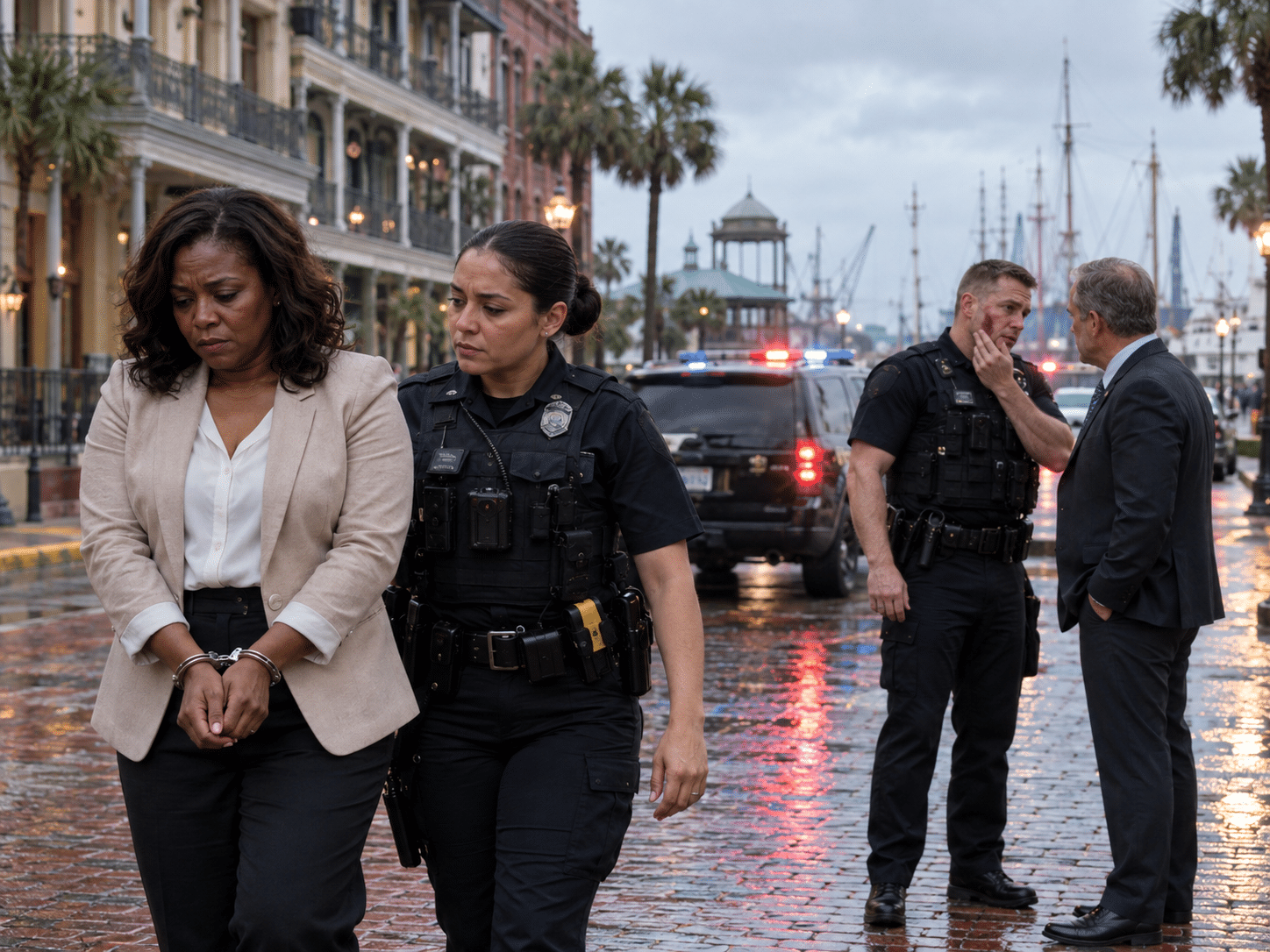
If you are accused of assaulting a police officer in Galveston County, the case can quickly become a felony, even if the incident lasted only a few seconds. These situations often happen during arrests, traffic stops, domestic calls, bar incidents, public events, or when several officers are restraining someone. If an officer says you intentionally, knowingly, or recklessly caused bodily injury, prosecutors may file charges that have much more serious consequences than a regular assault.
However, they still need to prove what happened, what you intended, whether the officer was doing their job legally, and if you knew they were a public servant. When we handle these cases, we carefully review body-camera footage, witness statements, medical records, arrest reports, use-of-force evidence, and every detail before and during the incident.
Assault On A Police Officer Can Become A Felony In Texas
Texas Penal Code § 22.01(a)(1) provides that a person commits assault if the person intentionally, knowingly, or recklessly causes bodily injury to another person. Bodily injury is broadly defined under Texas law and can include physical pain, illness, or impairment of physical condition.
Ordinarily, bodily-injury assault under § 22.01(a)(1) is a Class A misdemeanor. However, Texas Penal Code § 22.01(b)(1) elevates the offense to a third-degree felony when the alleged victim is a person the accused knows is a public servant who is lawfully discharging an official duty, or when the assault is committed in retaliation for the public servant’s exercise of official authority.
This difference can have a big impact on your case. In Texas, a third-degree felony usually means two to ten years in prison and a fine of up to $10,000 under Texas Penal Code § 12.34.
Prosecutors Must Prove More Than Physical Contact
Not every physical encounter with a police officer is considered felony assault on a public servant. Prosecutors have to prove every part of the charge beyond a reasonable doubt.
Under § 22.01(b)(1), one important issue is whether the accused knew the alleged victim was a public servant. In many cases involving uniformed Galveston police officers, that issue may appear straightforward. It can become more complicated when an officer is in plain clothes, working undercover, or becomes involved suddenly without clearly identifying himself or herself.
The state also has to show what you were thinking at the time. Accidentally touching an officer is not the same as intentionally, knowingly, or recklessly causing injury. In a chaotic arrest, someone might lose balance, pull away, fall into an officer, or make contact while people are struggling. We look closely at the evidence to see if it really shows criminal assault or just an accident during a fast-moving situation.
The Officer Must Be Lawfully Performing An Official Duty
Texas Penal Code § 22.01(b)(1) specifically refers to a public servant who is lawfully discharging an official duty. That language can become important when evaluating the circumstances surrounding an arrest, detention, or other police action.
The key question is not just whether you thought the officer was being unfair. We look at what the officer was doing, why the contact happened, whether the officer was on duty, and how the prosecution plans to prove this part of the case.
Video evidence is often very important. Body-camera footage, patrol-car videos, business surveillance, cellphone recordings, and videos from witnesses can give a clearer picture than a police report written after the fact.
Aggravated Assault On A Police Officer Can Carry Much Greater Penalties
Some cases are charged as aggravated assault rather than assault on a public servant. Under Texas Penal Code § 22.02(a), aggravated assault may occur when a person commits assault and causes serious bodily injury or uses or exhibits a deadly weapon during the offense.
Texas Penal Code § 22.02(b) can elevate aggravated assault to a first-degree felony when the offense is committed against someone the defendant knows is a public servant who is lawfully performing an official duty, or in retaliation for the exercise of official authority.
A first-degree felony is among the most serious offense levels under Texas law. Under Texas Penal Code § 12.32, punishment may range from five to 99 years or life in prison, with a possible fine of up to $10,000.
Because the penalties are so serious, it is important to look closely at the exact injury and any claims about a weapon. Medical records, photos, officer and witness statements, and forensic evidence can all affect whether prosecutors can prove aggravated assault.
Resisting Arrest Is A Separate Texas Offense
An incident involving an officer can also lead to a separate resisting-arrest charge. Texas Penal Code § 38.03 provides that a person commits resisting arrest, search, or transportation if the person intentionally prevents or obstructs an officer from carrying out an arrest, search, or transportation by using force against the officer or another person.
Resisting arrest is generally a Class A misdemeanor. It becomes a third-degree felony if a deadly weapon is used to resist the arrest or search.
Importantly, § 38.03 states that it is not a defense to resisting-arrest prosecution that the underlying arrest or search was unlawful. That rule often surprises defendants. A person who believes an officer had no legitimate reason to arrest them may still face criminal exposure if they use force to resist.
Texas Law Places Limits On Using Force Against Police
Texas self-defense law also contains specific restrictions when the other person is a peace officer. Texas Penal Code § 9.31 generally permits force when a person reasonably believes it is immediately necessary to protect against another person’s unlawful force.
However, § 9.31(b)(2) states that force generally is not justified merely to resist an arrest or search that the person knows is being performed by a peace officer, even if the arrest or search is unlawful. Texas law does recognize a limited exception under § 9.31(c) when the officer uses or attempts to use greater force than necessary before the person offers resistance and the person reasonably believes responsive force is immediately necessary to protect against the officer’s excessive force.
This is a fact-intensive defense. We evaluate who used force first, the amount of force used by the officer, whether the accused was already restrained, what threat existed at that moment, and whether the response was proportionate.
Body-Camera Footage Can Change The Direction Of The Case
Police reports commonly become the starting point of the prosecution’s case, but they do not always tell the entire story. Body-camera footage can reveal whether an officer gave commands, whether those commands could be heard, when physical force began, who initiated contact, and how the defendant reacted.
We also compare video evidence with the officer’s written report. Differences may matter. If a report states that a defendant punched an officer but the video appears to show the officer and defendant falling together during a struggle, that distinction can become central to the defense.
The same is true of witness testimony. Independent witnesses may have observed portions of the encounter from an angle not captured by police cameras.
Injuries To The Officer Must Be Examined Carefully
Because bodily injury is an element of assault under § 22.01(a)(1), the prosecution may rely on an officer’s description of pain, bruising, cuts, sprains, or other physical effects. Texas law does not require a catastrophic injury for bodily-injury assault.
We still examine the medical evidence closely. The timing of treatment, photographs, medical records, prior injuries, and consistency between the officer’s statements and physical findings may all matter.
When prosecutors allege serious bodily injury for aggravated assault, the level of injury becomes even more important because serious bodily injury has a specific legal meaning under Texas Penal Code § 1.07.
Statements Made After Arrest Can Affect The Defense
People accused of assaulting an officer often try to explain what happened immediately after the incident. Those statements can later become evidence.
A statement such as “I only pushed him because he grabbed me first” may be offered by prosecutors as an admission that physical contact was intentional. At the same time, the remainder of the statement may contain information relevant to excessive force or self-defense.
We review recordings of questioning, spontaneous statements captured by body cameras, jail calls, and other communications. Context matters, particularly when a person is injured, intoxicated, frightened, angry, or attempting to describe a chaotic event moments after it occurred.
Frequently Asked Questions About Assaulting A Police Officer In Galveston
Is Assaulting A Police Officer Automatically A Felony In Texas?
Not every contact with a police officer automatically results in a felony. Under Texas Penal Code § 22.01(a)(1), assault involving bodily injury requires proof that the defendant intentionally, knowingly, or recklessly caused bodily injury. Section 22.01(b)(1) can elevate that offense to a third-degree felony when the alleged victim is a public servant whom the defendant knows is lawfully performing an official duty.
The specific facts matter. Accidental contact during an arrest is different from intentionally striking an officer. We examine the physical movements, video evidence, statements, injuries, and circumstances surrounding the encounter before determining what defenses may apply.
What Is The Punishment For Assault On A Public Servant In Texas?
When bodily-injury assault is elevated under Texas Penal Code § 22.01(b)(1), it is generally a third-degree felony. Texas Penal Code § 12.34 provides that a third-degree felony may carry two to ten years in prison and a fine of up to $10,000.
The consequences can extend beyond the formal sentence. A felony conviction may affect employment, professional licensing, firearms rights, housing opportunities, and other areas of a person’s life. Because these cases can have lasting consequences, we examine whether every statutory element can actually be proven.
Can I Be Charged With Both Assault On An Officer And Resisting Arrest?
Yes. Prosecutors may file more than one charge arising from the same confrontation when they believe the facts support separate offenses.
Texas Penal Code § 38.03 covers resisting arrest, search, or transportation through the use of force. Texas Penal Code § 22.01 addresses assault. If prosecutors believe a defendant used force to prevent an arrest and also caused bodily injury to an officer, they may attempt to pursue both charges.
We examine whether the alleged conduct truly supports separate offenses and whether the evidence proves each element beyond a reasonable doubt.
What If I Accidentally Hit The Officer During The Arrest?
An accident can be an important issue because § 22.01(a)(1) requires an intentional, knowing, or reckless mental state. Mere accidental contact does not necessarily satisfy that requirement.
Arrests can be physically chaotic. Several officers may grab a person at once, someone may lose footing, arms may become trapped, or a person may instinctively pull away. Video evidence is often critical in distinguishing deliberate assault from accidental contact.
We review the event frame by frame when useful and compare the footage with the officer’s description of what occurred.
What If The Officer Was Not Wearing A Uniform?
The prosecution must prove the elements required by the specific charge. Under § 22.01(b)(1), the accused must know the alleged victim is a public servant.
When an officer is wearing a uniform, driving a marked vehicle, or clearly identifies himself or herself as law enforcement, prosecutors may argue that knowledge is obvious. Plainclothes or undercover situations can raise more difficult questions.
We examine whether the officer identified himself, whether a badge was visible, what was said, and whether a reasonable person in the defendant’s position would have understood that the individual was a police officer performing an official duty.
Speak With A Galveston Criminal Defense Lawyer About An Assault On A Police Officer Charge
An accusation that you assaulted a police officer in Galveston can expose you to felony prosecution, prison time, and consequences that continue long after the criminal case ends. Mark Diaz & Associates examines the entire encounter, including body-camera footage, witness statements, arrest reports, medical records, alleged injuries, use-of-force evidence, and the specific conduct prosecutors claim violated Texas law.
When you hire us, you work directly with the attorney handling your defense. Our clients have personal access to their lawyer, including a personal cell phone number, because questions, emergencies, and concerns do not always happen during ordinary business hours. You will not simply be handed off to a junior associate or left wondering who is responsible for your case. From arrest through resolution, we remain personally involved, accessible, and prepared to address the evidence against you.
Mark Diaz & Associates represents clients facing assault, assault on a public servant, resisting arrest, aggravated assault, and other criminal charges throughout Galveston and Houston, Texas. Contact our Galveston assaulting a LEO lawyers at Mark Diaz & Associates by calling 409-515-6170 to receive your free consultation.
