
What Happens If You Are Charged With Methamphetamine Trafficking in Galveston?
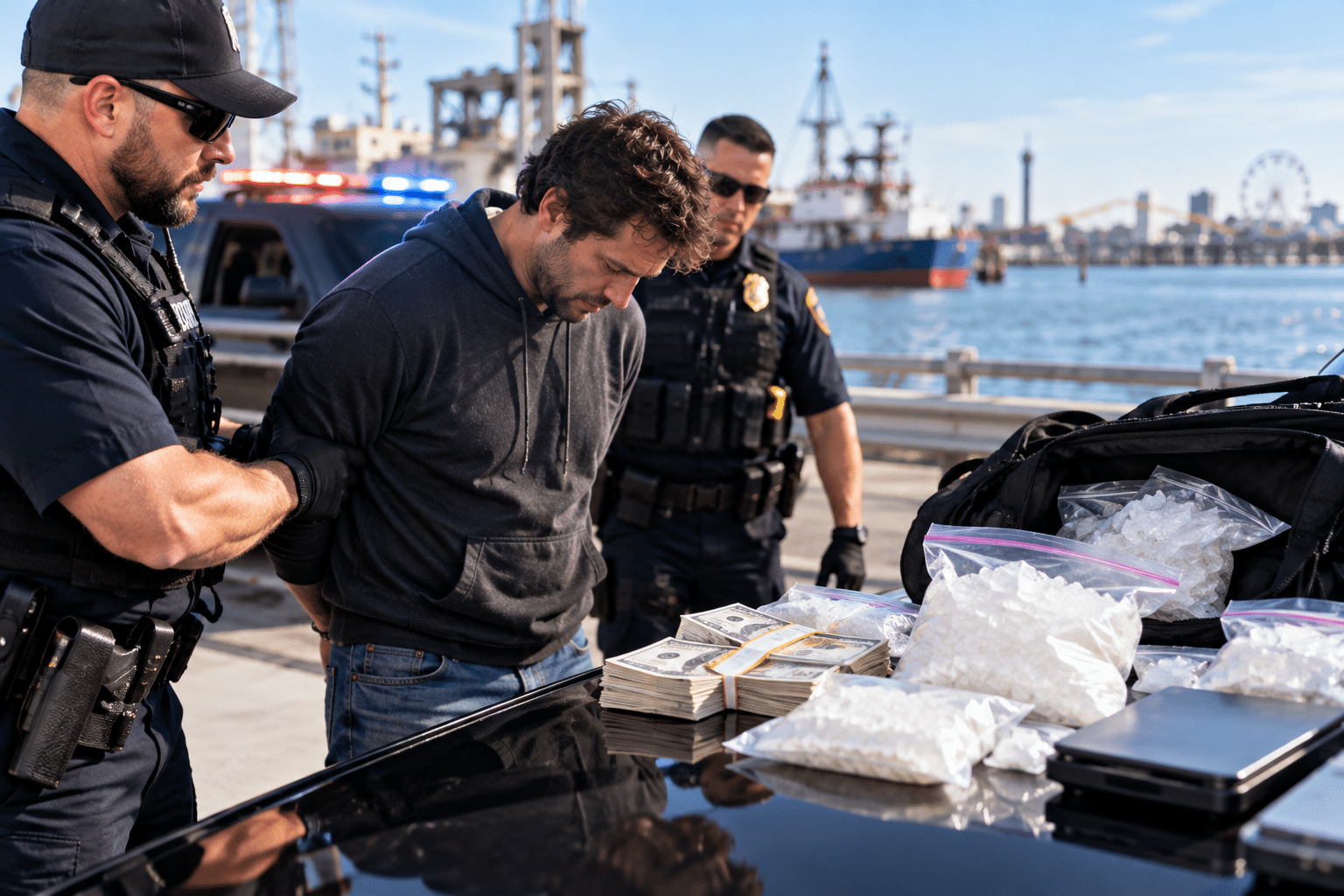
If you are charged with methamphetamine trafficking in Galveston, you could face many years in prison. These cases often start with a traffic stop, a search warrant, a tip from an informant, a controlled buy, surveillance, or an investigation involving several people. Police might take drugs, cash, phones, vehicles, digital messages, scales, packaging, and other items they say show intent to distribute methamphetamine.
The amount of methamphetamine can increase the possible punishment, but the prosecution must prove more than just quantity. When we defend someone in these cases, we look at whether the state can prove knowing possession, whether there is solid evidence of intent to deliver, how the drugs were found, and whether police followed the law during the investigation.
Texas Law Treats Methamphetamine As A Penalty Group 1 Controlled Substance
Methamphetamine is listed as a Penalty Group 1 controlled substance under Texas Health and Safety Code § 481.102. This means it is among the drugs with the harshest penalties in Texas.
Texas does not use one single criminal statute titled “methamphetamine trafficking.” Instead, conduct commonly described as trafficking is often prosecuted under Texas Health and Safety Code § 481.112, which prohibits knowingly manufacturing, delivering, or possessing with intent to deliver a Penalty Group 1 controlled substance.
This difference is important because simple possession and possession with intent to deliver have very different penalties. Prosecutors may try to show intent to deliver by pointing to the amount of methamphetamine, packaging, scales, messages, cash, surveillance, or statements from the accused or witnesses.
The Weight Of The Methamphetamine Can Determine The Severity Of The Charge
Under Texas Health and Safety Code § 481.112, penalties get more severe as the total weight of the drug increases, including any additives. Less than one gram is a state jail felony. One to less than four grams is a second-degree felony. Four to less than 200 grams is a first-degree felony.
Penalties are even harsher for larger amounts. If the case involves 200 grams or more but less than 400 grams, the law allows for 10 to 99 years or life in prison and a fine up to $100,000. For 400 grams or more, the minimum sentence is 15 years, with a maximum of 99 years or life, and a fine up to $250,000.
These numbers show why lab testing and weight calculations are so important in your defense. We check if the lab correctly identified the substance, how the weight was measured, if packaging was left out, and if drugs from different places were wrongly added together.
Prosecutors Must Prove More Than The Presence Of Methamphetamine
Just finding methamphetamine near someone does not prove possession with intent to deliver. Texas law says the state must show the person knowingly had the drug and, for intent to deliver charges, meant to deliver it.
This issue is especially important when drugs are found in a place shared by several people, like a car, apartment, hotel room, garage, storage unit, or house. We look at whether the methamphetamine was in an area only our client controlled or somewhere others could reach.
Other evidence can also matter, such as fingerprints, DNA, text messages, ownership records, surveillance videos, statements, keys, personal papers, and where the drugs were found. The defense may question whether the state can really link the accused to the methamphetamine, not just show it was nearby.
Intent To Deliver May Be Based On Circumstantial Evidence
Police do not need to see an actual sale for prosecutors to charge possession with intent to deliver. Investigators can use indirect evidence and argue that how the methamphetamine was stored or packaged shows it was meant for distribution.
For example, prosecutors may point to several individually packaged quantities, digital scales, large amounts of cash, communications discussing prices or meetings, customer lists, or observations from surveillance. They may also rely on testimony from confidential informants or cooperating witnesses.
We look at each piece of evidence on its own and in context. Having cash does not always mean drug sales. Owning a scale does not prove trafficking. Messages can be unclear or might belong to someone else who used the phone. A witness might also have a reason to help prosecutors to get a lighter sentence.
A Traffic Stop Can Become The Center Of The Defense
Many methamphetamine cases in Galveston and Houston start with a traffic stop. Officers might say they had probable cause to search because they smelled something, saw suspected drugs, got a tip from another officer, received consent, or used a drug-sniffing dog.
The Fourth Amendment protects you from unreasonable searches and seizures. In your defense, we look at whether police had a legal reason to stop you, if the stop lasted too long, if you really agreed to the search, and if there was probable cause for the search that found the drugs.
If evidence was found through an illegal search, the defense can ask the court to throw out that evidence. If the prosecution’s case relies on drugs found in this way, winning this issue can have a big impact on your case.
Cell Phones Often Become Important Evidence In Methamphetamine Cases
Drug investigations now often include digital evidence. Police may take your phone and search for text messages, encrypted chats, photos, contacts, location data, payment records, social media activity, or signs of past deals.
A phone found near someone does not automatically establish who wrote every message stored on it. Authentication, ownership, access, and context can all matter. We also examine whether law enforcement had lawful authority to search the device and whether the search stayed within the scope of the warrant.
Digital evidence may appear damaging when individual messages are viewed alone. The larger conversation, dates, participants, and surrounding circumstances may tell a different story.
Confidential Informants And Cooperating Witnesses Require Close Review
Methamphetamine trafficking investigations frequently rely on people who are themselves facing criminal charges. A confidential informant may perform controlled purchases, introduce undercover officers, or provide information used to obtain a search warrant.
A cooperating witness may have strong incentives to provide information that benefits the government. The person may be seeking dismissal of charges, a reduced sentence, favorable treatment, money, or some other benefit.
We examine the witness’s history, agreements with law enforcement, prior statements, criminal record when legally relevant, and whether the person’s story is supported by independent evidence. Credibility can become a central issue when a prosecution depends heavily on someone attempting to improve his or her own position.
Large Methamphetamine Cases May Draw Federal Attention
A serious Texas methamphetamine investigation can also attract federal agencies, particularly when investigators believe the alleged activity involved large quantities, interstate transportation, organized distribution, firearms, or an ongoing drug organization.
A person may therefore begin as the subject of a local investigation and later face federal charges. Federal methamphetamine offenses can carry substantial mandatory minimum sentences depending on the charge, quantity, and other circumstances.
When federal agencies are involved, it is important to determine early whether the case remains in state court or may be presented to federal prosecutors. Statements made during the early stages of an investigation can later become evidence in either system.
A Methamphetamine Trafficking Charge Requires A Detailed Review Of The Evidence
A trafficking allegation does not mean the prosecution has already proved the case. The state still bears the burden of establishing every element beyond a reasonable doubt.
We review how the investigation began, why police targeted our client, where the drugs were found, who controlled that location, how the methamphetamine was tested and weighed, what witnesses said, and whether police obtained digital evidence lawfully. We also examine whether the facts truly support an intent-to-deliver allegation or whether prosecutors are drawing conclusions from evidence that has another explanation.
The punishment ranges in these cases make early legal representation particularly important. A careful defense requires much more than simply looking at the amount of methamphetamine listed in a police report.
Frequently Asked Questions About Methamphetamine Trafficking Charges In Galveston
How Much Methamphetamine Makes A Texas Case A First-Degree Felony?
Under Texas Health and Safety Code § 481.112, manufacture, delivery, or possession with intent to deliver four grams or more but less than 200 grams of a Penalty Group 1 substance is a first-degree felony. Larger quantities carry enhanced first-degree punishment ranges.
If the amount is 200 grams or more but less than 400 grams, the statutory range is 10 to 99 years or life, with a possible fine of up to $100,000. At 400 grams or more, the statute provides a minimum of 15 years and a maximum of 99 years or life, along with a possible fine of up to $250,000.
Because the quantity can directly affect potential punishment, laboratory testing and the accuracy of the alleged weight deserve close attention.
Can I Be Charged With Trafficking If Police Never Saw Me Sell Methamphetamine?
Yes. Texas Health and Safety Code § 481.112 also criminalizes possession with intent to deliver. Prosecutors therefore do not have to prove that an officer personally witnessed a completed drug sale.
They may attempt to infer intent from quantity, packaging, cash, scales, messages, surveillance, or witness testimony. We examine whether those facts actually support the state’s interpretation.
For example, the presence of a large amount of cash may have a lawful explanation. A phone may have been shared with another person. Packaging materials may have an unrelated use. The prosecution must still establish knowing possession and intent beyond a reasonable doubt.
What If Methamphetamine Was Found In A Car With Several People Inside?
A vehicle occupied by several people can create significant possession issues. The state cannot necessarily prove that every person in the vehicle knowingly possessed drugs simply because methamphetamine was somewhere inside the car.
We examine where the drugs were located, whether they were visible, who owned or controlled the vehicle, whether anyone made statements about the drugs, and whether fingerprints, DNA, messages, or other evidence connects a particular person to them.
A bag located beneath another passenger’s seat presents different issues from methamphetamine found inside a person’s clothing. The precise facts matter when prosecutors attempt to establish knowing possession.
Can Police Use My Text Messages To Prove Methamphetamine Trafficking?
Yes, prosecutors often use text messages and other digital communications in drug cases. They may argue that messages discussing quantities, money, meetings, or coded language show an intent to distribute methamphetamine.
The defense can still challenge how the evidence was obtained, whether the phone belonged to or was exclusively used by the accused, whether the messages can be reliably attributed to that person, and whether the prosecution is interpreting conversations accurately.
Context matters. A short message may appear incriminating when isolated from an entire conversation. We look at the complete digital record whenever possible rather than accepting an investigator’s interpretation of selected messages.
Speak With Our Galveston Methamphetamine Trafficking Defense Lawyer
A methamphetamine trafficking charge can place your freedom, career, finances, and future at risk. At Mark Diaz & Associates, we examine the state’s case from the beginning, including the alleged drug weight, laboratory evidence, search and seizure issues, witness credibility, digital communications, and the prosecution’s evidence of intent to deliver. We represent people accused of serious drug offenses in Galveston and throughout Houston, Texas.
When you hire our firm, you work directly with Mark Diaz. His clients have his personal cell phone number because questions, emergencies, and concerns do not always occur during ordinary business hours. You will not simply be handed off to a junior associate or left wondering who is handling your case. From the investigation or arrest through the resolution of the case, Mark remains personally involved and accessible, while our firm works to protect your rights and challenge the government’s evidence.
If you have been arrested, indicted, or learned that you are under investigation for methamphetamine trafficking, possession with intent to deliver, or another serious drug offense, contact Mark Diaz & Associates for a free consultation. Contact our Galveston federal drug crime lawyers by calling 409-515-6170 to schedule your free consultation.
