
Can You Be Charged With Auto Theft in Texas If You Borrowed Someone’s Car Without Permission?
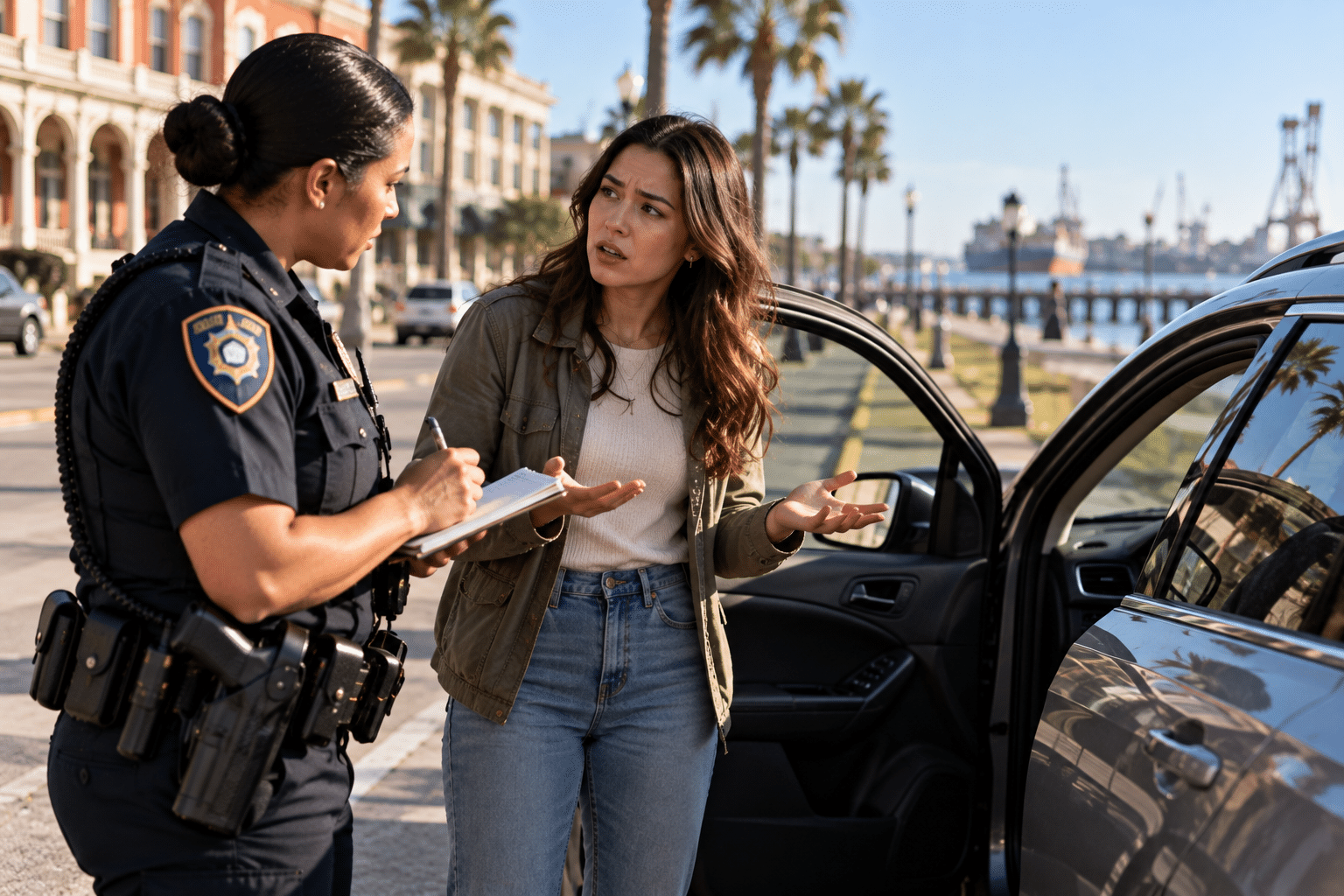
If you take someone else’s car without asking, you could face a felony charge in Galveston County, even if you meant to return it. Many people think auto theft only applies if you plan to keep or sell the car, but Texas law also makes it a crime to use someone’s vehicle without their clear permission. This difference matters, especially when a family member, friend, roommate, employee, or former partner says they were just borrowing the car.
We often see cases where the owner reports the car stolen, but the accused says they never meant to steal it. Details like whether you had permission, how the car was used before, what was said between everyone involved, and what you intended can all affect whether prosecutors charge you with unauthorized use, theft, or something else.
Unauthorized Use Of A Vehicle Is A Felony In Texas
Texas Penal Code § 31.07 makes it a criminal offense to intentionally or knowingly operate another person’s motor-propelled vehicle without the owner’s effective consent. The statute does not require prosecutors to prove that the accused intended to keep the car forever. Unauthorized use of a vehicle is classified as a state jail felony under Texas law.
This difference is important when someone says they were just “borrowing” a car. If you knew you didn’t have permission to drive the car, prosecutors might say you broke § 31.07, even if you planned to bring it back soon. What matters is whether you knew you didn’t have permission when you used the car.
Borrowing A Car Is Different From Theft
Traditional theft requires something more. Texas Penal Code § 31.03 states that theft occurs when a person unlawfully appropriates property with the intent to deprive the owner of that property. Appropriation is unlawful when it occurs without the owner’s effective consent, among other circumstances.
Intent is what separates theft from unauthorized use of a vehicle. If someone takes a car planning to sell it, hide it, take it apart, or keep it from the owner, prosecutors may charge theft. But if the evidence shows the person only took the car for a short time without permission and meant to return it, unauthorized use is more likely.
The label “auto theft” is often used casually, but the precise criminal charge matters. We examine the statute listed in the charging documents instead of relying only on how police or witnesses describe the accusation.
Prior Permission Can Become Important Evidence
Vehicle-use cases are often more complicated when the accused previously had permission to drive the car. A parent may regularly allow an adult child to use a vehicle. Couples may share vehicles even though only one person’s name appears on the title. Friends may regularly exchange vehicles without obtaining express permission each time.
Those circumstances do not automatically prevent a criminal charge, but they can create important questions about consent. Texas Penal Code § 31.07 requires the State to prove that the operation occurred without the owner’s effective consent. If there was an established pattern of permission, the defense may examine whether the accused reasonably believed consent still existed.
Text messages, emails, prior driving history, access to keys, insurance records, witness statements, and communications between the owner and accused may become important evidence. We look at what happened before the vehicle was taken rather than focusing only on the owner’s later decision to report it missing.
Taking A Family Member’s Car Can Still Lead To Charges
Being related to the owner does not create an automatic exception to Texas law. A person can potentially face unauthorized-use charges for taking a parent’s, sibling’s, spouse’s, former partner’s, or other relative’s vehicle without effective consent.
Family disputes can produce complicated factual situations. One person may say there was standing permission to use the car, while another claims permission had been withdrawn. An argument may occur shortly before the vehicle is taken, and the owner may then call the police.
We examine whether consent had actually been revoked, how that revocation was communicated, and whether the accused knew permission no longer existed. Those details can matter because § 31.07 requires intentional or knowing conduct.
Keeping The Vehicle Longer Than Allowed Can Create Problems
A person may initially receive permission to use a vehicle but later exceed the limits of that permission. For example, an owner may allow someone to use a car for an hour, but the driver keeps it overnight or takes it to another city.
The legal question may become whether the driver’s continued operation occurred after effective consent ended. Prosecutors may use messages demanding that the vehicle be returned, phone records, location information, or witness testimony to establish when the driver allegedly knew permission had been withdrawn.
The facts are particularly important when the driver did not clearly understand that permission had ended. We examine the exact communications instead of assuming that a late return automatically proves criminal intent.
The Penalties For Unauthorized Use Of A Vehicle Are Serious
Unauthorized use of a vehicle under Texas Penal Code § 31.07 is a state jail felony. Texas Penal Code § 12.35 generally provides for a sentence of between 180 days and two years in a state jail and permits a fine of up to $10,000. Certain circumstances can increase punishment beyond the ordinary state-jail-felony range.
A felony accusation can also affect employment, professional opportunities, housing, background checks, and other parts of a person’s life. Because the offense involves another person’s property, restitution or disputes over damage to the vehicle may also become part of the case.
A person accused of unauthorized use should therefore take the allegation seriously even if the vehicle was returned unharmed.
Evidence Of Intent Can Determine Whether Prosecutors Pursue Theft
Texas theft law focuses on whether the accused unlawfully appropriated the vehicle with the intent to deprive its owner. The value of the property can affect the classification and punishment of a theft offense under Texas Penal Code § 31.03.
Evidence that someone tried to sell the vehicle, changed its license plates, concealed it, stripped parts from it, abandoned it, altered identifying information, or claimed ownership may strengthen a theft allegation. By contrast, circumstances showing temporary use and an intention to return the vehicle may undermine the claim that the accused intended to deprive the owner.
We carefully separate evidence of unauthorized operation from evidence of theft because the mental states required by the statutes are not identical.
Police Statements Can Affect An Auto Theft Case
What someone tells police after being stopped can become significant evidence. Statements such as “I knew I wasn’t allowed to take it” may help prosecutors establish knowledge under § 31.07. On the other hand, statements about previous permission may become relevant to whether the accused believed he or she had consent.
People sometimes make matters worse by trying to explain a complicated relationship or vehicle arrangement during a stressful police encounter. Investigators may record those statements through body cameras, patrol-car video, written reports, or recorded interviews.
When we review a case, we examine exactly what was said, when it was said, and whether the statement accurately reflects what happened.
Frequently Asked Questions About Unauthorized Use And Auto Theft In Texas
Can I Be Charged If I Planned To Return The Car?
Yes. Planning to return the vehicle does not necessarily prevent an unauthorized-use charge. Texas Penal Code § 31.07 focuses on whether you intentionally or knowingly operated another person’s vehicle without the owner’s effective consent. Prosecutors do not have to prove that you planned to keep the car permanently to pursue that offense.
Your intention to return the vehicle may still be highly relevant when distinguishing unauthorized use from theft. Theft under Texas Penal Code § 31.03 requires an intent to deprive the owner of the property. We examine what you intended, what you said, how long you possessed the vehicle, where you took it, and what you did with it before it was recovered.
What If The Owner Usually Lets Me Drive The Car?
A history of permission can be important. If the owner regularly allowed you to use the vehicle without asking each time, that history may raise questions about whether you knowingly operated the car without effective consent on the particular occasion in question.
We may review messages, witness statements, access to the keys, insurance information, and prior instances when you used the vehicle. The prosecution still has to establish the elements of § 31.07. A later dispute between the parties does not automatically prove that you knew you lacked permission when you began driving.
Can My Parent Report Me For Taking The Family Car?
Yes. A family relationship does not prevent someone from making a police report, and Texas law does not create a general family exception to unauthorized use of a vehicle. If prosecutors believe you knowingly operated a vehicle without effective consent, charges may follow.
The surrounding history still matters. If you routinely drove the family vehicle, kept a set of keys, or previously had broad permission to use it, those circumstances may become relevant. We would also examine whether permission was expressly withdrawn and whether you were aware of that decision.
What If I Had Permission At First But Kept The Car Too Long?
That situation can be more complicated than taking a vehicle without any permission at all. The prosecution may argue that consent ended at a certain point and that you knowingly continued operating the vehicle after that time.
Messages demanding the return of the vehicle can become significant evidence. We examine when those communications were sent, whether they were received, what response was given, and whether the owner had previously allowed similar extensions. The timeline can be critical to determining whether the conduct became criminal.
Is Unauthorized Use Of A Vehicle The Same As Auto Theft?
Not exactly. Unauthorized use of a vehicle under Texas Penal Code § 31.07 requires intentional or knowing operation of another person’s vehicle without effective consent. Theft under § 31.03 requires unlawful appropriation of property with an intent to deprive the owner.
The distinction often turns on intent. Someone who takes a vehicle temporarily may still face unauthorized-use charges even when evidence of an intent to permanently deprive the owner is weak. Someone who sells, conceals, abandons, or otherwise treats the vehicle as his or her own may face evidence supporting a theft allegation.
What Is The Punishment For Unauthorized Use Of A Vehicle In Texas?
Unauthorized use of a vehicle is a state jail felony. Under Texas Penal Code § 12.35, the ordinary punishment range is 180 days to two years in a state jail, and a court may impose a fine of up to $10,000. Certain circumstances can result in enhanced punishment.
The consequences can extend beyond confinement or fines. A felony record can affect employment, housing, licensing, and future criminal proceedings. That is why we examine consent, intent, ownership, communications, and every other piece of evidence before deciding how the accusation should be challenged.
Speak With Our Galveston Criminal Defense Lawyer About An Auto Theft Charges
Being accused of taking someone’s vehicle does not mean the facts automatically establish auto theft. Texas law distinguishes between theft and unauthorized use of a vehicle, and questions about permission, intent, prior vehicle use, and communications between the parties can substantially affect the case. At Mark Diaz & Associates, we examine what the owner actually authorized, what our client understood about that permission, whether consent was withdrawn, and whether prosecutors can prove the required mental state beyond a reasonable doubt.
When you hire Mark Diaz & Associates, you work directly with your attorney. Our clients have personal access to us because legal questions, arrests, emergencies, and concerns do not always happen during ordinary business hours. You will not simply be handed off to a junior associate or become another name on a crowded docket. From arrest through resolution, we remain personally involved, accessible, and familiar with the facts and strategy of your case.
Mark Diaz & Associates represents people accused of auto theft, unauthorized use of a vehicle, and other criminal offenses in Galveston and throughout Houston, Texas. If you or a family member has been arrested or is under investigation, contact our Galveston auto theft lawyers at Mark Diaz & Associates by calling 409-515-6170 to receive your free consultation.
