
Can Marijuana Lead To A DWI Arrest In Galveston?
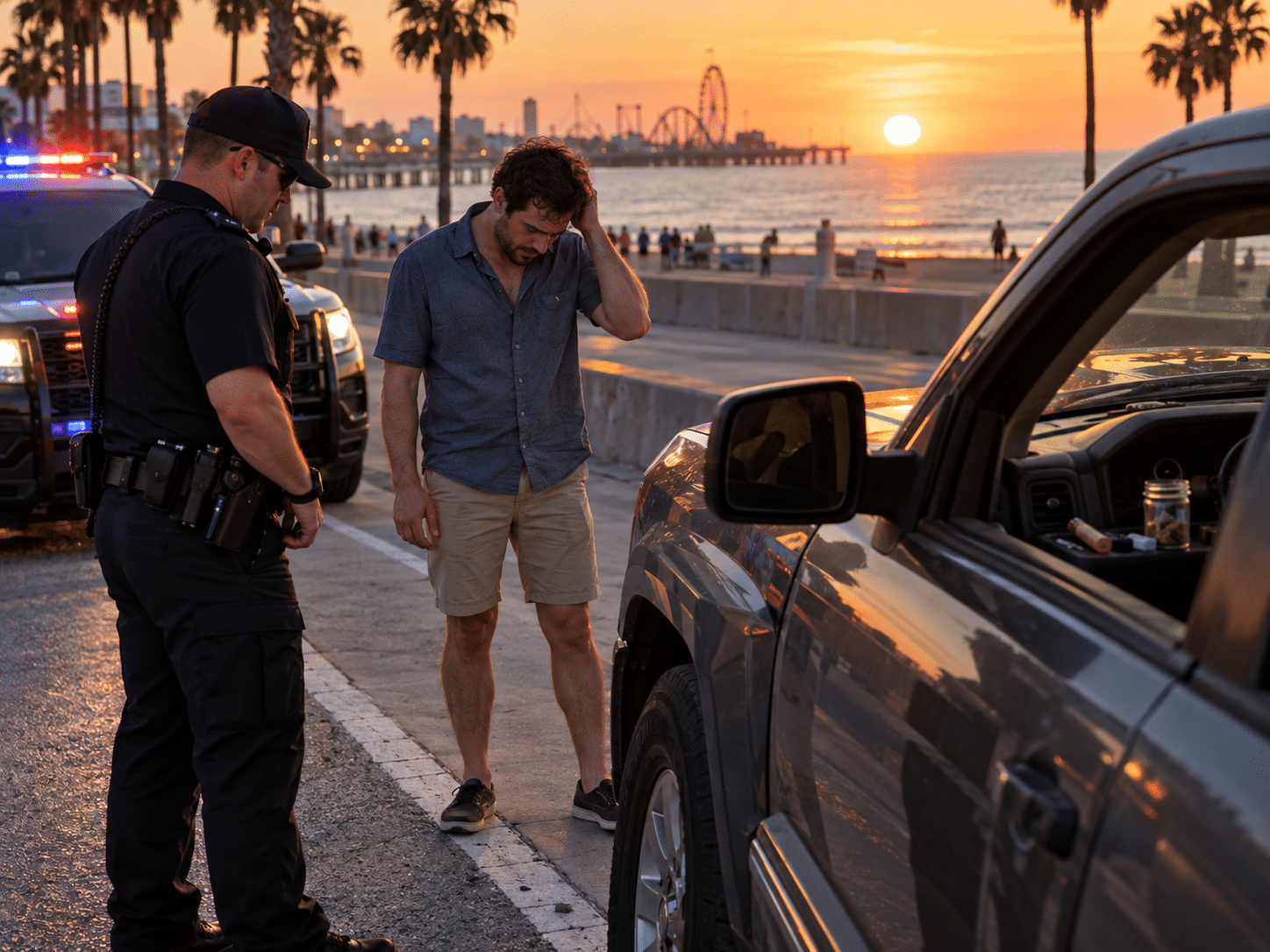
Marijuana can lead to a DWI arrest in Galveston County even when a driver has consumed no alcohol. Texas DWI law is not limited to drunk driving, and police can make an arrest when they believe marijuana has caused a driver to lose the normal use of mental or physical faculties. These cases can be difficult because marijuana does not produce the same type of simple numerical evidence commonly associated with alcohol.
A blood test may show THC or marijuana metabolites, but the presence of THC does not answer every question about whether a person was intoxicated while driving. When we defend a marijuana DWI case, we examine the traffic stop, the officer’s observations, field sobriety testing, statements, blood evidence, video recordings, and the prosecution’s attempt to connect marijuana use to actual impairment.
Texas DWI Law Applies To Marijuana
Texas Penal Code § 49.04 states that a person commits DWI when the person is intoxicated while operating a motor vehicle in a public place. The definition of “intoxicated” is found in Texas Penal Code § 49.01(2). It includes not having the normal use of mental or physical faculties because of alcohol, a controlled substance, a drug, a dangerous drug, a combination of those substances, or another substance.
That language is important in marijuana cases. A prosecutor does not have to prove that alcohol caused the alleged impairment. Marijuana alone may form the basis for a DWI charge if the state claims it caused the driver to lose normal mental or physical abilities.
Unlike alcohol cases, however, Texas law does not establish a marijuana equivalent to the 0.08 alcohol concentration standard. The state therefore generally must rely on other evidence to establish marijuana-related impairment.
There Is No Automatic THC Number That Proves DWI In Texas
One of the major differences between an alcohol DWI and a marijuana DWI is the significance of chemical testing. Texas Penal Code § 49.01 provides that an alcohol concentration of 0.08 or more satisfies one statutory definition of intoxication. The statute does not establish a corresponding THC concentration that automatically makes a driver legally intoxicated.
That distinction can become central to the defense. THC may remain detectable after the effects experienced by the person have changed substantially. A laboratory result showing marijuana-related compounds therefore must be evaluated together with the circumstances surrounding the driving and arrest.
We examine when marijuana was allegedly consumed, what substance was detected, the reported concentration, how the blood sample was collected and stored, and what conclusions the state’s witnesses claim can reasonably be drawn from the laboratory findings. The presence of THC and proof of impairment are related issues, but they are not necessarily the same issue.
What Police Look For During A Marijuana DWI Investigation
An officer who suspects marijuana impairment may begin forming an opinion before asking the driver to step out of the vehicle. The officer may describe observations involving driving behavior, reaction time, speech, coordination, appearance, odor, statements, or the presence of marijuana or related products inside the vehicle.
Police may also administer standardized field sobriety tests. Texas Department of Transportation materials state that officers working DWI enforcement should receive training in standardized field sobriety testing and that agencies should have procedures for using Drug Recognition Experts when appropriate.
A Drug Recognition Expert, often called a DRE, is an officer with additional training intended to help identify categories of drugs that may be affecting a driver. A DRE evaluation may include observations involving coordination, physical responses, vital signs, eye examinations, statements, and other indicators.
These observations are evidence, but they are not beyond challenge. Fatigue, anxiety, physical limitations, medical issues, poor road conditions, unfamiliar instructions, or simple nervousness can affect how someone appears during a roadside investigation.
Police May Request A Blood Test After A Marijuana DWI Arrest
A breath test is designed primarily to measure alcohol concentration, so suspected marijuana cases often involve blood testing. Texas Transportation Code § 724.011 provides that a person arrested for certain intoxication-related driving offenses is deemed to have consented, subject to the requirements of Chapter 724, to the taking of breath or blood specimens to determine alcohol concentration or the presence of controlled substances, drugs, dangerous drugs, or other substances.
A blood test can become an important part of the prosecution’s case, but we do not treat laboratory evidence as automatically decisive. We examine how the sample was obtained, whether proper procedures were followed, chain of custody, testing methodology, laboratory documentation, and the interpretation offered by the government’s witnesses.
We also look at the timing of the blood draw. The relevant legal issue is whether the person was intoxicated while operating the vehicle, not simply whether a marijuana-related substance was detectable sometime later.
Field Sobriety Tests Can Be Used In Marijuana Cases
Many drivers associate roadside sobriety tests exclusively with alcohol. Officers may also rely on those tests when they suspect marijuana or another drug.
The prosecution may claim that poor balance, difficulty following directions, divided-attention problems, unusual eye movements, or other behaviors support an inference of impairment. We compare those claims against the officer’s body-camera and dash-camera recordings whenever available.
Video evidence can be especially important. An arrest report may characterize a driver as confused, unstable, or impaired, while the recording may show a person speaking normally, understanding instructions, walking without obvious difficulty, and responding appropriately. The actual footage may provide a much clearer picture than a written description prepared after the arrest.
The Smell Of Marijuana Does Not Automatically Prove DWI
An officer may report smelling marijuana during a traffic stop, but odor by itself does not establish that the driver was intoxicated. Even if marijuana was recently present inside a vehicle, the state must still prove the elements of DWI.
We look at whether the odor allegedly came from the driver, a passenger, the vehicle, clothing, or another source. We also examine whether officers found marijuana, whether anyone admitted consuming it, and whether the state has evidence showing when consumption allegedly occurred.
The state’s burden is not simply to prove that marijuana existed somewhere in the situation. Under Texas Penal Code §§ 49.01 and 49.04, the prosecution must establish intoxication while the accused was operating a motor vehicle in a public place.
A First Marijuana DWI Can Carry Serious Consequences
Under Texas Penal Code § 49.04, a standard first DWI is generally a Class B misdemeanor and carries a statutory minimum confinement period of 72 hours. A prior intoxication-related conviction can increase the seriousness of a later charge under Texas Penal Code § 49.09.
A marijuana DWI conviction may also produce consequences beyond a possible jail sentence. A person may face fines, driver’s license consequences, probation requirements, court costs, substance-related conditions, increased insurance costs, and problems arising from a criminal record.
The seriousness can increase considerably under certain circumstances. Texas Penal Code § 49.045 makes DWI with a passenger younger than 15 a state jail felony. Repeat DWI allegations can also result in enhanced charges under § 49.09.
An Accident Can Make A Marijuana DWI Case Much More Serious
When an alleged marijuana DWI involves a serious collision, investigators may examine whether more serious intoxication offenses apply. These cases can involve extensive accident reconstruction, medical records, toxicology evidence, witness statements, vehicle data, and video evidence.
Causation becomes an important issue. The presence of marijuana in someone’s system does not by itself establish that marijuana caused an accident. We investigate roadway conditions, traffic signals, actions of other drivers, vehicle defects, weather, visibility, speed evidence, and other factors that may explain why the collision occurred.
An accusation involving an injury accident demands careful attention because the potential criminal consequences can be substantially greater than those associated with an ordinary misdemeanor DWI.
Marijuana DWI Cases Often Depend On The Details
There is no single piece of evidence that determines every marijuana DWI case. The prosecution may rely on driving observations, statements, field sobriety tests, marijuana discovered in the vehicle, DRE observations, blood results, and video recordings.
We examine how those pieces fit together and whether they actually establish loss of normal mental or physical faculties. A blood result may raise questions rather than answer them. An officer’s written observations may look different when compared with video. A driving mistake may have an innocent explanation unrelated to marijuana.
The state carries the burden of proving the criminal charge. Our job is to test the evidence used to support that accusation and identify weaknesses, inconsistencies, procedural issues, and facts that support the defense.
Frequently Asked Questions About Marijuana DWI Charges In Galveston
Can I Get A DWI In Texas For Marijuana Even If I Did Not Drink Alcohol?
Yes. Texas DWI law expressly includes impairment caused by drugs and controlled substances. Under Texas Penal Code § 49.01(2), intoxication can mean losing the normal use of mental or physical faculties because of a controlled substance or drug. Texas Penal Code § 49.04 makes it an offense to operate a motor vehicle in a public place while intoxicated.
Alcohol therefore does not have to be involved. A prosecutor may pursue a DWI case based entirely on alleged marijuana impairment. The important issue is whether the state can prove intoxication while you were operating the vehicle, rather than merely proving that marijuana had been consumed at some earlier point.
Is There A Legal THC Limit For Driving In Texas?
Texas does not use the same type of statutory THC limit that it uses for alcohol. Texas Penal Code § 49.01 provides a specific alcohol concentration of 0.08 for one definition of intoxication, but it does not create an equivalent numerical THC threshold.
That makes the interpretation of marijuana blood results particularly important. Prosecutors may try to combine toxicology findings with driving behavior, officer observations, field sobriety testing, statements, and other evidence. We examine whether that combined evidence actually supports the claim that the driver had lost the normal use of mental or physical faculties.
Can I Be Arrested If I Smoked Marijuana Hours Before Driving?
An arrest is possible if an officer develops probable cause to believe you were driving while intoxicated, but prior marijuana use does not automatically establish DWI. The relevant question is whether marijuana allegedly impaired your normal mental or physical faculties while you were operating the vehicle.
Timing can therefore become a major issue. We examine when consumption allegedly occurred, when the vehicle was operated, when the traffic stop happened, and when any blood sample was collected. Those details may affect how the prosecution’s toxicology evidence should be interpreted.
What Happens If My Blood Test Is Positive For THC?
A positive blood test can become evidence in a marijuana DWI prosecution, but a positive result does not end the inquiry. Texas law does not say that any detectable amount of THC automatically constitutes DWI.
We examine the reported substance and concentration, the collection and testing procedures, chain of custody, laboratory records, timing of the blood draw, and the state’s interpretation of the findings. We also compare the toxicology evidence with the driver’s actual behavior shown by body-camera, dash-camera, surveillance, or other available recordings.
Speak With Mark Diaz & Associates About A Marijuana DWI Arrest
A marijuana DWI charge can put your freedom, driver’s license, record, employment, and reputation at risk. These cases often depend on details that deserve close examination, including why the vehicle was stopped, what the officer observed, how field sobriety tests were administered, whether a DRE participated, how blood was collected and tested, and what video evidence actually shows. At Mark Diaz & Associates, we examine the state’s evidence from the beginning and determine whether it supports the accusation that marijuana caused a loss of normal mental or physical faculties.
When you hire Mark Diaz & Associates, you work directly with your attorney. Our clients have direct access because questions, emergencies, and concerns do not always occur during normal business hours. You will not simply be handed off to a junior associate or left wondering who is handling an important criminal case. From the arrest and initial investigation through negotiations, hearings, trial preparation, and resolution, we remain personally involved and accessible. Contact our Galveston DWI attorneys at Mark Diaz & Associates by calling 409-515-6170 to receive your free consultation.
