
Drug Recognition Exams in Texas DWI Cases
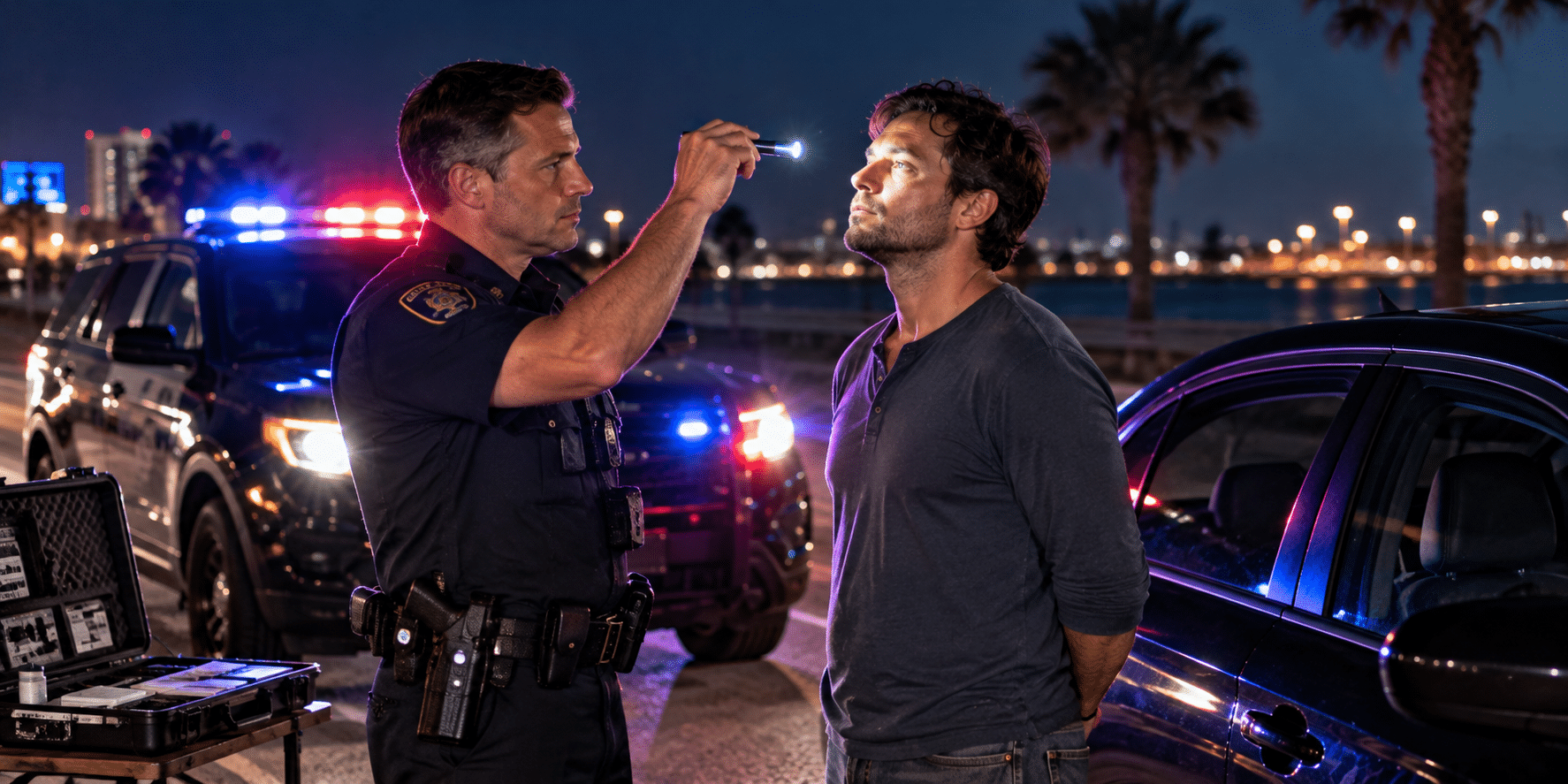
A Texas DWI investigation is not always about alcohol. Police may suspect a driver is impaired by marijuana, prescription drugs, illegal drugs, or a mix of substances, even if a breath test shows little or no alcohol. In these cases, law enforcement might call in a Drug Recognition Expert (DRE) to evaluate the driver. The officer’s findings can play a big role in the prosecution’s case, especially when there is no breath alcohol concentration of 0.08 or higher. I
f you are facing a drug-related DWI charge in Galveston County, it is important to know what a Drug Recognition Evaluation is, what the officer is trying to prove, and how the officer’s opinion can be challenged.
What Texas Law Considers Intoxication
Texas Penal Code § 49.01 defines “intoxicated” in two different ways. A person may be considered intoxicated if the person does not have the normal use of mental or physical faculties because of alcohol, a controlled substance, a drug, a dangerous drug, a combination of substances, or another substance introduced into the body. A person may also be considered intoxicated by having an alcohol concentration of 0.08 or more.
Texas Penal Code § 49.04 provides that a person commits DWI if the person is intoxicated while operating a motor vehicle in a public place. This means prosecutors do not necessarily need to prove that a driver had a particular concentration of marijuana, prescription medication, cocaine, or another drug in the bloodstream. In a drug-related DWI case, the prosecution may instead attempt to show that the substance caused the driver to lose the normal use of mental or physical faculties.
This difference is one reason why Drug Recognition Evaluations matter in Texas DWI cases.
What Is A Drug Recognition Evaluation?
A Drug Recognition Expert is a police officer with extra training to spot signs that someone may be impaired by drugs. The National Highway Traffic Safety Administration says the Drug Evaluation and Classification Program is an advanced law enforcement program for evaluating suspected drug-impaired drivers. Certified DRE officers follow a standard 12-step process to decide if a person seems impaired, if drugs or a medical condition might be the cause, and what type of drug could be involved.
A Drug Recognition Evaluation is more detailed than the usual roadside field sobriety tests people think of during a DWI stop. It can take about an hour and may include physical checks, divided-attention tests, looking at the eyes, checking pulse, blood pressure, body temperature, muscle tone, and asking about medications or drug use. The officer might also ask for a blood or urine sample for lab testing.
The officer then decides if the person is impaired and, if so, which type or mix of drugs might be the cause.
The Seven Drug Categories Used By DRE Officers
The DRE protocol groups drugs into seven general categories. These include central nervous system depressants, central nervous system stimulants, hallucinogens, dissociative anesthetics, narcotic analgesics, inhalants, and cannabis.
A DRE officer may attempt to connect certain physical signs with one or more of these categories. For example, the officer may consider pupil size, pulse rate, body temperature, muscle tone, eye movements, coordination, and statements made by the driver.
We do not treat a DRE conclusion as automatically accurate simply because the officer has advanced training. NHTSA itself notes that research concerning the ability of DRE officers to identify the responsible drug category has produced mixed results and that accuracy may vary depending on the officer’s experience, the drug involved, and whether multiple drugs were present.
Prescription Medication Can Lead To A Drug-Related DWI Charge
A valid prescription does not automatically prevent a Texas DWI charge. Under Texas Penal Code § 49.01, intoxication can result from a drug or dangerous drug regardless of whether the substance was legally prescribed. The issue is whether the State can prove that the substance caused a loss of normal mental or physical faculties.
This can create difficult cases for drivers taking medications for anxiety, pain, insomnia, attention disorders, muscle spasms, or other medical conditions. A DRE officer may observe behavior or physical characteristics and associate them with a particular class of drugs.
Those observations may have innocent explanations. Fatigue, anxiety, illness, injury, neurological conditions, dehydration, stress, and other medical circumstances can affect coordination, balance, eye appearance, pulse, and performance on roadside exercises. We examine whether the officer adequately considered these alternative explanations.
Blood Testing May Become Critical In A Drug DWI Case
Texas Transportation Code § 724.011 provides that a person arrested for an intoxication-related driving offense is deemed to have consented, subject to the statute, to the taking of one or more breath or blood specimens to determine alcohol concentration or the presence of a controlled substance, drug, dangerous drug, or other substance.
Drug-related cases frequently involve blood testing because many controlled substances cannot be detected through an ordinary breath alcohol test. Toxicology testing may identify marijuana metabolites, prescription drugs, stimulants, opioids, sedatives, or other substances.
The existence of a substance in someone’s blood, however, does not automatically establish intoxication at the time of driving. Some substances or metabolites may remain detectable after their impairing effects have diminished. We examine the amount detected, the pharmacology of the substance, the timing of the blood draw, laboratory procedures, chain of custody, and whether the toxicology evidence actually supports the officer’s conclusion.
Field Sobriety Tests May Be Used During A Drug Investigation
Before a DRE evaluation occurs, an officer may administer standardized field sobriety tests. NHTSA identifies the standardized battery as the horizontal gaze nystagmus test, walk-and-turn test, and one-leg-stand test. These tests were developed largely in connection with alcohol impairment, although officers with additional drug-impaired-driving training may use observations from those tests when investigating suspected drug impairment.
Performance can be affected by many factors unrelated to intoxication. Age, weight, footwear, uneven pavement, traffic conditions, physical injuries, nervousness, poor instructions, and medical conditions can influence the outcome.
When we review a DWI arrest, we compare the officer’s written description with body-camera and dash-camera footage whenever it is available. The video may show whether the officer accurately described what occurred.
A DRE Opinion Is Evidence, Not Automatic Proof Of Guilt
A Drug Recognition Expert may testify about training, observations, examination results, and conclusions. That testimony can sound persuasive because the officer uses medical and scientific terminology during the evaluation.
Still, a DRE does not replace the prosecution’s burden of proof. The State must prove beyond a reasonable doubt that the accused was intoxicated while operating a motor vehicle in a public place. The officer’s opinion is one piece of evidence that may be tested against laboratory results, video evidence, witness testimony, medical records, driving behavior, and other circumstances.
We may also examine whether the officer followed the standardized protocol correctly. Departures from training, incomplete testing, inconsistent documentation, assumptions about medications, or conclusions that conflict with toxicology results can become important issues in the defense.
Drug-Related DWI Cases Require Careful Review
Drug DWI cases can be more complicated than alcohol-based cases because there may be no simple numerical measurement comparable to a 0.08 alcohol concentration. The prosecution may rely heavily on officer observations, DRE conclusions, blood testing, driving behavior, and statements made during the investigation.
We examine each part of the case separately and then consider whether the evidence actually fits together. A positive drug test does not automatically prove impairment, and an officer’s suspicion does not automatically prove intoxication.
For someone facing a DWI accusation in Galveston or Houston, the details of the Drug Recognition Evaluation may become one of the most important parts of the defense.
Frequently Asked Questions About Drug Recognition Exams In Texas DWI Cases
What Happens During A Drug Recognition Evaluation In Texas?
A Drug Recognition Evaluation generally occurs after an officer suspects that alcohol alone does not explain a driver’s condition. According to NHTSA, DRE officers use a standardized 12-step protocol designed to determine whether a person appears impaired, whether the impairment may be caused by drugs or a medical condition, and what drug category may be responsible.
The evaluation may include questions about medications and drug use, observation of the eyes, divided-attention exercises, pulse measurements, blood pressure, body temperature, examination of muscle tone, and observations of physical behavior. The officer may also request a toxicology specimen.
We look closely at whether the officer followed the recognized protocol and whether the conclusions are actually supported by the observations recorded during the evaluation.
Can I Be Convicted Of DWI In Texas If My BAC Was Below 0.08?
Yes. Texas does not limit DWI prosecutions to drivers with an alcohol concentration of 0.08 or higher. Texas Penal Code § 49.01 also defines intoxication as not having the normal use of mental or physical faculties because of alcohol, controlled substances, drugs, dangerous drugs, combinations of substances, or other substances introduced into the body.
A prosecutor may therefore pursue a DWI case even when a breath test shows little or no alcohol. In a drug-related case, the State may rely on driving behavior, field sobriety tests, DRE observations, toxicology results, statements, and other evidence.
The prosecution still must prove intoxication beyond a reasonable doubt.
Can Prescription Medication Cause A Texas DWI Charge?
Yes. A driver can potentially be charged with DWI even when the drug involved was lawfully prescribed. Texas law focuses on impairment rather than simply whether the drug was legally possessed. If prosecutors claim a medication caused the driver to lose normal mental or physical faculties, they may pursue a DWI charge under Texas Penal Code §§ 49.01 and 49.04.
That does not mean taking prescribed medication automatically makes someone guilty. Dosage, tolerance, timing, medical history, blood levels, driving behavior, and other factors may affect whether the medication actually caused impairment.
We examine whether the State can connect the presence of the medication to actual loss of faculties at the time the person was driving.
Does A Positive Blood Test Automatically Prove Drugged Driving?
No. A positive toxicology result establishes that a substance or its metabolite was detected in the specimen. It does not necessarily establish that the person was impaired when operating the vehicle.
Different drugs behave differently in the human body. Some metabolites remain detectable after intoxicating effects have diminished, and individual responses to prescription medication may vary. Toxicology evidence therefore has to be considered together with the time of driving, the time of the blood draw, the concentration detected, driving behavior, officer observations, and other evidence.
We closely examine whether the laboratory findings support the prosecution’s theory or merely establish prior drug exposure.
Can A Drug Recognition Expert Be Wrong?
Yes. A DRE opinion is not infallible. NHTSA reports that research concerning DRE accuracy has produced mixed results and that performance can depend on the officer’s experience, the substance involved, and whether more than one substance was present.
Physical signs attributed to drug impairment may also have other causes. Anxiety, medical conditions, exhaustion, injury, dehydration, prescription side effects, and stress can affect physical appearance and test performance.
We compare the DRE officer’s conclusions with toxicology findings, video evidence, medical information, and the officer’s own written report. Significant inconsistencies can affect how persuasive that opinion is in court.
What If The DRE Says I Was Impaired, But My Blood Test Does Not Support The Opinion?
That discrepancy can become an important issue. The DRE evaluation is intended to identify whether impairment appears drug-related and to predict the drug category involved. Laboratory testing may later provide evidence that confirms or contradicts the officer’s prediction.
If toxicology testing fails to detect the type of drug identified by the officer, we examine that inconsistency closely. We also examine whether another medical or physical explanation fits the observations better than intoxication.
The ultimate question is not whether the officer believed impairment existed. The question is whether prosecutors can prove every required element of DWI beyond a reasonable doubt.
Speak With Mark Diaz & Associates About Your Drug DUI Case
A Drug Recognition Evaluation can become a major part of a Texas DUI prosecution, but an officer’s conclusion should never be treated as the final word. We examine the traffic stop, driving observations, field sobriety testing, DRE protocol, body-camera footage, blood testing, toxicology evidence, medical explanations, and every statement used against our client. When the State claims drugs caused impairment, we focus on whether the evidence actually proves loss of normal mental or physical faculties at the time of driving.
When you hire Mark Diaz & Associates, you work directly with your attorney. Our clients have direct access to us, including personal contact information, because questions, emergencies, and concerns do not always arise during normal business hours. You will not simply be handed off to a junior associate or become another file in a system where no one knows the details of your case. From the arrest and initial investigation through negotiations, hearings, trial preparation, and resolution, we remain personally involved and accessible.
Mark Diaz & Associates represents clients facing DUI and other criminal charges in Galveston and throughout Houston, Texas. If you have been arrested after a Drug Recognition Evaluation or accused of driving while impaired by marijuana, prescription medication, illegal drugs, or a combination of substances, contact our Galveston DUI lawyers at Mark Diaz & Associates by calling 409-515-6170 to receive a free consultation.
