
Can Domestic Battery By Strangulation Send You To Prison In Texas?
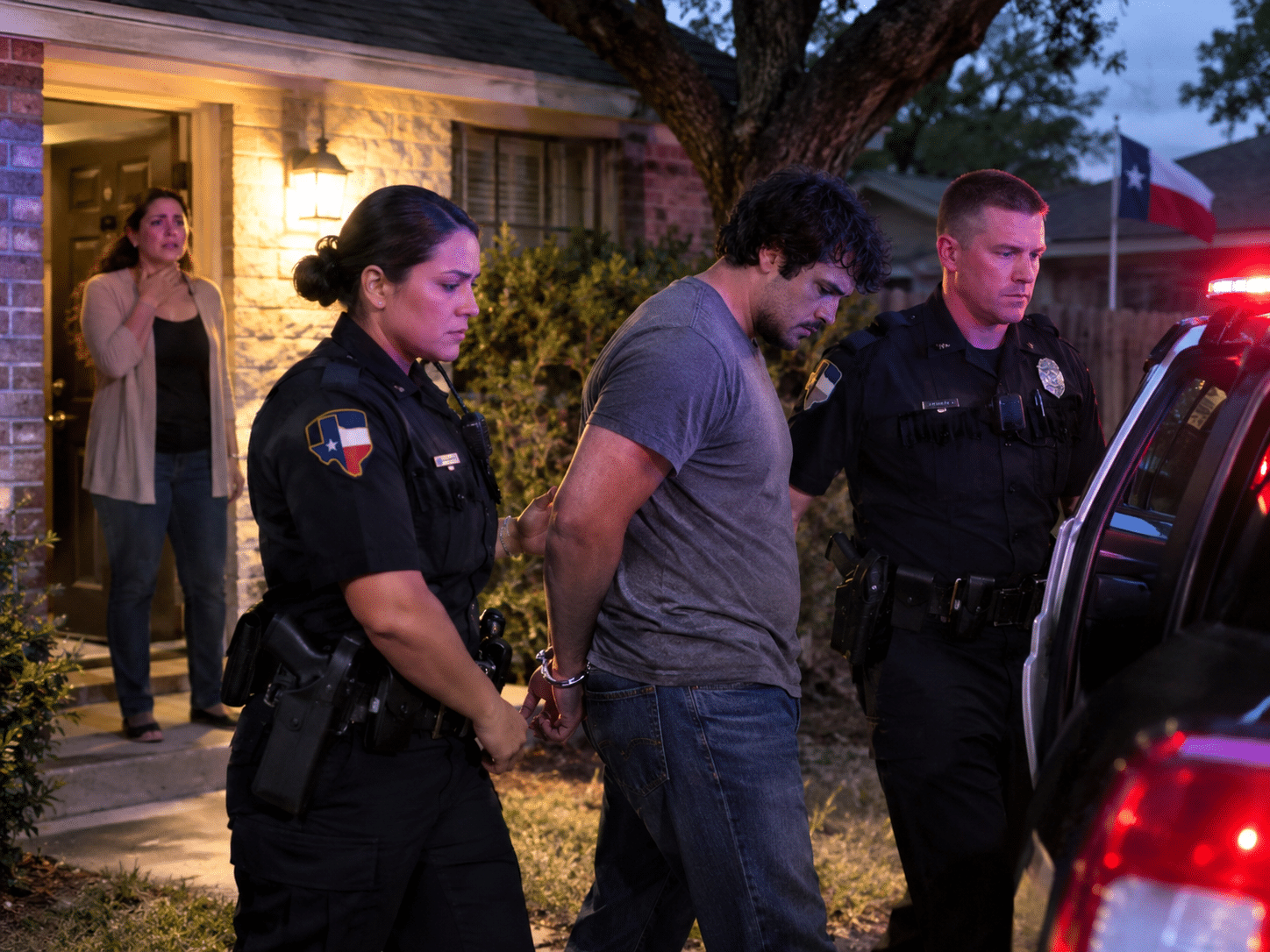
If someone is accused of choking or strangling a spouse, romantic partner, family member, or household member in Galveston, they can be arrested for a felony, even if the incident lasted only a few seconds. Texas law does not use the term “domestic battery by strangulation.” Instead, prosecutors usually charge it as assault against a family, household, or dating partner, claiming the accused stopped the other person’s normal breathing or blood flow.
This charge can result in years in the Texas Department of Criminal Justice, and a previous family-violence conviction can make the punishment even harsher. When we defend clients facing this accusation, we look closely at what actually happened, whether breathing or circulation was truly blocked, what the physical evidence shows, what each witness said, and whether the prosecution can prove every part of the case beyond a reasonable doubt.
Texas Treats Alleged Strangulation As A Felony Assault
Texas Penal Code § 22.01(a)(1) provides that a person commits assault by intentionally, knowingly, or recklessly causing bodily injury to another person, including a spouse. An ordinary bodily-injury assault can be a Class A misdemeanor, but Texas law increases the offense to a third-degree felony when the alleged victim has a qualifying family, household, or dating relationship with the defendant and the assault is committed by intentionally, knowingly, or recklessly impeding normal breathing or blood circulation by applying pressure to the throat or neck or by blocking the nose or mouth. Texas Penal Code § 22.01(b)(2)(B) contains the provision commonly associated with family-violence strangulation cases.
The relationship between the people involved matters. Texas Family Code § 71.0021, §71.003, and §71.005 cover dating relationships, family relationships, and households. The statutory definitions can include current or former romantic partners, spouses and former spouses, people who share a child, certain relatives, and people who live or previously lived together in the same household.
A Third-Degree Felony Can Lead To Years In Prison
A first qualifying allegation of assault by strangulation or suffocation against a family or dating partner is generally a third-degree felony under Texas Penal Code § 22.01(b)(2)(B). Texas Penal Code § 12.34 provides a punishment range of two to ten years in the Texas Department of Criminal Justice for a third-degree felony. A court may also impose a fine of up to $10,000.
Not everyone charged with this offense will automatically go to prison. The result depends on the evidence, the person’s criminal history, the details of the incident, possible defenses, plea deals, and other sentencing factors. However, anyone facing this charge should know it is not just a minor domestic dispute. From the start, the accusation puts the accused at risk of a felony conviction and possible prison time.
Prior Family-Violence Convictions Can Increase The Charge
Texas law provides an even greater punishment range in certain repeat cases. Under Texas Penal Code § 22.01(b-3), an assault involving strangulation or suffocation against a person in a qualifying dating, family, or household relationship can become a second-degree felony when the prosecution proves a qualifying prior conviction involving family violence. The prior offense must meet the statutory requirements before the enhancement applies.
Texas Penal Code § 12.33 sets the punishment for a second-degree felony at two to twenty years in prison, with a possible fine of up to $10,000. When we review an enhanced case, we do not just accept that a prior conviction qualifies. We check the prior judgment, charging documents, relationship details, and the legal basis for the earlier case to see if the prosecution can legally use it to increase the current charge.
Prosecutors Must Prove That Breathing Or Blood Circulation Was Impeded
A physical struggle involving the neck does not automatically establish felony strangulation under Texas Penal Code § 22.01(b)(2)(B). The statute focuses on impeding normal breathing or blood circulation through pressure applied to the throat or neck or by blocking the nose or mouth. The prosecution must prove facts that bring the alleged conduct within that statutory definition.
This difference is important. Sometimes, one person says the other put hands around their neck during an argument, while the accused says there was pushing, self-defense, or trying to get away. Medical reports, photos, body-camera videos, 911 calls, witness statements, text messages, and when statements were made can all help show what really happened.
We also look at whether the complaining witness’s story changed over time. What someone says during an emotional 911 call might be different from what they later tell police, doctors, prosecutors, or a grand jury. These differences do not automatically end the case, but they can matter when the government has to prove felony strangulation beyond a reasonable doubt.
Serious Injury Can Produce Additional Criminal Exposure
Some strangulation allegations involve claims of unconsciousness, neurological injury, fractured structures in the neck, or other serious harm. Texas Penal Code § 22.02 provides that an assault can become aggravated assault when the accused causes serious bodily injury or uses or exhibits a deadly weapon during the assault. Aggravated assault is ordinarily a second-degree felony, although particular circumstances can elevate the offense further.
This means prosecutors may look at more than just whether someone’s neck was pressed. Medical records become very important if the state says the incident caused serious injury. We check if the medical evidence really supports the claim, if something else could explain the symptoms, and if the injuries match what was told to law enforcement.
An Arrest Can Lead To An Emergency Protective Order
A family-violence arrest can create restrictions before the criminal case is resolved. Texas Code of Criminal Procedure Article 17.292 allows a magistrate to issue an emergency protective order following an arrest involving family violence. The order may restrict contact with the alleged victim and impose other conditions, and the statute requires an emergency protection order in certain cases involving serious bodily injury or the use or exhibition of a deadly weapon.
These restrictions can quickly affect where someone lives, their family contact, and daily life. Breaking a court order can cause more legal trouble, even if the accused disagrees with the original claim. We tell clients to take every bond condition and protective order seriously while we fight the criminal case through the right legal steps.
The Alleged Victim Does Not Control Whether Charges Continue
Some people think a domestic assault case will go away if the complaining witness decides not to press charges. In Texas, criminal cases are brought by the State, not controlled by the complaining witness. After police make an arrest and prosecutors get the case, the government decides whether to keep going with the prosecution.
Still, if the complaining witness changes their mind, it can make a difference. Prosecutors might look at later statements, inconsistencies, evidence that goes against the original claim, and any problems with proving the case in court. We review all the evidence instead of assuming that asking to “drop the charges” will end the case.
Defending A Texas Strangulation Allegation Requires A Close Review Of The Evidence
Domestic assault cases often begin during highly emotional situations where two people give sharply different accounts of what happened. Police may arrive after the physical interaction has ended and must make decisions based on statements, visible injuries, witness observations, and the condition of the scene. That initial decision does not determine guilt.
We might look at body-camera videos, photos, medical records, emergency calls, security footage, phone records, texts, witness statements, and earlier statements. Self-defense can matter if the accused used reasonable force to protect themselves from someone else’s aggression. Sometimes, cases involve misunderstandings about physical contact, exaggerated claims, or evidence that does not show breathing or blood flow was really blocked.
The central question is whether the prosecution can prove the specific felony allegation beyond a reasonable doubt. A serious accusation demands a defense based on the evidence rather than assumptions about what supposedly occurred.
Frequently Asked Questions About Domestic Assault By Strangulation In Texas
Is Strangulation Of A Spouse Automatically A Felony In Texas?
When an assault involving bodily injury is committed against a spouse or another person covered by the statutory family, household, or dating relationship provisions, and the accused intentionally, knowingly, or recklessly impeded normal breathing or blood circulation in the manner described by Texas Penal Code § 22.01(b)(2)(B), the offense is generally a third-degree felony.
Not every claim of contact with someone’s neck is enough to prove felony strangulation. The prosecution has to show the right relationship, an assault, the accused’s mental state, and that breathing or circulation was actually impeded. We look at whether the evidence supports each of these points.
How Much Prison Time Can You Receive For Domestic Strangulation In Texas?
A third-degree felony carries a potential prison sentence of two to ten years under Texas Penal Code § 12.34, along with a possible fine of up to $10,000. A qualifying prior family-violence conviction can increase a strangulation assault to a second-degree felony under Texas Penal Code § 22.01(b-3), which can expose the accused to two to twenty years in prison under § 12.33.
Those are statutory punishment ranges, not automatic sentences. The actual outcome can depend on the strength of the state’s evidence, criminal history, defenses, negotiations, and the particular circumstances of the case.
Does The Alleged Victim Need To Have Visible Neck Injuries?
Texas Penal Code § 22.01(b)(2)(B) does not state that visible bruising or another particular external injury is required. The prosecution’s focus is whether the accused caused bodily injury and impeded normal breathing or circulation in one of the ways covered by the statute.
The lack of visible injury can nevertheless be important evidence. We compare photographs, medical findings, witness observations, body-camera footage, and statements made after the incident with the specific mechanism of strangulation alleged by the prosecution. Evidence that conflicts with the accusation can become significant at trial or during negotiations.
What If I Put My Hands On Someone’s Neck But Did Not Choke Them?
Contact with the neck and statutory strangulation are not necessarily the same thing. The felony provision addresses intentionally, knowingly, or recklessly impeding normal breathing or blood circulation by pressure to the throat or neck or by blocking the nose or mouth.
The precise facts therefore matter. We would examine the duration and nature of the contact, statements from both parties, medical evidence, photographs, recordings, and other circumstances. Prosecutors cannot replace proof of the statutory elements with the mere fact that physical contact occurred near the neck.
Speak With Mark Diaz & Associates About A Texas Strangulation Charge
A felony family-violence strangulation allegation can threaten your freedom, record, family relationships, employment, and future. When we defend these cases at Mark Diaz & Associates, we examine what occurred before police arrived, whether breathing or circulation was actually impeded, whether medical evidence supports the accusation, whether statements are consistent, and whether self-defense or another defense applies. We understand that the first version presented to police is not always the complete story, and a felony accusation should be tested against the evidence the State will actually have to present in court.
When you hire Mark Diaz & Associates, you work directly with your attorney. Our clients have personal access to their attorney, including a personal cell phone number, because questions, emergencies, and concerns do not always happen during normal business hours. You will not simply be handed off to a junior associate or left wondering who is responsible for your defense. From arrest through resolution, we remain personally involved, accessible, and familiar with the facts and legal issues affecting your case.
Mark Diaz & Associates represents people accused of domestic violence, felony assault, and other criminal offenses in Galveston and throughout Houston, Texas. If you are being accused of assault by strangulation or another serious criminal offense, contact our Galveston domestic violence defense lawyer at Mark Diaz & Associates today by calling 409-515-6170 to schedule your free consultation. Let’s discuss the evidence, potential penalties, and available defenses.
