
What Happens If Police Find Drugs in a Shared Apartment or Hotel Room?
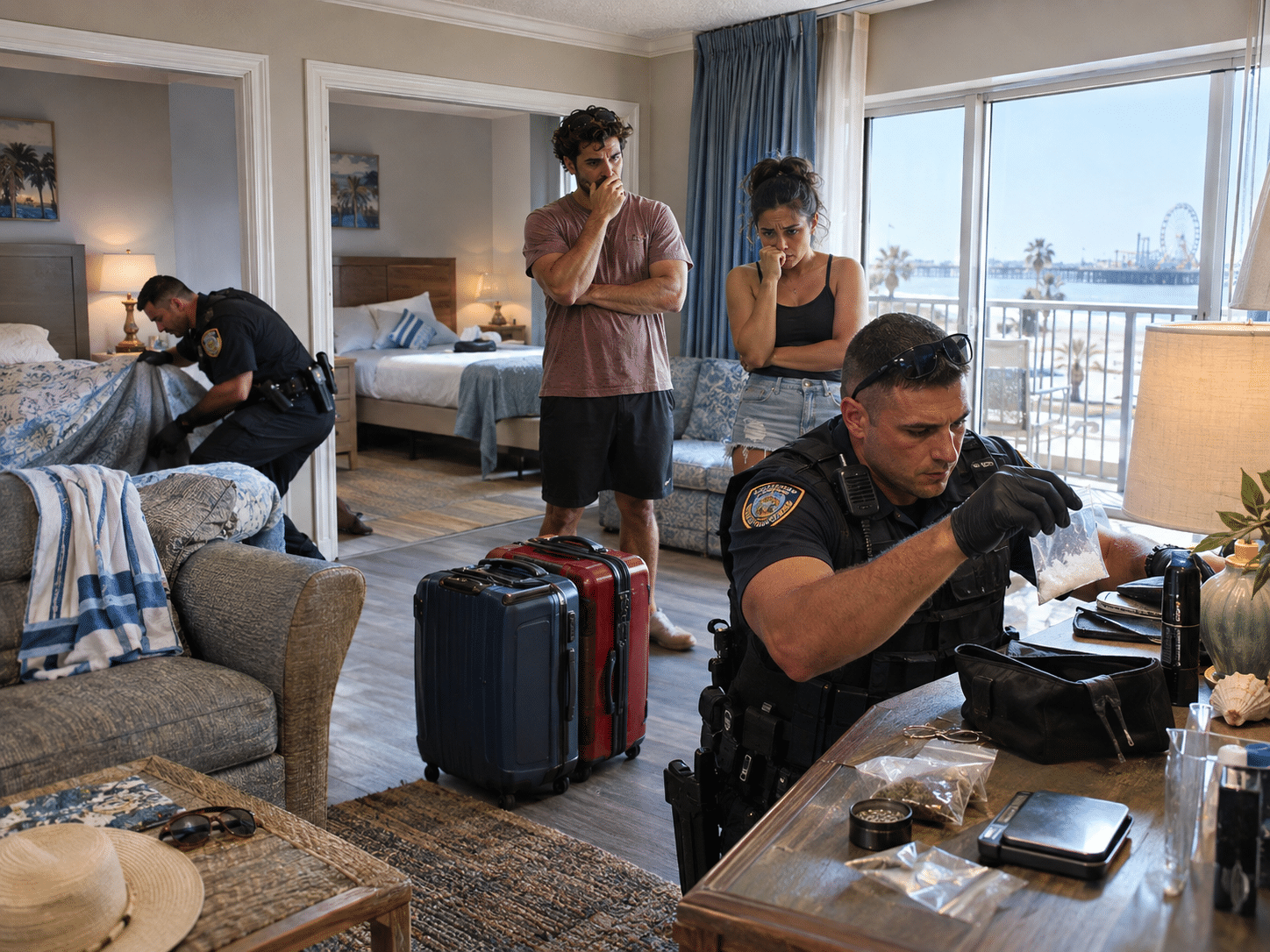
If police find drugs in an apartment or hotel room, it does not mean everyone there will be convicted of drug possession. In Galveston County, prosecutors must still show that a specific person knowingly or intentionally possessed the drugs. This can get complicated when several people share the space, guests come and go, or the drugs are found with property that could belong to someone else. Having a hotel room in your name or living in an apartment can be used by prosecutors, but just being there does not prove possession. When we handle these cases, we look at where the drugs were found, who could access that spot, whose things were nearby, what was said, and whether police can actually link our client to the drugs.
Texas Prosecutors Must Prove Knowing Or Intentional Possession
Texas controlled-substance laws generally require proof that a person knowingly or intentionally possessed the drug. Texas Health and Safety Code § 481.115, for example, makes it an offense to knowingly or intentionally possess certain Penalty Group 1 or 1-B substances. Texas law defines possession as actual care, custody, control, or management of the substance.
So, just being near drugs is not always enough. The State usually has to prove that the person controlled, managed, or cared for the substance and knew it was illegal. Texas courts allow possession to be shown with direct or circumstantial evidence, but the facts must still support the connection. This is especially important in shared apartments, hotel rooms, vacation rentals, and other places where several people might have equal or shared access.
Shared Rooms Create Important Questions About Who Actually Possessed The Drugs
Texas courts use what’s called the affirmative-links analysis when drugs are found in a place not only controlled by one person. This helps prevent someone from being convicted just because they were near drugs that belonged to someone else. When a place is shared, prosecutors usually need more facts that connect the accused to the drugs.
For example, if drugs are out in the open next to someone’s ID, wallet, phone, or personal items, it may be a stronger case for the prosecution than if the drugs are hidden in another guest’s closed suitcase. Drugs found in a shared kitchen cabinet are different from drugs hidden in a locked bedroom that only one roommate uses.
We look at the whole situation: Who rented the hotel room? Who paid for it? Who had a key? How many people were there? Where were the drugs found? Were they visible? Were they in a backpack, drawer, safe, suitcase, or bathroom cabinet? These details help decide if prosecutors can prove someone knowingly possessed the drugs.
Police May Rely On Several Factors To Establish An Affirmative Link
Texas appellate courts have listed several things that can help show a connection between a person and drugs found in a shared place. These include how close the person was to the drugs, if the drugs were in plain sight, if the person owned or had the right to use the place, if drug paraphernalia was nearby, if the person made incriminating statements, and if their actions showed they knew about the drugs.
No single factor decides the outcome. The strength of the evidence usually depends on all the circumstances together. For example, prosecutors might say someone controlled drugs found in a bedroom with their clothes, ID, mail, and other personal items. The defense has a stronger case if the drugs were found in a shared living room or in a bag that belongs to someone else.
Drugs Found In A Hotel Room Can Raise Different Possession Issues
Hotel cases can be especially fact-dependent because rooms often have temporary guests, visitors, and shared access. A person may reserve a room but allow several others inside, or several people may split the cost of a room even though only one name appears on the reservation.
Texas courts have considered cases where officers observed drugs inside hotel rooms and evaluated whether the facts supported possession and a lawful seizure. In one Texas appellate case, officers observed crack cocaine in plain view from a lawful position at the doorway of a hotel room, and the court upheld the seizure under those circumstances.
That does not mean every hotel-room drug discovery produces a valid possession case. The government still must connect the particular accused person to the substance. A hotel registration may show access to the room, but access is not always the same as knowing possession of everything inside.
The Legality Of The Search Can Be Just As Important As Possession
Before we look at who supposedly possessed the drugs, we also check how police entered the apartment or hotel room. Homes and hotel rooms usually have strong Fourth Amendment protection against unreasonable searches.
Police may enter with a valid search warrant, valid consent, or another recognized exception to the warrant requirement. The details matter when officers claim that a roommate, hotel guest, property manager, or another person gave permission to search.
If police entered unlawfully or exceeded the legal scope of a search, the defense may seek to suppress evidence obtained as a result. In a drug case, suppression of the controlled substance can severely damage the prosecution’s ability to proceed.
Statements Made At The Scene Can Affect Who Gets Charged
When police discover drugs in a shared room, officers often separate the occupants and begin asking questions. They may ask who rented the room, who owns a particular bag, where everyone slept, who brought guests over, and whether anyone knows where the drugs came from.
People sometimes make assumptions or guesses because they believe cooperation will help them avoid arrest. Those statements can later become evidence.
We carefully review body-camera recordings, police reports, and recorded interviews to determine exactly what was said. Statements that appear incriminating when quoted alone may look very different when the full conversation is reviewed.
Shared Possession Does Not Mean Automatic Guilt
More than one person can legally possess the same controlled substance, so proving that another person had access to the drugs does not automatically clear the accused. At the same time, the government cannot simply assume everyone inside an apartment or hotel room jointly possessed whatever drugs were discovered there.
The question is whether the evidence proves that the accused knowingly exercised care, custody, control, or management over the substance. When several people share access to a location, Texas courts require additional facts linking the accused to the drugs rather than relying only on presence or proximity. That distinction can become the central issue in a drug possession defense.
Frequently Asked Questions About Drugs Found In Shared Apartments And Hotel Rooms
Can Everyone In A Hotel Room Be Arrested If Police Find Drugs?
Police may detain or arrest more than one person depending on what they believe the evidence shows, but an arrest is not the same as proof of guilt. Texas drug possession laws generally require proof that the accused knowingly or intentionally possessed the controlled substance.
When several people occupy the same room, the State normally needs facts connecting a particular defendant to the drugs. We examine where the substance was found, whether it was visible, whose property surrounded it, who controlled the area, and what each person said. Texas courts recognize that mere proximity to another person’s drugs should not automatically result in a possession conviction.
What If The Drugs Were In My Room But Belonged To Someone Else?
That situation can create a legitimate defense issue, although the facts matter greatly. Prosecutors may argue that control over the room supports an inference that you knew the drugs were there. We would look for evidence showing whether other people had access to the room and whether the substance was concealed inside another person’s belongings.
The State still must prove knowledge and control. If another person left drugs in your room without your knowledge, the location alone may not establish every element of possession.
What If Police Find Drugs In My Roommate’s Bedroom?
Drugs found inside another roommate’s private bedroom may present a very different case from drugs sitting in a shared living room. If you did not have access to that bedroom and nothing else connects you to the drugs, the prosecution may have difficulty establishing knowing possession.
We would examine lease arrangements, locks, personal belongings, statements from the occupants, and any evidence showing who controlled the area. Texas courts focus on whether the accused had actual care, custody, control, or management of the substance, not merely living at the same address.
Does Having My Name On The Hotel Room Make Me Responsible For All Drugs Inside?
Not automatically. A hotel registration can show you had control of or access to the room, but it does not necessarily prove you knew about every item another guest brought inside.
If several people were using the room, the location of the drugs becomes especially important. Drugs found inside your personal luggage create different circumstances from drugs discovered inside another guest’s closed backpack.
The prosecution must evaluate the entire factual picture rather than relying solely on whose name appears on the reservation.
What If Another Person Admits The Drugs Belonged To Them?
An admission by another person can be important evidence, but it does not automatically end the case. Texas law allows the possibility of joint possession, so prosecutors may still claim that more than one person exercised control over the substance.
We examine whether the admission is credible, whether other evidence supports it, and whether anything independently connects our client to the drugs. If the only meaningful evidence points to another occupant, that can substantially affect the strength of the prosecution’s case.
Can Police Search A Hotel Room Without A Warrant?
Police do not automatically have the right to enter and search an occupied hotel room simply because it belongs to a hotel. Depending on the circumstances, officers may need a warrant, valid consent, or another recognized legal basis for entry.
A lawful plain-view observation can also matter. Texas courts have upheld seizures where officers were lawfully positioned and immediately observed apparent contraband inside a hotel room.
We examine exactly how officers gained access, who allegedly consented, where officers were standing, and whether they remained within lawful limits during the search.
Speak With Mark Diaz & Associates About A Texas Drug Possession Charge
When police find drugs in a shared apartment, hotel room, vacation rental, or other jointly occupied space, the most important question is not simply where the drugs were found. We examine whether the State can actually connect those drugs to our client through evidence of knowledge, access, control, statements, personal belongings, or other circumstances. We also investigate whether police entered legally, whether the search remained within lawful limits, whether the drugs were properly tested and weighed, and whether prosecutors are trying to turn a possession case into a more serious delivery or trafficking allegation.
When you hire Mark Diaz & Associates, you work directly with your attorney. Our clients have their attorney’s personal cell phone number because questions, emergencies, and concerns do not always happen during normal business hours. You will not be handed off to a junior associate or lost in a system where your case is simply one of dozens on a crowded docket. From arrest through resolution, we remain personally involved, accessible, and familiar with the facts and evidence affecting your defense.
Mark Diaz & Associates represents clients facing drug possession, possession with intent to deliver, trafficking, and other criminal charges in Galveston and throughout Houston, Texas. If police found drugs in a shared apartment, hotel room, or another location connected to you, contact our Galveston drug crime lawyers by calling 409-515-6170 to schedule your free consultation.
