
Assault With a Deadly Weapon Charges and Penalties in Texas
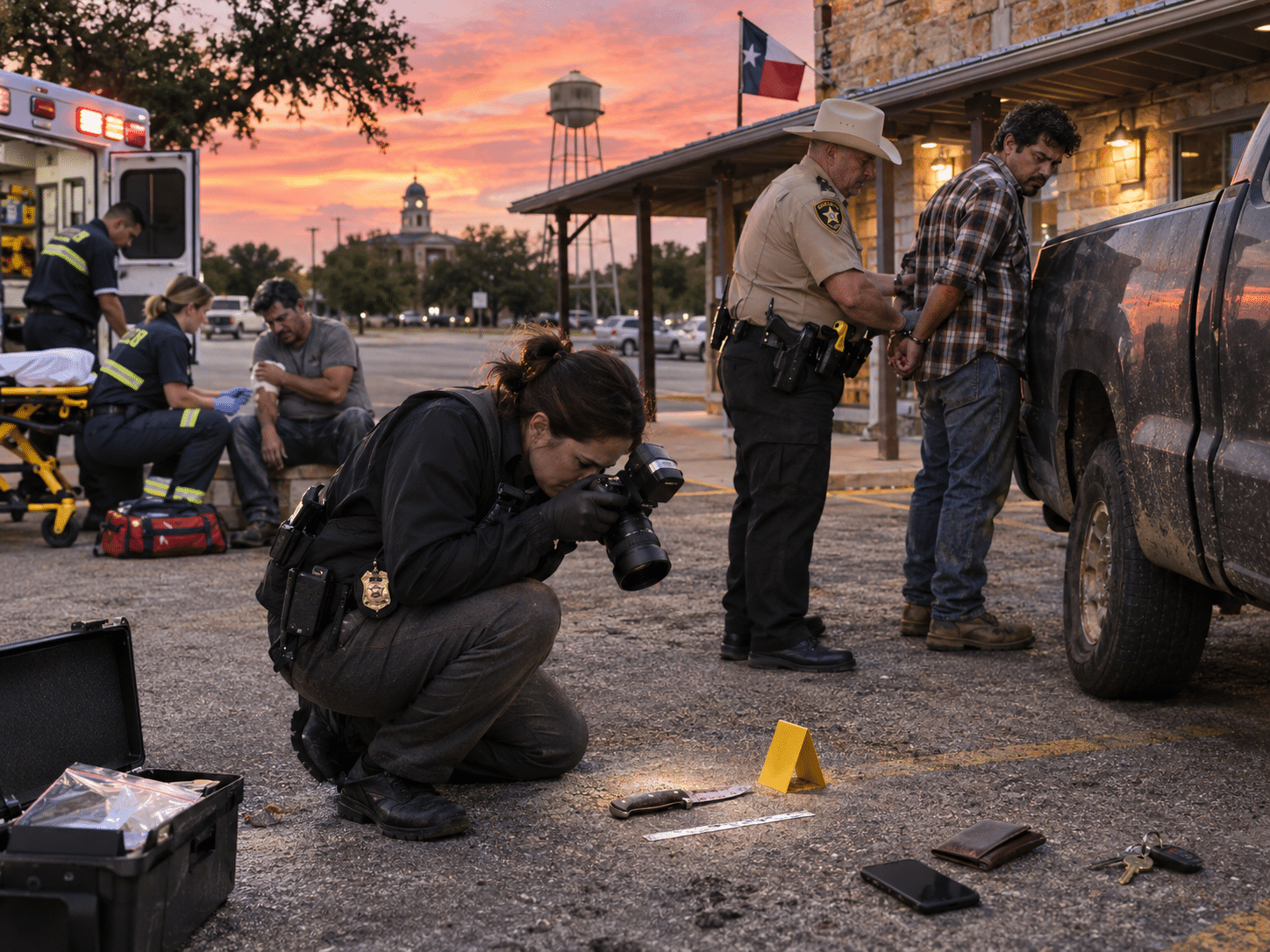
An assault charge becomes much more serious if police or prosecutors say a deadly weapon was involved. In Texas, the term “assault with a deadly weapon” usually means aggravated assault under Texas Penal Code § 22.02. If convicted, a person could face years in prison, a large fine, and a permanent felony record. The weapon in question does not have to be a gun or knife, since Texas law can treat other objects as deadly weapons based on how they were used or intended to be used. When we defend someone accused of aggravated assault in Galveston County or Houston, we look at the alleged weapon, the injuries claimed, witness statements, video, self-defense issues, and whether the State can prove every part of the case beyond a reasonable doubt.
How Texas Defines Aggravated Assault With a Deadly Weapon
Texas Penal Code § 22.02 provides that a person commits aggravated assault when the person commits an assault under § 22.01 and either causes serious bodily injury or uses or exhibits a deadly weapon during the assault. Under § 22.01, assault can include intentionally, knowingly, or recklessly causing bodily injury, intentionally or knowingly threatening another person with imminent bodily injury, or intentionally or knowingly making certain offensive or provocative physical contact.
The deadly weapon allegation matters because prosecutors do not always have to show that the alleged victim was seriously hurt. If the State proves a deadly weapon was used or shown during an assault, that can be enough for an aggravated assault charge under § 22.02(a)(2). So, the specific facts about the alleged threat or encounter are very important.
What Counts as a Deadly Weapon in Texas
Texas Penal Code § 1.07 defines a deadly weapon to include a firearm or anything designed, made, or adapted for the purpose of causing death or serious bodily injury. The definition also includes anything that, in the manner of its use or intended use, is capable of causing death or serious bodily injury.
This means prosecutors might say an object became a deadly weapon because of how it was used. A knife, baseball bat, heavy tool, vehicle, bottle, or other object could be called a deadly weapon depending on what happened. Courts look at the object’s features, how it was used, how far apart the people were, what was said during the incident, and whether it could cause serious harm.
We do not assume that an object automatically qualifies as a deadly weapon simply because police describe it that way. The State must prove the allegation under the facts of the particular case.
Most Aggravated Assault Deadly Weapon Charges Are Second-Degree Felonies
Aggravated assault under Texas Penal Code § 22.02 is generally a second-degree felony. Texas Penal Code § 12.33 provides that a second-degree felony carries a potential sentence of two to twenty years in the Texas Department of Criminal Justice. A person may also face a fine of up to $10,000.
These punishment ranges make the charge much more serious than a regular misdemeanor assault. Even someone with no previous felony record can face a long prison sentence if convicted. Prior criminal history can also affect the punishment, since Texas has laws that increase penalties for repeat felony offenders.
The risk of prison is only one issue. A felony conviction can also affect jobs, housing, professional licenses, gun rights, and many other parts of a person’s life long after the case is over.
Some Aggravated Assault Cases Can Become First-Degree Felonies
Certain aggravated assault cases can be elevated to a first-degree felony. One important example under Texas Penal Code § 22.02(b)(1)(A) involves the use of a deadly weapon while causing serious bodily injury to a person in a qualifying family, household, or dating relationship.
Texas law also provides first-degree felony treatment for aggravated assault in several other specified circumstances, including certain offenses involving public servants, witnesses, security officers, process servers, and particular firearm conduct.
A first-degree felony carries dramatically greater punishment. Texas Penal Code § 12.32 provides for imprisonment from five to ninety-nine years or life, along with a possible fine of up to $10,000.
Because the difference between a second-degree and first-degree felony is so significant, we carefully examine whether the facts actually support any statutory enhancement alleged by prosecutors.
Serious Bodily Injury Can Change the Case
Texas law defines serious bodily injury as bodily injury that creates a substantial risk of death or causes death, serious permanent disfigurement, or a prolonged loss or impairment of a bodily member or organ.
Not every injury qualifies. Bruising, cuts, pain, swelling, or other injuries may support an assault allegation without necessarily meeting the legal definition of serious bodily injury. Medical records, photographs, emergency room reports, surgical records, and testimony from medical professionals may become important when prosecutors claim an injury qualifies as serious bodily injury.
We check if the medical evidence really supports how the State describes the injury. A serious charge should be based on evidence that meets the legal definition, not just on strong words used in an arrest report.
Self-Defense Can Be a Critical Issue
Many aggravated assault cases arise from confrontations in which both people claim the other person was the aggressor. Texas law recognizes self-defense under appropriate circumstances. The fact that a weapon was present does not automatically eliminate a self-defense claim.
We look carefully at what happened before the alleged assault, whether the other person threatened or used force, whether our client had a good reason to think force was needed right away, and whether the amount of force used was allowed by law. Witness statements, video, phone recordings, injuries to our client, 911 calls, and earlier messages between the people involved can all be important.
The order of events can change the whole case. Police often arrive after the incident is over and may arrest someone based mostly on the first story they hear. That does not always show what really happened.
Threatening Someone With a Weapon Can Lead to Aggravated Assault Charges
A person does not always have to fire a gun, stab someone, or cause a serious injury to face an aggravated assault charge. Because Texas assault law includes intentionally or knowingly threatening another person with imminent bodily injury, displaying a deadly weapon during an alleged threat can support an aggravated assault accusation.
For example, prosecutors may allege aggravated assault when someone points a firearm during an argument or displays a weapon while making an immediate threat of bodily harm. The State still must prove the required mental state, the threatening conduct, and the deadly weapon allegation.
Context matters. A firearm displayed defensively during a lawful self-defense situation presents very different legal issues from a firearm allegedly displayed for the purpose of threatening another person.
Witness Statements and Video Evidence Can Decide the Case
Aggravated assault investigations often involve sharply conflicting versions of what occurred. One person may claim a weapon was pointed or used aggressively, while the accused maintains that the object was never displayed, was used defensively, or was never present at all.
We review surveillance video, body-camera footage, cell phone videos, 911 calls, photos, physical evidence, and witness statements. We also compare what people said right after the incident with what they say later. Differences in these stories can matter a lot when the prosecution’s case depends on credibility.
Finding the weapon can also be important. If police do not find the alleged weapon, prosecutors may try to prove it existed using testimony or other evidence. Not finding the weapon does not end the case, but it can be a key issue when challenging the State’s evidence.
Frequently Asked Questions About Assault With a Deadly Weapon Charges in Texas
How Much Prison Time Can You Get for Assault With a Deadly Weapon in Texas?
Aggravated assault involving a deadly weapon is generally a second-degree felony under Texas Penal Code § 22.02. A second-degree felony carries a potential prison sentence of two to twenty years and a fine of up to $10,000 under Texas Penal Code § 12.33.
Some situations can raise aggravated assault to a first-degree felony. This level of felony can mean five to ninety-nine years or even life in prison, plus a fine of up to $10,000. The specific sentence depends on the details of the case, such as the allegations, who the victim is, the injuries claimed, any past convictions, and whether prosecutors are seeking extra penalties.
Does a Gun Have to Be Fired for Aggravated Assault Charges?
No. Texas Penal Code § 22.02 applies when a person uses or exhibits a deadly weapon during an assault. The statute does not require that a firearm actually be discharged before prosecutors can file an aggravated assault charge.
If someone is accused of pointing or showing a gun while making a threat of immediate harm, that may be enough for prosecutors to charge aggravated assault. The defense can still question whether the threat really happened, if the gun was actually shown, if the accused meant to do it, and whether self-defense or another legal reason applies.
Can a Car Be Considered a Deadly Weapon in Texas?
Yes, possibly. Texas law says that something not made to be a weapon can still be treated as a deadly weapon if it is used or meant to be used in a way that could cause death or serious injury.
A vehicle may therefore become the basis of a deadly weapon allegation if prosecutors claim it was intentionally or recklessly used in a manner capable of causing serious harm. The facts matter greatly. We examine the driving conduct, intent, speed, proximity to other people, accident evidence, witness statements, and any video recordings.
What If Nobody Was Seriously Injured?
A serious injury is not required in every aggravated assault case. Texas Penal Code § 22.02 allows aggravated assault charges when a person commits assault and uses or exhibits a deadly weapon, even if serious bodily injury did not occur.
That distinction surprises many people. The prosecution may rely on the alleged use or display of the weapon itself to elevate the assault. We therefore examine whether the object legally qualifies as a deadly weapon and whether the evidence establishes that it was actually used or exhibited during the alleged assault.
Can Self-Defense Apply to an Assault With a Deadly Weapon Charge?
Yes, depending on the circumstances. Texas law recognizes self-defense and, in certain circumstances, the use of deadly force in self-defense. The key issues include who initiated the confrontation, whether the accused reasonably believed force was immediately necessary, and whether the level of force used was legally justified.
Evidence is especially important when each side tells a different story. Videos, injuries, witness statements, past threats, 911 calls, and physical evidence can all help show what really happened. We look at the whole situation, not just the moment when the weapon was said to appear.
Can You Be Charged If Police Never Find the Weapon?
Yes. Prosecutors are not necessarily required to physically produce the alleged weapon in order to pursue an aggravated assault case. They may attempt to prove that a deadly weapon was used or exhibited through eyewitness testimony, video, photographs, statements, injuries, or other evidence.
The absence of a recovered weapon can nevertheless be important. We examine whether witness descriptions are consistent, whether video supports the allegation, whether forensic evidence exists, and whether the State can establish what the alleged object actually was. When the weapon itself is never recovered, the reliability of the remaining evidence may become even more important.
Speak With Mark Diaz & Associates About an Aggravated Assault Charge
Being accused of assault with a deadly weapon can put your freedom and future in danger. At Mark Diaz & Associates, we check if the object in question is legally a deadly weapon, if the State can prove an assault happened, if the injuries match the charge, if witnesses are trustworthy, and if self-defense or another defense applies. We also look at whether prosecutors are trying to raise the charge from a second-degree to a first-degree felony and if the evidence really meets the rules for that change.
When you hire our firm, you will have access to your attorney’s personal cell phone number because questions, emergencies, and concerns do not always happen during normal business hours. You will not simply be handed off to a junior associate or become another file on a crowded docket. From arrest through resolution, we remain personally involved, accessible, and familiar with the evidence affecting your defense.
Mark Diaz & Associates helps people facing aggravated assault, weapons charges, family violence accusations, and other serious criminal charges in Galveston and Houston, Texas. If you have been arrested or are being investigated for assault with a deadly weapon, contact our Galveston assault lawyers at Mark Diaz & Associates by calling 409-515-6170 to receive your free consultation.
