
Can A DWI With A Child Passenger Lead To Child Abuse Charges In Texas?
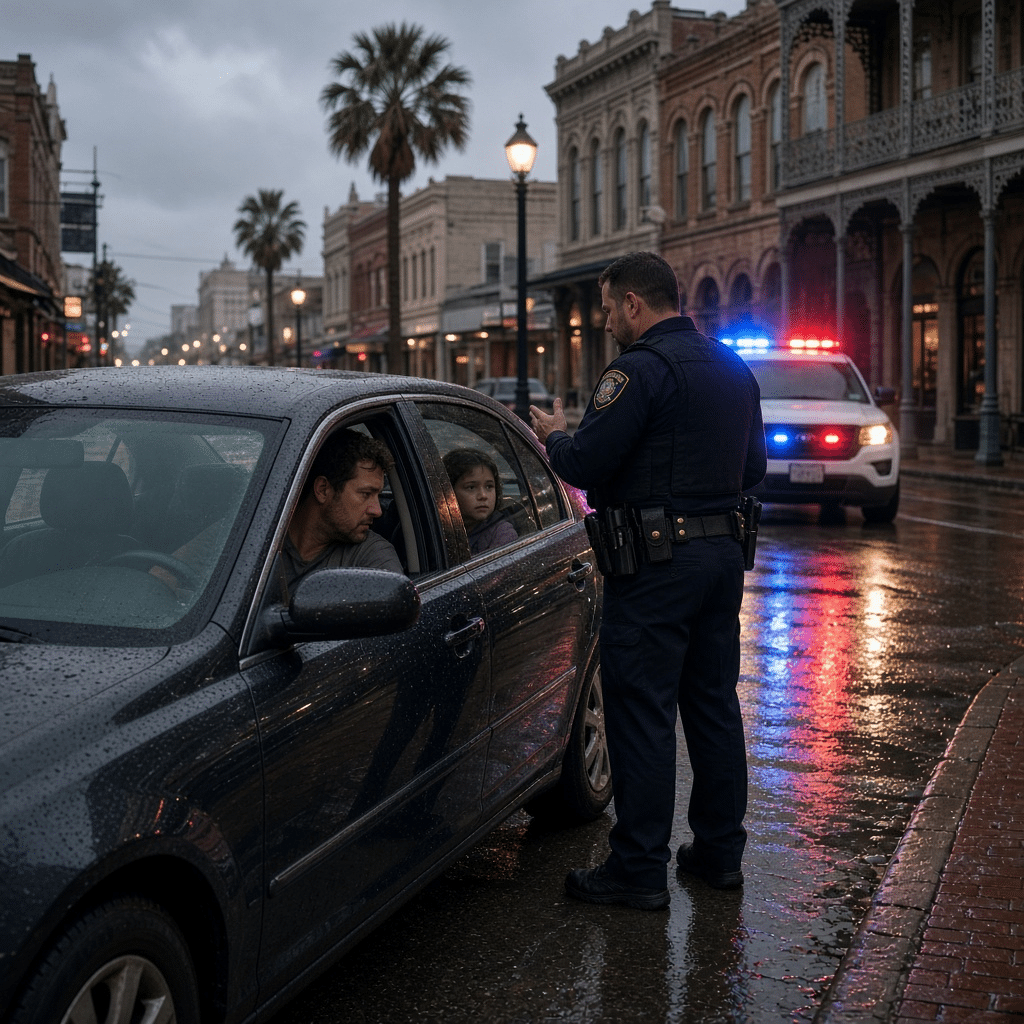
Getting arrested for DWI is always serious in Galveston, but the stakes are even higher if a child is in the car. Texas law makes it a felony to drive while intoxicated with a passenger under 15, so what might have been a misdemeanor can quickly become a felony case. Depending on the details of the stop, prosecutors might also look into possible child endangerment or injury to a child. These are separate charges, each with its own requirements. When we handle these cases, we carefully review both the DWI evidence and any facts the prosecution might use to claim a child was put in danger.
DWI With A Child Passenger Is A Separate Texas Felony
Texas Penal Code § 49.045 creates the offense of Driving While Intoxicated With Child Passenger. The statute applies when a person is intoxicated while operating a motor vehicle in a public place, and the vehicle is occupied by a passenger younger than 15 years of age. Unlike an ordinary first-time DWI, which is generally prosecuted as a misdemeanor, DWI with a child passenger is classified as a state jail felony.
This difference is important right away. Under Texas Penal Code § 12.35, a state jail felony usually means 180 days to two years in a state jail and a fine up to $10,000. A felony conviction can also impact your job, professional license, housing, gun rights, and future legal matters. Because of how serious this charge is, we treat a DWI with a child passenger as a major felony, not just a traffic offense. Every part of the State’s case needs to be reviewed closely.
A prosecutor does not have to prove that the child was physically injured to establish the offense under § 49.045. The State generally must prove that the accused was intoxicated, operated a motor vehicle in a public place, and had a passenger younger than 15 in the vehicle. That means the presence of the child changes the nature of the charge even when there was no collision and nobody was hurt.
A Child Passenger Does Not Automatically Mean A Separate Child Abuse Charge
People often use the term “child abuse” broadly, but Texas criminal law separates different types of conduct into different offenses. A DWI with a child passenger does not automatically establish injury to a child or every form of child endangerment.
The State must prove the elements of each separate offense it chooses to file. Prosecutors cannot simply label a DWI arrest “child abuse” without evidence supporting another criminal statute. However, the same incident may cause investigators to look at whether additional conduct placed the child in danger or caused physical or psychological injury.
That is where the facts become especially important. A routine traffic stop involving suspected intoxication may be treated differently from a case involving excessive speed, a serious collision, driving the wrong way, leaving a child unattended, drug use inside the vehicle, or other conduct that prosecutors believe created an immediate danger.
Texas Child Endangerment Charges May Be Considered
Texas Penal Code § 22.041 addresses abandoning or endangering a child. Under the endangerment portion of the law, prosecutors may pursue charges when they believe a person intentionally, knowingly, recklessly, or with criminal negligence engaged in conduct that placed a child younger than 15 in imminent danger of death, bodily injury, or physical or mental impairment.
Whether a DWI incident also supports an endangering-a-child allegation depends heavily on the circumstances. Driving after consuming alcohol does not relieve prosecutors of their obligation to prove the elements of § 22.041. They still must establish the required mental state and show that the child was placed in the type of imminent danger described by the statute.
The prosecution may point to evidence such as dangerous driving, an extremely high alleged blood alcohol concentration, a crash, nearly striking another vehicle, driving at excessive speeds, or other conduct suggesting that the child’s safety was immediately threatened. We examine whether the evidence truly establishes imminent danger or whether prosecutors are attempting to stretch the facts because a child happened to be present.
Injury To A Child Requires Proof Of An Actual Injury
Texas Penal Code § 22.04 addresses injury to a child. This is different from both DWI with a child passenger and child endangerment. The statute generally requires proof that a person caused bodily injury, serious bodily injury, or serious mental impairment or injury to a child with one of the mental states identified by the statute.
This issue becomes particularly important when a DWI arrest follows an automobile collision. If a child passenger suffers an injury, prosecutors may investigate whether additional criminal charges are appropriate.
The severity of an injury and the accused person’s alleged mental state can substantially affect the potential charge and punishment. Injury-to-a-child offenses can be extremely serious felonies in Texas. For that reason, we carefully review medical records, accident reconstruction evidence, witness statements, vehicle damage, body-camera footage, and other evidence before accepting the State’s description of how an injury occurred.
The presence of an injury does not automatically prove criminal responsibility. Prosecutors still have to prove causation and the required mental state beyond a reasonable doubt.
Prosecutors Must Still Prove That The Driver Was Intoxicated
The fact that a child was in the vehicle does not eliminate the State’s burden of proving DWI.
Under Texas Penal Code § 49.04, DWI requires proof that the accused was intoxicated while operating a motor vehicle in a public place. Texas law defines intoxication through either an alcohol concentration of at least 0.08 or the loss of normal use of mental or physical faculties because of alcohol, drugs, another substance, or a combination of substances.
We therefore examine the same types of evidence that matter in other DWI prosecutions. That can include the reason for the traffic stop, the officer’s observations, body-camera recordings, field sobriety exercises, breath-test procedures, blood testing, laboratory procedures, medical conditions, medications, and the timing of alcohol consumption.
If the State cannot prove intoxication beyond a reasonable doubt, that weakness directly affects the DWI-with-child-passenger charge.
The Traffic Stop Can Become A Major Defense Issue
Police need a lawful basis to stop a vehicle. An officer may have reasonable suspicion because of an alleged traffic violation, unusual driving pattern, equipment violation, or other observable facts. In other situations, an officer may arrive after a crash or encounter a parked vehicle.
When we review a Galveston DWI case, we examine what the officer knew before activating emergency lights or otherwise detaining the driver. If the stop violated the Fourth Amendment, we may seek suppression of evidence obtained as a result of the unlawful detention.
This issue can affect much more than the initial traffic citation. If critical DWI evidence resulted from an unconstitutional stop, suppression can substantially weaken the prosecution’s felony case.
Field Sobriety Tests Are Evidence, Not Automatic Proof
Prosecutors frequently rely on standardized field sobriety testing to argue that a driver had lost the normal use of mental or physical faculties. Those tests may include the horizontal gaze nystagmus test, walk-and-turn test, and one-leg-stand test.
Performance on these exercises can be affected by many factors unrelated to intoxication. Road conditions, footwear, age, physical injuries, fatigue, anxiety, weather, poor instructions, and the testing surface may affect what an officer observes.
Body-camera footage can be especially valuable because it allows us to compare the officer’s written description with what actually occurred. Sometimes the video supports the State. In other cases, the footage shows that a driver was communicating clearly, following instructions, standing steadily, or performing better than the police report suggests.
Breath And Blood Evidence Should Be Closely Examined
Chemical test results can be powerful evidence, but they are not beyond challenge.
Breath testing depends on properly maintained equipment, correct procedures, and reliable administration. Blood evidence presents different issues involving the collection, preservation, transportation, storage, laboratory testing, and interpretation of the sample.
In some cases, police obtain a search warrant for blood after a driver refuses testing. We can examine the affidavit used to obtain that warrant and whether the procedure complied with constitutional and statutory requirements.
We also consider whether the reported alcohol concentration accurately reflects the driver’s condition at the time of driving. Alcohol absorption and elimination occur over time, and a later test does not automatically establish the driver’s precise alcohol concentration when the vehicle was being operated.
A Child Passenger Can Affect Bond Conditions
Because DWI with a child passenger is a felony, the court may impose significant bond conditions while the case is pending.
Depending on the circumstances, those conditions may involve alcohol monitoring, drug testing, an ignition interlock device, restrictions concerning alcohol consumption, or other requirements. When the accused is the child’s parent, guardian, or household member, the arrest may also create family-related concerns that extend beyond the criminal courtroom.
Bond conditions must be taken seriously. Violating a condition can create new legal problems and may result in a request to revoke or increase the bond.
Child Protective Services May Become Involved
A DWI arrest involving a child may also lead to a report to the Texas Department of Family and Protective Services. That process is separate from the criminal prosecution.
An investigation may include questions about the child’s safety, the home environment, alcohol or drug use, supervision, and whether there have been similar incidents. Parents should understand that statements made during a child-protection investigation may create issues that affect the criminal case.
This overlap requires careful handling. What appears to be a simple explanation offered to a caseworker may later become evidence prosecutors attempt to use in court. We want clients to understand the relationship between the criminal accusation and any related family or child-protection proceeding before making decisions that could have lasting consequences.
Prior DWI Convictions Can Make The Situation More Serious
A prior criminal record can also affect the way prosecutors approach the case. Texas has enhancement statutes that can increase punishment when defendants have qualifying prior convictions.
A person arrested for DWI with a child passenger should therefore make sure the defense lawyer knows about every prior DWI, felony, probation case, deferred case, and out-of-state conviction. The legal effect of a prior case depends on what the conviction was and how Texas law permits it to be used.
This analysis should occur early because criminal history may influence charging decisions, plea negotiations, bond conditions, and sentencing exposure.
Defending A DWI With A Child Passenger Case In Galveston
An arrest tells us what police believe happened. It does not tell us what prosecutors will ultimately be able to prove.
Our defense begins with the evidence. We examine the legality of the stop, whether the State can establish operation of the vehicle, the officer’s observations, field sobriety evidence, body-camera recordings, chemical testing, witness statements, and the child’s age. If prosecutors pursue an additional endangerment or injury allegation, we separately examine whether the evidence establishes every element of that offense.
This distinction matters. The State should not be permitted to treat the emotional impact of having a child in the vehicle as a substitute for proof. Each criminal charge must stand on its own evidence.
Call Mark Diaz & Associates About A DWI With A Child Passenger Charge In Galveston
A DWI with a child passenger can expose you to a felony prosecution, possible state jail time, a substantial fine, driver’s license consequences, and concerns involving your family. If prosecutors believe the circumstances support child endangerment or another offense, the case can become even more serious. We believe these cases should be evaluated based on the actual evidence rather than assumptions made because a child happened to be in the vehicle.
At Mark Diaz & Associates, we represent people facing DWI and criminal charges in Galveston and throughout Houston, Texas. We examine the traffic stop, body-camera footage, field sobriety testing, breath or blood evidence, search warrants, witness statements, and any allegations involving the child’s safety. Our goal is to identify legal and factual weaknesses in the State’s case and determine the defense strategy that best protects you.
When you hire me, you work directly with me. My clients have my personal cell phone number because questions, emergencies, and concerns don’t always happen during business hours. You won’t be handed off to a junior associate or lost in a system where your case is one of dozens on a crowded docket. From arrest through resolution, I remain personally involved and accessible.
If you or someone in your family has been arrested for DWI with a child passenger, call our Galveston DWI lawyer at Mark Diaz & Associates today by calling 409-515-6170 to schedule your free consultation.. The firm represents clients in Galveston and throughout the entire city of Houston, Texas.
