
Can A Texas DWI Charge Be Dismissed Because Of An Illegal Traffic Stop?
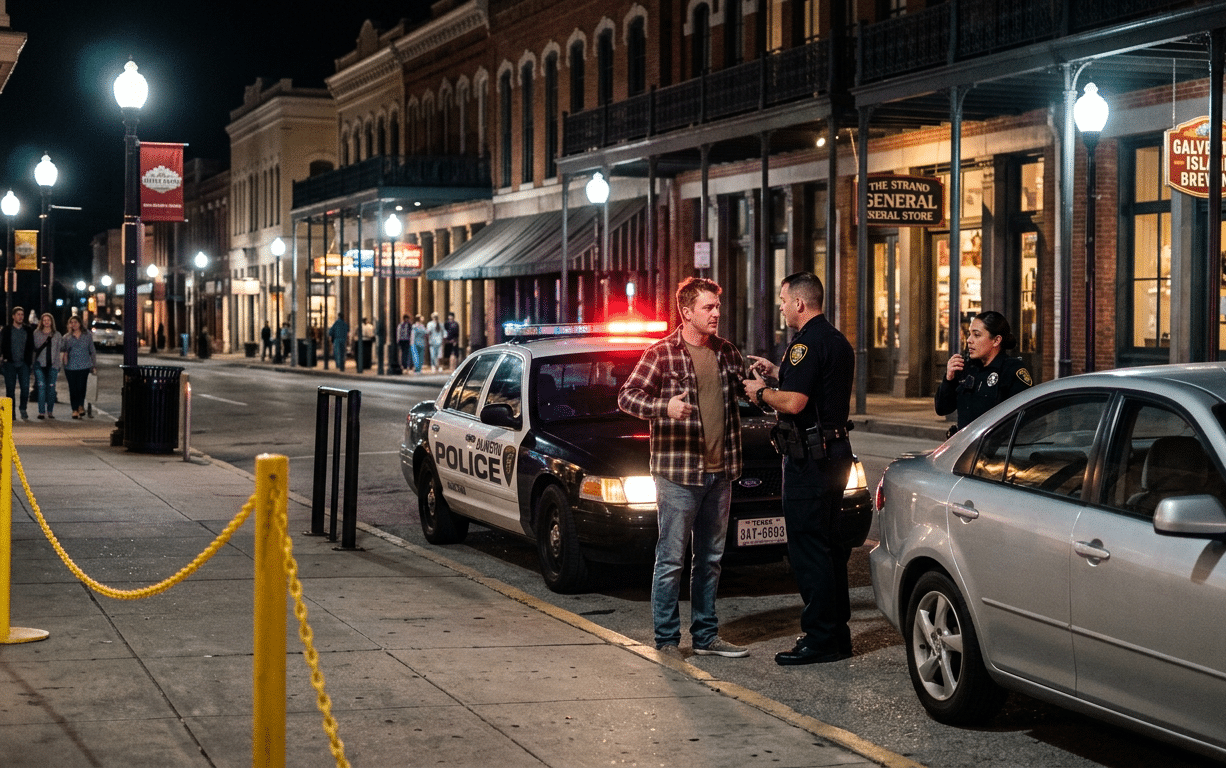
A DWI investigation usually starts before an officer asks a driver to get out of the car. It begins when the officer turns on the emergency lights and pulls the car over. This step is important because police cannot stop someone just to check if they have been drinking.
The Fourth Amendment of the U.S. Constitution and Article I, Section 9 of the Texas Constitution protect drivers from unreasonable searches and seizures, and a traffic stop counts as a seizure. If the officer did not have a legal reason for the stop, we may be able to ask the court to throw out evidence gathered during that detention. In some cases, this can remove so much of the prosecution’s evidence that the DWI charge could be dismissed.
If you are arrested for DWI in Galveston County, the legality of the original traffic stop is a serious issue, not just a technicality. Police reports might include details about field sobriety tests, statements, breath tests, or blood evidence, but all of this may have only been collected because the officer stopped you in the first place. We look closely at what happened before the officer turned on the emergency lights, since the prosecution must be able to justify that stop under the Constitution.
What Makes A Traffic Stop Legal In Texas?
Texas Penal Code § 49.04 provides that a person commits DWI when the person is intoxicated while operating a motor vehicle in a public place. That statute defines the criminal accusation, but it does not give police unlimited authority to stop vehicles in search of intoxicated drivers.
For most traffic stops without a warrant, an officer needs reasonable suspicion based on clear, specific facts. Texas courts use an objective standard and look at all the circumstances together. Reasonable suspicion means the officer has facts, and reasonable inferences from those facts, that suggest someone has committed, is committing, or will soon commit a crime. The officer must be able to explain what was observed and why those observations justified the detention. When we examine a Galveston DWI arrest, one of our first questions is therefore simple: What exactly did the officer see before stopping the vehicle?
A Traffic Violation Can Provide A Lawful Basis For A DWI Stop
Police do not necessarily need to suspect DWI before initiating the stop. If an officer observes an actual traffic violation, that violation may provide sufficient legal justification to stop the vehicle even if the investigation later changes into a DWI investigation.
For example, an officer may claim that a driver was speeding, failed to signal, disregarded a traffic control device, or committed another traffic offense. If the evidence supports that observation, the initial stop may be lawful. Once the officer approaches the vehicle, observations such as the odor of alcohol, slurred speech, unusual behavior, admissions of drinking, or other circumstances may cause the officer to investigate possible intoxication.
We do not just take the police report at face value when it comes to the reason for the stop. Dash cam video, body camera footage, dispatch records, road markings, surveillance video, witness statements, and the officer’s own testimony can all help us figure out if the alleged violation really happened.
An Officer’s Hunch Is Not Enough
A driver does not have to commit an obvious traffic violation before every lawful DWI detention. In some cases, driving behavior itself may create reasonable suspicion of criminal activity. The important issue is whether the officer can identify specific facts supporting the decision to detain the driver.
Texas courts have made clear that reasonable suspicion requires objective justification. When a warrantless stop is challenged at a suppression hearing, the State bears the burden of establishing the reasonableness of the stop once the appropriate burden has shifted.
This difference matters when officers use vague language. Phrases like “the driver appeared suspicious,” “the vehicle caught my attention,” or “I thought the driver might be intoxicated” are not enough on their own to show reasonable suspicion. We want to know exactly what happened, when it happened, how long the officer watched the car, and if the video matches the officer’s story.
Does Weaving Automatically Justify A DWI Stop?
Weaving is frequently mentioned in DWI reports, but the legal analysis depends heavily on the facts. A report may state that a vehicle moved within its lane, touched a lane marking, crossed a line, drifted repeatedly, or nearly struck another vehicle. Those descriptions are not interchangeable.
The court considers the totality of the circumstances rather than relying on a single phrase in the report. Time of day, traffic conditions, duration of the observation, degree of movement, roadway design, and other facts may be relevant. What matters is whether the officer possessed specific facts that objectively supported the detention.
Video evidence can be very important in these cases. Sometimes, an officer’s report describes severe weaving, but the dash cam only shows a small movement within the lane. This difference can be a key point in a motion to suppress.
Anonymous Tips And Reports From Other Drivers
Not every DWI stop begins with an officer personally witnessing questionable driving. Police sometimes receive 911 calls or reports from another motorist alleging that a vehicle is being driven dangerously or that a driver appears intoxicated.
Information supplied by another person can contribute to reasonable suspicion, but courts consider the reliability and circumstances surrounding the information. The amount of detail provided, whether the caller witnessed the conduct personally, whether the information can be corroborated, and the nature of the reported conduct may all matter.
If a dispatcher tells an officer to stop a certain car, that does not automatically settle the constitutional question. We look into what information was first given to law enforcement and whether, when all the facts are considered, the stop was legally justified.
Police Cannot Unreasonably Extend A Traffic Stop
The legality of a DWI investigation is not determined only at the moment the emergency lights come on. An initially lawful stop may create a separate constitutional issue if police prolong the detention beyond what the law permits without additional justification.
A traffic stop may ordinarily continue while an officer handles matters connected with the reason for the stop, such as checking a driver’s license, registration, outstanding warrants, and related traffic matters. The United States Supreme Court has held that police cannot extend an otherwise completed traffic stop to conduct unrelated investigative activity without additional legal justification. Rodriguez v. United States, 575 U.S. 348 (2015), remains an important part of the constitutional analysis surrounding prolonged roadside detentions.
In a DWI case, the facts may develop rapidly. An officer who observes signs suggesting intoxication may acquire reasonable suspicion sufficient to continue the detention for a DWI investigation. But when that additional suspicion is missing, the length and purpose of the detention deserve close review.
What Happens If The Traffic Stop Was Illegal?
Texas provides an important statutory remedy when evidence is obtained unlawfully. Article 38.23(a) of the Texas Code of Criminal Procedure generally provides that evidence obtained by an officer or another person in violation of the United States Constitution, the Texas Constitution, or Texas law may not be admitted against the accused in a criminal case.
This is why an illegal traffic stop can have such a major effect on a DWI prosecution. Evidence collected after the stop may include the officer’s observations, statements made by the driver, field sobriety test performance, breath testing evidence, blood testing evidence, and other information developed during the detention.
The defense may file a motion to suppress asking the judge to exclude evidence obtained through an unconstitutional detention. The court can then conduct a hearing at which the circumstances surrounding the stop are examined. The officer may testify, video may be presented, and the defense and prosecution may argue whether the constitutional requirements were satisfied.
Suppression And Dismissal Are Not The Same Thing
It is important to understand the difference between suppressing evidence and dismissing a criminal charge. A judge who finds that a traffic stop was illegal does not necessarily issue an order immediately dismissing the DWI case. Instead, the usual legal remedy involves excluding evidence that was obtained unlawfully.
That distinction can nevertheless determine the outcome of the prosecution. If the State loses the evidence needed to prove intoxication or connect the defendant to the alleged offense, prosecutors may no longer have a viable case. A prosecutor may then dismiss the charge, or the State may be unable to obtain a conviction at trial.
The result depends on what evidence remains after the suppression ruling. This is one reason we avoid promising that any particular constitutional violation will automatically produce a dismissal. We first determine what evidence was obtained because of the challenged detention and what evidence, if any, could remain admissible.
The Police Video May Tell A Different Story Than The Report
Modern DWI cases often involve substantial video evidence. Dash cameras may capture the driving that allegedly caused the stop, while body cameras may show the roadside investigation after the officer approaches the vehicle.
We compare the video with the written police report carefully. If the officer claims that a vehicle repeatedly crossed lane markings but the video does not show that conduct, the discrepancy may matter. If the officer claims a traffic violation occurred outside the camera’s field of view, we examine the testimony and surrounding evidence. If the stated justification changes during the prosecution, that can also deserve scrutiny.
Video is not automatically favorable to either side. Sometimes it supports the officer. Sometimes it raises serious questions about the accuracy of the report. Our job is to examine the evidence rather than assume the written narrative tells the whole story.
A Lawful Arrest Does Not Cure An Unlawful Stop
Drivers sometimes assume that a high breath or blood alcohol result makes the legality of the traffic stop irrelevant. That misunderstands how constitutional protections operate.
The question is not simply whether police ultimately obtained evidence suggesting intoxication. The question is whether police had lawful authority to seize the driver when they did. Evidence discovered after an unlawful detention does not necessarily retroactively justify the original stop.
Texas law expressly addresses evidence obtained in violation of constitutional or legal protections through Article 38.23 of the Code of Criminal Procedure. This means we may challenge the foundation of the prosecution even when the State believes the later evidence is strong.
Why We Examine The Stop Early In A Galveston DWI Case
An effective DWI defense starts before the field sobriety tests. We want to reconstruct the events leading to the stop and determine what information the officer possessed at each stage of the encounter.
That review may involve the officer’s dash camera, body camera recordings, radio traffic, dispatch information, reports from other witnesses, traffic citations, photographs of the roadway, and other available evidence. We also consider whether the initial justification for the stop matches what the evidence actually shows.
An illegal-stop argument is not appropriate in every DWI case. When the facts support it, however, a motion to suppress can attack evidence at the foundation of the prosecution. That can be much more significant than arguing only about how well someone performed on roadside exercises after the detention had already occurred.
Speak With A Galveston DWI Defense Lawyer At Mark Diaz & Associates
A DWI case should not begin with the assumption that everything the police did was lawful simply because an arrest occurred. We examine the case from the beginning, including the officer’s reason for stopping the vehicle, the driving shown on video, the duration of the detention, the roadside investigation, statements, field sobriety testing, and breath or blood evidence. When the initial detention was not legally justified, we can evaluate whether a motion to suppress may prevent the State from using evidence obtained after the stop.
When you hire me, you work directly with me. My clients have my personal cell phone number because questions, emergencies, and concerns don’t always happen during business hours. You won’t be handed off to a junior associate or lost in a system where your case is one of dozens on a crowded docket. From arrest through resolution, I remain personally involved and accessible.
If you were arrested for DWI after a questionable traffic stop, contact our Galveston DWI defense attorneys at Mark Diaz & Associates by calling 409-515-6170 to receive your free consultation. The firm represents clients in Galveston and throughout Houston, Texas, and we can review the circumstances of the stop, the evidence collected afterward, and the legal defenses that may apply.
