
Can Galveston Police Search Your Cell Phone Without A Warrant?
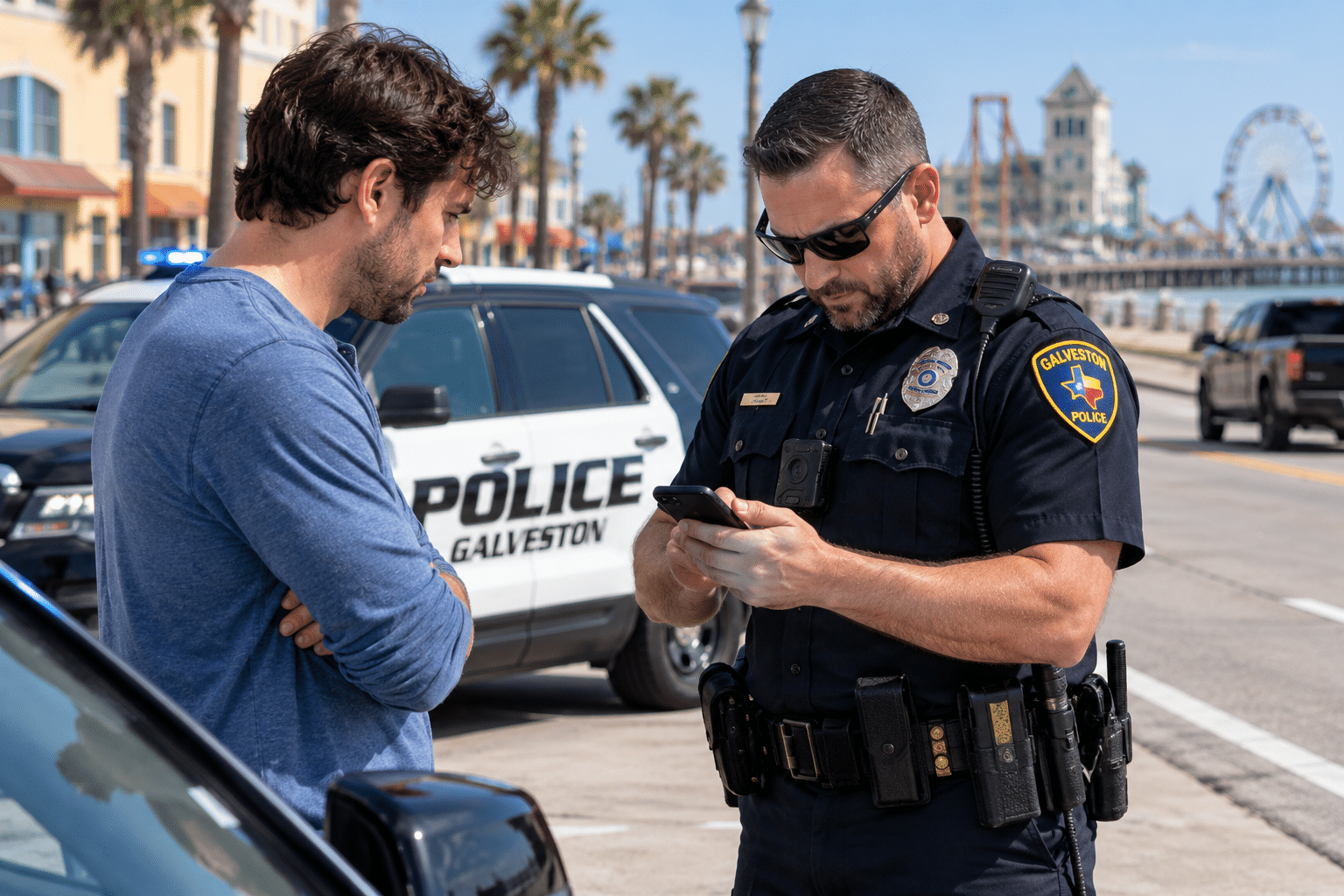
Cell phones often hold years of personal information, like texts, photos, emails, location data, financial details, social media activity, internet searches, and conversations with family. If Galveston police arrest or investigate you, they might think your phone has evidence related to the case. However, this does not automatically allow them to search your phone. Federal and Texas laws set strict limits on searching digital devices. If police searched your phone, we would look at how they got access, whether there was a warrant, what the warrant allowed, and if the evidence should be thrown out.
An Arrest Does Not Automatically Allow Police To Search Your Phone
In the past, police could search some items found on a person during a legal arrest. Cell phones are treated differently because they can store so much personal information.
In Riley v. California, 573 U.S. 373 (2014), the United States Supreme Court held that police generally must obtain a warrant before searching the digital contents of a cell phone seized during an arrest. The Court recognized that modern phones can reveal far more personal information than ordinary physical objects carried in a pocket. A lawful arrest therefore does not, by itself, give an officer unrestricted access to texts, photos, emails, apps, or other digital information.
Texas law provides additional protection. Article 18.0215 of the Texas Code of Criminal Procedure specifically states that a peace officer may not search a person’s cellular telephone or other wireless communications device pursuant to a lawful arrest without obtaining a warrant, subject to limited statutory exceptions.
An officer might take your phone during an arrest, but taking the phone and searching its contents are two different legal matters.
Texas Police Generally Need Probable Cause To Obtain A Cell Phone Search Warrant
Police cannot obtain a valid cell phone warrant merely by saying that they would like to see whether something useful might be on the device.
Under Texas Code of Criminal Procedure Article 18.0215(c), the warrant application must identify the device and provide facts and circumstances establishing probable cause that criminal activity has occurred, is occurring, or will occur. The application must also establish probable cause to believe that searching the particular phone is likely to produce evidence relating to that criminal activity.
That connection between the alleged crime and the phone is important. Texas courts often refer to it as a “nexus.” In State v. Baldwin, the Texas Court of Criminal Appeals explained that merely possessing a phone generally does not establish probable cause to search everything stored on it. More recent Texas appellate decisions have continued to examine whether police supplied specific facts connecting the device to the suspected crime.
We therefore do not stop our review simply because police obtained a piece of paper labeled “search warrant.” We examine the affidavit supporting that warrant to determine whether it actually established probable cause.
Police May Search A Phone Without A Warrant In Limited Situations
Texas Code of Criminal Procedure Article 18.0215 contains several specific exceptions to the warrant requirement.
One of the most important is consent. If the owner or possessor voluntarily consents to the search, police may search the phone without first obtaining a warrant. Texas law also permits certain warrantless searches when a device has been reported stolen, when it is possessed by a qualifying felony fugitive, or when an officer reasonably believes that an immediate life-threatening situation exists. Certain emergency searches require officers to seek a warrant as soon as practicable afterward.
Consent cases can become complicated. We may examine what the officer asked, exactly what the person agreed to, whether the consent was voluntary, and whether police went beyond the scope of the permission that was actually given.
For example, agreeing to let an officer make a telephone call or view one specific photograph does not necessarily mean that the person agreed to an unrestricted examination of every message, application, photograph, and account stored on the device.
Unlocking A Phone Can Raise Additional Legal Questions
Modern phones may be protected by a passcode, fingerprint, facial recognition, or another security feature. Whether law enforcement can require someone to provide or use a particular method of unlocking a phone may raise separate constitutional questions involving the Fourth Amendment and, depending on the circumstances, the Fifth Amendment privilege against compelled self-incrimination.
These disputes can be highly fact-specific. The legal analysis may differ depending on whether police already know the passcode, whether the person voluntarily provided access, whether biometric access was used, and whether a court order or warrant addressed the unlocking process.
Because the law concerning compelled access to encrypted devices continues to develop, we examine the precise method law enforcement used rather than assuming that possession of a search warrant automatically resolves every issue involving access.
A Search Warrant Does Not Give Police Unlimited Authority
Even when police have a valid warrant, there may still be limits on what they are permitted to search. A phone can contain an extraordinary amount of information unrelated to the investigation. Search warrants must satisfy constitutional requirements concerning probable cause and particularity. Article I, Section 9 of the Texas Constitution protects Texans against unreasonable searches and seizures and requires warrants to be supported by probable cause.
When reviewing a Galveston criminal case involving a phone, we may examine the categories of information authorized by the warrant, the alleged offenses identified in the affidavit, the time periods involved, and the digital evidence police actually reviewed.
A warrant that legitimately permits police to search for evidence connected with one alleged offense does not necessarily function as unlimited permission to search a person’s entire digital life for evidence of unrelated misconduct.
Cell Phone Evidence Can Become Important In Many Criminal Cases
Phone searches are increasingly important in Texas criminal investigations. Depending on the allegations, investigators may seek text messages, photographs, social media communications, internet searches, location information, call records, deleted files, app activity, or communications with other people.
That evidence may appear in investigations involving drug offenses, assault, domestic violence, theft, robbery, sex offenses, fraud, weapons allegations, conspiracy accusations, and other criminal charges.
Digital evidence can also be misunderstood. A message may be taken out of context. Someone else may have used the phone or an account. A screenshot may omit the surrounding conversation. Location information may not prove what investigators claim it proves. Dates, metadata, account access, backups, and forensic extraction methods can become important when determining what the evidence actually establishes.
An Illegal Cell Phone Search May Lead To A Motion To Suppress
When police obtain evidence through an unlawful search, the defense may ask the court to suppress that evidence. Texas Code of Criminal Procedure Article 38.23 provides that evidence obtained in violation of the Constitution or laws of Texas, or the Constitution or laws of the United States, generally may not be admitted against an accused person in a criminal case, subject to applicable legal exceptions.
A suppression issue involving a phone may focus on whether police had a warrant, whether an exception applied, whether consent was valid, whether probable cause supported the warrant, whether the affidavit established a connection between the phone and the crime, or whether officers exceeded the lawful scope of the search.
If important evidence came from the phone, excluding that evidence can substantially change the prosecution’s case.
Frequently Asked Questions About Galveston Cell Phone Searches
Can Galveston Police Search My Phone Just Because They Arrested Me?
Generally, no. A lawful arrest does not automatically permit police to search the digital contents of your cell phone. The United States Supreme Court established that rule in Riley v. California, and Texas Code of Criminal Procedure Article 18.0215 expressly provides that an officer generally may not search a person’s cellular phone pursuant to an arrest without obtaining a warrant.
Police may still take possession of the phone when you are arrested. That does not necessarily mean they may immediately begin reviewing your messages, photographs, social media accounts, emails, or other stored information. We would determine whether investigators later obtained a warrant or relied on one of the limited exceptions permitted under Texas law.
Can Police Search My Phone If I Give Them Permission?
Yes. Consent is one of the exceptions expressly recognized by Texas Code of Criminal Procedure Article 18.0215.
However, whether valid consent existed can become a disputed issue. We may review body-camera footage, recorded interviews, police reports, and witness testimony to determine exactly what was said. We would also examine the scope of the consent. Permission to view one item on a phone may present a very different issue from permission to conduct a complete forensic search of the device.
If you are the subject of an investigation, voluntarily giving investigators access to a phone can expose information far beyond what you originally believed was relevant.
What Must Police Show To Get A Texas Cell Phone Search Warrant?
Texas Code of Criminal Procedure Article 18.0215 requires an application identifying the phone or wireless device and supplying facts that establish probable cause. Investigators must establish probable cause both that criminal activity has occurred, is occurring, or will occur and that searching the device is likely to uncover evidence connected with that activity.
This means there ordinarily should be a factual connection between the alleged offense and the phone. A person’s mere ownership or possession of a cell phone does not automatically establish probable cause to search the device. Texas courts have scrutinized warrants that rely on generalized assumptions rather than case-specific facts connecting a phone to the alleged crime.
Can Police Read Deleted Text Messages Or Recover Deleted Photos?
Potentially. Law enforcement agencies may use forensic software and other methods to extract information from a seized device. Depending on the phone, operating system, backups, applications, encryption, and other factors, investigators may recover information that a user believed had been deleted.
That technical ability does not eliminate the warrant requirement. Police still need lawful authority to conduct the search. We may also examine whether the recovered information falls within the authorized scope of the warrant and whether the forensic evidence accurately establishes who created, sent, received, or controlled the information.
Trying to destroy evidence after learning about an investigation can also create additional legal problems. Texas Penal Code § 37.09 addresses altering, destroying, or concealing evidence with the required intent in connection with an investigation or proceeding.
What Happens If Police Illegally Search My Cell Phone?
An unlawful search can provide grounds for a motion to suppress. Texas Code of Criminal Procedure Article 38.23 generally prohibits the use of evidence obtained in violation of Texas or federal constitutional or statutory protections, although the statute contains legal exceptions that must be considered in each case.
If the prosecution relies heavily on messages, photographs, location information, internet activity, or other evidence obtained from the phone, suppression may have a major effect on the case. We would also consider whether investigators used information from the initial search to obtain other evidence, because the relationship between the original search and later investigative steps may matter.
Should I Give Police My Phone Passcode If They Ask For It?
You should understand that providing a passcode can give investigators access to a large amount of private information. Whether police can legally compel access to a locked phone may raise issues beyond the ordinary search-warrant analysis, and the answer can depend heavily on the circumstances.
If investigators ask for a passcode, request that you unlock a device, or ask for permission to search it, speaking with a criminal defense attorney before voluntarily providing access can protect you from making decisions without understanding their consequences. Once investigators obtain access, they may discover information relating not only to the original investigation but potentially to other matters as well.
Speak With Mark Diaz & Associates About Your Criminal Case
If Galveston police searched your cell phone, seized your device, obtained your passcode, downloaded your data, or used information from your phone to support criminal charges, we can examine whether law enforcement followed Texas and federal search-and-seizure requirements. We can review the warrant, the supporting affidavit, body-camera footage, consent issues, forensic extraction records, and the relationship between the alleged offense and the information police searched.
At Mark Diaz & Associates, we understand that a cell phone may contain years of personal information. When the government accesses that information, the legality of the search matters. If the search violated your rights, we can determine whether a motion to suppress should be filed and how the challenged evidence affects the prosecution’s case.
When you hire us, you work directly with your attorney. Our clients have direct access because questions, emergencies, and concerns do not always happen during normal business hours. You will not simply be handed off and left wondering who is handling your case. From the initial investigation or arrest through the resolution of the case, we remain personally involved, accessible, and informed about what is happening.
If you have been arrested, charged, or are under investigation in Galveston or anywhere in the Houston area and police searched or seized your phone, contact our Galveston criminal defense attorney at Mark Diaz & Associates by calling 409-515-6170 to for your free consultation. Mark Diaz & Associates represents clients throughout Galveston County and throughout the City of Houston, Texas.
