
Can Police Arrest You For DWI While You Are Sleeping In Your Car?
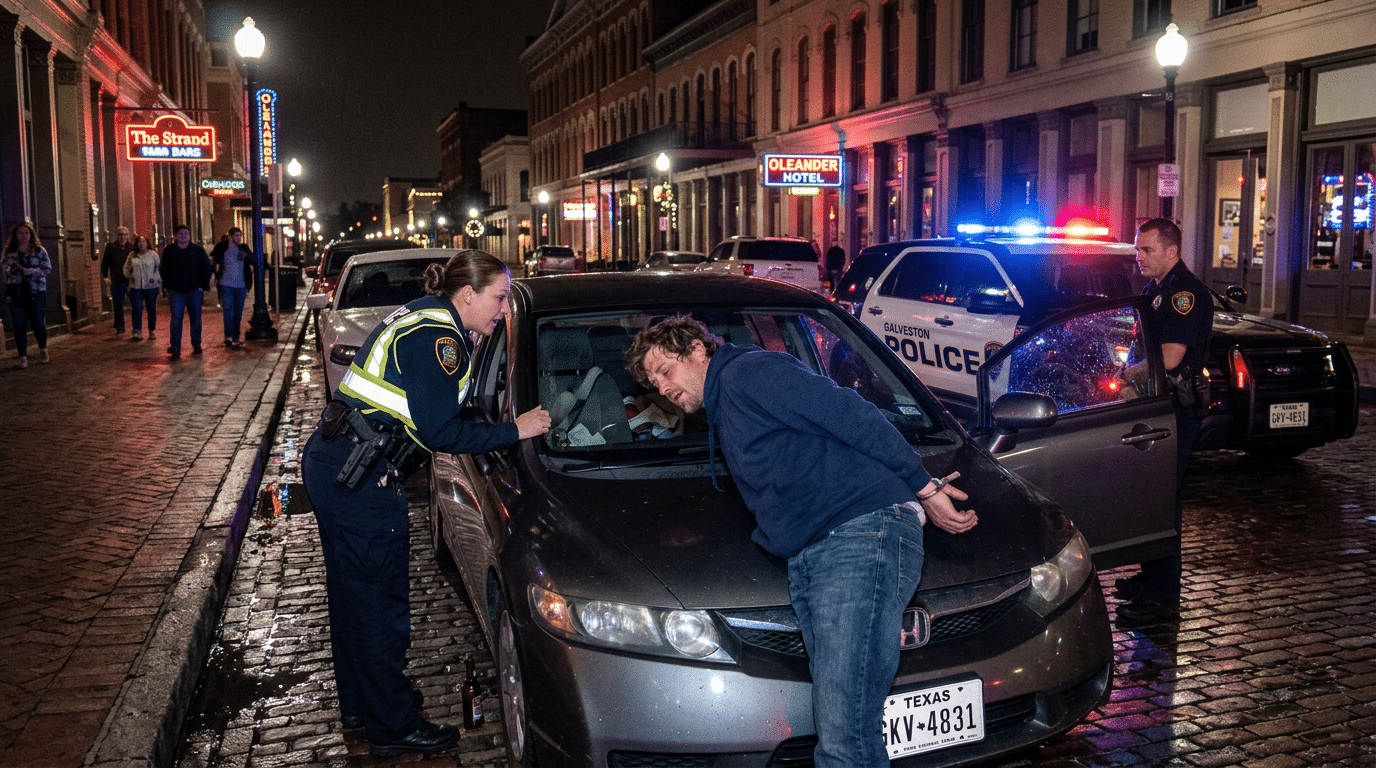
A lot of people think that if they choose to sleep in their car after drinking instead of driving, they can’t be arrested for DWI in Galveston County. While this seems like the responsible thing to do, Texas law is more complicated. We often talk to people who are surprised to find out they can still be charged with DWI, even if their car never moved while police were there. Sometimes, the person was just asleep in a parked car. Other times, they pulled over to avoid driving while impaired. Still, arrests happen because Texas DWI law looks at whether someone was operating a vehicle while intoxicated, and courts interpret that idea in a broad way.
Whether someone sleeping in their car can be arrested for DWI depends on the details of the situation. Things like where the car is parked, whether the engine was running, where the keys are, and any evidence of earlier driving all matter. Knowing how Texas law handles these cases can help you understand your rights and possible defenses.
Understanding Texas DWI Law
The starting point for any DWI case is Texas Penal Code § 49.04. Under that statute, a person commits the offense of Driving While Intoxicated if the person is intoxicated while operating a motor vehicle in a public place.
The law does not give a strict definition of the word “operate.” Because of this, Texas courts have spent years deciding what counts as operating a vehicle. Many people think it only means driving down the road, but that’s not always true.
Texas courts have often said that someone can operate a vehicle even if they aren’t actually driving it. Prosecutors may argue that any action that lets the car be used or affects how it works can count as operation in some cases.
That broad interpretation creates legal issues in cases involving individuals who are found asleep inside parked vehicles.
Why Sleeping In Your Car Does Not Automatically Prevent A DWI Arrest
A common misunderstanding is that sleeping in your car protects you from being arrested for DWI in Texas. Unfortunately, there is no law in Texas that gives you immunity just because you were asleep when police showed up.
Police are trained to look at the whole situation. If they think there is enough reason to believe someone who is intoxicated was operating or just operated a vehicle, they can make an arrest.
For example, if an officer finds someone asleep behind the wheel at a gas station, with the engine running, headlights on, and the car in a drive lane, the officer might think the person drove there while intoxicated and fell asleep before moving again.
Even if the officer never witnessed any driving, prosecutors may still pursue charges based on circumstantial evidence.
How Texas Courts Define “Operating” A Vehicle
Texas appellate courts have generally adopted a broad definition of operation. Courts often focus on whether the defendant took action that affected the functioning of the vehicle in a manner that would enable its use.
This analysis frequently becomes the central issue in sleeping-driver cases.
If a person is found asleep in the driver’s seat with the engine running, prosecutors may argue that the vehicle was being operated because the individual activated systems necessary for driving. Evidence showing the vehicle was capable of immediate movement can strengthen that argument.
On the other hand, a person sleeping in a parked vehicle with the engine off and keys stored elsewhere may have a stronger defense against allegations of operation.
Every case depends heavily on its specific facts.
Does The Engine Need To Be Running?
Many people ask whether a DWI arrest is possible if the engine was not running. The answer is yes.
While a running engine often helps prosecutors establish operation, it is not always required. Texas courts examine all available evidence rather than relying on a single fact.
Suppose an officer discovers an intoxicated person asleep behind the wheel with the keys in the ignition, but the engine is turned off. Prosecutors may argue that the person had recently driven to that location and stopped shortly before police arrived.
Likewise, evidence from witnesses, surveillance cameras, vehicle location data, or admissions made by the accused can become important evidence.
The absence of a running engine may help the defense, but it does not automatically prevent an arrest or dismissal.
The Importance Of The Vehicle’s Location
Where the vehicle is located can significantly affect a DWI investigation.
Texas Penal Code § 49.04 requires the operation of a motor vehicle in a public place. Under Texas Penal Code § 1.07(a)(40), a public place generally includes areas where the public has access, such as streets, highways, parking lots, gas stations, apartment complexes, and many business parking areas.
A person found asleep in a vehicle parked on the shoulder of a highway may attract immediate attention from law enforcement because the circumstances suggest recent driving.
Likewise, a vehicle parked in a restaurant parking lot or convenience store lot may still satisfy the public-place requirement.
The location often becomes a key piece of circumstantial evidence used by prosecutors.
What Evidence Police Look For During A Sleeping Driver Investigation
When officers encounter someone asleep inside a vehicle, they generally begin gathering evidence to determine whether a DWI offense may have occurred.
They may examine the location of the keys, whether the engine is running, whether the transmission is in gear, and whether the vehicle appears to have been recently driven.
Officers also pay close attention to signs of intoxication. These may include the odor of alcohol, slurred speech, bloodshot eyes, poor coordination, open containers, and admissions regarding alcohol consumption.
Statements made by the driver can become particularly damaging. A person who says, “I knew I was too drunk to drive, so I pulled over,” may believe they are helping themselves. Instead, that statement may provide evidence that they drove while intoxicated before stopping.
This is one reason why speaking with a criminal defense attorney as early as possible is important.
Circumstantial Evidence Can Be Enough For A Conviction
Many people assume prosecutors cannot win a DWI case without eyewitness testimony showing actual driving. Texas law does not require direct evidence in every case.
Circumstantial evidence can support a conviction if the evidence persuades a jury beyond a reasonable doubt.
For example, prosecutors may rely on a combination of facts such as an intoxicated individual found behind the wheel, keys within reach, a vehicle parked in a location suggesting recent travel, and admissions indicating prior driving.
When multiple pieces of circumstantial evidence point toward operation, prosecutors often argue that the evidence establishes guilt even without a witness observing the vehicle in motion.
Common Defenses In Sleeping Driver DWI Cases
Sleeping-driver DWI cases often present opportunities for aggressive defense strategies because the evidence is frequently less straightforward than in a traditional traffic stop.
One common defense involves challenging whether the operation actually occurred. If prosecutors cannot prove operation beyond a reasonable doubt, the DWI charge may fail.
Another defense may involve challenging the timeline of intoxication. In some situations, alcohol consumption may have occurred after driving ended. While these cases are fact-specific, they can create reasonable doubt regarding intoxication at the time of operation.
Constitutional issues may also arise. Police officers must comply with the Fourth Amendment when conducting investigations. Unlawful detentions, improper searches, and violations of constitutional rights may create opportunities to suppress evidence.
Additionally, the reliability of field sobriety tests, blood tests, and breath tests can often be challenged.
Why These Cases Require Immediate Legal Representation
Sleeping-driver cases frequently appear simple at first glance, but they often involve complicated legal issues. Prosecutors must establish operation, intoxication, and the public-place requirement. Each element presents potential areas for defense.
The earliest stages of the case are often critical. Surveillance footage may disappear. Witnesses may become difficult to locate. Important evidence supporting innocence can be lost if not preserved quickly.
An experienced defense attorney can evaluate police reports, body-camera footage, dispatch records, witness statements, and forensic evidence to identify weaknesses in the prosecution’s case.
The sooner the defense begins its investigation, the greater the opportunity to protect valuable evidence and build a strong defense strategy.
A DWI Arrest Does Not Mean A Conviction
Many people assume that once they have been arrested for DWI, a conviction is inevitable. That is simply not true.
A DWI arrest represents only an accusation. Prosecutors still bear the burden of proving every element of the offense beyond a reasonable doubt.
Sleeping-driver cases often involve factual disputes regarding operation, timing, and intoxication. These issues can create substantial opportunities for the defense.
If you were arrested while sleeping in your vehicle, it is important not to assume the case cannot be challenged. A careful review of the evidence may reveal defenses that significantly affect the outcome of the case.
FAQs About Sleeping In Your Car And Texas DWI Charges
Can I Be Arrested For DWI If My Car Was Parked?
Yes. Texas law does not require police officers to observe a vehicle moving before making a DWI arrest. If officers believe the evidence shows that you operated the vehicle while intoxicated, they may arrest you even if the vehicle was parked when they arrived. Prosecutors often rely on circumstantial evidence to support these cases.
Can I Get A DWI If I Was Sleeping In The Back Seat?
Possibly, but the facts matter. Sleeping in the back seat may help demonstrate that you were not attempting to drive. However, prosecutors may still investigate whether you drove to that location while intoxicated. The location of the keys, the status of the vehicle, and other evidence will be important factors.
Does Having The Keys In My Pocket Matter?
Yes. The location of the keys is often an important piece of evidence. If the keys are easily accessible, prosecutors may argue that you had the ability to operate the vehicle immediately. While having keys in your pocket does not automatically prove operation, it may become part of the overall evidence considered by the court.
Can Police Arrest Me If The Engine Was Off?
Yes. A running engine is not required for a DWI arrest in Texas. Officers and prosecutors may rely on other evidence suggesting that you recently drove or operated the vehicle while intoxicated. The absence of a running engine may help your defense, but it does not automatically prevent prosecution.
What Should I Do If I Am Arrested While Sleeping In My Car?
Remain calm and exercise your constitutional rights. Avoid making statements about where you were driving or how much alcohol you consumed. Politely decline to answer investigative questions until you have spoken with an attorney. Contacting a qualified DWI defense lawyer immediately can help protect your rights and preserve important evidence.
Speak With Mark Diaz & Associates About Your Texas DWI Case
A DWI arrest involving a sleeping driver can raise complicated questions about operation, intoxication, and the sufficiency of the evidence. These cases are often far more defensible than many people realize. When police arrest someone who was asleep in a parked vehicle, the prosecution frequently relies on assumptions and circumstantial evidence rather than direct proof of driving.
At Mark Diaz & Associates, we thoroughly examine every aspect of the investigation. We review police reports, body-camera footage, witness statements, forensic testing, and the circumstances surrounding the arrest to identify weaknesses in the prosecution’s case. Our goal is to protect your rights, challenge questionable evidence, and pursue the best possible outcome.
When you hire me, you work directly with me. My clients have my personal cell phone number because questions, emergencies, and concerns don’t always happen during business hours. You won’t be handed off to a junior associate or lost in a system where your case is one of dozens on a crowded docket. From arrest through resolution, I remain personally involved and accessible.
If you were arrested for DWI while sleeping in your car, contact our Galveston DWI attorneys at Mark Diaz & Associates by calling 409-515-6170 to receive your free consultation. We represent clients in Galveston and throughout the entire city of Houston, Texas, and we are prepared to help you understand your options and defend your future.
