
Can You Be Charged With A Sex Crime Without Physical Evidence?
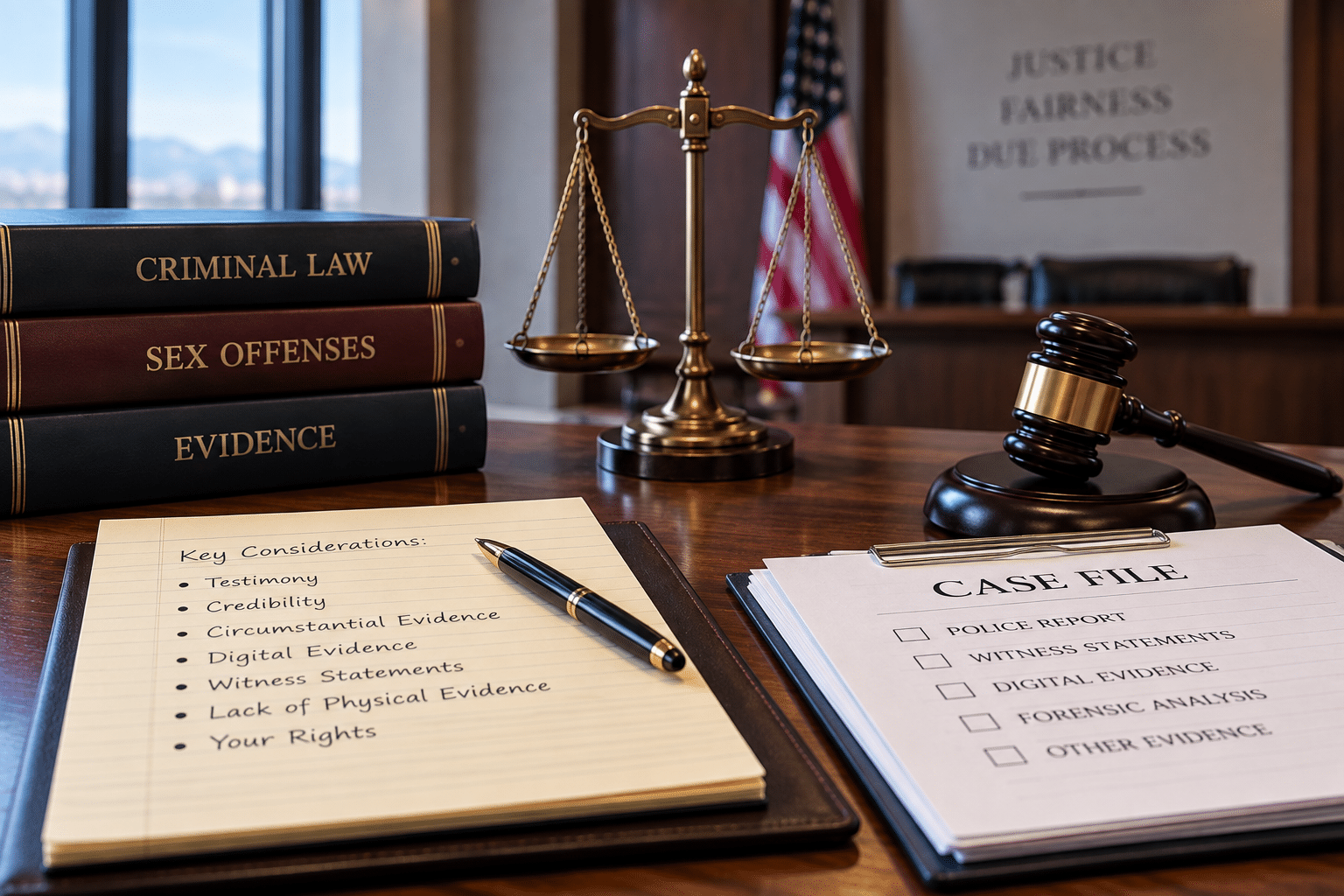
Yes. A person can be investigated, arrested, charged, and even convicted of certain sex crimes in Texas without DNA, fingerprints, photographs, physical injuries, or other forensic evidence. This surprises many people who assume prosecutors must have scientific proof before they can file a serious sexual offense charge. In many cases, the accusation itself becomes a central piece of evidence, along with statements, text messages, social media communications, witness testimony, phone records, and evidence about what happened before or after the alleged incident.
The absence of physical evidence can still be extremely important to the defense, but it does not automatically prevent a criminal case from moving forward. When we defend someone accused of a sex crime in Galveston, we examine not only what evidence the State claims to have, but also what evidence should exist if the accusation is accurate and whether the entire story is consistent with the available facts.
Texas Law Does Not Always Require Physical Evidence
Texas sexual assault law focuses on whether the prosecution can prove the statutory elements of the charged offense, not whether investigators recovered a particular type of forensic evidence. Texas Penal Code § 22.011 defines sexual assault and includes several forms of prohibited sexual conduct, including certain acts committed without another person’s consent and specified sexual conduct involving a child.
Nothing in § 22.011 creates a general rule requiring DNA or documented physical injury before a prosecution can occur. Aggravated sexual assault under Texas Penal Code § 22.021 likewise depends on the elements specified in that statute, including sexual conduct combined with particular aggravating circumstances. Aggravated sexual assault is generally a first-degree felony, making the consequences of an allegation exceptionally serious.
The prosecution must ultimately prove every required element beyond a reasonable doubt at trial. That burden, however, does not mean every element must be established through physical evidence.
A Complainant’s Testimony Can Be Powerful Evidence
One of the most important Texas laws in these cases is Article 38.07 of the Texas Code of Criminal Procedure. That provision states that convictions for specified sexual offenses can be supported by the uncorroborated testimony of the alleged victim when the statutory conditions are satisfied. For certain adult complainants, the statute addresses whether the alleged offense was reported to another person within one year. The reporting requirement does not apply to certain complainants, including those who were 17 or younger at the time of the alleged offense.
This means a defense should never be built around the assumption that, “There is no DNA, so they cannot convict me.” Texas law does not work that way.
At the same time, testimony is evidence that can be tested. We can examine whether an account has changed, whether important details conflict with objective records, whether other witnesses contradict the allegation, and whether communications before or after the alleged event are consistent with the State’s theory. Credibility can become one of the central issues in a case where little or no physical evidence exists.
Why Physical Evidence May Be Missing
There are legitimate reasons why some sexual assault investigations produce little or no usable physical evidence. An allegation may not be reported until days, weeks, months, or considerably longer after the alleged event. Biological material can disappear, injuries can heal, clothing may be washed or discarded, and the location may no longer contain useful evidence.
That reality cuts both ways. Prosecutors may argue that the absence of forensic evidence is understandable because of delayed reporting or the particular conduct alleged. The defense may argue that missing physical evidence weakens the State’s ability to independently confirm an accusation. Which argument carries greater weight depends heavily on the circumstances of the individual case.
We therefore do not treat “no physical evidence” as either an automatic victory or an insignificant fact. We examine why that evidence is absent and what the absence means when compared with the allegation.
Digital Evidence Often Becomes Important
Many modern sex crime investigations involve substantial digital evidence even when there is no DNA or medical evidence.
Police may investigate text messages, direct messages, photographs, videos, social media accounts, dating applications, internet searches, location information, call records, and other electronic communications. In some cases, those records may support part of an accusation. In others, they may contradict it.
Context matters greatly. A prosecutor may focus on several isolated messages while the larger conversation tells a different story. A message sent after an alleged event may be interpreted differently depending on what was said immediately before and afterward. Dates, timestamps, deleted communications, location information, and complete conversation histories can become significant defense evidence.
For allegations involving minors and online communications, Texas Penal Code § 33.021 separately criminalizes certain forms of online solicitation of a minor. That statute demonstrates why a sex offense investigation does not necessarily depend on proof of physical sexual contact at all. Electronic communications themselves may form a substantial part of the alleged offense.
Child Sex Crime Allegations Can Also Proceed Without Forensic Proof
Texas law imposes severe penalties for sexual offenses involving children, and many of these cases arise from allegations made long after the claimed conduct occurred.
Texas Penal Code § 21.11 addresses indecency with a child and prohibits specified sexual contact with a child younger than 17, as well as certain exposure-related conduct committed with the required sexual intent. Physical evidence is not listed as a necessary element of the offense.
Article 38.07 is particularly significant in cases involving younger complainants because the statute’s reporting requirement does not apply when the alleged victim was 17 or younger at the time of the alleged offense.
These cases can therefore become heavily dependent on statements, interviews, family testimony, electronic communications, and credibility assessments. That makes careful investigation especially important.
Being Charged Is Different From Being Convicted
People often use “charged” and “convicted” as though they mean the same thing. They do not.
Law enforcement and prosecutors do not need to prove guilt beyond a reasonable doubt merely to investigate or pursue a criminal charge. The beyond-a-reasonable-doubt standard applies to obtaining a criminal conviction at trial. By the time a case reaches trial, the State must prove each element of the charged crime to that demanding standard.
The lack of physical evidence may become an important part of creating reasonable doubt. We may question whether objective evidence supports the accusation, whether investigators tested alternative explanations, and whether the State’s evidence establishes what prosecutors claim it establishes.
Inconsistent Statements Can Become A Major Defense Issue
In cases based primarily on an allegation, the history of the complainant’s statements deserves close attention.
We compare initial reports, recorded interviews, police reports, forensic interviews when applicable, text messages, witness accounts, deposition or hearing testimony where available, and later statements. Human memory is not perfect, and minor differences do not necessarily establish that someone is lying. Material contradictions, however, can become important when they involve central facts such as where an event occurred, when it happened, who was present, what was said, or what allegedly took place.
We also examine whether investigators asked leading questions, whether information was introduced into an interview before the complainant mentioned it, and whether outside influences could have affected an account.
False Or Mistaken Allegations Require A Careful Defense
A false allegation can arise from many different circumstances. A misunderstanding, a relationship conflict, family dispute, custody issue, mistaken identity, or intentionally false accusation can potentially result in a criminal investigation. We do not assume why an allegation was made without evidence supporting that conclusion.
Instead, we test the accusation against objective facts.
Phone records may establish where someone was located. Video may contradict a claimed timeline. Witnesses may establish what occurred before or after the alleged incident. Messages may provide context that was missing from the initial police report. Employment records, receipts, vehicle information, photographs, and other records can sometimes become important.
The sooner those materials are identified and preserved, the more useful they may be to the defense.
Frequently Asked Questions About Sex Crime Charges Without Physical Evidence
Can Someone Be Convicted Of Sexual Assault Based Only On The Accuser’s Testimony?
Under certain circumstances, yes. Texas Code of Criminal Procedure Article 38.07 specifically provides that a conviction for specified sexual offenses can be supported by the uncorroborated testimony of the alleged victim when the statutory requirements are satisfied. For certain adult complainants, that includes a reporting provision involving disclosure of the alleged offense to another person within one year. The reporting requirement does not apply to several categories of complainants, including those 17 or younger at the time of the alleged offense. This is why a defendant should never assume that the absence of DNA or medical evidence makes prosecution impossible.
Does No DNA Mean The Sexual Assault Case Is Weak?
Not necessarily. The significance of missing DNA depends on the allegation, the amount of time before testing occurred, whether biological evidence would ordinarily be expected, and the other evidence available. Prosecutors may argue that the circumstances explain why DNA was not recovered. The defense may argue that an absence of expected forensic evidence makes the allegation less reliable. We examine the complete evidentiary picture rather than treating DNA as the sole measure of whether a case is strong or weak.
What Evidence Can Police Use If There Is No Physical Evidence?
Police can investigate testimonial, circumstantial, documentary, and digital evidence. This can include the complainant’s statements, witness accounts, text messages, social media communications, photographs, call records, location information, surveillance video, dating-app communications, and statements made by the accused. Some sex offenses can also arise largely from electronic conduct. Texas Penal Code § 33.021, for example, addresses online solicitation of a minor and specifically covers certain internet and electronic communications.
Can Inconsistent Statements Help A Sex Crime Defense?
They can, particularly when inconsistencies involve important facts. We distinguish minor differences that might naturally occur when a person recounts an event from contradictions that change a central part of the allegation. Comparing recorded interviews, police reports, text messages, witness statements, and later testimony can show whether the account remained consistent. Credibility may become especially important where there is little independent evidence supporting the allegation.
Should I Talk To Police If I Know I Did Nothing Wrong?
Speaking with investigators without first understanding the situation can create unnecessary risk. Police may already have interviewed the complainant and other witnesses before contacting you. Questions may be designed around information you have not seen, and seemingly innocent answers can later be compared against other evidence or interpreted in ways you did not anticipate. Before deciding whether to provide a statement, we want to understand the allegation, the stage of the investigation, and the potential legal consequences.
Contact Mark Diaz & Associates To Defend Against A Sex Crime Allegation In Galveston
Being accused of a sex crime can affect nearly every part of a person’s life before the case ever reaches a courtroom. An arrest can threaten employment, family relationships, reputation, professional licensing, freedom, and, depending on the offense and outcome, may carry sex offender registration consequences. When a case depends largely on one person’s allegation, we carefully examine the history of that accusation, the available digital evidence, witness accounts, objective records, police interviews, and any evidence that contradicts the State’s theory.
Mark Diaz & Associates represents people accused of serious criminal offenses in Galveston and throughout Houston, Texas. We understand how aggressively sex crime allegations can be investigated and prosecuted, and we believe these cases require careful attention from the beginning. The absence of DNA does not mean the allegation can be ignored, but it also does not mean an accusation should simply be accepted without testing its accuracy against all available evidence.
When you hire me, you work directly with me. My clients have my personal cell phone number because questions, emergencies, and concerns don’t always happen during business hours. You won’t be handed off to a junior associate or lost in a system where your case is one of dozens on a crowded docket. From arrest through resolution, I remain personally involved and accessible. Call our Galveston sex crime defense attorney at Mark Diaz & Associates today by calling 409-515-6170 to schedule your free consultation.
