
Federal Fentanyl Trafficking Charges In Galveston
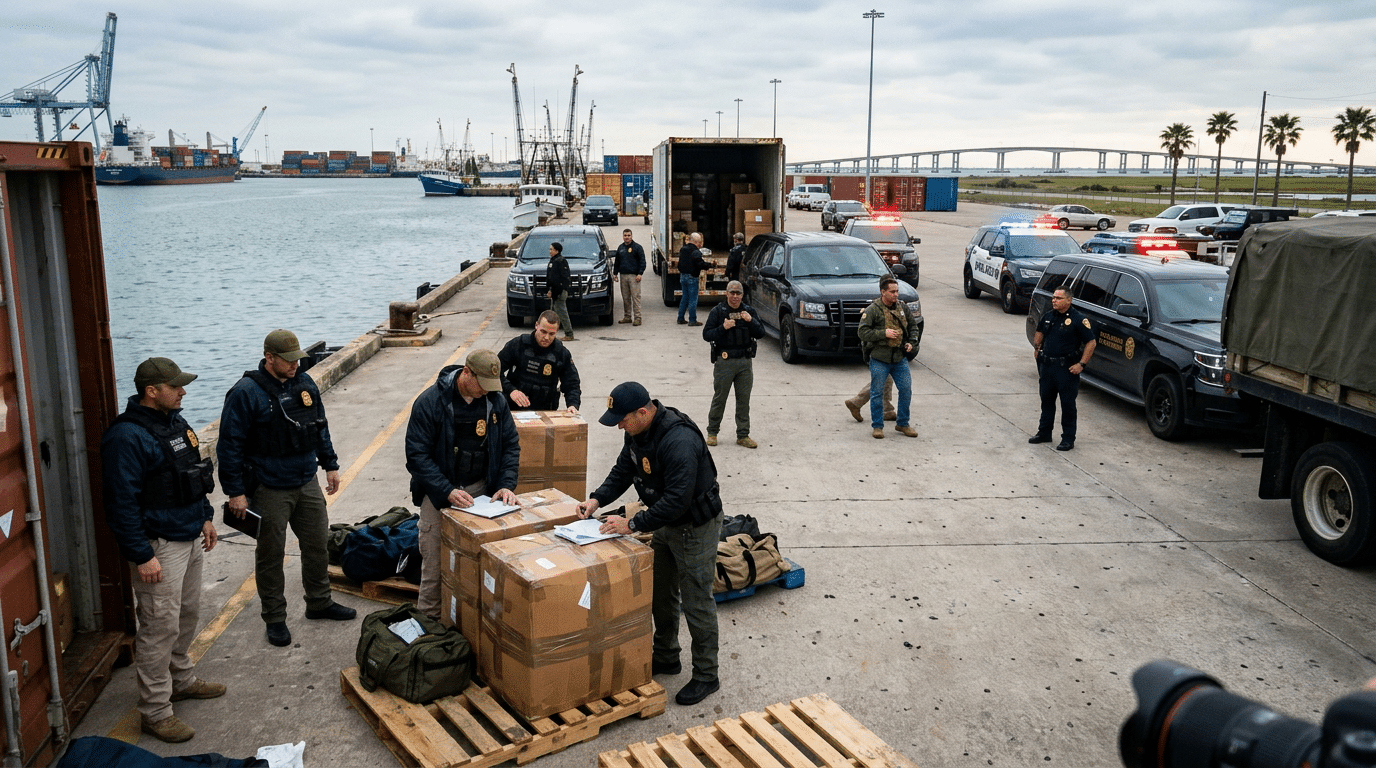
Federal fentanyl trafficking charges carry some of the harshest penalties under federal drug laws. In Galveston, these cases might start with a traffic stop, an inspection at an airport or port, a package seizure, surveillance, a controlled delivery, or an investigation by the DEA, Homeland Security Investigations, or another federal agency. Sometimes, people are investigated because agents think they are part of a larger distribution network between Galveston, Houston, Mexico, or other areas. The government does not need to catch someone in the act of selling fentanyl to bring trafficking charges. Often, federal prosecutors build their cases using seized drugs, text messages, phone records, financial documents, witness statements, surveillance, and statements from alleged co-conspirators.
How Federal Fentanyl Trafficking Charges Are Filed
The main federal law for fentanyl trafficking cases is 21 U.S.C. § 841. This law makes it illegal to knowingly or intentionally make, distribute, give out, or have a controlled substance with plans to make or distribute it. Fentanyl trafficking cases can involve actual distribution, having fentanyl with intent to distribute, manufacturing, or being part of a larger drug operation.
The government must still prove that a person had the right mental state. Just being near fentanyl does not mean someone knowingly had it or planned to distribute it. When we review a case, we carefully check if the government can truly link our client to the drugs, the place they were found, the supposed transaction, or any larger trafficking operation.
Federal Fentanyl Weight Thresholds Can Trigger Mandatory Minimum Sentences
Federal fentanyl penalties depend a lot on the amount of drugs involved. Under 21 U.S.C. § 841(b)(1)(B), if a case involves 40 grams or more of a mixture or substance with fentanyl, it can lead to a mandatory minimum sentence of five years and up to 40 years. The law also gives tougher penalties for certain fentanyl analogues and related substances.
The penalties get even harsher with larger amounts. Under § 841(b)(1)(A), if the case involves 400 grams or more of a mixture or substance with fentanyl, the mandatory minimum prison sentence is 10 years, and the maximum can be life in prison.
These thresholds make the alleged weight extremely important. We examine how the drugs were collected, tested, weighed, and attributed to the accused. In conspiracy cases, prosecutors may also try to hold a defendant responsible for quantities connected to the broader operation rather than only the amount physically found in that person’s possession.
A Federal Fentanyl Case May Be Based On Possession With Intent To Distribute
Federal prosecutors do not need evidence of a completed sale to charge trafficking. Possession with intent to distribute is itself prohibited under 21 U.S.C. § 841. Prosecutors may rely on the quantity of fentanyl, packaging, scales, cash, communications, firearms, travel patterns, or other evidence when arguing that drugs were intended for distribution.
We do not assume those facts prove intent. Large amounts of cash can have legitimate explanations. A phone may contain messages unrelated to trafficking. A person may live in or visit a home where another person controls the drugs. Every piece of evidence must be evaluated in context.
This distinction matters because possession with intent to distribute carries substantially greater exposure than simple possession.
Conspiracy Charges Can Reach People Who Never Touched The Fentanyl
Federal fentanyl prosecutions often include conspiracy allegations. A person can become part of a federal drug case even when agents never find fentanyl in that person’s pocket, vehicle, or home. Prosecutors may claim the person knowingly agreed to participate in a plan to distribute or manufacture controlled substances.
These cases frequently depend on cooperating witnesses, intercepted communications, text messages, recorded calls, financial transfers, surveillance, and statements from people attempting to reduce their own criminal exposure. We scrutinize whether the evidence actually proves an agreement and whether the accused knowingly joined that agreement.
Being acquainted with someone involved in drug trafficking is not the same as joining a criminal conspiracy. The government still has to establish criminal participation beyond a reasonable doubt.
Texas Fentanyl Charges Can Also Be Extremely Serious
Even when federal authorities are involved, Texas fentanyl laws remain important because conduct may also support state charges. Texas classifies fentanyl and certain related substances in Penalty Group 1-B under Texas Health and Safety Code § 481.1022. Texas Health and Safety Code § 481.1123 makes it a crime to knowingly manufacture, deliver, or possess with intent to deliver a controlled substance in Penalty Group 1-B.
The punishment increases sharply with weight. Under § 481.1123, less than one gram is a third-degree felony, while one gram or more but less than four grams is a second-degree felony. An amount of four grams or more but less than 200 grams is a first-degree felony carrying a potential sentence of 10 to 99 years or life and a fine of up to $20,000.
Texas also separately criminalizes knowing or intentional possession of Penalty Group 1-B substances under Texas Health and Safety Code § 481.115. The level of that offense also depends largely on the aggregate weight of the controlled substance, including adulterants and dilutants.
Fentanyl Distribution Resulting In Death Can Increase The Consequences
One of the most serious allegations in a fentanyl case is that another person died after using the substance. Federal law allows substantially increased penalties when death or serious bodily injury results from the use of fentanyl distributed in violation of § 841. Depending on the charge and facts, the statutory exposure can include decades in federal prison or life imprisonment.
Texas law also provides serious consequences when a person knowingly manufactures or delivers a Penalty Group 1-B substance and another person dies after ingesting, injecting, inhaling, or otherwise introducing that substance into the body. Texas Penal Code § 19.02 addresses this conduct as murder under specified circumstances, and the offense is generally a first-degree felony.
Causation becomes a central issue in these cases. We examine toxicology findings, the presence of other substances, medical evidence, the source of the fentanyl, and whether the government can establish the legal connection it claims.
Federal Agents May Build The Case Long Before An Arrest
A federal fentanyl investigation may continue for weeks or months before anyone is arrested. Agents may use confidential informants, controlled purchases, GPS information, surveillance, phone records, search warrants, financial records, social media, and information from cooperating defendants.
By the time federal agents make an arrest, prosecutors may already have gathered a large amount of evidence. That does not mean the government’s interpretation is correct. We review search warrants, affidavits, phone extractions, laboratory reports, recorded conversations, surveillance evidence, and witness statements to determine where the government’s case may be challenged.
Early legal representation can be especially important if federal agents have started asking questions or executing warrants but charges have not yet been filed.
Frequently Asked Questions About Federal Fentanyl Trafficking Charges In Galveston
What Makes A Fentanyl Case Federal Instead Of State?
A fentanyl case may become federal when federal agencies investigate it, the alleged conduct crosses state or international borders, drugs move through the mail or interstate transportation systems, or prosecutors believe the case involves a larger distribution organization. Federal authorities may also take cases involving substantial quantities or investigations connected to other defendants.
The fact that conduct occurred in Texas does not prevent federal prosecution. Federal and Texas law are separate systems, and the same investigation may potentially involve both. We determine which agencies are involved, which court has jurisdiction, and what statutes prosecutors appear likely to use.
Can I Be Charged With Federal Fentanyl Trafficking If I Never Sold Fentanyl?
Yes. Federal trafficking charges are not limited to completed sales. Under 21 U.S.C. § 841, the government may prosecute possession with intent to distribute, manufacturing, distribution, and related conduct.
Prosecutors may argue that quantity, packaging, cash, communications, travel records, or other circumstances show an intent to distribute. We examine whether that evidence actually supports the government’s allegation. Possessing an item, being present in a location, or knowing another person involved in drugs does not automatically establish trafficking.
How Much Fentanyl Triggers A Federal Mandatory Minimum Sentence?
Under current federal law, 40 grams or more of a mixture or substance containing fentanyl can trigger a five-year mandatory minimum sentence under 21 U.S.C. § 841(b)(1)(B). A quantity of 400 grams or more can trigger a 10-year mandatory minimum under § 841(b)(1)(A).
Those amounts make laboratory testing and weight calculations especially important. We examine whether the government accurately identified the substance, whether the weight was calculated correctly, and whether the entire amount can legally be attributed to the accused.
Can I Be Charged Because My Name Appeared In Someone Else’s Phone?
A person’s name appearing in a phone does not by itself prove participation in fentanyl trafficking. Federal investigators often examine texts, call logs, social media messages, location data, and contact lists when trying to connect people to an alleged drug organization.
The meaning of those communications matters. We look at whether prosecutors can prove the messages concern drugs, whether the phone data can be authenticated, who actually used the device, and whether the communication shows knowing participation rather than ordinary contact between acquaintances.
What If The Fentanyl Was Found In A Car With Several People?
A shared vehicle can create important possession issues. The government still has to establish a connection between the accused and the fentanyl. Simply riding in a vehicle where drugs are found does not automatically establish knowing possession.
We examine where the fentanyl was located, who owned or controlled the vehicle, who had access to the area where the drugs were found, fingerprints or DNA evidence, statements made during the stop, and whether any communications link a particular person to the substance. These facts can become especially important when multiple occupants could have had access to the same area.
What Happens If Someone Dies After Using Alleged Fentanyl?
A death can dramatically increase the seriousness of both federal and Texas charges. Federal law authorizes enhanced punishment when death or serious bodily injury results from the use of a substance distributed in violation of federal drug law.
Texas Penal Code § 19.02 also addresses certain deaths resulting from the manufacture or delivery of Penalty Group 1-B substances.
These cases often turn on medical causation and drug-source evidence. Toxicology, other substances in the person’s system, dosage, the chain of distribution, and whether the government can identify the source of the fentanyl may all be contested.
Speak With A Galveston Federal Drug Crime Lawyer
Federal fentanyl trafficking charges require immediate attention because the government may already have conducted surveillance, seized phones, collected financial records, interviewed witnesses, and obtained laboratory testing before an arrest occurs. Mandatory minimum sentences, conspiracy allegations, disputed drug quantities, and claims involving distribution or death can substantially increase the potential consequences.
At Mark Diaz & Associates, we examine how the investigation began, what federal agents seized, whether searches and warrants were lawful, how the fentanyl was tested and weighed, and whether the government can prove knowledge, possession, distribution, or conspiracy beyond a reasonable doubt. We also evaluate the relationship between any federal charges and possible Texas charges under the Texas Controlled Substances Act.
When you hire Mark Diaz & Associates, you work directly with your attorney. Our clients have direct access because questions, emergencies, and concerns do not always happen during normal business hours. You will not simply be handed off to a junior associate or left wondering who is handling your case. From the investigation or arrest through the resolution of the case, we remain personally involved and accessible.
Mark Diaz & Associates represents people facing federal and state criminal charges in Galveston and throughout Houston, Texas. If you are under investigation or have been charged with fentanyl trafficking, possession with intent to distribute, drug conspiracy, or another serious drug offense, contact our Galveston federal drug trafficking lawyers by calling 409-515-6170 to schedule your free consultation.
