
How Serious Is a Federal Firearms Charge in Texas?
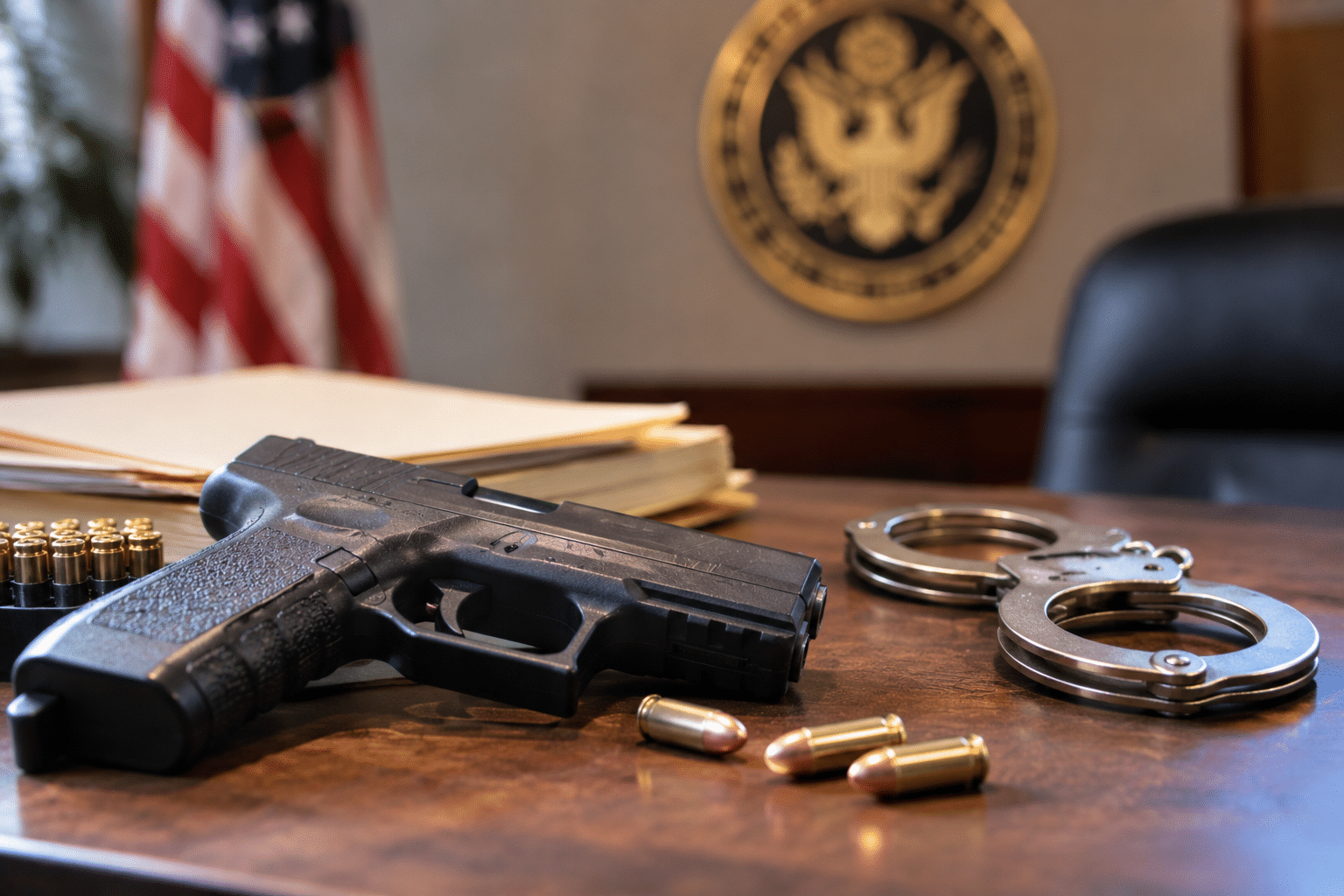
Federal Firearms Charges Can Carry Years In Federal Prison
A federal firearms charge can lead to a long prison sentence, even if no one was shot and the gun was never fired. These cases often start after a traffic stop, drug investigation, search warrant, domestic dispute, or an investigation by agencies like the ATF, FBI, or DEA. Someone who thought owning a gun was legal under Texas law may find that federal law has its own restrictions. Factors like prior felony convictions, domestic violence convictions, drug use, protective orders, the type of firearm, and whether another federal crime is involved can all impact the case. When we defend someone facing a federal firearm charge, we first identify which federal law applies and what the government needs to prove.
One of the most common federal firearm charges is prohibited-person possession under 18 U.S.C. § 922(g). This law bans certain people from having guns or ammunition, including some convicted felons, fugitives, illegal drug users, people under certain domestic violence restraining orders, and those convicted of certain misdemeanor domestic violence crimes. Federal law also restricts firearm possession for some immigration statuses and other specific groups.
If someone knowingly violates § 922(g), they can face up to 15 years in federal prison under 18 U.S.C. § 924(a)(8). This is a serious penalty, and the gun does not have to be fired during another crime for the charge to apply. The prosecution still has to prove every part of the offense beyond a reasonable doubt, including possession and the person’s prohibited status.
Prior Convictions Can Turn A Firearm Case Into A Much More Serious Federal Prosecution
Having a prior felony conviction is a common reason why a Texas firearm case becomes a federal matter. Under 18 U.S.C. § 922(g)(1), someone convicted of a crime punishable by more than one year usually cannot have a gun or ammunition that is connected to interstate commerce. This federal rule can still apply even if the person thinks enough time has passed since their Texas conviction.
Texas law creates an important distinction that can cause confusion. Texas Penal Code § 46.04 generally makes it a third-degree felony for a person convicted of a felony to possess a firearm before the fifth anniversary of release from confinement or supervision, whichever is later. After that period, the Texas statute restricts possession to the premises where the person lives. A violation of subsection (a) is a third-degree felony, which Texas Penal Code § 12.34 punishes by two to ten years in prison and a possible fine of up to $10,000.
The issue is that federal law does not automatically follow the five-year rule in Texas. Someone might think they can have a gun at home under Texas Penal Code § 46.04, but federal law could still prohibit it. That’s why we carefully review the prior conviction, the person’s legal status, any restoration of rights, and the exact federal law before deciding if firearm possession was legal.
Prior convictions can also lead to much longer federal sentences under the Armed Career Criminal Act. Under 18 U.S.C. § 924(e), someone convicted under § 922(g) with three qualifying past convictions for violent felonies or serious drug crimes on different occasions faces a mandatory minimum of 15 years in prison. Whether a past conviction counts can be debated in court, so the label on the old conviction is not always final.
A Gun Connected To Drugs Or Violence Can Produce Mandatory Additional Prison Time
Some of the most serious federal firearm cases involve 18 U.S.C. § 924(c). The statute applies when the government alleges that a person used or carried a firearm during and in relation to a qualifying crime of violence or possessed a firearm in furtherance of a federal drug trafficking crime. Unlike an ordinary sentencing enhancement, a § 924(c) charge is a separate federal offense with its own mandatory punishment.
The punishment can increase according to how the firearm was allegedly used. Section 924(c) generally requires at least five years when a firearm is used or carried during a qualifying offense or possessed in furtherance of it. The minimum increases to seven years if the firearm was brandished and ten years if it was discharged. Those terms generally must run consecutively to the punishment imposed for the underlying federal crime rather than at the same time.
This can make a federal drug case much more serious when agents find a firearm near drugs, cash, packaging materials, or other alleged evidence of trafficking. The government may argue that the weapon protected the drugs, proceeds, or distribution operation. We look closely at where the gun was found, whether it was loaded, who owned it, whether it was accessible, and whether there is actual evidence connecting the firearm to the alleged drug activity rather than merely showing that a gun happened to be present.
The type of firearm can also matter. Section 924(c) provides greater mandatory penalties for certain firearms, including short-barreled rifles, short-barreled shotguns, machineguns, destructive devices, and firearms equipped with silencers or mufflers. The precise statutory classification of the weapon can therefore dramatically change the sentencing exposure.
Texas Weapons Laws Can Apply Alongside Federal Firearms Laws
A person investigated federally may also face possible prosecution under Texas law. Texas Penal Code Chapter 46 governs numerous weapons offenses, including unlawful possession of a firearm by certain people. Texas Penal Code § 46.04 applies to convicted felons and also contains restrictions involving certain prior family-violence convictions and qualifying protective orders.
For example, § 46.04(b) generally prohibits a person convicted of a qualifying Class A misdemeanor assault involving a family or household member from possessing a firearm for five years after the later of release from confinement or community supervision. That offense is generally a Class A misdemeanor under Texas law. A Texas Class A misdemeanor can carry up to one year in county jail and a fine of up to $4,000 under Texas Penal Code § 12.21.
Texas law also regulates certain prohibited weapons under Penal Code § 46.05. The statute addresses specified weapons and expressly refers to federal registration requirements for certain items, including machine guns and explosive weapons. Depending on the item involved, the conduct can expose a defendant to both state and federal scrutiny.
The fact that Texas generally allows many lawful adults to possess firearms does not prevent federal prosecution when a federal restriction applies. State and federal firearm laws operate separately, and a person can comply with one set of rules while violating another. We therefore examine both systems whenever a firearm investigation begins in Galveston, Houston, or elsewhere in Texas.
Possession Is Often One Of The Most Important Issues In The Case
Federal firearm cases do not always involve a gun found in someone’s hand or waistband. A firearm may be discovered inside a car, bedroom, closet, shared apartment, suitcase, garage, or another location accessible to several people. Prosecutors can rely on constructive possession rather than actual physical possession, which makes the surrounding facts especially important.
We look for evidence showing whether our client actually knew the firearm was present and whether the government can prove control over it. The location of personal belongings, fingerprints, DNA, photographs, text messages, firearm purchase records, statements, and access to the area where the gun was found may all become relevant. When several people shared the vehicle or residence, simply being nearby does not resolve who possessed the firearm.
Knowledge of prohibited status also matters in a § 922(g) prosecution. In Rehaif v. United States, the U.S. Supreme Court held that the government must prove that the defendant knew he possessed the firearm and knew that he belonged to the relevant prohibited category. That does not mean the prosecution must prove the defendant knew the federal statute itself, but the required knowledge of status can become important depending on the facts of the case.
Frequently Asked Questions About Federal Firearms Charges In Texas
Can A Convicted Felon Legally Possess A Gun At Home In Texas?
Texas and federal law can produce different answers, which makes this a dangerous area for assumptions. Texas Penal Code § 46.04 provides that after the applicable five-year period has passed, a person with a felony conviction does not violate that particular Texas subsection by possessing a firearm at the premises where the person lives.
Can A Gun Found Near Drugs Lead To A Federal Firearms Charge?
Yes. A firearm discovered during a drug trafficking investigation can lead to a separate charge under 18 U.S.C. § 924(c) if prosecutors contend that the firearm was possessed in furtherance of a federal drug trafficking crime. A conviction can carry a mandatory minimum term beginning at five years, with longer minimums when a firearm is brandished or discharged.
Can You Face A Federal Gun Charge If The Firearm Was Not Yours?
Ownership and possession are different legal concepts. A person can potentially be accused of possessing a firearm owned by someone else, but prosecutors must still prove the required possession and knowledge. A gun found in a shared vehicle or residence often raises factual questions about who knew about it and who exercised control over it.
Does The Government Have To Prove That A Felon Knew He Could Not Possess A Gun?
Not exactly. Under Rehaif v. United States, the government must prove in a § 922(g) case that the defendant knew he possessed the firearm and knew that he had the status that made him a prohibited person. The Supreme Court’s decision does not generally require the government to prove that the defendant knew the federal statute itself prohibited possession.
Can Texas And Federal Prosecutors Bring Gun Charges Based On The Same Firearm?
Potentially, yes. Texas and federal governments have separate criminal laws governing firearm possession and related conduct. Texas Penal Code § 46.04, for example, creates state firearm restrictions for certain convicted felons, people with qualifying family-violence convictions, and people subject to specified protective orders.
Speak With Mark Diaz & Associates About A Federal Firearms Charge
Federal firearm charges require immediate attention because the potential punishment can change dramatically depending on the defendant’s criminal history, the alleged connection between the firearm and another crime, and the particular federal statute involved. At Mark Diaz & Associates, we examine how the firearm was discovered, who actually possessed it, whether the search was lawful, what statements were made, whether the government can establish prohibited status, and whether prosecutors are attempting to connect the weapon to alleged drug trafficking or another federal offense.
When you hire Mark Diaz & Associates, you work directly with your attorney. Our clients have their attorney’s personal cell phone number because questions, emergencies, and concerns do not always happen during normal business hours. You will not be handed off to a junior associate or lost in a system where your case becomes one of dozens on a crowded docket. From the federal investigation or arrest through resolution, we remain personally involved, accessible, and familiar with the evidence and legal issues affecting your case.
Mark Diaz & Associates represents clients facing federal firearm charges and other serious criminal accusations in Galveston and throughout Houston, Texas. If federal agents are investigating you, you have been arrested, or you have been indicted on a federal firearms charge, contact our Galveston federal defense attorney at Mark Diaz & Associates today by calling 409-515-6170 to schedule your free consultation.
