
Texas DWI Accident Charges And The Penalties You Could Face
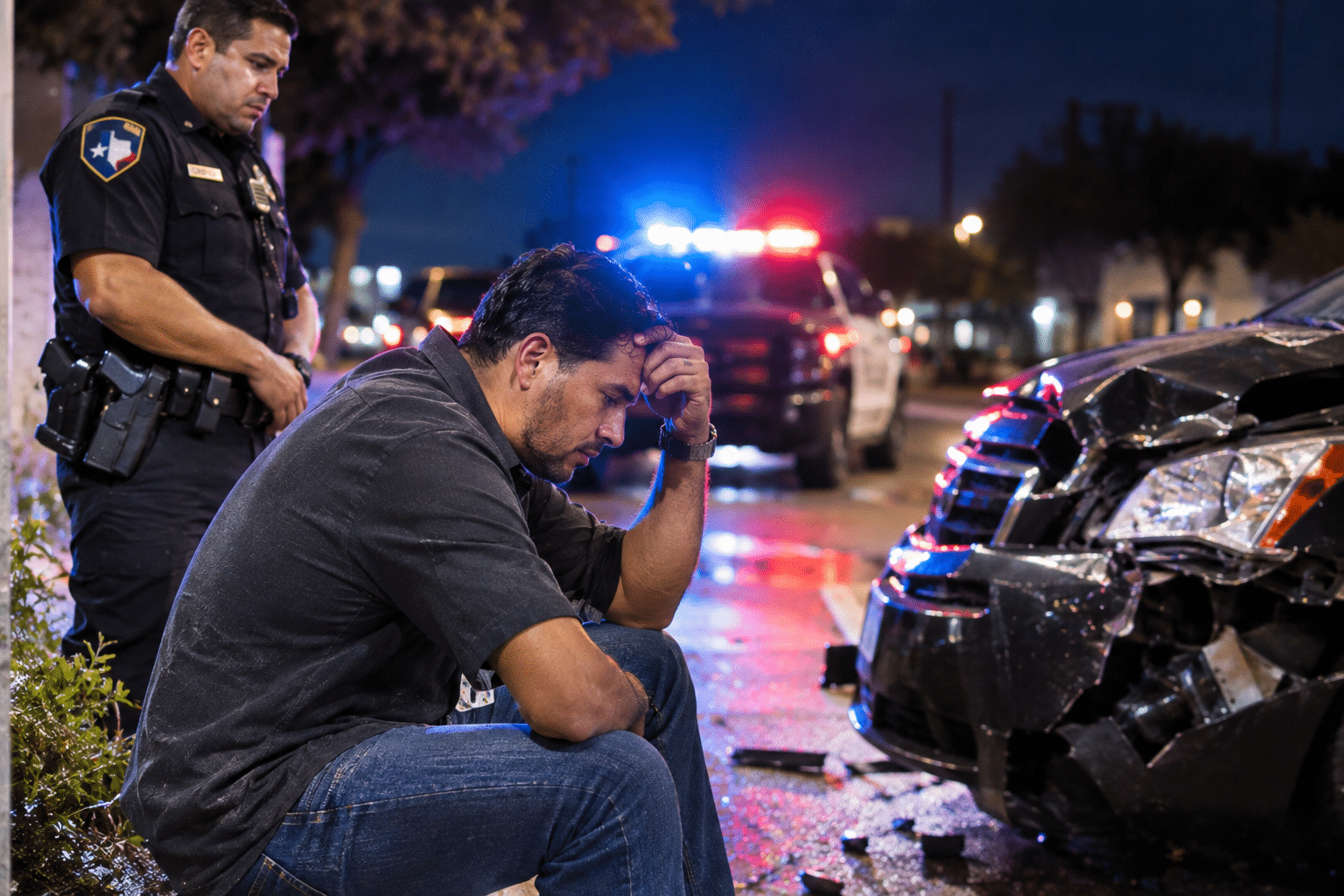
A DWI arrest gets more serious if the police say intoxicated driving caused a car accident. What might start as a misdemeanor DWI can turn into charges like intoxication assault, intoxication manslaughter, or leaving the scene. The outcome often depends on whether anyone was hurt, how badly, if someone died, and if the driver stayed at the scene. Police may look for blood evidence, witness statements, surveillance video, vehicle data, and medical records to figure out what happened before the crash. When we defend a Galveston County DWI accident case, we look at whether the State can prove intoxication and whether it can show that intoxication actually caused the injuries or death.
A Texas DWI Accident Does Not Automatically Mean A Felony
Texas Penal Code § 49.04 says a person commits DWI if they are intoxicated while driving a motor vehicle in a public place. In Texas, intoxication means having an alcohol concentration of 0.08 or higher, or losing normal mental or physical abilities because of alcohol, drugs, or both. A basic DWI is usually a Class B misdemeanor, but certain factors can make the charge more serious.
The occurrence of an accident does not, by itself, automatically convert the charge into a felony. If no one suffers serious bodily injury or death, prosecutors may still pursue the underlying DWI and any other offenses supported by the circumstances. We look carefully at what caused the collision because an accident can happen for many reasons unrelated to intoxication, including another driver’s actions, road conditions, mechanical failure, weather, or an unexpected traffic hazard.
Serious Injuries Can Lead To Intoxication Assault Charges
Texas Penal Code § 49.07 creates the offense of intoxication assault. A person can be charged when, while operating a motor vehicle in a public place while intoxicated, the person causes serious bodily injury to another by reason of that intoxication. The statute defines serious bodily injury as an injury that creates a substantial risk of death or causes serious permanent disfigurement or a protracted loss or impairment of the function of a bodily member or organ.
Intoxication assault is usually a third-degree felony. This means a person could face two to ten years in prison and a fine of up to $10,000.
The causation requirement is critical. The State must do more than show that the driver was intoxicated and that someone was injured. Prosecutors must establish that the serious bodily injury occurred by reason of the intoxication. We investigate the collision itself, including vehicle positions, speed, braking, witness accounts, roadway conditions, and the actions of every driver involved.
Fatal DWI Accidents Can Lead To Intoxication Manslaughter
When another person dies, prosecutors may pursue intoxication manslaughter under Texas Penal Code § 49.08. The statute applies when a person operates a motor vehicle in a public place while intoxicated and, by reason of that intoxication, causes the death of another person by accident or mistake. Intoxication manslaughter is generally a second-degree felony.
A second-degree felony usually means two to twenty years in prison and a fine of up to $10,000. Because the consequences are so serious, proving causation is one of the most important parts of a fatal DWI case.
We examine whether intoxication actually caused the crash rather than assuming that a positive alcohol or drug test resolves the issue. Accident reconstruction evidence, event data recorder information, video, witness accounts, road design, vehicle defects, and the conduct of other motorists can all become significant.
Prior DWI Convictions Can Increase The Criminal Exposure
Texas Penal Code § 49.09 enhances certain intoxication offenses based on prior convictions. A second qualifying DWI can become a Class A misdemeanor with a minimum period of confinement, while a third qualifying DWI can become a third-degree felony. Prior intoxication manslaughter convictions and certain other qualifying histories can also affect the level of a new offense.
This means two drivers involved in similar accidents may face very different punishment ranges depending on their criminal histories. When prosecutors claim an enhancement applies, we review the prior judgments and records to determine whether the convictions legally qualify.
An enhancement allegation should not simply be accepted because a prior arrest appears on a background check. The State must establish the prior conviction in the manner required by law.
Leaving The Scene Can Create A Separate Criminal Charge
A driver involved in an accident resulting or reasonably likely to result in injury or death has specific duties under Texas Transportation Code § 550.021. The driver must immediately stop at or near the scene, determine whether someone requires assistance, and remain until the duties imposed by § 550.023 have been satisfied. Those duties include providing identifying and insurance information and providing reasonable assistance to someone who is injured.
Failure to stop after an accident involving death is a second-degree felony. Leaving the scene of an accident involving serious bodily injury is a third-degree felony. Other injury accidents can also result in significant incarceration and fines.
A person suspected of DWI who panics and leaves the scene may therefore face separate criminal cases arising from the same event. We examine whether the accused knew a collision occurred, whether injury was apparent or reasonably likely, what happened immediately afterward, and whether the statutory duties were satisfied.
Blood Testing Often Becomes Important After A Serious Accident
Serious DWI accidents frequently lead to blood testing rather than a simple roadside breath test. Officers may seek a specimen to determine whether alcohol, prescription medication, controlled substances, or other drugs were present.
A laboratory result is not the end of the analysis. We examine how the specimen was collected, stored, transported, tested, and documented. The timing of the blood draw can also matter because an alcohol concentration measured later does not necessarily establish the precise concentration at the time of driving.
Drug-related DWI cases present additional issues. Texas does not require prosecutors in every case to prove a particular numerical drug concentration. The State may instead attempt to prove that a substance caused the loss of normal mental or physical faculties. That makes observations, driving behavior, toxicology evidence, medical information, and competing explanations especially important.
Accident Evidence Can Be Just As Important As The DWI Evidence
DWI accident cases involve two related but distinct questions. The State may need to prove intoxication, and in serious injury or death cases, it may also need to prove that intoxication caused the result.
We therefore review more than the breath or blood result. Crash reports, photographs, surveillance footage, vehicle damage, skid marks, electronic vehicle data, witness statements, road conditions, and accident reconstruction findings can all affect the prosecution’s theory.
An intoxicated driver is not automatically legally responsible for every collision that occurs. If another motorist ran a red light, crossed into the wrong lane, or caused an unavoidable collision, causation may become a major issue even when evidence of intoxication exists.
Frequently Asked Questions About Texas DWI Accident Charges
Does A Car Accident Automatically Turn A Texas DWI Into A Felony?
No. A collision by itself does not automatically make a DWI a felony. Under Texas Penal Code § 49.04, a basic DWI is generally a Class B misdemeanor unless another statutory enhancement applies. The charge becomes much more serious when the accident results in serious bodily injury or death and prosecutors claim intoxication caused that result. Serious bodily injury can lead to intoxication assault under § 49.07, while a death can lead to intoxication manslaughter under § 49.08. The State must prove the elements of the particular felony rather than relying solely on the fact that an accident occurred.
How Much Prison Time Can You Face For Intoxication Assault In Texas?
Intoxication assault is generally a third-degree felony under Texas Penal Code § 49.07. A third-degree felony ordinarily carries a prison range of two to ten years and may include a fine of up to $10,000. The statute requires serious bodily injury and a causal connection between the defendant’s intoxication and that injury. We examine whether the injury meets the statutory definition and whether the evidence actually shows that intoxication caused the crash.
How Much Prison Time Can You Face For Intoxication Manslaughter?
Under Texas Penal Code § 49.08, intoxication manslaughter is usually a second-degree felony. This means you could face two to twenty years in prison and a fine of up to $10,000.
These cases often turn heavily on accident reconstruction and causation. The State must prove that the accused was intoxicated and that, by reason of that intoxication, the person caused another person’s death.
What Happens If The Other Driver Caused The Accident?
Evidence that another driver caused or materially contributed to the collision can be extremely important. An intoxication assault or intoxication manslaughter case requires a connection between the accused driver’s intoxication and the serious injury or death.
We may investigate whether the other driver ran a traffic signal, made an unsafe turn, crossed the centerline, was speeding, or committed another act that caused the crash. Vehicle data, video recordings, physical evidence, and witness testimony may help reconstruct what actually occurred.
Speak With Mark Diaz & Associates About A Texas DWI Accident Charge
A DWI accident accusation can become far more serious than an ordinary drunk-driving case when prosecutors allege serious injury, death, prior DWI convictions, or leaving the scene. At Mark Diaz & Associates, we examine both the intoxication evidence and the accident itself. We review blood or breath testing, body-camera footage, witness statements, medical records, vehicle data, crash reconstruction evidence, and every fact prosecutors rely on to claim that intoxication caused the collision.
When you hire Mark Diaz & Associates, you work directly with your attorney. Our clients have their attorney’s personal cell phone number because questions, emergencies, and concerns do not always happen during normal business hours. You will not simply be handed off to a junior associate or become one file among dozens on a crowded docket. From arrest through resolution, we remain personally involved, accessible, and familiar with the evidence and legal issues affecting your defense.
Mark Diaz & Associates represents people facing DWI, intoxication assault, intoxication manslaughter, failure to stop and render aid, and other serious criminal charges in Galveston and throughout Houston, Texas. If you have been arrested or are under investigation after a DWI accident, contact our Galveston DWI defense attorneys at Mark Diaz & Associates by calling 409-515-6170 to receive your free consultation.
