
TSA Found Something Illegal In Your Luggage. What Happens Next?
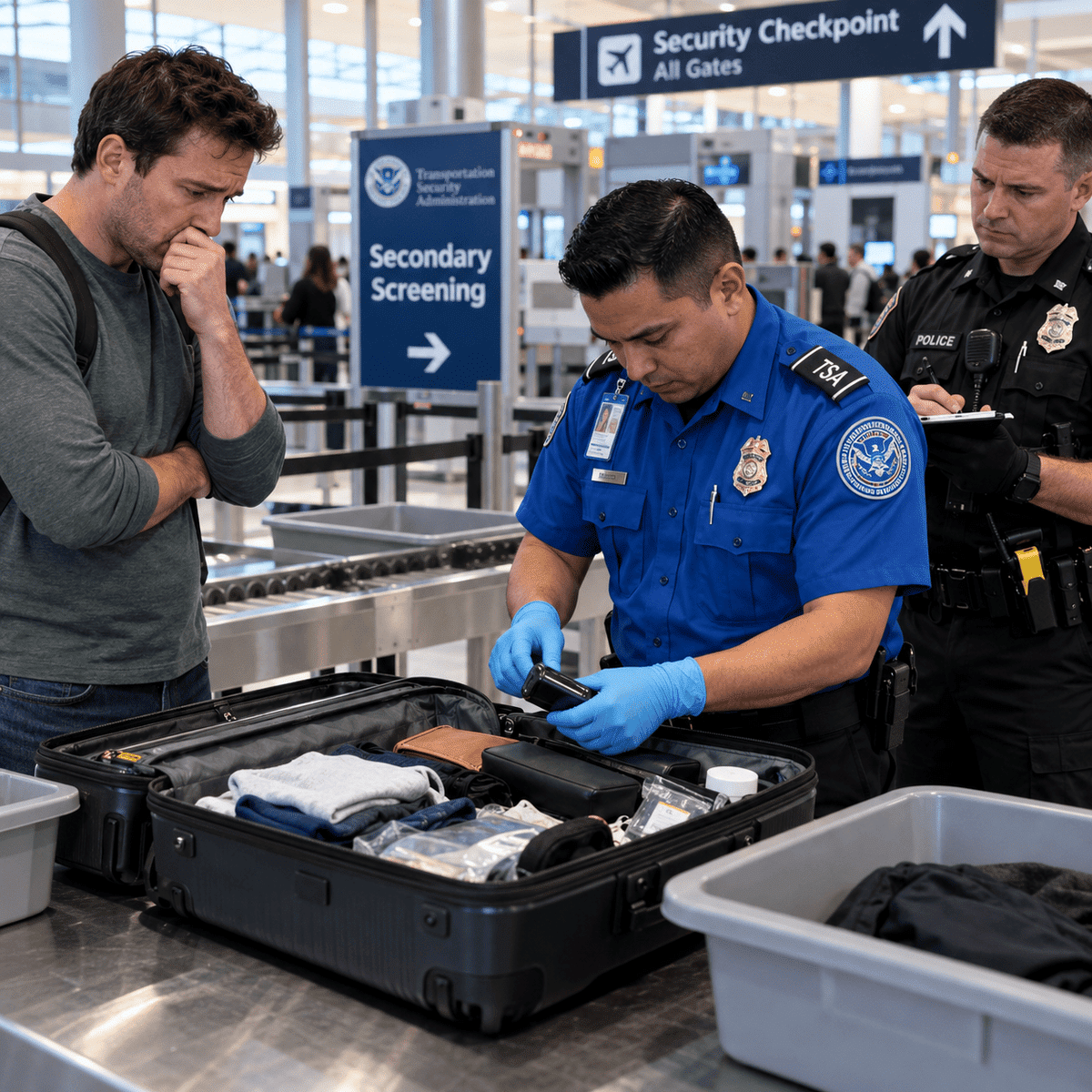
If TSA finds something illegal in your luggage, your trip can quickly become a criminal investigation. Many people think TSA will just take the item and let them go, but that is not always the case. Depending on what is found, law enforcement may be called, you may be questioned right away, and you could even be arrested. You might face Texas criminal charges, federal penalties, or both. If this happens at an airport in Galveston or Houston, your actions and words in those first few minutes can make a big difference in what happens next.
TSA Screening Can Quickly Become A Law Enforcement Matter
TSA officers screen passengers to keep flights safe, but they are not regular police officers. If they find suspected illegal drugs or evidence of a crime during screening, TSA policy says they must call local, state, or federal law enforcement. TSA also says its officers do not search for marijuana or other illegal drugs, but if they find any during screening, they refer the case to law enforcement.
This difference is important. TSA screening starts as a security check, but if they find something illegal, police may arrive and start a criminal investigation. At that point, explaining what happened without thinking can give prosecutors evidence they might not have had otherwise.
Drugs Found In Luggage Can Lead To Texas Possession Charges
Texas prosecutors generally must prove that a person knowingly or intentionally possessed the illegal substance. Under Texas Penal Code Section 1.07, possession means actual care, custody, control, or management. Finding drugs inside someone’s suitcase is important evidence, but the location of the drugs does not automatically answer every question about knowledge or possession.
For example, luggage might be shared, packed by someone else, borrowed, or handled by several people before it gets to the airport. If a controlled substance was hidden in a compartment and our client did not know about it, proving knowledge can become a major issue.
The seriousness of the charge depends heavily on the substance and quantity. Texas Health and Safety Code Section 481.115 applies to possession of substances in Penalty Group 1 or 1-B. Possession of less than one gram is generally a state jail felony, while larger quantities can result in progressively more serious felony charges. Texas Health and Safety Code Section 481.116 establishes similar quantity-based penalties for Penalty Group 2 substances.
Marijuana Can Still Result In A Texas Criminal Charge
Some travelers think marijuana is legal in Texas because they bought it legally in another state. However, having it in Texas is still against the law.
Under Texas Health and Safety Code Section 481.121, a person commits an offense when the person knowingly or intentionally possesses a usable quantity of marijuana, unless otherwise authorized by law. Possession of two ounces or less is generally a Class B misdemeanor, while more than two ounces but no more than four ounces is generally a Class A misdemeanor. Larger amounts can result in felony charges.
TSA rules add another layer of concern. TSA says marijuana and some cannabis products are still illegal under federal law, except for certain hemp products with no more than 0.3 percent THC and some FDA-approved items. If TSA finds a suspected illegal substance, they call law enforcement.
A Firearm At The Security Checkpoint Creates Different Problems
If a firearm is found at an airport, the situation needs careful review because both Texas law and federal TSA rules may apply.
Texas Penal Code Section 46.03 prohibits certain weapons in or into the secured area of an airport. Texas law defines the secured area as an area where access is controlled by federal inspection of persons and property, along with certain controlled aircraft parking areas. The definition generally does not include baggage claim, passenger parking areas, or public pickup and drop-off areas.
Federal travel rules separately prohibit firearms in carry-on baggage. A firearm transported in checked baggage generally must be unloaded, placed in a locked hard-sided container, and declared to the airline at check-in.
If TSA finds a firearm at a screening checkpoint, they stop the screening and call local law enforcement. Police take control of the firearm and handle the passenger according to the law. TSA can also give a large civil penalty, take away TSA PreCheck for at least five years, and may refer the case for federal prosecution.
Saying “I Forgot It Was There” Does Not Automatically End The Case
One of the most common reactions after contraband is discovered is an immediate explanation. Someone may say, “I forgot that was in my bag,” “That belongs to my friend,” or “I didn’t know I couldn’t bring that.”
We look at these statements very closely. Some explanations might help your defense, but others can accidentally show knowledge, ownership, or possession. For example, saying you “forgot” an item was in your bag could be used by prosecutors to show you knew about it before.
You can be polite without giving law enforcement a detailed explanation. If you might face criminal charges, you have the right to ask for a lawyer before answering questions.
We Examine Whether The State Can Actually Prove Knowing Possession
A criminal case about airport luggage is not just about what TSA found. We look at how the bag was packed, who had access, where the item was, if others used the bag, what was said, any video footage, and how the item was identified and tested.
We also examine the search and subsequent law enforcement investigation. TSA has broad authority to conduct airport security screening, but that does not eliminate every constitutional issue that may arise once an investigation changes from aviation security screening into criminal law enforcement activity.
The prosecution still carries the burden of proving every required element of the charged offense. An airport setting does not eliminate that burden.
Frequently Asked Questions About Illegal Items Found By TSA
Will TSA Arrest Me If They Find Drugs In My Bag?
TSA officers generally conduct transportation security screening rather than ordinary criminal investigations. According to TSA, its officers are not specifically searching for marijuana or other illegal drugs. If suspected illegal drugs are discovered during screening, however, TSA refers the matter to a law enforcement officer.
What happens next depends on the substance, quantity, surrounding circumstances, and decisions made by the responding law enforcement agency. Police may question the traveler, seize the suspected substance, conduct further investigation, issue a citation where legally permitted, or make an arrest. We would evaluate both what TSA discovered and everything that happened after law enforcement became involved.
What If Someone Else Packed My Suitcase?
That can be extremely important. Texas controlled-substance offenses generally require knowing or intentional possession. Texas law defines possession in terms of actual care, custody, control, or management.
The fact that something was physically located inside your luggage can provide evidence connecting you to it, but prosecutors still must prove the required mental state. If a spouse, friend, relative, coworker, or another traveler packed the bag, we may investigate whether there is evidence showing that you actually knew the illegal item was inside. Text messages, travel arrangements, ownership of the luggage, witness testimony, fingerprints, statements, and the location of the item inside the suitcase may all become relevant.
Can I Be Arrested In Texas For Marijuana That I Legally Bought In Another State?
Yes, depending on the substance and circumstances. Purchasing marijuana lawfully somewhere else does not automatically make its possession lawful after entering Texas. Texas Health and Safety Code Section 481.121 generally prohibits knowingly or intentionally possessing a usable quantity of marijuana unless possession is otherwise legally authorized.
Air travel also raises federal issues because TSA operates under federal transportation security rules. TSA states that marijuana and certain cannabis-infused products remain prohibited under federal law, subject to limited exceptions including qualifying hemp products and certain FDA-approved products. The exact composition of a cannabis product can therefore matter.
What Happens If TSA Finds A Gun In My Carry-On Bag?
TSA will generally stop the screening process and contact local law enforcement. Current TSA guidance states that local law enforcement will take control of the firearm, secure it, and process the passenger according to applicable law. TSA can separately impose substantial civil penalties and remove TSA PreCheck eligibility for at least five years.
Texas law can also become relevant. Texas Penal Code Section 46.03 addresses weapons in or into the secured area of an airport. Whether criminal charges are appropriate can depend on exactly where the firearm was discovered, the traveler’s conduct, the type of weapon, and other facts. A firearm may be transported in checked baggage under TSA rules when it is unloaded, properly secured in a locked hard-sided container, and declared to the airline.
Should I Explain To Police That I Forgot The Item Was In My Luggage?
We recommend being very careful about making statements before understanding what investigators believe occurred. A statement intended to explain an innocent mistake can sometimes provide evidence of knowledge or possession.
For example, saying that you “forgot” a firearm or controlled substance was in the bag may suggest that you knew it had been there. The legal significance will depend on the particular charge and circumstances. You can remain respectful while declining to provide a detailed statement until you have spoken with a criminal defense attorney.
Speak With Mark Diaz & Associates About An Airport Criminal Charge
An airport arrest can happen suddenly. A vacation, business trip, or family visit can turn into a criminal case before you ever reach the gate. When TSA discovers a firearm, controlled substance, marijuana, or another allegedly illegal item, we examine much more than what was found. We look at knowledge, possession, ownership, access to the luggage, statements, search issues, police procedures, and whether prosecutors can prove every element required under Texas law.
When you hire our firm, you work directly with Mark Diaz. Clients have access to Mark’s personal cell phone because questions, emergencies, and serious concerns do not always occur during regular business hours. You will not simply be handed off and forgotten in a system where your case becomes another file on a crowded docket. From the arrest and initial investigation through the resolution of the case, Mark remains personally involved and accessible.
Mark Diaz & Associates represents people facing criminal charges in Galveston and throughout Houston, Texas. If TSA found something illegal in your luggage or you were arrested or questioned at an airport, contact us as soon as possible so we can review what happened and discuss your options.
If you are facing criminal charges after TSA discovered an illegal or prohibited item in your luggage, contact our Galveston federal criminal defense lawyers at Mark Diaz & Associates by calling 409-515-6170 to schedule your free consultation. The firm represents clients in Galveston and throughout the city of Houston, Texas. Early legal review gives us an opportunity to examine the evidence, preserve important information, evaluate possible defenses, and begin protecting your rights before the case progresses further.
