
What Do I Do When Federal Search Warrant Is Executed At Your House?
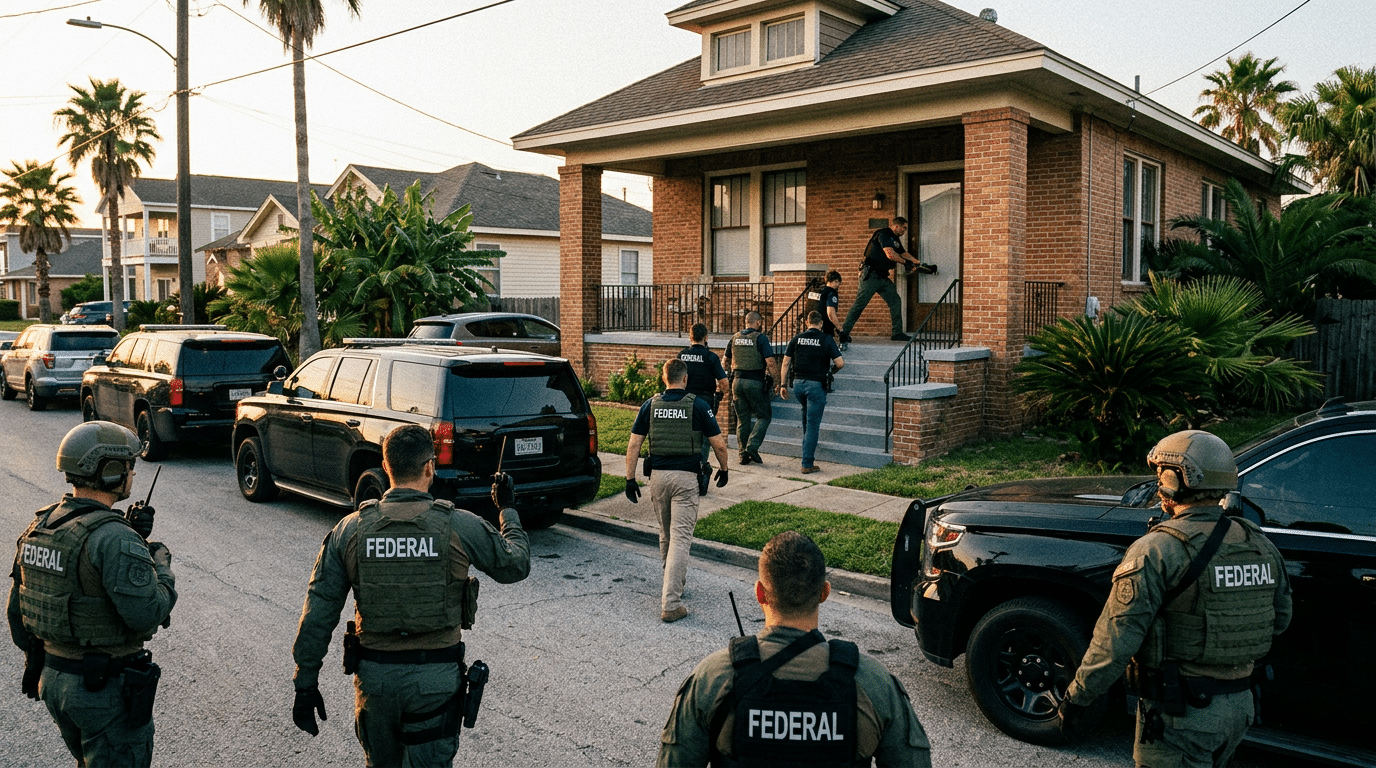
When federal agents execute a search warrant at your home or business, your life can change quickly. Agents might arrive early, secure the area, separate people, take phones and computers, photograph rooms, and collect business records. They may leave with evidence that could be used in a criminal case in Galveston.
Just because agents have executed a warrant does not mean you have been charged with a crime, but it usually means the investigation is serious. The government has already shown information to a federal judge or magistrate and received permission to search for specific evidence. What you do after the search can greatly affect how we handle the investigation, protect your rights, and get ready for possible federal charges.
A Federal Search Warrant Means The Investigation Is Already Well Underway
A federal search warrant usually comes after other steps in an investigation. By the time agencies like the FBI, DEA, ATF, IRS Criminal Investigation, or Homeland Security Investigations execute a warrant, investigators may have already collected records, talked to witnesses, reviewed electronic messages, watched the property, or gathered information through subpoenas.
The Fourth Amendment requires warrants to be supported by probable cause and to particularly describe the place to be searched and the persons or things to be seized. A neutral judicial officer generally reviews the government’s application before authorizing the search.
This does not mean the government’s claims are correct. Probable cause is not the same as proof beyond a reasonable doubt. A warrant simply allows a search based on what was shown to the judge. When we get involved, we first look at what the government was allowed to search, what agents actually searched, and what they took.
Federal Law Controls The Execution Of A Federal Search Warrant
Although our clients may be located in Galveston or Houston, a federal search warrant is primarily governed by federal law rather than the Texas search-warrant statutes. Federal Rule of Criminal Procedure 41 provides important procedures governing federal searches and seizures. The rule addresses warrant authority, execution, inventories, receipts, electronically stored information, and procedures for seeking the return of property.
Federal law also addresses how officers may gain entry. Under 18 U.S.C. § 3109, an officer executing a search warrant may forcibly enter after giving notice of authority and purpose and being refused admittance, subject to the circumstances recognized by law.
When we review how a warrant was carried out, we do not just assume agents acted lawfully because a judge signed the warrant. How the warrant was obtained and executed can be a key part of your defense.
Agents May Seize Far More Than Paper Records
Modern federal investigations often focus heavily on electronic evidence. Agents may seize mobile phones, laptops, desktop computers, external drives, servers, tablets, financial records, storage media, business files, photographs, or other property described in the warrant.
Federal Rule of Criminal Procedure 41 specifically recognizes warrants involving electronic storage media and electronically stored information. A warrant may authorize the seizure or copying of electronic information followed by later review of that information, provided that the review remains consistent with the lawful scope of the warrant.
This is important because investigators can keep reviewing digital evidence long after agents leave your home or business. Emails, texts, photos, browsing history, financial records, location data, deleted files, and documents may all become part of the investigation, depending on what the warrant allows and what investigators find.
You Should Receive Information About What Was Seized
Federal Rule of Criminal Procedure 41 requires procedures for documenting property taken during the execution of a search warrant. The executing officer generally must prepare an inventory and provide a receipt for property taken or leave the receipt at the location where the property was seized. In cases involving electronic storage, the inventory may identify the physical media that was seized or copied rather than every individual electronic file contained on the device.
We carefully review all the paperwork. The warrant, its attachments, and the property receipt can give us early clues about the investigation.
For example, the types of records listed in the warrant may show if prosecutors are looking into drug trafficking, fraud, firearms offenses, financial crimes, child exploitation, conspiracy, tax violations, or another federal crime. Even if the affidavit is sealed, the warrant itself can give helpful information about what the government suspects.
Being Searched Does Not Automatically Mean You Are Under Arrest
Federal agents can carry out a search warrant without arresting the person whose home or business is searched. This is important to understand. You may be a subject or target of an investigation even if you have not been indicted or arrested yet.
Sometimes prosecutors want investigators to review seized evidence before deciding whether charges should be presented to a grand jury. In other cases, an investigation may continue for weeks or months after the search.
We generally treat the execution of a federal search warrant as a major warning that legal representation is needed immediately. Waiting until an indictment is filed can surrender valuable time that could have been used to investigate the case, preserve evidence, communicate with prosecutors, and prepare a defense.
Be Extremely Careful About Speaking With Federal Agents
One of the most dangerous moments can occur while agents are executing the warrant or immediately afterward. Investigators may attempt to interview you while you are surprised, frightened, angry, or trying to understand what is happening.
People sometimes believe that cooperating means they should answer every question. That can create serious problems. Under 18 U.S.C. § 1001, knowingly and materially falsifying, concealing, or making a materially false statement in a matter within federal jurisdiction can itself result in criminal liability.
You do not have to make up a story to get into trouble. Confusion, incomplete answers, mixed-up memories, or trying to downplay your actions can all become important evidence later. We advise our clients to politely use their rights and let us handle federal investigators, instead of trying to explain things on their own.
Do Not Destroy, Delete, Hide, Or Alter Evidence
After a federal search, some people panic and begin deleting messages, moving money, discarding records, wiping phones, contacting witnesses, or destroying documents. That can transform an already serious investigation into an even more dangerous situation.
Federal law makes destruction or alteration of evidence particularly serious. Under 18 U.S.C. § 1519, knowingly altering, destroying, concealing, falsifying, or making a false entry in certain records or documents with the intent to obstruct or influence a federal investigation can result in severe criminal penalties.
Texas law contains a similar principle when state investigators or state charges are involved. Texas Penal Code § 37.09 prohibits certain acts involving alteration, destruction, concealment, or fabrication of evidence when a person knows an investigation or official proceeding is pending or in progress.
If federal agents have searched your property, the safest course is to preserve relevant information and obtain legal advice before doing anything that could be interpreted as interfering with the investigation.
We Examine Whether The Search Exceeded The Warrant
A warrant does not give law enforcement unlimited authority to search every location and seize every item they encounter. The Fourth Amendment’s particularity requirement is intended to prevent general searches by requiring the warrant to identify the place to be searched and the things to be seized with sufficient specificity.
We may examine whether agents entered areas covered by the warrant, whether containers or electronic devices could legally be searched, whether property fell within the categories authorized for seizure, and whether investigators relied on an established exception when they seized something not specifically described.
The plain-view doctrine can sometimes permit seizure of evidence outside the warrant’s stated list, but constitutional requirements still apply. The government does not receive unlimited authority merely because agents are lawfully present at the location.
Suppression May Become An Important Defense Issue
If evidence was obtained through a constitutionally unlawful search or seizure, we may consider whether there is a basis to seek suppression of that evidence. The federal exclusionary rule can prevent the government from using certain evidence obtained in violation of the Fourth Amendment, although several legal exceptions and limitations can apply.
If the evidence is later used in a Texas state prosecution, Texas Code of Criminal Procedure Article 38.23 may also become important. That provision generally addresses the admissibility of evidence obtained in violation of the Texas or United States Constitution or applicable laws.
Whether evidence can actually be suppressed is highly fact-dependent. We need to review the warrant, affidavit if available, circumstances of execution, scope of the search, statements made by officers, seized property, and the government’s legal justification before determining whether a suppression argument exists.
Property Taken By Federal Agents May Be Held For Some Time
Phones, computers, financial records, business equipment, and other seized property are not always returned quickly. Investigators may claim that the property remains necessary as evidence or must be examined as part of the investigation.
Federal Rule of Criminal Procedure 41(g) provides a procedure through which a person aggrieved by an unlawful search and seizure or deprivation of property can ask a federal court for its return. Whether such a motion is appropriate depends on the circumstances and the government’s continuing need for the property.
For a business, seizure of computers, servers, records, or financial materials can create immediate operational problems. Part of our work may involve determining whether copies can be obtained, whether property can be returned, and how to protect the client’s interests without interfering with the investigation.
What Happens Next Depends On The Investigation
There is no single timetable after a federal search warrant. Agents may conduct additional interviews, issue subpoenas, examine digital devices, analyze financial records, present evidence to a federal grand jury, or seek additional search or arrest warrants.
The search itself may reveal whether you are dealing with a mature federal prosecution or an investigation that is still developing. Our objective is to learn as much as we lawfully can before the government makes its next move.
The period after the search can also provide valuable time. We can begin identifying witnesses, preserving favorable evidence, reviewing financial or electronic records, evaluating constitutional issues, and preparing for possible negotiations or court proceedings. Federal criminal cases are often built over time. We want to use that time for the defense rather than simply waiting to see whether an indictment arrives.
Speak With Mark Diaz & Associates About A Federal Investigation In Galveston
When federal agents execute a search warrant at your home or business, the government has already committed substantial investigative resources to the matter. This is not the time to guess about what agents want, attempt to explain everything yourself, or wait for an indictment before preparing a defense. We can examine the warrant, identify the suspected offenses, review what was seized, address communications with investigators, evaluate possible constitutional challenges, and begin preparing for whatever comes next.
When you hire me, you work directly with me. My clients have my personal cell phone number because questions, emergencies, and concerns don’t always happen during business hours. You won’t be handed off to a junior associate or lost in a system where your case is one of dozens on a crowded docket. From arrest through resolution, I remain personally involved and accessible.
If federal agents have searched your home, office, or business, contact our Galveston federal offense attorney at Mark Diaz & Associates by calling 409-515-6170 to schedule your free consultation. We represent clients in Galveston and throughout the entire city of Houston, Texas, and we can begin addressing the investigation before the government determines its next move.
