
What Happens If Police Find A Firearm During A Drug Arrest In Texas?
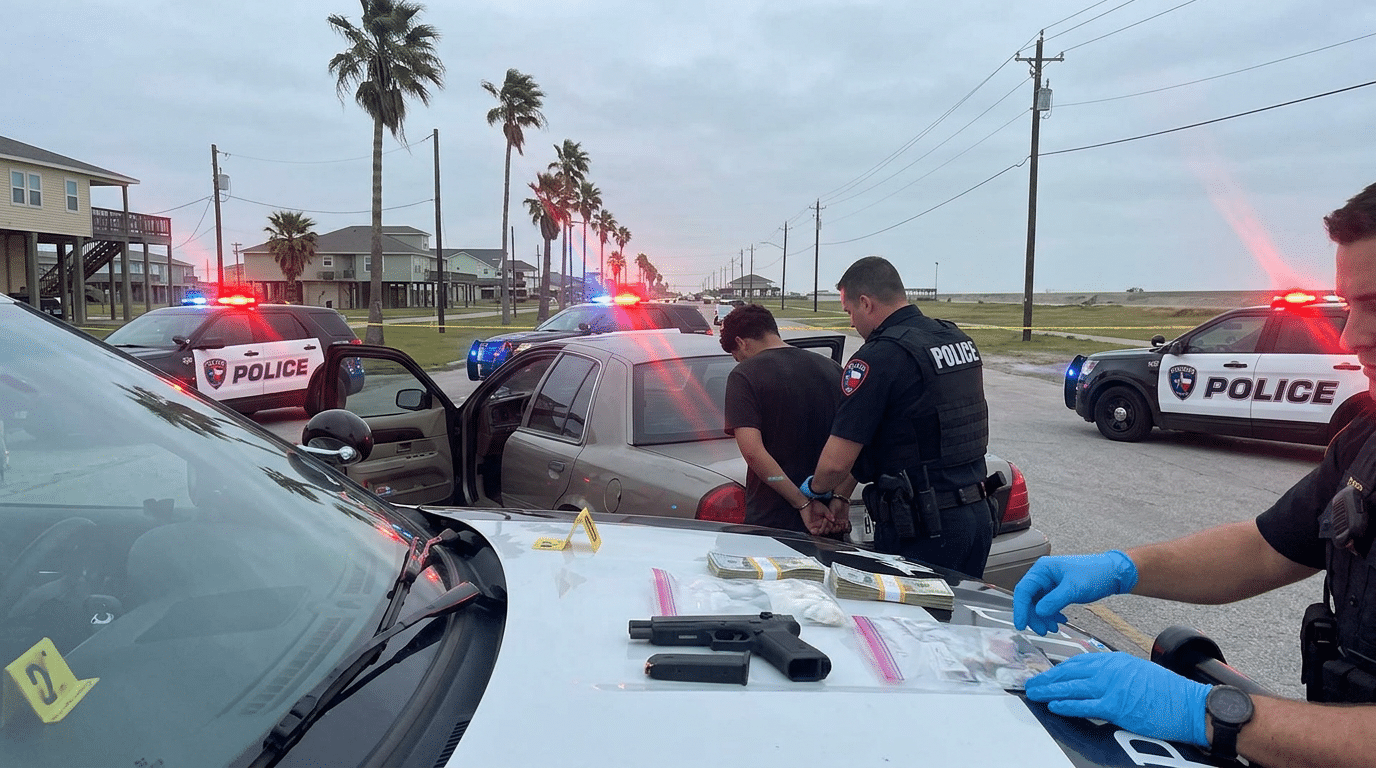
If police find a firearm during a drug arrest in Galveston County, it can quickly change the course of the case. While Texas law lets most adults own guns, just having a firearm does not always mean another crime happened. Things get more serious if police say the gun was tied to drug trafficking, carried illegally during a crime, or held by someone who is not allowed to have one. A gun can also affect sentencing if prosecutors push for a deadly weapon finding or if federal authorities get involved. When we handle these cases, we look at the drug and firearm evidence separately, since the government must prove each charge on its own.
Finding A Gun Does Not Automatically Create A Firearm Charge
Police often see finding drugs and a gun together as a sign of a more serious crime. But under the law, just having both in the same place does not automatically mean a firearm offense happened. In Texas, people are not usually banned from having a gun just because they are being investigated for drugs.
The details are important. We check who owned the gun, where it was found, if our client knew about it, if they could get to it, and if state law banned them from having it. For example, a gun locked in someone else’s room is different from a handgun carried by someone selling drugs.
The drug charge itself must also be proven. For example, Texas Health and Safety Code § 481.115 requires the state to prove knowing or intentional possession of a substance in Penalty Group 1 or 1-B. The punishment level generally depends heavily on the aggregate weight of the controlled substance.
Carrying A Handgun During Criminal Activity Can Lead To Another Charge
Texas Penal Code § 46.02 can become important when police find a handgun during a vehicle-related drug arrest. Under § 46.02(a-1), a person can commit unlawful carrying of weapons when the person intentionally, knowingly, or recklessly carries a handgun on or about the person’s body in a motor vehicle or watercraft and is engaged in criminal activity other than certain minor traffic or boating violations.
So, even someone who legally owns a gun could face a weapons charge if prosecutors can show a link between carrying the gun and the crime happening at that time. That’s why the details of the drug case are so important.
We look at whether prosecutors can prove our client actually had the drugs, if the gun was carried as the law requires, and if the crime itself can be proven. If the drug charge does not hold up, it can weaken any related weapons charge.
A Prior Felony Conviction Can Create A Separate Firearm Felony
A person’s criminal history may create additional exposure when a gun is found. Texas Penal Code § 46.04 restricts firearm possession by certain people with prior felony convictions. During the period ending five years after the later of release from confinement or release from community supervision, parole, or mandatory supervision, a qualifying person generally may not possess a firearm. After that period, Texas law limits possession to the premises where that person lives.
A violation of § 46.04(a) is generally a third-degree felony. Texas law ordinarily punishes a third-degree felony with two to ten years in prison and a fine of up to $10,000 under Texas Penal Code § 12.34.
If a client has a past conviction, we look closely at what the conviction was for, when confinement or supervision ended, where the gun was found, and if the state can really prove possession. Just finding a gun in a house, car, or shared space does not automatically show who owned it.
A Firearm May Affect A State Jail Felony Drug Sentence
A firearm can also affect punishment even when prosecutors do not file a separate weapons charge. Texas Penal Code § 12.35(c) provides that a state jail felony can be punished as a third-degree felony when a deadly weapon was used or exhibited during the offense or immediate flight and the required statutory findings are established.
This difference matters. Texas law talks about a weapon being “used or exhibited.” Just finding a gun near drugs does not meet that rule. Courts look at how the weapon was involved in the crime and if it was actually used in connection with the felony.
A normal state jail felony carries 180 days to two years in a state jail and a possible fine of up to $10,000. A third-degree felony carries two to ten years in prison. For that reason, whether prosecutors can support a deadly weapon allegation may have a major effect on potential punishment.
A Gun And Drugs Can Attract Federal Attention
A firearm discovered during a serious drug trafficking investigation can also create federal consequences. Under 18 U.S.C. § 924(c), federal law imposes an additional criminal penalty when a person uses or carries a firearm during and in relation to a federal drug trafficking crime, or possesses a firearm in furtherance of such a crime. A conviction under this statute can result in additional imprisonment that generally must run consecutively to the sentence imposed for the underlying drug trafficking offense.
This federal statute does not apply merely because someone possesses drugs and happens to own a firearm. Federal prosecutors must establish the relationship required by § 924(c), including that the firearm was used or carried during and in relation to the trafficking crime or possessed in furtherance of it.
Cases involving substantial quantities of drugs, organized distribution, interstate activity, DEA investigations, or coordinated task forces may receive federal attention. We therefore look early at whether the case is likely to remain in Texas state court or whether federal prosecutors could become involved.
The Location Of The Firearm Can Be Critical Evidence
Where officers find a firearm can affect how prosecutors frame the case. A handgun underneath the driver’s seat during a traffic stop raises different factual questions from a firearm locked in a safe inside a residence. A gun lying beside packaged narcotics may be treated differently from a hunting rifle stored in another part of the house.
We also examine whether the location establishes knowing possession. Houses and vehicles are often shared by spouses, roommates, relatives, friends, or passengers. Prosecutors cannot simply ignore the possibility that another person owned or controlled the gun.
The same reasoning applies to the drugs. Texas prosecutors must connect the accused person to the controlled substance rather than merely showing that drugs existed somewhere nearby.
The Search That Found The Gun And Drugs May Be Challenged
Another major issue is how officers discovered the evidence. Drug and firearm cases frequently begin with traffic stops, vehicle searches, search warrants, probation searches, consent searches, or police entry into a home.
We review why the vehicle was stopped, what officers observed before searching, whether consent was actually given, whether probable cause existed, and whether a search warrant accurately described the place and evidence to be searched. If evidence was obtained through an unconstitutional search or seizure, the defense may seek suppression of the evidence.
When both the drugs and firearm came from the same challenged search, suppression can affect multiple parts of the prosecution’s case at once.
Frequently Asked Questions About Firearms And Texas Drug Arrests
Is It Automatically Illegal To Have A Gun And Drugs At The Same Time In Texas?
No. The presence of a firearm near drugs does not automatically establish a separate weapons offense. Texas law permits many adults to lawfully possess firearms, and the prosecution must prove the elements of any specific firearm charge it files.
The situation can become more serious if police allege that the gun was unlawfully carried while the person was engaged in criminal activity, that the accused was legally prohibited from possessing a firearm, or that the firearm was used or exhibited during a felony. The type of drug offense also matters. A simple possession allegation presents different issues from an accusation involving manufacturing, delivery, or possession with intent to deliver.
We examine the firearm and drug allegations separately rather than assuming that finding both automatically proves either offense.
Can I Be Charged If The Gun Belonged To Someone Else?
Possibly, but ownership and possession are not necessarily the same issue. Prosecutors may attempt to prove that someone possessed a firearm even when that person was not the registered purchaser or original owner. The government generally focuses on whether the accused exercised control over the firearm and knew it was there.
Shared vehicles and residences often create important factual disputes. A gun found underneath another passenger’s seat, inside a roommate’s bedroom, or in property belonging to another person may raise significant questions about who actually possessed it.
We look for evidence such as fingerprints, DNA, statements, photographs, purchase records, the gun’s exact location, and which people had access to the area where officers found it. Mere proximity should not substitute for proof.
Can A Gun Turn A Simple Drug Possession Case Into Drug Trafficking?
A firearm does not automatically convert possession into possession with intent to deliver. However, prosecutors may use the firearm as one part of their argument that drugs were connected to distribution.
Texas Health and Safety Code § 481.112 covers manufacturing, delivery, and possession with intent to deliver certain Penalty Group 1 substances. Prosecutors may rely on multiple circumstances, including drug quantity, packaging, scales, cash, communications, and other alleged evidence of sales.
We challenge conclusions that are based primarily on assumptions. Many Texans lawfully own firearms for home protection, personal security, hunting, or sporting purposes. The government still must prove intent to deliver beyond a reasonable doubt.
What Happens If I Have A Prior Felony And Police Find A Gun?
A prior felony can create a separate and serious firearms issue. Texas Penal Code § 46.04 restricts firearm possession by people with certain felony convictions. During the first five years after the later of release from confinement or qualifying supervision, possession may violate the statute. After that period, possession generally remains restricted to the premises where the person lives under Texas law.
A violation of § 46.04(a) is generally a third-degree felony, carrying a potential prison sentence of two to ten years and a fine of up to $10,000.
The dates matter. We determine exactly when confinement or supervision ended, where the firearm was located, and whether prosecutors can establish that our client knowingly possessed it.
Can Police Add A Deadly Weapon Finding Just Because A Gun Was Nearby?
Not automatically. Texas Penal Code § 12.35(c) can increase punishment for a state jail felony when a deadly weapon was used or exhibited during the commission of the offense or immediate flight, and the statutory requirements are satisfied.
The words “used or exhibited” matter. A firearm sitting somewhere in a house does not necessarily have the same legal significance as a firearm used to protect drugs, threaten another person, or facilitate an offense.
A deadly weapon finding can have consequences beyond the immediate sentence, including restrictions that may affect community supervision or parole considerations. Because of those consequences, we examine whether the prosecution can actually establish the required connection between the firearm and the charged felony.
Can A Texas Drug And Gun Case Become A Federal Case?
Yes. Serious drug investigations involving firearms sometimes attract federal prosecutors, particularly when authorities allege trafficking, interstate distribution, organized drug activity, or large quantities of controlled substances.
Federal law under 18 U.S.C. § 924(c) addresses using or carrying a firearm during and in relation to a federal drug trafficking crime and possessing a firearm in furtherance of such a crime. The statute provides additional imprisonment, and a § 924© sentence generally runs consecutively to the sentence for the underlying offense.
Federal prosecutors still must prove the statutory relationship between the firearm and drug trafficking activity. Simply showing that a defendant owned a firearm is not enough to establish every element of a federal § 924(c) charge.
Speak With Mark Diaz & Associates About A Texas Drug And Firearm Charge
When police find a firearm during a drug arrest, the case requires careful attention to both sets of allegations. We examine whether the drugs actually belonged to our client, whether the firearm was knowingly possessed, whether carrying the gun violated Texas law, whether prosecutors can establish any connection between the weapon and alleged drug activity, and whether the search that produced the evidence complied with constitutional requirements. We also look closely at whether prosecutors are trying to turn possession into an intent-to-deliver case simply because a legally owned firearm was nearby.
At Mark Diaz & Associates, we understand that a drug arrest involving a gun can expose a person to multiple felony allegations and, in some cases, possible federal prosecution. We begin evaluating those risks early rather than treating the firearm as an afterthought.
When you hire Mark Diaz, you work directly with Mark. His clients have his personal cell phone number because arrests, questions, emergencies, and serious concerns do not always happen during normal business hours. You will not be handed off to a junior associate or left wondering who is handling your case. From the arrest and investigation through negotiations, hearings, trial preparation, and final resolution, Mark remains personally involved and accessible.
If you are facing drug charges, firearm charges, or both in Galveston, Houston, or the surrounding areas of Texas, contact our Galveston drug crime attorneys at Mark Diaz & Associates today by calling 409-515-6170 to schedule your free consultation. The sooner the evidence is examined, the sooner we can identify the legal and factual issues that may affect the prosecution’s case
