
What Happens If Police Find Drugs In A Shared Vehicle?
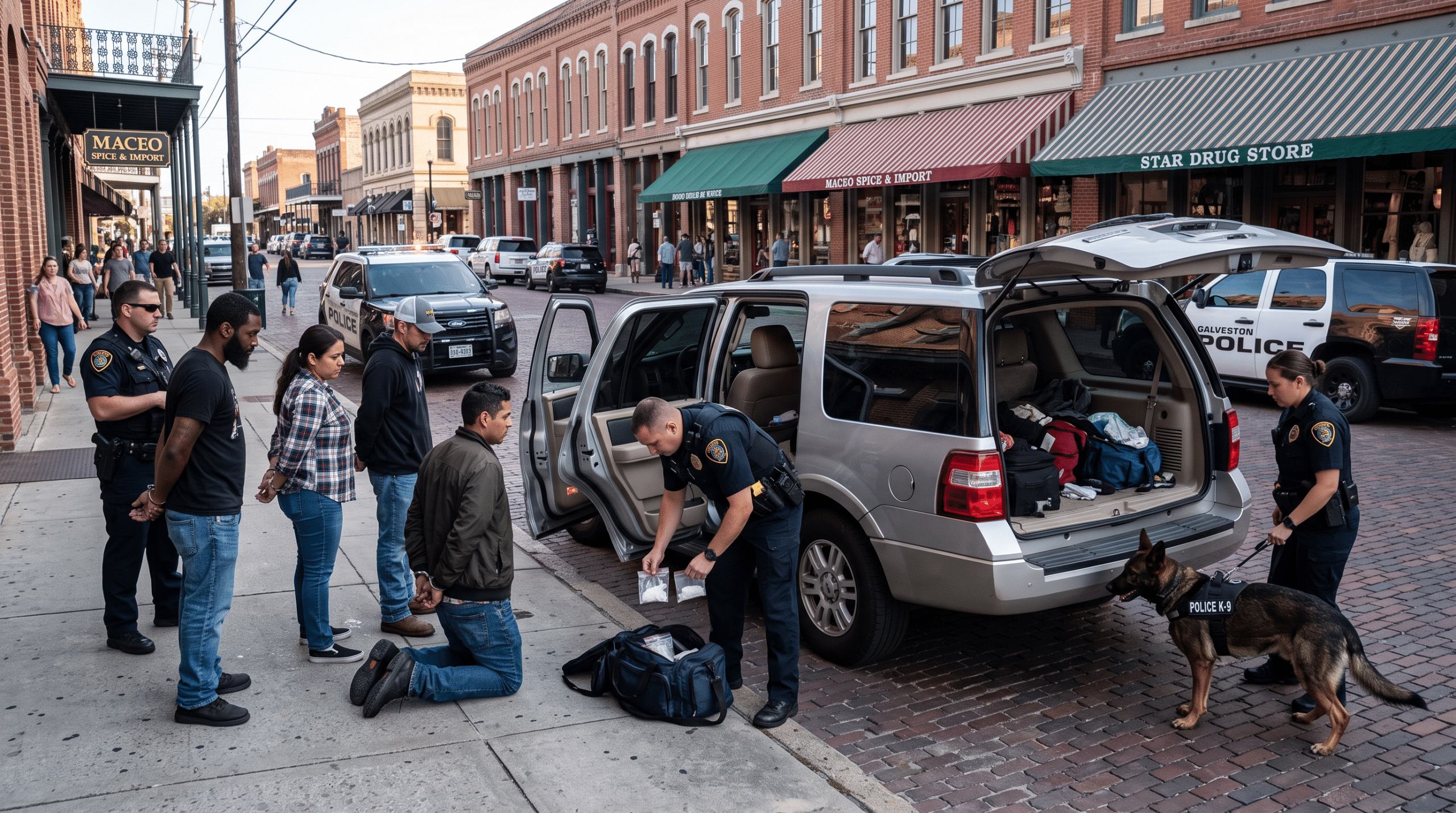
Just because drugs are found in a car does not mean everyone inside actually possessed them. This is especially true when friends, spouses, coworkers, or borrowers share a vehicle. Police might suspect everyone at first, but suspicion is not the same as what must be proven in court. Texas law requires proof that someone knowingly or intentionally possessed the drugs, not just that they were nearby. When we handle a drug possession case from a shared vehicle in Galveston, we first look at whether the State can truly link our client to the drugs, not just to the car.
Texas Prosecutors Must Prove Knowing Or Intentional Possession
Texas drug possession offenses are primarily governed by Chapter 481 of the Texas Health and Safety Code. For example, Texas Health and Safety Code § 481.115 provides that a person commits an offense involving a Penalty Group 1 or 1-B controlled substance when the person knowingly or intentionally possesses the substance without lawful authorization. This category can include drugs such as cocaine, methamphetamine, heroin, and fentanyl, depending on the applicable classification.
The word “possession” has an important legal meaning. Texas Penal Code § 1.07 defines possession as actual care, custody, control, or management. Simply being close to illegal drugs does not necessarily establish those elements.
This difference is especially important in a shared vehicle. If police find drugs in the center console, under a seat, in luggage, or in the trunk, the State still needs to show that the person charged knew about the drugs and had control over them. Just being the driver does not automatically prove this.
Being In The Same Car As Drugs Does Not Automatically Establish Possession
Texas courts have developed what is commonly called the affirmative-links doctrine for situations in which an accused person does not have exclusive possession of the place where drugs are discovered. The doctrine is particularly important in vehicles occupied by several people.
Texas courts say that if someone does not have exclusive control over where drugs are found, prosecutors usually need extra facts that connect that person to the drugs. This rule helps protect innocent passengers or bystanders from being convicted just because someone else’s drugs were close by.
For example, imagine four people are traveling through Galveston when police stop the vehicle and discover cocaine hidden beneath the rear passenger seat. The fact that all four occupants were inside the vehicle would not necessarily prove that all four knowingly possessed the cocaine. The prosecution would need evidence connecting each person it chooses to charge to the substance.
That evidence, and the strength of the connection it creates, often becomes one of the central issues in the case.
What Evidence Can Connect Someone To Drugs Found In A Vehicle?
No single fact proves possession in every shared-vehicle case. Courts look at the whole situation to decide if the evidence truly connects the accused to the drugs.
Important details include where the drugs were found, if they were visible, how close they were to the person, whether the person could reach them, who owned or controlled the car, and if other drug items were nearby. What people say during the stop can also matter.
Police may focus heavily on the driver because the driver controls the vehicle. However, vehicle ownership or control does not necessarily establish knowledge of everything hidden inside it. A person might be driving a spouse’s car, borrowing a friend’s vehicle, operating a rental vehicle, or transporting passengers who brought property into the car without the driver’s knowledge.
Texas courts have emphasized that the logical force of the evidence matters more than simply counting the number of circumstances that arguably connect a defendant to drugs.
Where The Drugs Were Found Can Become A Major Defense Issue
Location can significantly affect how we evaluate a shared-vehicle drug case. Drugs sitting openly on the driver’s seat present a very different factual situation from drugs hidden inside a passenger’s closed backpack.
Suppose officers discover methamphetamine inside a purse located on the rear floorboard behind the passenger seat. If the purse contains identification and personal property belonging to one passenger, that may substantially weaken an accusation that the driver possessed the substance. By contrast, drugs found inside the driver’s personal wallet or clothing would create a much stronger connection.
The center console creates more complicated questions because several occupants may have access to it. The same is true of cupholders, door compartments, glove boxes, luggage areas, and trunks.
We do not assume that location alone determines guilt. We examine who had access, who owned the container, whether fingerprints or other forensic evidence exists, what officers observed before the search, and whether any occupant made statements claiming or denying ownership.
What Happens When Someone Else Says The Drugs Belong To Them?
Sometimes another occupant admits ownership of the drugs. That statement can be extremely important, but it does not necessarily cause police to immediately release everyone else.
Officers may question whether the admission is truthful, particularly if they believe one person is attempting to protect another. Prosecutors can also argue that more than one person jointly possessed the same controlled substance.
Joint possession is legally possible. Two people can both exercise care, custody, control, or management over the same drugs. However, prosecutors still have to establish knowing possession as to each defendant.
When another person acknowledges ownership, we examine that statement together with the physical evidence. Where the drugs were discovered, whose property surrounded them, text messages, fingerprints, body-camera recordings, and statements from other occupants can all affect whether the State can prove its case.
What If Drugs Are Found In A Passenger’s Backpack Or Personal Property?
A passenger’s personal container can create a significant factual distinction. If officers search a backpack belonging to one passenger and discover controlled substances buried inside it, prosecutors may have difficulty proving that another passenger or the driver knew what was inside. Mere access to the vehicle does not necessarily establish access to or control over another person’s closed personal belongings.
These cases can become more complicated if the State claims that the driver knew drugs were being transported. Text messages, conversations recorded on body cameras, inconsistent explanations, or other evidence may then become part of the prosecution’s theory.
Our job is to separate assumptions from evidence. A criminal conviction requires proof beyond a reasonable doubt. The government should not be permitted to turn proximity into possession without evidence supporting the necessary connection.
The Type And Amount Of Drugs Affect The Potential Penalties
The possible punishment depends heavily on the type and amount of controlled substance involved. Under Texas Health and Safety Code § 481.115, possession of less than one gram of a Penalty Group 1 or 1-B substance is generally a state jail felony. Possession of one gram or more but less than four grams is generally a third-degree felony, while four grams or more but less than 200 grams is generally a second-degree felony. Higher quantities can lead to even more severe felony punishment ranges.
Different controlled substances fall under other provisions of Chapter 481, and the penalty ranges vary according to the applicable penalty group and quantity.
Marijuana is addressed separately under Texas Health and Safety Code § 481.121. That statute provides that knowingly or intentionally possessing a usable quantity of marijuana can range from a misdemeanor to a felony depending primarily on the amount involved. Possession of two ounces or less is generally a Class B misdemeanor, while larger quantities can result in progressively more serious charges.
Because drug classification and weight can dramatically affect exposure, we examine laboratory testing and the alleged quantity rather than relying solely on the description used in a police report.
Police Must Also Have A Lawful Basis For The Stop And Search
Even when drugs are discovered inside a vehicle, another major question is how officers obtained the evidence. Traffic stops and vehicle searches are governed by constitutional protections against unreasonable searches and seizures. Depending on the circumstances, officers may rely on probable cause, a warrant, valid consent, or another recognized exception to the warrant requirement.
We examine why the vehicle was stopped, how long the detention lasted, what officers asked each occupant, whether consent was requested, who allegedly gave consent, and what justification officers claimed for searching particular areas or containers.
Texas Code of Criminal Procedure Article 38.23 generally provides that evidence obtained in violation of the Texas or United States Constitution or applicable law may not be admitted against an accused, subject to recognized exceptions.
If the search that uncovered the drugs was unlawful, a motion to suppress may become one of the most important parts of the defense.
Statements Made During The Traffic Stop Can Change The Case
People often feel pressure to explain themselves when police discover drugs in a vehicle. Unfortunately, attempts to talk their way out of an arrest can produce statements prosecutors later characterize as evidence of knowledge or control.
A person might say, “I knew he had something, but I didn’t know what it was,” believing that the statement proves innocence. Prosecutors may instead focus on the admission that the person knew something suspicious was inside the vehicle.
Another passenger might initially deny knowing about the drugs and later provide a different explanation. Police reports and body-camera recordings may preserve both statements, allowing prosecutors to argue that the person’s account changed.
We generally want to review the actual recordings rather than relying solely on an officer’s summary. The words used, questions asked, tone of the conversation, and surrounding circumstances can materially affect how a statement should be understood.
The Driver Is Not Automatically Responsible For Everything Inside The Vehicle
A common misconception is that the driver automatically owns or possesses everything found in the car. Texas possession law does not work that way. Driving the vehicle can certainly be one circumstance prosecutors rely upon, especially if drugs are found in an area primarily controlled by the driver. But control of the automobile is not identical to knowing possession of every object hidden inside it.
This issue is particularly important with borrowed cars, rental vehicles, rides shared among friends, family vehicles used by several people, and vehicles carrying numerous passengers.
If another person had recently used the vehicle, left belongings inside it, or had greater access to the location where the drugs were discovered, those circumstances may matter greatly to the defense.
A Shared Vehicle Drug Case Requires A Close Review Of The Evidence
Shared-vehicle cases frequently turn on details that may initially seem minor. A seat position, ownership of a backpack, the location of a phone, a body-camera statement, or the sequence in which passengers entered the vehicle can change how the evidence should be viewed.
We examine the prosecution’s claim that our client knowingly exercised care, custody, control, or management over the drugs. We also examine whether the State is relying primarily on proximity rather than evidence of possession.
An arrest is not proof of guilt. When several people have access to the same vehicle, determining who actually knew about and controlled the contraband can become a serious disputed issue. That is why these cases should be investigated carefully before assumptions made during a roadside encounter become accepted as facts in court.
Call Mark Diaz & Associates About A Shared Vehicle Drug Charge In Galveston
When police find drugs in a vehicle occupied by several people, they may make quick decisions about who they believe possessed the contraband. Those roadside assumptions should not substitute for the evidence Texas law requires. At Mark Diaz & Associates, we examine where the drugs were found, who owned the vehicle and containers, what each occupant said, what officers recorded, how the search occurred, and whether the State can actually prove knowing possession.
We defend people accused of drug offenses in Galveston and throughout the city of Houston, Texas. Our goal is to identify weaknesses in the prosecution’s evidence, challenge unlawful searches when the facts support doing so, and pursue dismissal, reduction, acquittal, or another favorable resolution available under the circumstances.
When you hire me, you work directly with me. My clients have my personal cell phone number because questions, emergencies, and concerns don’t always happen during business hours. You won’t be handed off to a junior associate or lost in a system where your case is one of dozens on a crowded docket. From arrest through resolution, I remain personally involved and accessible.
If police found drugs in a shared vehicle and you have been arrested or are under investigation in Galveston or Houston, call our Galveston drug crime attorneys at Mark Diaz & Associates today by calling 409-515-6170 to schedule your free consultation. We can review what happened, examine the evidence the State intends to use, and discuss the defenses that may apply to the specific facts of your case.
