
What Happens When Federal Agents Seize Your Phone During a Criminal Investigation?
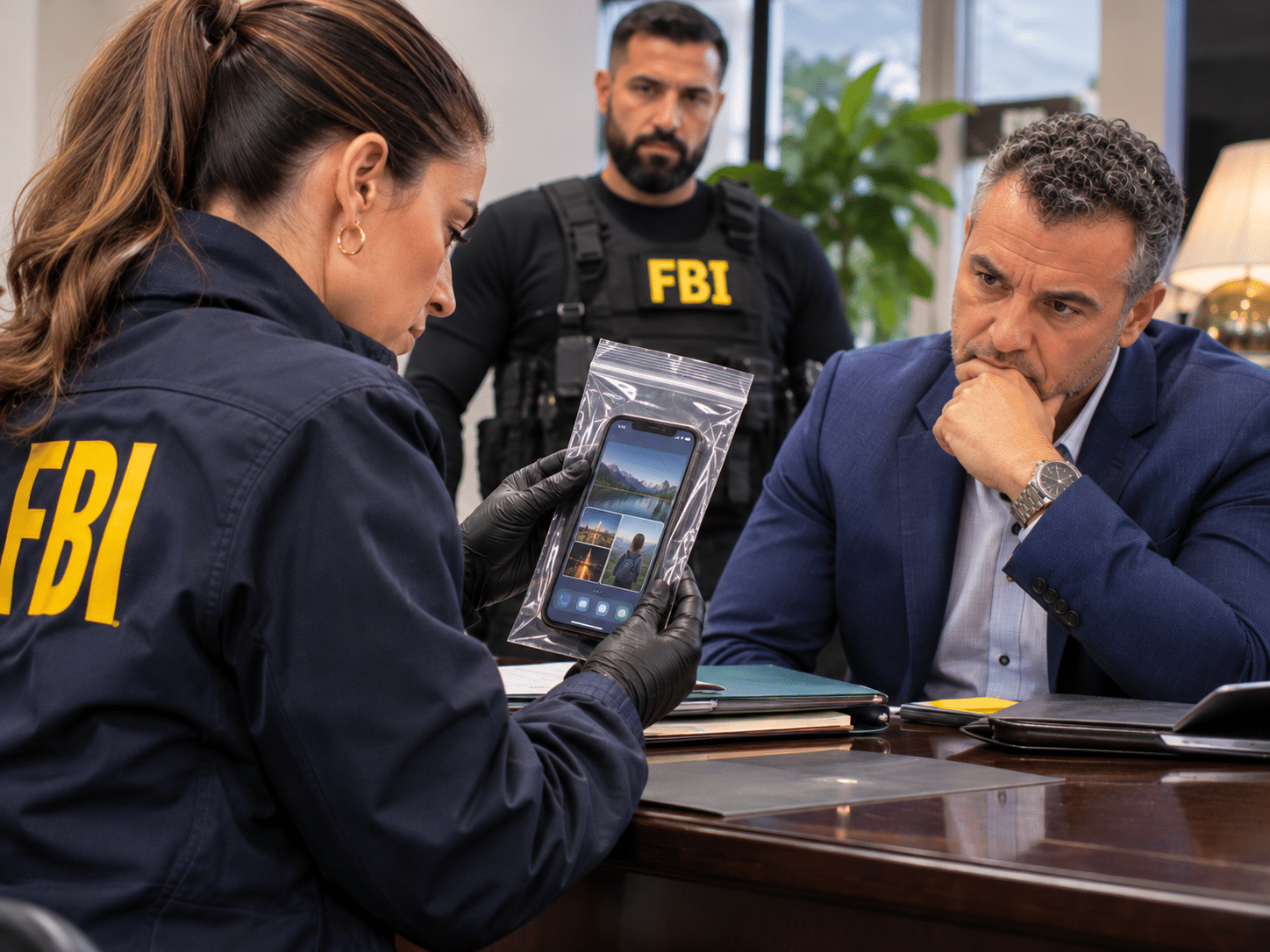
If a federal agent takes your phone, it usually means the investigation is getting serious. Phones today hold years of texts, photos, emails, financial details, locations, social media, search history, contacts, and messages with others who might also be involved. Investigators may think your phone has evidence of crimes like drug trafficking, fraud, firearms offenses, conspiracy, human trafficking, financial crimes, or other federal offenses. Taking your phone and searching its data are separate legal steps, and different rules can apply to each. When we help someone whose phone has been seized, we look at why agents took it, whether they had a search warrant, what the warrant allowed them to search, and if any evidence from the phone can be used in court.
Federal Agents Generally Need A Warrant To Search The Contents Of A Phone
The U.S. Supreme Court set a key rule for cell phone searches in Riley v. California. The Court decided that police usually need a warrant to search the digital contents of a cell phone taken during an arrest. The Court also noted that modern phones hold a lot of personal information and are very different from other items someone might carry.
However, agents can sometimes take your phone before getting a warrant. In some cases, they may hold onto the device while they ask a judge for permission to search it. Just because they have your phone does not mean they can look through everything on it without limits.
Federal Rule of Criminal Procedure 41 lets a federal magistrate judge issue a search warrant if there is probable cause. If the warrant covers electronic information, agents may be allowed to take the device and later examine its contents in a lab.
A Search Warrant Should Define What Agents Are Allowed To Search For
A proper federal search warrant must say what property will be searched and what evidence agents can take. For phones, the government might look for things like messages between suspects, photos, financial records, location data, transaction records, or messages about a specific crime.
Federal Rule of Criminal Procedure 41 says investigators can take electronic devices and review the data later. This matters because agents usually cannot look through every file right away at the scene. Instead, they may bring the phone to a lab, make a copy, and use special software to analyze it.
We look closely at the warrant to see if the government followed its limits. For example, a warrant for a fraud case should not give agents free rein to look at unrelated private information. They must stick to what the warrant and the law allow.
Texas Law Also Provides Strong Protection For Cell Phone Searches
Texas has its own specific cell phone search statute. Texas Code of Criminal Procedure Article 18.0215 generally prohibits a Texas peace officer from searching a person’s cellular telephone or other wireless communications device merely because the person was lawfully arrested. The statute requires a warrant supported by facts establishing probable cause that criminal activity occurred and that searching the phone is likely to produce evidence of that activity.
There are a few exceptions to the law, such as if you give consent, if the device is reported stolen, or in certain emergencies. Texas law follows the idea that just being arrested does not usually let police search all the private information on your phone. Even though federal agents usually follow federal law, Texas rules can matter if state officers are involved in the investigation or if phone evidence is used in a Texas criminal case.
Agents May Use Phone Evidence To Expand The Investigation
Searching a phone can reveal more than just evidence of the original crime. Messages might point to other people, bank accounts, cars, addresses, transactions, or other possible crimes. One phone can end up leading to a much bigger investigation.
Federal investigators often match phone evidence with bank records, surveillance videos, travel records, social media, cell-site data, witness statements, and evidence from other warrants. One text conversation can also mean different things depending on the context.
We try to look at full message threads instead of just single screenshots. Things like abbreviations, jokes, code words, unfinished conversations, forwarded messages, shared devices, and third-party account access can all change how the evidence is understood.
Evidence From An Illegal Search May Be Challenged
If federal agents search a phone without lawful authority or exceed the scope of a warrant, the defense will seek to suppress evidence under the Fourth Amendment. Whether suppression is available will depend on the specific facts and legal doctrines applicable to the search.
Texas law provides an additional protection in state prosecutions. Texas Code of Criminal Procedure Article 38.23 generally prohibits evidence obtained in violation of the United States Constitution, the Texas Constitution, or applicable law from being admitted against an accused in a Texas criminal trial.
This is why the details of the seizure matter. We need to know when the phone was taken, who took it, if there was a warrant, what the warrant allowed, when the forensic search happened, and if investigators looked at anything they were not supposed to.
Seizure Of Your Phone Does Not Necessarily Mean You Will Be Charged
Federal investigations sometimes continue for months before prosecutors decide whether to seek an indictment. A seized phone may belong to a target of the investigation, but it may also belong to a subject, witness, employee, business associate, friend, or another person whom agents believe possesses relevant evidence.
Federal Rule of Criminal Procedure 41 usually requires officers with a warrant to give you a copy of the warrant and a receipt for any property they take. Sometimes, the law allows them to delay this notice. If your property is taken, you may be able to ask for its return under Rule 41(g) in certain situations. The safest course is to determine your status in the investigation before voluntarily answering detailed questions about the phone, its contents, other people, or the allegations being investigated.
Frequently Asked Questions About Federal Agents Seizing A Phone
How Long Can Federal Agents Keep My Phone?
There is no single rule requiring every seized phone to be returned within a fixed number of days. Federal Rule 41 permits the government to seize electronic storage media within the warrant’s execution period and conduct a later forensic review. The rule recognizes that encryption, data volume, and forensic laboratory demands may make digital searches lengthy. A person who needs the property returned may, in appropriate circumstances, seek relief under Federal Rule of Criminal Procedure 41(g). Whether that remedy is available or likely to succeed depends on the investigation, the government’s continued need for the device, and whether copies of the relevant information can adequately preserve the evidence.
Can Agents Read My Text Messages After Seizing My Phone?
Not simply because they possess the phone. The Supreme Court has held that officers generally need a warrant before examining digital information stored on a seized phone. A valid federal warrant can authorize agents to search for messages and other information connected to the alleged offense. The warrant’s scope remains important. We examine which dates, accounts, types of data, and suspected crimes were identified in the warrant and whether investigators stayed within lawful limits when reviewing the device.
Do I Have To Give Federal Agents My Passcode?
The answer can depend on the facts and the legal authority agents are using. Providing a memorized passcode may raise Fifth Amendment concerns because revealing the password can communicate that the person knows the code and exercises control over the device. The Fifth Circuit has addressed this issue and recognized that demanding a passcode can produce testimonial information protected by the Fifth Amendment in some circumstances. Because password and biometric unlocking issues remain highly fact-specific, someone facing such a demand should obtain legal advice before voluntarily providing access.
What Happens If Agents Find Evidence Of A Different Crime On My Phone?
That issue depends on how the evidence was discovered and the lawful scope of the search. A phone examination may reveal information that investigators believe relates to crimes beyond the original investigation. Prosecutors may attempt to use that evidence, seek additional warrants, or expand the investigation. The defense may challenge whether investigators were lawfully examining the location or category of data where the evidence was found. The precise language of the original warrant can therefore become critical.
Should I Delete Messages If I Think Federal Agents Are Investigating Me?
No. Deliberately destroying potential evidence can create serious additional problems. Under Texas Penal Code § 37.09, altering, destroying, or concealing a record, document, or thing with intent to impair its availability as evidence can constitute tampering with physical evidence and may be charged as a third-degree felony. Federal obstruction laws can also apply during a federal investigation. If you believe your phone contains damaging material, the proper response is to speak with criminal defense counsel rather than attempting to erase or destroy information.
Speak With Mark Diaz & Associates After Federal Agents Seize Your Phone
When federal agents seize a phone, the investigation may already involve search warrants, grand jury activity, cooperating witnesses, financial records, digital surveillance, or evidence gathered from other people. We examine why the phone was seized, whether the government had lawful authority, what the warrant allowed agents to search, what evidence was extracted, and whether constitutional violations provide grounds to challenge that evidence. We also evaluate whether the client is being treated as a witness, subject, or target and what steps should be taken before additional contact with federal investigators.
When you hire Mark Diaz & Associates, you work directly with your attorney. Our clients have access to their attorney’s personal cell phone number because questions, emergencies, and concerns do not always arise during ordinary business hours. You will not simply be handed off to a junior associate or become another file on a crowded docket. From the investigation through indictment, negotiations, trial, or resolution, we remain personally involved, accessible, and familiar with the evidence affecting your case.
Mark Diaz & Associates represents clients facing serious state and federal criminal investigations in Galveston and throughout Houston, Texas. If the FBI, DEA, Homeland Security Investigations, ATF, or another federal agency has seized your phone or contacted you about a criminal investigation, contact our Galveston federal criminal defense attorneys at Mark Diaz & Associates by calling 409-515-6170 to receive your free consultation.
