
What Is Intoxication Manslaughter In Texas?
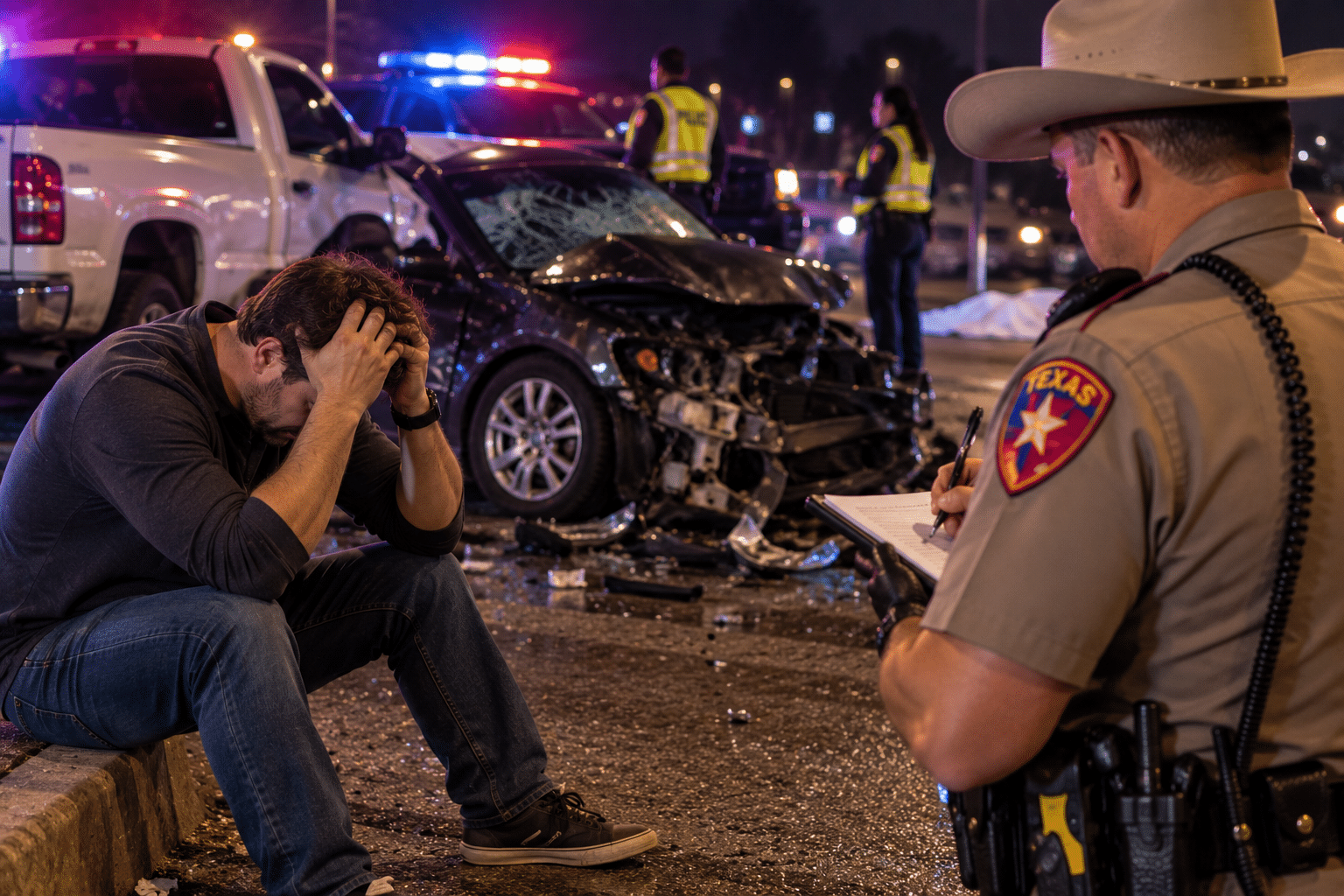
A fatal accident with an intoxication allegation can quickly become one of the most serious criminal cases someone may face in Galveston County. Intoxication manslaughter is more than just a DWI case where someone died. The prosecution must prove certain legal elements, including intoxication and that it caused another person’s death. These cases often involve evidence like blood or breath tests, accident reconstruction, medical records, witness statements, vehicle data, video footage, and expert opinions. When we defend someone charged with intoxication manslaughter in Galveston or Houston, we review every part of the State’s case. A conviction can impact your freedom, driver’s license, job, finances, and future for many years.
How Texas Law Defines Intoxication Manslaughter
Texas Penal Code § 49.08 provides that a person commits intoxication manslaughter if the person operates a motor vehicle in a public place, aircraft, watercraft, or amusement ride, or assembles a mobile amusement ride, while intoxicated and, because of that intoxication, causes another person’s death by accident or mistake. In most cases, the charge arises from a motor vehicle collision.
The phrase “by reason of that intoxication” is important. A person does not automatically become guilty of intoxication manslaughter merely because prosecutors believe that person was intoxicated and another person died. The State must establish that the alleged intoxication caused the death. That causation requirement can become a major issue when several circumstances contributed to a crash.
What Does Intoxicated Mean Under Texas Law?
Texas Penal Code § 49.01 provides two primary ways the State may attempt to prove intoxication. A person may be considered intoxicated if alcohol, drugs, controlled substances, dangerous drugs, another substance, or a combination of substances caused the person to lose the normal use of mental or physical faculties. A person may also meet the statutory definition by having an alcohol concentration of 0.08 or more.
This means a prosecution for intoxication manslaughter does not always involve alcohol. Prescription drugs, illegal drugs, or combinations of substances can also be involved. We carefully review which substances were present, their amounts, how and when testing was done, and whether the scientific evidence truly supports the prosecution’s claims.
The State Must Prove Causation
Causation is often one of the most significant issues in an intoxication manslaughter case. Texas Penal Code § 6.04 states that a person is criminally responsible when the result would not have occurred but for that person’s conduct, either acting alone or together with another cause, unless the other cause was clearly sufficient to produce the result and the defendant’s conduct was clearly insufficient.
This rule is important in complex crashes. We may need to look at another driver’s actions, road conditions, mechanical problems, visibility, unexpected pedestrians, weather, or other factors. The main question is not just whether our client had alcohol or drugs in their system. We focus on whether the evidence proves, beyond a reasonable doubt, that intoxication caused the death.
Accident reconstruction can be a key part of the defense. Evidence like vehicle data recorders, surveillance or dash cameras, photos, skid marks, road measurements, phone records, traffic signals, and witness statements can help show what really happened before the crash.
What Are The Penalties For Intoxication Manslaughter?
Under Texas Penal Code § 49.08(b), intoxication manslaughter is generally a second-degree felony unless an enhancement under § 49.09 applies. Texas Penal Code § 12.33 provides that a person convicted of a second-degree felony may face imprisonment in the Texas Department of Criminal Justice for not less than two years and not more than 20 years. The court may also impose a fine of up to $10,000.
Texas law also provides enhanced punishment in specified circumstances. Section 49.09 can elevate an intoxication manslaughter offense to a first-degree felony in certain cases, including specified cases involving protected public servants and other circumstances addressed by the statute. Because enhancement allegations can dramatically increase the possible punishment, we review the indictment and alleged enhancement provisions carefully.
When more than one person dies, or several intoxication offenses arise from the same criminal episode, sentencing can become even more complicated. Texas Penal Code § 3.03 permits sentences for multiple convictions under §§ 49.07 or 49.08 to run consecutively in circumstances covered by that statute.
Blood And Breath Evidence Can Be Challenged
A lab result might seem convincing, but it is still just evidence that needs to be checked. We review how the blood was collected, who took the sample, if proper steps were followed, how it was stored, when it was tested, and whether the lab’s process supports a reliable result.
Timing can also matter. A blood sample collected well after a collision may not necessarily show a person’s alcohol concentration at the exact time of driving without additional interpretation. Drug cases may raise different scientific questions because detecting a substance or metabolite does not always establish when it was consumed or what effect it had on the driver’s faculties at the relevant time.
We also examine how law enforcement obtained the evidence. Depending on the facts, constitutional issues involving detention, arrest, warrants, searches, or blood draws may affect whether evidence can be used in court.
Intoxication And Responsibility For The Crash Are Separate Questions
A common mistake is assuming that evidence of intoxication automatically proves responsibility for a fatal accident. Texas Penal Code § 49.08 requires more than proof that the accused was intoxicated. It requires proof that the death occurred “by reason of” that intoxication.
For example, if another car suddenly enters an intersection against a red light and a crash happens, evidence of intoxication does not remove the need to find out how and why the accident occurred. We may look into whether the crash would have happened even without the alleged intoxication. This difference can be very important.
Building A Defense To An Intoxication Manslaughter Charge
Every intoxication manslaughter case must be evaluated on its own evidence. We may examine whether intoxication can be proven, whether the chemical testing is reliable, whether the State can establish causation, whether another person caused or materially contributed to the collision, and whether law enforcement complied with constitutional requirements.
We also look for evidence that might not last long. Businesses could delete surveillance videos, vehicles might get repaired or scrapped, witnesses can be hard to find, and road conditions may change. Investigating early helps us save important evidence before it is gone.
Frequently Asked Questions About Intoxication Manslaughter In Texas
Is Intoxication Manslaughter The Same As Murder In Texas?
No. Intoxication manslaughter is a separate criminal offense created by Texas Penal Code § 49.08. The statute addresses situations in which a person operates specified vehicles or equipment while intoxicated and, because of the intoxication, causes another person’s death by accident or mistake. Murder involves different statutory elements and legal theories.
The distinction does not make an intoxication manslaughter charge minor. It is generally a second-degree felony and can carry years in prison. In certain circumstances, statutory enhancements can increase the seriousness of the charge and potential punishment. We therefore examine the exact offense and enhancement allegations rather than treating every fatal intoxication case the same way.
Can I Be Charged With Intoxication Manslaughter If My BAC Was Below 0.08?
Potentially. Texas Penal Code § 49.01 does not define intoxication solely through the 0.08 alcohol concentration standard. The statute also defines intoxication as not having the normal use of mental or physical faculties because of alcohol, drugs, controlled substances, dangerous drugs, another substance, or a combination of substances.
As a result, prosecutors may attempt to prove intoxication even when a reported alcohol concentration is below 0.08. The evidence might include driving behavior, field sobriety testing, witness observations, statements, video recordings, or alleged drug impairment. We examine whether those facts actually prove intoxication beyond a reasonable doubt.
What If The Other Driver Caused The Accident?
The conduct of another driver may be highly important because intoxication manslaughter requires causation. Texas Penal Code § 6.04 addresses criminal responsibility when more than one cause contributes to a result.
If another driver’s actions were responsible for the fatal collision, we would investigate that evidence carefully. Traffic camera footage, vehicle data, witness statements, intersection timing records, crash reconstruction, roadway evidence, and other information may help establish what happened. The presence of alcohol or drugs does not relieve prosecutors of their obligation to prove that intoxication caused the death.
Can Prescription Drugs Lead To An Intoxication Manslaughter Charge?
Yes. Texas law’s definition of intoxication is broader than alcohol. Section 49.01 includes controlled substances, drugs, dangerous drugs, combinations of substances, and other substances when they cause the loss of normal mental or physical faculties.
However, the presence of medication in a blood sample is not automatically the same as proving impairment. Drug concentration, dosage, timing, tolerance, medical history, interactions with other substances, laboratory methodology, and observed behavior may all require examination. We look beyond the laboratory report and evaluate whether the evidence supports the State’s claim that the substance actually caused intoxication.
How Long Can Someone Go To Prison For Intoxication Manslaughter In Texas?
Intoxication manslaughter is generally classified as a second-degree felony under Texas Penal Code § 49.08. A second-degree felony is ordinarily punishable by two to 20 years in the Texas Department of Criminal Justice under Texas Penal Code § 12.33, with a possible fine of up to $10,000.
Certain facts can create more serious punishment exposure. Texas Penal Code § 49.09 contains enhancement provisions that can elevate qualifying intoxication manslaughter cases to first-degree felony status. Multiple victims or multiple intoxication-related offenses may also create substantial sentencing issues. The applicable punishment range therefore depends on the exact allegations, criminal history, number of alleged victims, and statutory enhancement provisions involved.
Can Blood Test Results Be Challenged In An Intoxication Manslaughter Case?
Yes. Blood evidence should not be accepted without examining how it was obtained and analyzed. We may review the warrant or legal authority for the blood draw, collection procedures, chain of custody, storage conditions, laboratory methodology, calibration and quality-control records, and the qualifications of the people involved in testing.
We may also consider the amount of time between driving and collection of the sample. The central issue is what the State can reliably prove about intoxication at the relevant time, not simply what appeared in a sample collected later. When drug evidence is involved, the interpretation can become even more complicated because the presence of a substance does not necessarily establish impairment at the time of the crash.
Speak With Mark Diaz & Associates About A Texas Intoxication Manslaughter Charge
An intoxication manslaughter investigation can place your freedom and future at risk before formal charges are even filed. Evidence can be collected immediately after a fatal collision, and important defense evidence can disappear just as quickly. At Mark Diaz & Associates, we examine the State’s claims about intoxication, causation, chemical testing, accident reconstruction, constitutional issues, and every other part of the prosecution’s case.
When you hire me, you work directly with me. My clients have my personal cell phone number because questions, emergencies, and concerns do not always happen during business hours. You will not be handed off to a junior associate or lost in a system where your case becomes one of dozens on a crowded docket. From the arrest and investigation through the final resolution of your case, I remain personally involved and accessible.
If you or a family member has been arrested, charged, or is under investigation for intoxication manslaughter, contact Mark Diaz & Associates to discuss your situation. Contact our Texas murder defense attorney at Mark Diaz & Associates today by calling us at 409-515-6170 to schedule your free consultation.
