
What Should I Do If I Used A Gun In Self-Defense And Police Want A Statement?
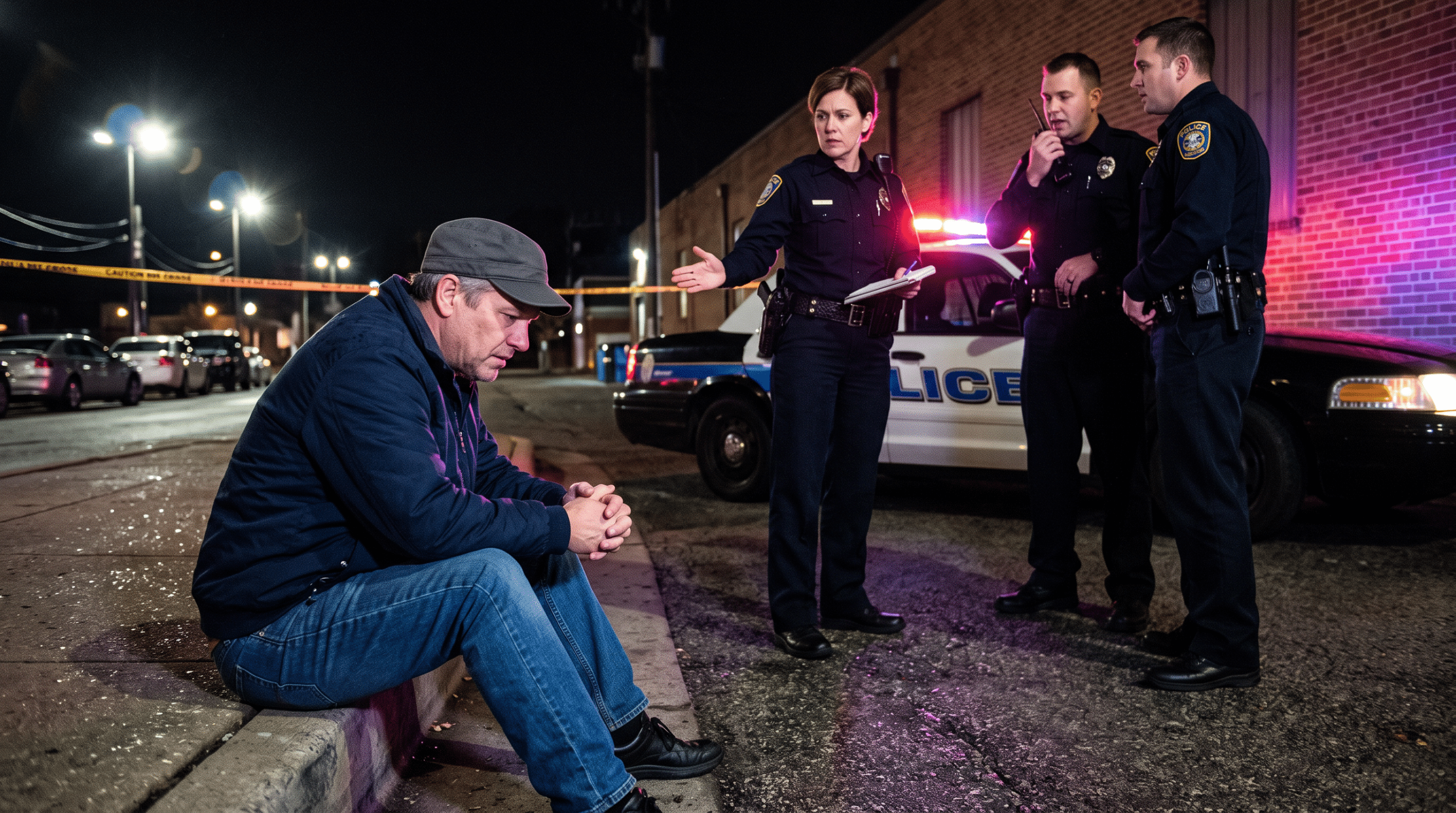
If you use a gun to protect yourself or someone else, your day can quickly become the focus of a serious police investigation. Even if you believe the shooting was justified, officers may still treat the situation as a possible crime and ask you for a detailed statement. What you say in those first hours can become key evidence. Stress, fear, adrenaline, and confusion can make it hard to remember events clearly, even for innocent people. When we help people in Galveston County who used a gun in self-defense, our goal is to protect both their self-defense claim and their rights before any statement causes problems that are hard to fix later.
Texas Law Allows Deadly Force In Certain Self-Defense Situations
Texas law allows people to defend themselves against unlawful force. According to Texas Penal Code § 9.31, you can use force if you reasonably believe it is immediately needed to protect yourself from someone else’s unlawful actions. The important parts are that you must have a reasonable belief and that the need must be immediate. Whether self-defense applies depends on what was happening when you used force, not just on whether you felt scared.
When a firearm is discharged at another person, the case usually involves the separate rules governing deadly force. Texas Penal Code § 9.32 permits deadly force when the person would first be justified in using force under § 9.31 and reasonably believes deadly force is immediately necessary to protect against another person’s use or attempted use of unlawful deadly force or to prevent certain serious violent crimes specified by statute. Texas law also provides circumstances in which a person who is lawfully present and has not provoked the encounter has no duty to retreat before using justified deadly force.
These legal protections are important, but not every shooting claimed as self-defense will be accepted as such by police or prosecutors. Investigators will look at whether the threat was immediate, what the other person did, if the person with the gun started the confrontation, when the gun was drawn, how many shots were fired, and if deadly force was still needed each time a shot was fired.
Calling It Self-Defense Does Not End The Police Investigation
A common and risky mistake is thinking that if you acted lawfully, you should explain everything right away and police will see it as justified. Claiming self-defense does not stop police from doing a full investigation.
Police might take the gun, separate witnesses, take photos of the scene, look at shell casings and bullet paths, collect video, check text messages, and review body-camera footage. They will compare all this evidence with what witnesses say. If someone was badly hurt or killed, investigators will treat the case as seriously as they would an aggravated assault or homicide.
Texas Penal Code § 22.02 addresses aggravated assault, including assaults involving the use or exhibition of a deadly weapon. If a person dies, Texas Penal Code Chapter 19 governs criminal homicide offenses, including murder under § 19.02. A lawful self-defense claim can defeat criminal liability, but investigators may initially be gathering evidence to determine whether the shooting was justified or whether one of these serious charges should be pursued.
You Do Not Have To Prove Your Innocence During A Police Interview
After a shooting, police may say they just want to know what happened. They might tell you that giving a statement is your chance to explain your side. This can make you feel a lot of pressure to talk right away.
We want our clients to know that cooperating is not the same as giving a full recorded interview. There is a big difference between sharing basic information needed for an emergency and answering detailed questions about everything you did, said, or thought during the shooting.
Under Texas Code of Criminal Procedure Article 38.22, Texas places specific requirements on the admissibility of statements resulting from custodial interrogation. Among other protections, an accused subjected to custodial questioning must be advised of the right to remain silent, that statements may be used as evidence, the right to counsel before and during questioning, and the right to terminate the interview.
The critical point is that Miranda-type protections do not mean statements made before formal custodial interrogation are automatically protected. Article 38.22 itself recognizes circumstances in which voluntary statements or statements that do not result from custodial interrogation may be admissible. A person can therefore create damaging evidence before ever hearing Miranda warnings.
A Small Mistake In Your Statement Can Become A Major Issue
Shootings happen fast. Your memory might not come back in order right away. People often remember more details after they calm down, see the scene again, or have time to think about what happened.
For example, you might tell police the attacker was six feet away, but later evidence shows it was closer to ten feet. Or you might think you fired twice, but forensics show four shots. These differences do not mean you lied, but prosecutors can still use them to challenge your credibility.
The same issues can happen if you try to estimate time, distance, speed, where people were, lighting, or exactly what was said during a stressful event. Once you give a detailed recorded statement, investigators can check every word against physical evidence, digital records, witness accounts, video, and later testimony.
This is why we are careful about giving detailed statements right after a shooting. It is natural to want to explain yourself, but rushing to do so can cause problems that could have been avoided.
Police May Already View You As A Suspect
Just because officers are polite does not mean you are only a witness. You could be a person of interest or a suspect. Investigators do not need to be confrontational for your statements to be used as evidence.
If you admit that you intentionally fired the gun, you may have established an important part of the prosecution’s factual case before the dispute over justification even begins. The legal question can then become whether the shooting satisfied Texas self-defense requirements.
That distinction matters. In many self-defense cases, the issue is not who fired the gun. The central dispute is why the gun was fired and whether the use of deadly force was reasonably believed to be immediately necessary under Texas Penal Code § 9.32.
We want to know what evidence is out there before letting our client’s words guide the prosecution’s case.
The Right To Remain Silent Must Be Used Carefully
If police ask for a detailed statement about a shooting, we usually advise our clients to clearly say they want a lawyer before answering questions. Staying silent is not the same as lying, hiding evidence, refusing legal orders, or getting in the way of police at a crime scene.
A person should never fabricate a story in an effort to improve a self-defense claim. False statements can destroy credibility and create additional legal problems. Likewise, evidence should never be deleted, hidden, altered, or discarded.
It is safer not to make up a legal defense during a stressful police interview. A defense lawyer can talk to investigators, find out what they want, look at the legal issues, and decide if giving information later is better for you.
Whether You Provoked The Encounter Can Matter
Texas self-defense law has limitations. Texas Penal Code § 9.31 identifies situations in which the use of force may not be justified, including circumstances involving provocation and certain responses to verbal provocation alone.
This means what happened before the shooting is very important. Investigators may ask who approached first, if there were earlier threats, if anyone showed a weapon before the shooting, and if either side tried to escalate things.
Text messages, social media posts, telephone calls, surveillance recordings, and witness testimony may become relevant. A statement made to police without understanding this evidence can inadvertently characterize an event in a way that damages an otherwise legitimate self-defense claim.
Texas Does Not Impose A Duty To Retreat In Every Justified Shooting
Texas is often described as a “stand your ground” state, although the actual law is more specific than that phrase suggests. Under § 9.32, when statutory requirements are satisfied, a person who has a right to be present at the location, did not provoke the person against whom deadly force was used, and was not engaged in criminal activity connected to the use of deadly force is not required to retreat before using justified deadly force.
That does not create a blanket right to shoot whenever someone feels threatened. The use of deadly force must still satisfy the statutory requirements, including the reasonable belief that it was immediately necessary.
Investigators may therefore ask why you did not leave, whether you had another way out, or why you chose to fire. Those questions can be legally significant, but they should be considered in light of the actual requirements of Texas law rather than answered under pressure at the scene.
Physical And Digital Evidence May Be More Important Than Your Immediate Statement
A strong self-defense case should not depend entirely on a defendant’s word. Objective evidence can often establish what happened more reliably.
Surveillance footage may show the aggressor approaching. A 911 recording may capture threats. Photographs may document injuries. Shell casings and bullet trajectories may help reconstruct positions. Phone records or text messages may establish earlier threats. Witnesses may confirm that the other person displayed a weapon or attacked first.
We want this evidence identified and preserved as early as possible. Video can be erased, overwritten, or lost. Witnesses can become difficult to locate. Physical conditions at a location can change.
Early representation allows us to begin considering the entire event as an evidentiary problem rather than allowing the case to depend solely on an exhausted person’s memory during the first police interview.
A Self-Defense Shooting Can Still Lead To Arrest
A person may genuinely believe a shooting was justified and still be arrested. Police do not make the final determination of criminal guilt, and officers at the scene may believe probable cause exists even where the defense later has strong evidence of justification.
The consequences become particularly serious when someone has been killed or seriously injured. A murder prosecution under Texas Penal Code § 19.02 or an aggravated assault prosecution under § 22.02 can expose a defendant to severe felony penalties.
This is why we treat every firearm self-defense investigation seriously from the beginning. The question is not merely whether you believe you acted legally. The question is whether the available evidence can establish that your conduct satisfied Texas law.
FAQs About Giving Police A Statement After A Self-Defense Shooting
Should I Tell Police That I Shot Someone In Self-Defense?
The circumstances matter, particularly when officers have just arrived at an active scene and need essential safety information. However, there is a significant difference between identifying an immediate threat or evidence and agreeing to a lengthy investigative interview. Once the emergency is under control, we generally want a person facing potential criminal exposure to obtain legal advice before giving a detailed account. Statements can be used to establish important facts against you even if you intended those statements to prove self-defense. Texas Code of Criminal Procedure Article 38.22 contains protections concerning custodial statements, but voluntary and non-custodial statements may still become evidence.
Won’t Refusing A Statement Make Me Look Guilty?
People understandably worry that asking for an attorney will make police suspicious. That concern should not cause you to give a rushed statement in a potentially life-changing criminal investigation. The constitutional right to remain silent and the right to counsel exist because people facing criminal questioning should not have to decide complicated legal issues alone. Investigators may already consider you a suspect regardless of whether you speak. We would rather address investigators through a deliberate defense strategy than attempt to repair an inaccurate statement after it has been recorded.
What If The Other Person Had A Gun Or Knife?
Evidence that another person displayed or used a deadly weapon can be extremely important. Texas Penal Code § 9.32 permits deadly force when statutory requirements are met, and the person reasonably believes it is immediately necessary to protect against another’s use or attempted use of unlawful deadly force. However, the complete circumstances still matter. Police may investigate when the weapon appeared, what the other person did with it, whether the threat had ended, and what happened immediately before shots were fired. Preserving the weapon, video evidence, witnesses, photographs, and other physical evidence can therefore be critical.
Can I Claim Self-Defense If I Fired More Than Once?
The number of shots does not by itself determine whether a shooting was justified. Texas law focuses on whether deadly force was justified when it was used and whether the person reasonably believed the force was immediately necessary. In a multiple-shot case, prosecutors may closely examine the timing of each shot and whether the threat continued. Ballistics, medical evidence, witness testimony, video, and the positions of the people involved may become significant. That is another reason we do not want clients casually estimating details during an immediate post-shooting interview.
What Should I Do If Detectives Ask Me To Come To The Station Tomorrow?
Do not assume that an invitation means you are simply a witness. Before agreeing to an interview about a shooting, we would want to know what police are investigating and what potential criminal exposure exists. An attorney can contact detectives and determine whether they are requesting a voluntary interview, whether charges are being considered, and whether providing any statement is strategically appropriate. Once you give detectives a detailed recorded account, you generally cannot take those words back. Getting legal advice first gives you an opportunity to protect your rights before making a decision that could affect the entire case.
Call Mark Diaz & Associates After A Self-Defense Shooting In Galveston
If you used a firearm because you believed you had to protect yourself or someone else, the hours immediately following the shooting can have a lasting effect on the investigation. We do not want you attempting to explain a deadly-force case by yourself while investigators are collecting evidence and deciding whether criminal charges should be filed. Texas provides meaningful self-defense protections, but those protections depend on specific facts and statutory requirements. We can examine the events leading to the shooting, preserve favorable evidence, address law enforcement inquiries, and protect your rights while the investigation is still developing.
At Mark Diaz & Associates, we defend people facing serious criminal investigations and charges in Galveston and throughout Houston, Texas. When you hire me, you work directly with me. My clients have my personal cell phone number because questions, emergencies, and concerns don’t always happen during business hours. You won’t be handed off to a junior associate or lost in a system where your case is one of dozens on a crowded docket. From arrest through resolution, I remain personally involved and accessible.
If police want a statement after you used a gun in self-defense, do not treat the interview as a routine conversation. Call our Galveston firearm charge attorney at Mark Diaz & Associates today by calling 409-515-6170 to schedule your free consultation and discuss your legal options. We represent clients in Galveston and throughout the entire city of Houston, Texas, and we can begin protecting your rights before an avoidable statement becomes evidence against you.
