
What Should You Do If Federal Agents Want To Interview You?
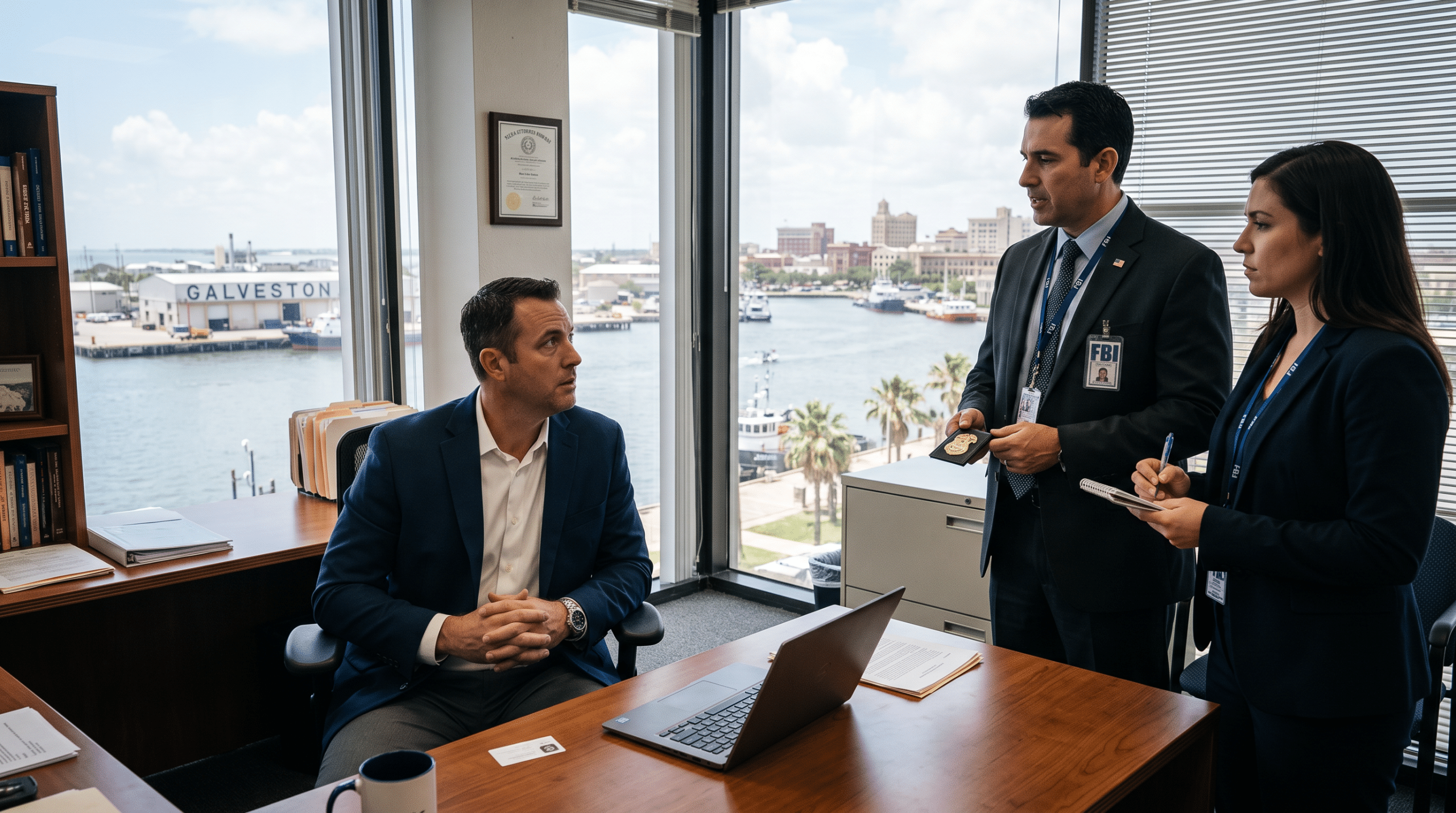
Getting a visit or call from federal agents can be very stressful, especially if you have never been involved in a criminal investigation before. Agents might say they just want to clear up a few facts, confirm a timeline, or hear your side of the story. Even if they seem polite and friendly, the interview is still serious and carries legal risks. Anything you say could become evidence, reveal inconsistencies, or lead investigators to more witnesses and records. If federal agents want to talk to you in Galveston or Houston, it is important to know your rights before you decide whether to answer any questions.
Do Not Assume That You Are Only A Witness
Federal agents often do not explain your exact role in an investigation. You could be seen as a witness, a subject, or a target, and your status might change as they collect more information. A witness usually has helpful information. A subject is someone whose actions are being looked at. A target is someone prosecutors think may have committed a crime.
Even if agents say the conversation is routine, their questions might be meant to test what you know, check your answers against their evidence, or get you to admit something. They may have already looked at your text messages, bank records, emails, surveillance videos, business documents, or statements from others. A question that seems harmless can actually be very important.
Do not try to guess your status based on how the agents act or speak. Federal investigations are planned carefully, and interviews are just one part of gathering evidence. Before you talk to agents, get legal advice that fits your situation and the agency involved.
You Usually Do Not Have To Agree To A Voluntary Interview
Federal agents might ask to interview you without arresting you or giving you a subpoena. In these cases, the meeting is usually voluntary. You have the right to say no, end the conversation, or tell them you will not answer questions without a lawyer present. as resisting arrest or interfering with lawful police activity. A clear response such as, “I do not wish to answer questions without my attorney,” protects your position without provoking an unnecessary confrontation.
Agents may continue asking questions after you decline, especially if the conversation takes place at your home, workplace, or another familiar setting. You should not allow politeness, embarrassment, or fear of appearing guilty to override your legal judgment. Innocent people can create serious problems for themselves by providing incomplete answers, making assumptions, or trying to explain events they do not fully remember.
Miranda Warnings May Not Be Required During A Voluntary Conversation
Many people think officers have to give Miranda warnings before asking questions that could get you in trouble. This is not always the case. Miranda rights usually apply only if you are both in custody and being questioned. If the interview happens at your home, office, a parking lot, or a federal building, it might not count as being in custody, depending on the situation.
This difference is important because you might say something harmful without ever hearing the usual warning about your right to remain silent. If you do not get a Miranda warning, it does not mean the government cannot use what you say during a voluntary interview. The safer course is to obtain legal guidance before the interview begins. We can communicate with the agents, determine what they are requesting, and assess whether any interview should occur at all.
Never Lie To A Federal Agent
Declining to answer is legally different from providing a false answer. Under 18 U.S.C. § 1001, knowingly and willfully making a materially false, fictitious, or fraudulent statement in a matter within federal jurisdiction can be prosecuted as a separate federal crime. The statute also covers certain schemes used to conceal material facts and the use of documents known to contain materially false statements. A standard violation may carry up to five years in federal prison, with higher maximum penalties in certain matters.
This law is one of the biggest risks in an unexpected federal interview. You might deny something, downplay your involvement, or give a timeline that does not match what investigators already know. Even if the government cannot prove the main crime, prosecutors might still look at whether you made a false statement during the interview.
Guessing is risky. If you do not remember a date, conversation, payment, or meeting, a wrong answer might later look like a lie when compared to documents or what others say. Do not try to make things up. It is better to stay silent and talk to a lawyer instead of trying to explain your way out.
Do Not Destroy, Alter, Or Hide Evidence
Once you learn about a federal investigation, do not delete messages, destroy documents, discard devices, alter files, or ask another person to conceal information. Under 18 U.S.C. § 1519, knowingly altering, destroying, concealing, covering up, or falsifying a record, document, or tangible object with the intent to impede or influence a federal matter can result in a fine and imprisonment for up to 20 years. The statute may apply to conduct undertaken in connection with an existing federal investigation or in contemplation of one.
Texas law can also create separate exposure. Texas Penal Code § 37.09 addresses tampering with or fabricating physical evidence when a person alters, destroys, or conceals an item while knowing that an investigation or official proceeding is pending or in progress. Depending on the circumstances and the evidence involved, the charge may be prosecuted as a felony.
Keeping evidence safe does not mean you have to let agents look at everything you own. It means you should keep anything that might be important while your lawyer figures out what needs to be given, what is protected, and how to handle any legal requests.
Do Not Consent To A Search Without Legal Advice
Agents might ask to come into your home, look at your phone, copy your computer, check business files, or search your car. If you agree, the government may not need to show probable cause or get a warrant for that search. Always talk to a lawyer before giving consent.
You may ask whether the agents have a warrant. When they do, you should not physically obstruct the search, but you may request a copy and contact counsel immediately. A warrant has limits. It should identify the place to be searched and the items that may be seized, although the proper interpretation of its scope may require legal review.
Do not sign consent forms merely because agents say cooperation will make the matter easier. Consent can have lasting legal consequences. We can review the warrant or request, identify possible constitutional issues, and preserve objections without escalating the situation.
Contacting A Lawyer Does Not Make You Look Guilty
Agents sometimes suggest that an innocent person should have nothing to hide. That statement ignores the realities of federal criminal investigations. People seek counsel because the stakes are high, the rules are complex, and statements cannot always be taken back after they are made.
An attorney may contact the agent, identify the investigating agency, ask about the subject matter, and determine whether prosecutors are involved. Counsel may also learn whether the person is considered a witness, subject, or target, although the government does not always provide a binding answer.
Legal representation may lead to several possible responses. Counsel may advise against an interview, request written questions, provide selected documents, negotiate the terms of a meeting, or attend the interview. The correct response depends on the evidence, the potential offenses, and the client’s exposure.
What Happens If Agents Arrive At Your Home Or Workplace?
When agents appear unexpectedly, you should remain composed. Ask for their names, agencies, telephone numbers, and business cards. You may ask whether you are free to leave and whether the conversation is voluntary. You should then state that you will not answer questions without counsel.
Do not discuss the investigation with employees, relatives, coworkers, or potential witnesses after the agents leave. Those conversations can create additional witnesses and may be misunderstood as efforts to coordinate stories. Texas Penal Code § 38.05 also criminalizes certain conduct intended to hinder the arrest, prosecution, conviction, or punishment of another person, including providing specified forms of assistance.
You should write down what occurred while the details are fresh. Record which agents were present, what they requested, what areas they entered, what property they took, and whether they left paperwork. Provide that information to your attorney rather than posting about the encounter or discussing it publicly.
A Carefully Managed Interview May Sometimes Be Appropriate
Refusing an immediate interview does not mean that no communication will ever occur. In certain cases, a controlled interview may help correct false information, establish a defense, or show that a client lacks criminal intent. That decision should follow a careful investigation rather than fear or impulse.
Before allowing an interview, we may examine documents, review the likely legal theories, identify dangerous subject areas, and prepare the client for questioning. We may also request assurances about the client’s status, the topics to be discussed, and the people who will attend.
Even with preparation, speaking to federal agents carries risk. Agents commonly work in pairs, and their reports may summarize statements rather than provide a complete recording. A disagreement about what was said can place the person being interviewed at a disadvantage. That is why the decision should be made with a full understanding of the potential benefits and consequences.
Speak With Mark Diaz & Associates About A Federal Investigation
When federal agents request an interview, the first conversation can shape the course of the entire investigation. You may not know what evidence the government already possesses, what another witness has said, or whether agents view you as a witness, subject, or target. We can communicate with the investigating agency, evaluate the legal risks, protect your constitutional rights, and determine whether any interview is in your best interest.
Mark Diaz & Associates represents people facing federal investigations and criminal allegations in Galveston and throughout Houston, Texas. We understand how quickly an unexpected visit from federal agents can place a person’s reputation, career, family, and freedom at risk. Our goal is to become involved before preventable statements or decisions damage the defense.
When you hire me, you work directly with me. My clients have my personal cell phone number because questions, emergencies, and concerns do not always happen during business hours. You will not be handed off to a junior associate or lost in a system where your case is one of dozens on a crowded docket. From the first contact with federal agents through the resolution of the case, I remain personally involved and accessible. Contact our Galveston federal offense attorney at Mark Diaz & Associates by calling 409-515-6170 to schedule your free consultation.
